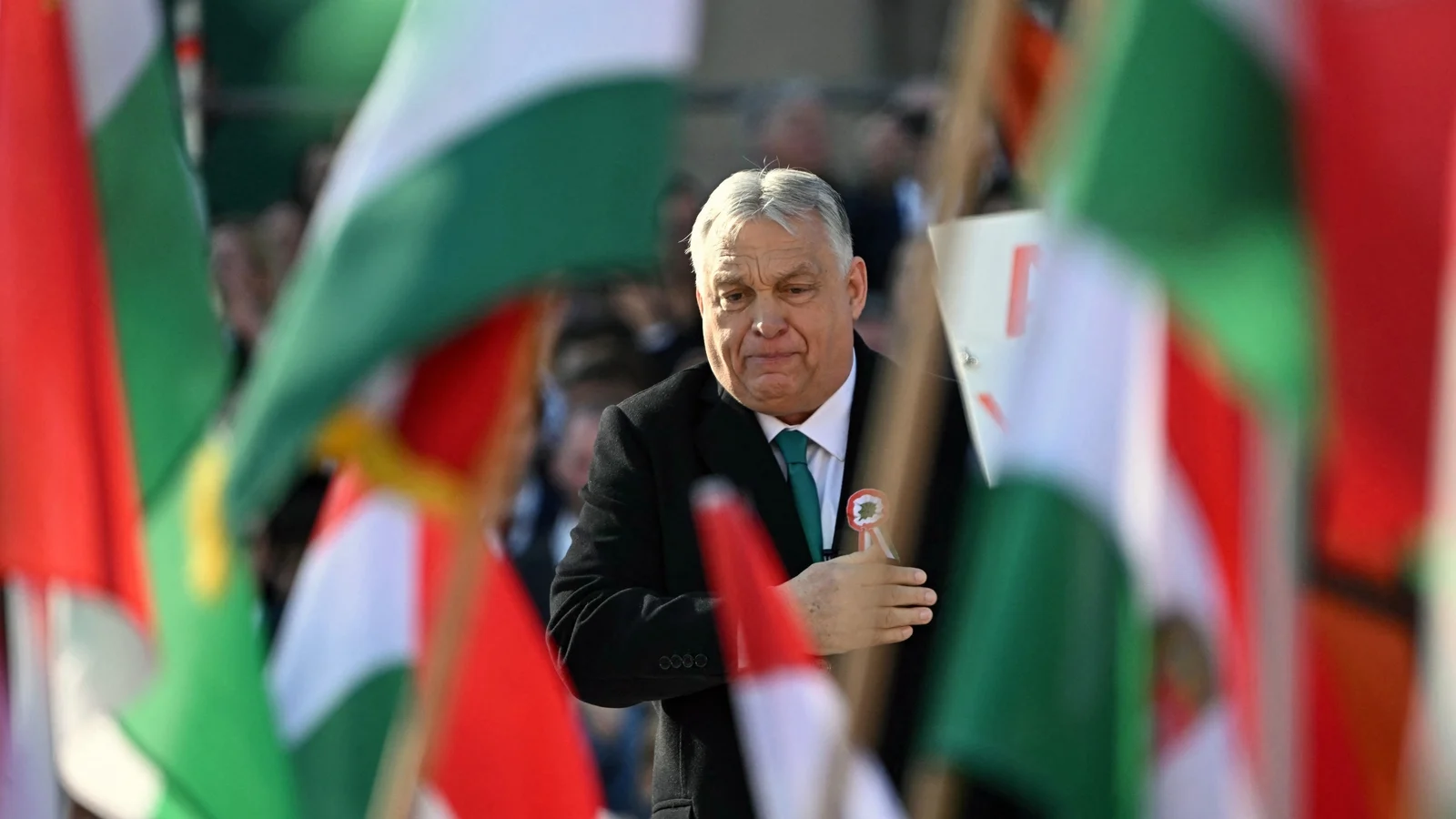
Budapest, 10 days before the vote: a city draped in posters and tension
On a brisk morning beside the Danube, the Hungarian capital looked like a town caught between two histories.
Along the tramlines, campaign posters fluttered in the wind: one showed a smiling Volodymyr Zelenskyy next to Péter Magyar with the blunt caption “Ok, the decision.” Another, pasted onto the stone face of an old building near Deák Ferenc tér, urged voters: “Don’t let Zelensky have the last laugh.”
Between the ruin-bars and state-built monuments, shopkeepers and pensioners passed under those images as if through two different weather systems—one warm with nostalgia for years of stability, the other cold with worry about what comes next.
Why this election feels like a hinge moment
For 16 years Viktor Orbán and his Fidesz party have steered Hungary’s political ship, often at storm-speed. But the parliamentary vote on 12 April has the look and feel of a genuine contest: polls show Péter Magyar’s centre-right Tisza party about nine points ahead, transforming his party from footnote to front-runner in a matter of months.
“You can’t understate the mood change,” said Éva Horváth, a 52-year-old nurse who lives in central Budapest. “People are tired. Not just of the politics—of the way things get done, or not. Wages feel stuck, and the costs keep climbing. We want someone who looks outward again.”
Magyar, 44, is a lawyer who once moved in the same corridors as Fidesz insiders. His campaign leans on two overlapping promises: clean up corruption and make Hungary more attractive to business. That message, combined with strong performances in the 2024 European and local elections, has buoyed Tisza into real contention.
The political geometry
It’s not simply a personality contest. The stakes are institutional. For more than a decade Fidesz’s parliamentary supermajority—won four times, each with a two-thirds margin—allowed sweeping changes: rewrites of the constitution, sustained pressure on the independence of the judiciary and public media, and the 2021 law restricting LGBTQ+ content for minors that shocked Brussels and human-rights advocates.
“This isn’t just about who sits in a chair,” said Márk Szabó, a political scientist at a Budapest university. “It’s about whether the checks and balances that remain in this country will be reinforced or further hollowed out.”
Foreign policy: the tug of Moscow, the pull of Brussels
On foreign policy, the contrast between Orbán and Magyar is stark, but complicated.
Orbán has cultivated, at times, an unusually cordial relationship with Moscow for an EU leader, and his government has frequently broken with EU consensus—over migration quotas, social policy, and, crucially, over how to handle the war in Ukraine. His rhetoric has often leaned toward “peace-first” messaging that critics say echos Russian talking points. For many in Brussels, Hungary under Orbán has been a persistent irritant.
Magyar, for his part, has pledged to “re-align” Hungary with its Western partners and promises to work with the EU to unfreeze billions in structural and cohesion funds that have been withheld amid rule-of-law concerns. He has said a Tisza government would hold a referendum on whether Hungary should support Ukraine’s accession to the European Union. He also insists he would not send weapons to Kyiv—an attempt, perhaps, to thread a needle between voters wary of escalation and a desire to mend ties with Brussels.
“I visited Kyiv’s Wall of Remembrance last year,” Magyar told a rally in a converted warehouse. “We honour the lost. We will work with our friends in Europe to heal and to rebuild.”
The line is delicate. Magyar has condemned Russia’s full-scale invasion, but he also wants to reassure a sizeable portion of the Hungarian electorate that he would not drag the country deeper into an external conflict.
Accusations, intelligence leaks and a thickening fog
If the campaign were a drama, recent reports have added a thriller subplot.
The Washington Post published a report that an internal Russian intelligence (SVR) document suggested a staged assassination attempt on Orbán could swing the campaign in Fidesz’s favour. The story—based on material shared by a European intelligence agency—read as if a KGB-era worst-case scenario had been revived for 21st-century politics.
“These are explosive allegations,” said Elena Kovács, a former EU security adviser. “If substantiated, they would point to an audacity in the methods used by foreign services that we have not seen on this soil for decades.”
Separately, reporting claimed Hungary’s foreign minister shared live updates from EU foreign council meetings with the Russian foreign minister. The minister called those claims “fake news”; the Kremlin dismissed the coverage as “disinformation.” The European Commission has asked for clarifications. Prime Minister Orbán ordered an investigation into what he described as the wiretapping of his foreign minister.
Independent Hungarian outlet VSquare reported three Russian operatives were active in Hungary, manipulating social media ahead of the vote—a claim based on interviews with unnamed European intelligence sources. Whether these threads will knot into a coherent picture before ballots are counted remains unclear. But the mere presence of such allegations raises a larger question: in an era of hybrid warfare, how free is the battlefield of information?
The practical stakes: money, oil and a €90bn loan
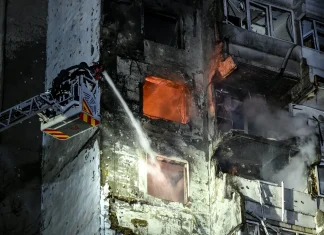
Beyond the moral questions, there are concrete, near-term consequences. A Tisza victory could unlock billions in EU cohesion funds frozen over rule-of-law concerns. It would also remove a key veto: under Orbán’s watch, Hungary delayed approval for a proposed €90 billion EU loan to Ukraine—meant to cover Kyiv’s budgetary needs over the next two years—after voicing concerns about repair work to the Druzhba oil pipeline, which sustained damage in Russian drone attacks. Hungary and Slovakia remain two EU members still importing Russian crude directly.
“For Ukraine, Hungary is not just another vote,” said Oksana Melnyk, a Kyiv-based analyst. “Budapest sits at a junction of geopolitics and cash flows.”
Alliances, applause and air kisses from the far-right
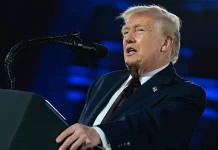
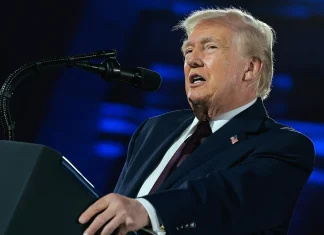
Orbán’s camp remains buoyed by loud, visible friends. Last week Budapest hosted a gathering of nationalist leaders from across Europe—Marine Le Pen, Matteo Salvini and Geert Wilders among them—and drew an endorsement from Donald Trump in a video address to CPAC Hungary.
“International endorsements matter,” said a Fidesz campaign coordinator who asked not to be named. “They signal to our base that Hungary’s path has global resonance.”
Still, for many ordinary Hungarians, economics and daily life are trumping transnational ideological solidarity. “I don’t care for the fireworks,” said Gábor, a taxi driver in his 40s. “I care if my daughter can afford to keep renting, if my pension buys bread. That is what decides my vote.”
What the rest of Europe should be watching
What happens in Hungary will ripple far beyond the Carpathians. Will a country that has tested the limits of EU solidarity return to the fold? Or will the continent gain another sturdy outpost of a nationalist, ‘sovereignty-first’ movement that believes in charting its own course, sometimes at odds with Brussels?
We are watching a nation weigh up competing desires: stability versus change, sovereignty versus solidarity, a cautious peace narrative versus alignment with a military and political bloc confronting a war on its borders.
What would you choose if you were deciding for a country—pragmatic distance from conflict, or lucid recommitment to collective European action? It’s the question Hungarian voters will answer on 12 April, and the consequences will be felt across an anxious continent.
Key questions to keep in mind
-
Will the promised investigations and clarifications satisfy Brussels and voters alike?
-
Can a new government reconnect Hungary to frozen EU funds without alienating a large swath of its electorate?
-
How resilient are Hungarian institutions to outside interference in the information space?
In the final days before the vote, the city hums with a kind of expectant fatigue. Campaign trucks blare messages in broadcast tones; friends turn to each other and ask, quietly, “What do you think will happen?”
The answer is not yet written. But when people stand in lines to hand over a small piece of paper on 12 April, they will be choosing not just a leader but a direction—for Hungary, for its neighbours, and for a Europe still figuring out how to be both united and diverse in a contested age.