On the Square in Budapest: A Country at a Crossroads
It was a gusty spring evening in Budapest — the kind of night that pulls your collar up and pushes you toward other people. The city’s neo-Gothic parliament loomed like a watchful grandparent; the crowd gathered on the adjacent square was smaller than the television networks had promised, but no less loud. Flags snapped in the wind, coffee steam rose from paper cups, and a handful of teenagers chanted a rhythm that echoed off the stone facades.
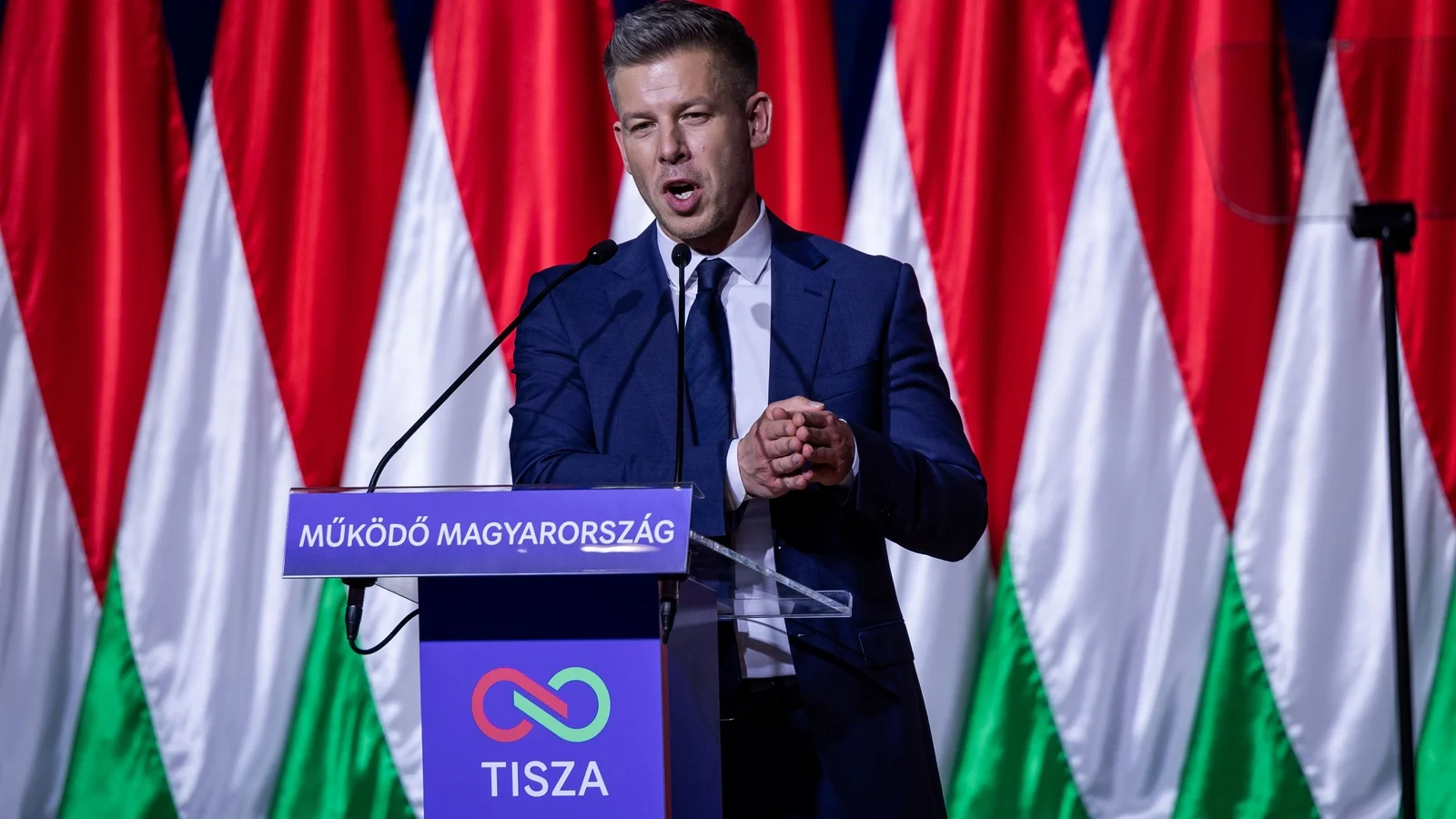
At the makeshift stage, Peter Magyar spoke with the urgency of someone who believes he has a last chance to save more than a political career. He didn’t read from a teleprompter; he paced, jabbed, laughed, and then — when the subject turned to corruption and surveillance — his voice narrowed into a razor.
“We have hit a dead end,” he said. “Not because Hungary cannot succeed, but because the people who were supposed to build our future have been stealing it.” Then he named a remedy: transparency, prosecutions, and a promise to return money he says the state has lost over 16 years.
The Contest: Old Order vs. New Promise
This is the scene as another parliamentary election approaches on 12 April — a calendar date that has hung over the country for months like a verdict still to be delivered. Peter Magyar, leader of the Tisza party, has emerged as the most potent challenger to Viktor Orbán since the prime minister’s return to power in 2010. In many public polls, Magyar’s movement has run ahead of Fidesz for weeks; in coffee houses and tram lines, the chatter varies between cautious hope and bruised skepticism.
“If you listen to the numbers, it sounds operatic — but on the ground, people are hungry for change,” said Anna Kovács, a small-business owner who runs a bakery near Kálvin Square. “We pay taxes, we queue at clinics, we see new bridges and shiny projects, but our lives have not changed. My kids are thinking of leaving. That frightens me more than anything.”
Magyar has made corruption the centerpiece of his campaign. He accuses Orbán’s circle of enriching itself through state contracts and opaque procurement. His pledge of “total transparency in contracts involving public funds” is both a policy promise and a moral rallying cry: a promise to pull back the curtain on the deals many Hungarians suspect are rigged in favor of insiders.
Civil Rights and Surveillance: The Other Front
Accusations of economic wrongdoing sit beside more existential complaints about civil liberties. Magyar suggests Orbán’s government has watched — literally and figuratively — and that opponents’ private lives have been invaded in the name of national security. “If they can search through my private life,” he told the crowd, “then they can rummage through everyone’s.”
That line resonated with journalists, academics, and lawyers who have spent years watching legal reforms, media takeovers, and funding cuts shrink the space for dissent. “It’s not just about lost money,” said Dr. Gábor Török, a legal scholar at a Budapest university. “It’s about institutions that are supposed to act as checks and balances getting hollowed out. When the judiciary is weakened and the press is muzzled, the public loses the language to talk about power.”
What the Rifts Look Like on the Ground
Walk away from the square and Budapest splits into a thousand micro-stories. A woman in her seventies pauses by a memorial bench and tells you she supports Orbán because he has kept her pension stable. A taxi driver in Józsefváros says he votes for whoever wins — “it’s safer that way, and you find work,” he says — while a student in a cafés whispers about emigration as if it were a weather forecast.
In the east — along the Tisza River, where Magyar’s party takes its name — the mood is different. Fields that once produced grains are now dotted with new developments and, some say, suspiciously large estates owned by contractors close to the government. “You see tractors by day and SUVs by night,” an elderly farmer told me, smiling wryly. “The tractor is for show. The SUV is for the money.”
Numbers and the Broader Picture
It is important not to confuse noise with reality. Hungary’s headline economy has shown growth over the past decade, and unemployment figures at times have been relatively low. But many economists and citizens argue that growth has not always translated into broadly shared prosperity; wage stagnation, rising housing costs, and concerns about healthcare access complicate the narrative of success.
- Fidesz has dominated Hungarian politics for more than a decade, returning to government in 2010 and holding majorities large enough to reshape institutions.
- The European Union has repeatedly flagged rule-of-law concerns; conditionality mechanisms have been used to delay or withhold funds to member states where governance standards are judged lacking.
- Opinion polls show a closely contested race, with Magyar’s Tisza party ahead in several surveys — a fragile lead that could evaporate depending on turnout and alliances.
International Echoes and Local Tensions
In recent weeks, foreign visitors and international headlines have added heat to an already boiling pot. Broadly, Hungary has been at the center of a wider debate about the balance between national sovereignty and shared democratic norms in Europe. Viktor Orbán has courted powers and personalities from east to west, cultivating relationships that critics say undermine European solidarity.
“What Europe needs is not a lecture but a conversation,” one EU diplomat told me off the record. “Yet when institutions are consolidated to the point where opposition voices cannot function freely, the conversation becomes impossible.”
At the rally, Magyar did not shy away from naming foreign influence — or perceived influence. He called Orbán a “puppet” of outside powers, a phrase meant to complicate the prime minister’s own frequent rhetoric about foreign meddling. In the international theater, that kind of rhetoric can be both strategic and incendiary, inviting friends and foes to pick sides.
Voices of the Voters
People at these rallies are not monoliths. Lajos, a retired schoolteacher, says he wants clean governance but doubts the opposition’s readiness. “They promise the moon,” he said. “I need someone who knows how to fix the plumbing first.” Elsewhere, younger voters speak in sharper tones: “It’s about dignity,” said 28-year-old Ágnes, who works in a tech startup. “We don’t want our country to become a story of one family getting rich.”
Why This Election Matters Beyond Hungary
You can read this contest as a local fight about jobs and corruption, and you would be right. But it’s also part of a larger global conversation: what happens when democratic institutions are gradually repurposed to secure power, and what responsibility neighbors have when that process affects regional stability and shared values.
Think about it: how do societies balance effective governance with openness? How do they create prosperity that is visible and tangible for ordinary people, not just visible on construction cranes and glossy state media?
These questions are not unique to Hungary. They surface in capitals across Europe, in small towns and big metropolises, in voting booths and kitchen-table talk. The answer Hungarians choose on 12 April will not only decide who sits in parliament but will also send a message about whether the pendulum in Europe is swinging back toward pluralism — or toward a politics of consolidation and controlled dissent.
After the Rally: Uncertain Roads Ahead
As people drifted from the square, the banners folded like tired birds. The speeches would be replayed on screens and dissected on morning radio shows. Polls would jitter; pundits would predict, and the voters would decide.
In the end, the scene that will matter most is not the podium or the prime minister’s office. It is the kitchen where a family argues about rent, the classroom where a teacher wonders about academic freedom, the courthouse where a judge considers a case against a powerful contractor. These are the places where policy becomes lived reality.
So, if you find yourself watching this story from afar, consider how it connects to conversations at home: about fairness, about institutions, about the ways power is used and who benefits. How would you want your country to answer the same questions? What would you demand of those who govern?
One thing is certain: for many in Hungary, this election is not merely a choice between parties. It is a choice about the kind of country they want to inherit — and the kind they are willing to fight for.