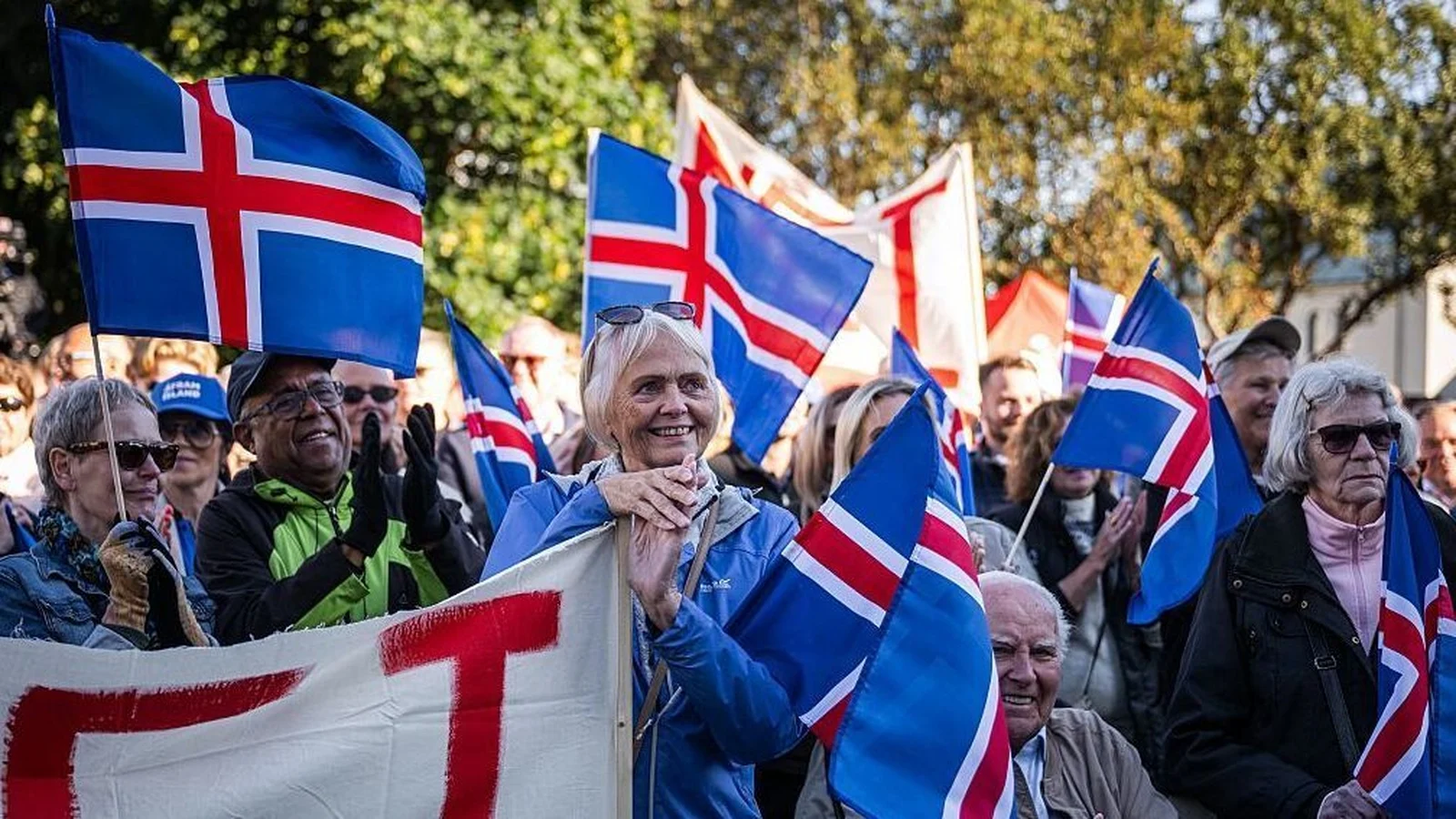
Iceland has slammed the brakes on European Union ambitions after voters rejected a proposal to reopen accession talks, a result that underscores how fiercely the country guards its fishing waters and its independence on the seas.
The Arctic island of 400,000 people has wrestled with the EU question for well over a decade. While the referendum had once been expected to narrowly favour restarting membership negotiations, opinion polling this month pointed to a shift in public mood.
In yesterday’s vote, 52.8% of ballots were cast against the government’s plan to hold negotiations with Brussels, while 47.2% backed it. Turnout reached 82.5% of eligible voters, according to public broadcaster RUV and other Icelandic media.
The referendum had originally been pencilled in for next year. But after US President Donald Trump’s threats to annex Greenland — alongside rising unease about how small economies might fare in a tougher global trading environment — Iceland’s coalition government decided to move the vote forward.
Ministers had pitched EU membership as protection against trade wars and intensifying Arctic competition, framing the ballot as a “now or never” decision.
Speaking at a press conference after the result, Icelandic Prime Minister Kristrun Frostadottir said the outcome should be seen not as defeat, but as a democratic milestone.
“I don’t see this as a setback. I see this as a victory for democracy,” she said.
“We had over 80% of the country participate in a matter like this.”
She confirmed that her “government is not going forward with the accession talks this term”.
Iceland Prime Minister Kristrun Frostadottir (C) address a press conference in Reykjavik
The ‘No’ result is a significant disappointment for Brussels, which had been eager to welcome a new wealthy member and appeared prepared to compromise with Reykjavik on difficult sticking points to smooth the path to accession.
It also looks likely to push the EU question off Iceland’s agenda until at least 2028.
Iceland first applied to join the EU following the 2009 financial crisis that battered its economy.
Those membership talks were put on ice in 2013, when a Eurosceptic government took office.
Against a backdrop of sharpening international tensions, Iceland’s current administration, led by Social Democratic Alliance leader Ms Frostadottir, sought to gauge public appetite for closer ties with the EU.
Even so, the North Atlantic nation already has deep connections to the bloc through the European Economic Area and the free-movement Schengen zone — arrangements that will remain the same regardless of the referendum result.
While the referendum is technically non-binding, the government has pledged to follow the public’s decision.
We need your consent to load this rte-player contentWe use rte-player to manage extra content that can set cookies on your device and collect data about your activity. Please review their details and accept them to load the content.Manage Preferences
‘We will be fine’
Debate in the run-up to the vote largely centred on domestic and economic concerns, though the war in Ukraine and Mr Trump’s stated ambitions for neighbouring Greenland — which he has mixed up with Iceland on several occasions — also surfaced repeatedly.
The campaign had “lifted discussions about the EU, about Iceland’s place in the world, about our general geopolitical situation and status, to a higher level”, Ms Frostadottir said yesterday after she cast her ballot.
Although she openly supported a ‘Yes’, she added that “we will be fine also if it’s a ‘No'”.
Ms Frostadottir had promised that if voters rejected restarting accession talks, the question of EU membership would not return to the political agenda during her term, which runs until 2028.
The government has also said that if the public opted for ‘No’, parliament would be left to decide whether to formally withdraw the country’s EU membership application.
The country of just under 400,000 people applied to join the EU in the wake of a 2009 financial crisis
Political analysts had said they did not expect the coalition to step down if the proposal was defeated. But with three parties holding different views on EU membership, the government could still be weakened by the rejection.
If the ‘Yes’ side had won, Iceland would have reopened negotiations with Brussels — including on the politically charged issue of fishing, a central pillar of the economy and national identity, and an area over which Reykjavik insists on exclusive control.
Any final accession deal would then have been submitted to Icelanders in another referendum.
The fisheries industry has been among the most determined opponents of EU membership, with 90% of companies in the sector against joining. In the run-up to the vote, the EU sought to reassure the industry with a conciliatory tone.
“Iceland’s unique specificities on fisheries and agriculture are well known. They would have to be carefully considered,” EU Enlargement Commissioner Marta Kos had said.
“I’m confident that, together with EU member states, we would find creative solutions.”
An EU source in Brussels told AFP: “I don’t think anyone (in the EU) wants to block an accession over a question of fish.”
For Brussels, Iceland’s membership had been viewed as a potential showcase for “positive enlargement” — an example that could make it easier for member states to accept the prospect of bringing in poorer candidates such as Montenegro.
It also would have expanded the EU’s footprint in the strategic Arctic region, and perhaps nudged debate in ultra-wealthy, non-EU Norway.