When the Postman Delivers a Survival Manual: Poland’s New Safety Guide and the Everyday Politics of Preparedness
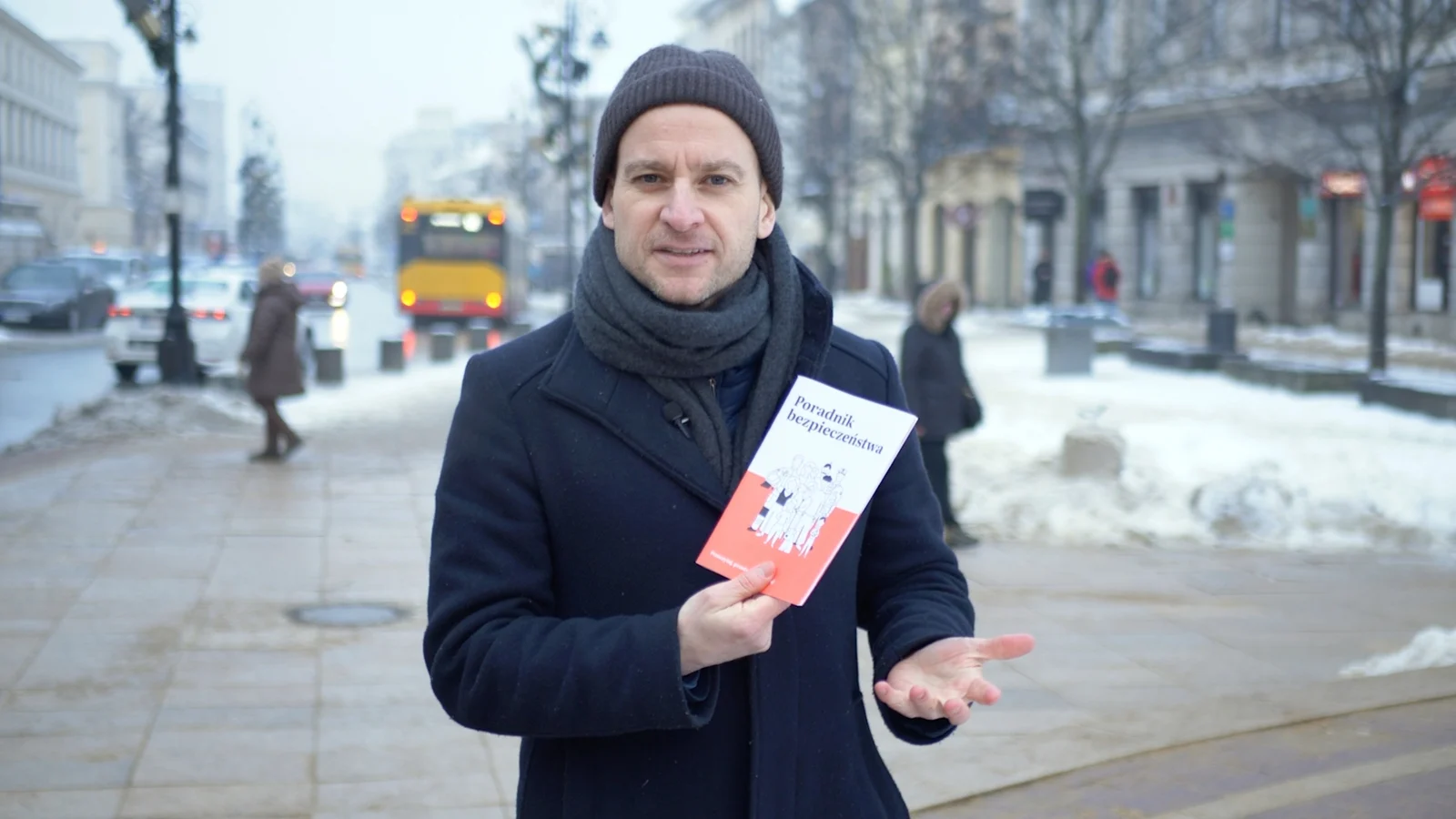
It arrived in the mailbox like a neighborly leaflet—thicker, heavier, and far more charged than any supermarket flyer. Seventeen million copies, the government says. Forty-eight pages of instructions, maps and blank spaces for family plans. A government reaching into homes not with promises of prosperity or progress, but with a practical how-to: how to hide, how to heal, how to keep the lights on if the lights go out.
On a bitter evening in Warsaw, the booklet lay open on our kitchen table, a thin plume of steam rising from a teacup. Outside, tram bells sliced the cold air. A wind-up radio sits in the drawer of my mother-in-law’s kitchen; in cities and villages across Poland, older habits mingle with new anxieties.
“It’s sensible,” said Marek, a retired electrician I met outside a convenience store in the Żoliborz neighborhood. “But it’s also unsettling that we need it. You can feel the change—small things matter now.”
What’s Inside the Guide
The guide reads like a compact emergency philosophy: air raid protocols, a checklist for non-perishable food and three days’ worth of water, instructions for administering first aid, steps to take in the event of biological or nuclear hazards, and advice on preparing for floods and other extreme weather. There are spaces to write down family evacuation plans—names, phone numbers, rendezvous points. A link within points readers toward an online tool for locating the nearest public shelter.
Practicalities headline the list of suggested items: a hand-crank radio and a paper map for when digital navigation is gone, power banks, warm clothes, canned food, and a spirit of readiness. “Better to plan for something you hope never happens,” said my wife, folding the booklet with a quiet determination.
Across Europe, a New Normal of Prep
Poland is hardly alone. In late 2024, Sweden mailed its own “In Case of War” brochure to households; Finland and Norway have published similar advisories. These are not relics of the Cold War being dusted off for nostalgia. They are, instead, a visible measure of a broader shift: nations re-teaching citizens how to live with risk in public life.
Officials in Poland prioritized the first deliveries to eastern provinces—areas that butt up against Belarus, Ukraine and the Russian exclave of Kaliningrad—an obvious geographic logic with geopolitical overtones. The move signaled more than caution; it highlighted the reality that peripheral regions often feel the first reverberations of instability.
When Infrastructure Becomes a Target
This winter’s pamphlet did not emerge in a vacuum. In late December, Poland’s digital minister, Krzysztof Gawkowski, reported that the nation’s power system had been the target of a large-scale cyber-attack that nearly triggered a blackout. Officials blamed sabotage originating beyond Poland’s borders.
Then there were the drone incursions last September from Belarusian airspace, which Poland linked to Russian forces—one more reminder that hybrid threats can flare without formal declarations of war. In November, an explosion destroyed a section of the key Warsaw–Lublin rail line; Prime Minister Donald Tusk called it an “unprecedented act of sabotage.”
“We’re in a very different security environment than we were a few years ago,” said Dr. Ewa Nowak, a security analyst at a Warsaw think-tank. “It’s not just missiles and tanks. It’s drones, cyber operations, and targeted attacks on infrastructure. That forces societies to think about resilience in everyday terms.”
Between Prudence and Panic: How People React
In the small grocery where I bought bread, the owner—a wiry woman named Halina—had already set aside a crate of canned beans and bottled water. “People ask for torches now more than they used to,” she said. “They buy extra tea. You can see worry in their faces, but also a strange calm. We prepare.”
Not everyone is thrilled. A young father from Praga, Jakub, shrugged when he flipped through the booklet. “Necessary, maybe. But a bit scary,” he said. “You put it on the table and you imagine things you hadn’t thought of before.” The phrase resonated with others I spoke to: the guide was described again and again as “practical but frightening,” a document that normalizes the abnormal.
Small Habits, Big Significance
There is a human choreography to preparedness—what you stash in a backpack, who you call if the phones are down, whether you can boil water when the central supply goes cold. These are intimate decisions that suddenly feel political. They also intersect with everyday culture: the pierogi packed for an evacuation, the thermos of borscht in the trunk, the blanket knitted by a neighbor.
“We have a tradition of mutual aid here,” said Aneta, a schoolteacher in Lublin. “In the winter markets, people share wood and warm meals. This guide asks you to formalize what we already do informally—help your neighbor, check on the elderly. That’s comforting.”
What This Means Globally
Ask yourself: how would you respond if the lights went out for days in subzero temperatures? Would you know the nearest shelter? Who would you call if phones and the internet went dark? These are now questions for citizens not just in Poland, but across an increasingly fragile global network of energy and information systems.
As climate change intensifies extreme weather events and as geopolitical tensions transform the character of conflict, the boundary between war and everyday life grows porous. Civilization’s conveniences—power grids, logistics, digital identity—are also its vulnerabilities.
“Preparedness is not paranoia,” Dr. Nowak reminded me. “It’s a social insurance. It asks people to take small, practical steps to endure disruptions. But it’s also a test of public trust. If people believe the state will help them, they prepare differently than if they feel abandoned.”
Practical Takeaways—and a Final Question
- Keep at least three days of water and food that doesn’t need refrigeration.
- Have a battery or hand-crank radio and a paper map.
- Create a written family evacuation plan and store it where everyone can find it.
- Know the nearest public shelter; the guide includes a link to find one.
Seventeen million booklets will not end uncertainty. They cannot prevent sabotage or guarantee that power will stay on. But they do something else: they transform vulnerability into something manageable, teach citizens a vocabulary for the unexpected, and prompt conversations across kitchen tables and street corners.
So I ask you—reader, neighbor, parent—what would you put in your kit? Would you tuck a wind-up radio under the tea towels, or call your elderly neighbor to check they have warm blankets? In a world where the geopolitical and the domestic are tangled, the act of preparedness is as much about human connection as it is about supplies.
When the postman brings a booklet, it’s not just paper he hands over. It’s an invitation: to plan, to talk, to care for one another. How we answer that invitation will tell us much about the kind of communities we want to be when the next disruption inevitably comes.