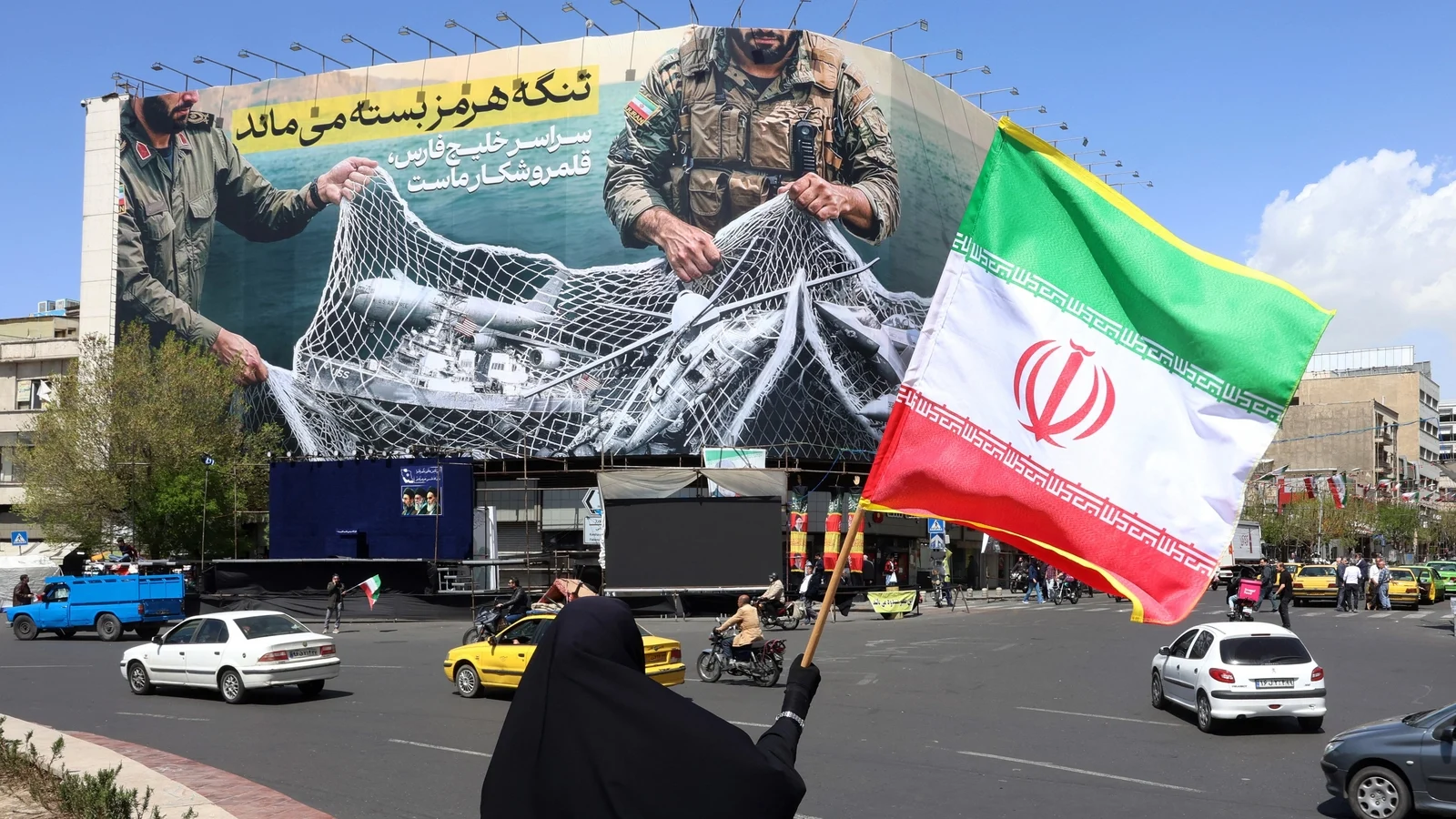
The Midnight Deadline: A Strait, a Threat, and a World Holding Its Breath
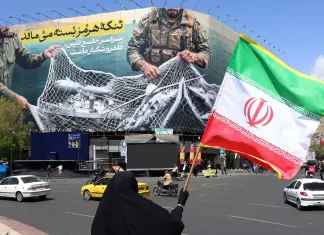
By the time dawn bled pale over the Persian Gulf, a strange hush hung over ports that usually thrummed with activity. Cranes stood idle like sleeping giants. Fishing boats bobbed in the oily light, their nets uncast. The Strait of Hormuz — a narrow throat through which roughly one-fifth of the world’s oil and natural gas once flowed — had become the fulcrum of a crisis that felt, in the small hours, both impossibly large and painfully intimate.
Inside Tehran, the mood was the opposite of calm. Streets were full of small, urgent conversations. In a bakery near Valiasr, Fatemeh, whose hands still smelled of cardamom and yeast, folded a scarf around her head and said, “We are used to sanctions, to shortages. But this is different. The talk of bridges and power plants being ‘decimated’ — it makes you think of your own children.”
What’s at Stake
The immediate trigger was a deadline set by U.S. President Donald Trump: an ultimatum to Iran to reopen the Strait of Hormuz and accept a ceasefire arrangement. If Tehran refused, the president warned of a campaign so devastating that “the entire country can be taken out in one night.” Within minutes, those words ricocheted across diplomatic channels, social media, and markets.
Oil traders reacted before diplomats could finish their coffees. Brent crude hovered near $110 a barrel, spooked by the possibility that a lasting closure of Hormuz — through which about 20% of the world’s oil and gas used to be shipped — could choke global energy supplies. For consumers thousands of miles away, this was no abstract geopolitical drama; it was a prospect of higher bills at the pump and more inflation at the supermarket.
Negotiations that Unraveled
Behind the headlines was an attempt, brokered by Pakistan, to thread the crisis back to calm: an immediate ceasefire, a reopening of the Strait, and negotiations on a broader settlement within a few weeks. Iran rejected that proposal. According to sources familiar with Tehran’s response, the government’s counter-offer consisted of ten demands: an end to regional conflicts, a formal guarantee for safe passage through Hormuz, the lifting of sanctions, and funds for reconstruction among them.
“We didn’t say no to peace,” said an Iranian foreign ministry official in a low, weary voice. “We laid out conditions that must be part of any durable arrangement. Empty assurances aren’t enough.”
Voices on the Ground
Ali, a fisherman from Bandar Abbas, banged a palm on the pier as he spoke. “Hormuz is our lifeline and our prison,” he said. “If it opens, our gas and oil flow. If it stays closed, we have to worry every day about missiles, about returning home.”
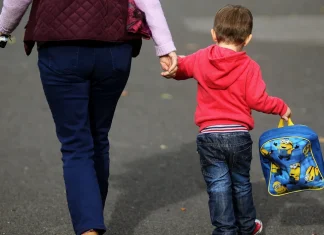
In Tel Aviv, a different anxiety played out in public squares. Anti-war protesters gathered outside the U.S. Embassy, chanting and holding signs that read “No More Nightmares” and “Talk, Don’t Bomb.” “We’re not against Israel,” said Rachel Cohen, a schoolteacher, “we’re against the kind of decisions that send planes and missiles into the night. War is for politicians; it’s our children who pay.”
Escalation: Strikes, Intercepts, and Human Cost
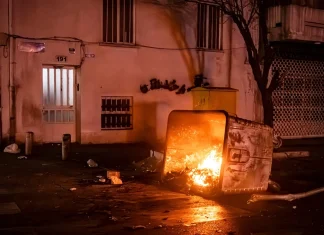
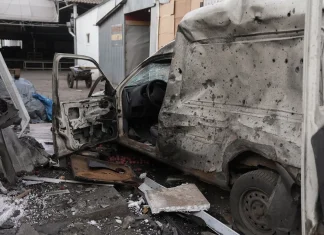
In the early hours, the Israeli military announced a series of airstrikes on sites it described as Iranian government infrastructure in and around Tehran. Iran responded with ballistic missiles and drones, some aimed at Israeli territory and others at U.S. forces in the region. Air defenses roared to life — missiles streaked across the sky and left trails of smoke that residents later described as “writing in the heavens.”
Saudi Arabia reported intercepting projectiles aimed at its eastern oil regions, with debris falling dangerously close to energy facilities. The kingdom, along with the UAE and Bahrain, issued public safety alerts, and authorities said that hundreds of Iranian-fired missiles and drones have been launched since the conflict began on February 28 — most intercepted, but some causing damage and casualties.
Casualty figures are grim. Human rights groups on the ground estimate thousands killed across the region: more than 3,500 in Iran and nearly 1,500 in Lebanon, where Israeli strikes have targeted the Iran-backed Hezbollah militia. Thirteen U.S. service members have died since the conflict escalated, and a downed F-15E earlier in the week — with one airman stranded deep in hostile territory — nearly pushed the crisis over the edge before a daring rescue mission brought him back.
“Every life is a story,” said Dr. Mona Hafezi, a Tehran-based physician volunteering at overwhelmed hospitals. “These numbers are not statistics on a page; they are parents, students, carpenters. We stitch wounds and bury the rest.”
Law, Threats, and the Language of War
President Trump’s rhetoric sharpened the stakes. He warned that if Iran did not comply, U.S. forces would target bridges, power plants, and other infrastructure “burning, exploding, and never to be used again.” Iran’s UN envoy responded with fury, calling the remarks “direct incitement to terrorism” and evidence of an intent to commit war crimes under international law. Tehran’s leadership, meanwhile, urged citizens to form human chains at power stations, turning sites of vulnerability into symbols of resistance.
“Threatening to wipe out civilian infrastructure crosses a threshold,” said Captain Sarah Mitchell, a retired naval strategist now teaching at a university in London. “It’s not just about military advantage; it’s about the civilian population’s future. Under international conventions, attacking purely civilian objects is illegal — and it puts the attacker on dangerous moral ground.”
Beyond the Strait: Global Ripples
This conflict is not contained to the Gulf map. Energy markets twitch when Hormuz clutches shut. Supply chains with components from Asia to Europe feel the tremor. Refugee flows, already pressured by climate and instability, may swell. Geopolitically, regional fault lines are deepening: the emboldening of proxies, the erosion of multilateral institutions, and the normalization of hyperbolic rhetoric as policy leverage.
“We’re watching the unspooling of another era of geopolitical risk,” said Javier Ortega, an energy analyst in Madrid. “If you combine military strikes with sanctions and trade disruptions, the global economy doesn’t respond linearly. It’s nonlinear — you get tipping points.”
Questions for the Reader — and the World
Ask yourself: How willing are we to accept civilian suffering as collateral for strategic goals? When leaders threaten entire nations, where does responsibility lie — with the commander in chief, with international courts, with bystanders who watch on screens? And what price are we willing to pay for short-term security over long-term stability?
Back on the pier in Bandar Abbas, Ali tied a new knot on his nets and stared toward the narrow mouth of the Strait. “We have always navigated between storms,” he said. “But this is a storm made by people on another map. Sometimes I feel the world is smaller — because our fear is shared — and sometimes it feels so big I cannot reach it.”
What Comes Next
At the moment, there is no tidy ending. The proposed ceasefire remains rejected. The deadline has come and gone in political and public discourse, replaced by a longer arc of diplomatic horse-trading, back-channel discussions, and the terrible arithmetic of risk. But in markets, hospitals, and kitchens across the region, people are composing lives that refuse to be mere footnotes in strategic statements.
In the days ahead, watch for three things: whether diplomatic mediators can reframe the deal in terms that address Iranian security concerns; whether international law bodies raise the heat on any threats against civilian infrastructure; and whether communities on both sides of the conflict can begin to tell different stories—stories that move from obliteration to rebuilding.
Because before any map, before any resource, before any trophy of power, there are human beings — making tea, mending nets, teaching, protesting — and their stories are the ones that will, in the end, define what this moment becomes.