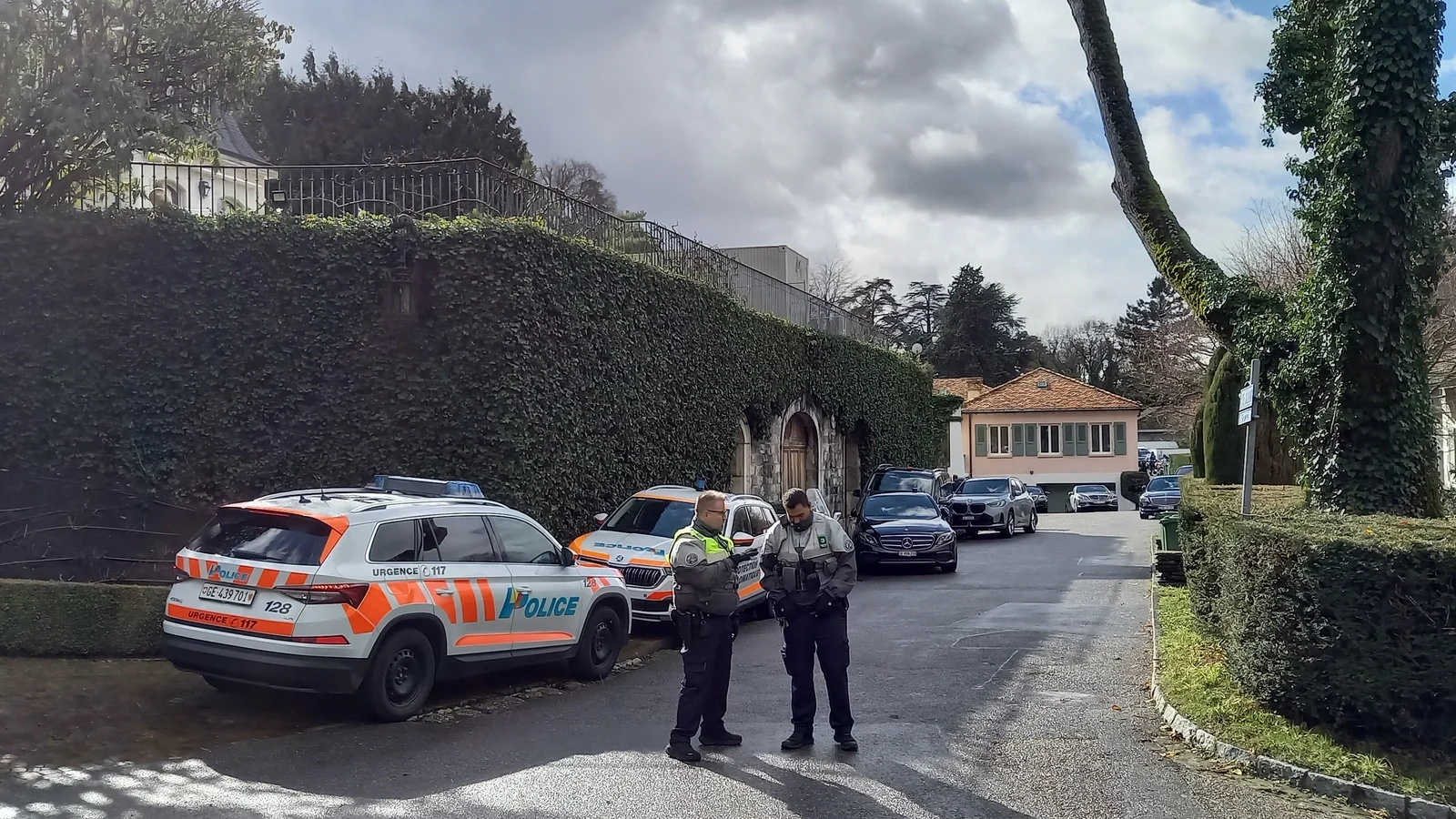
Geneva’s fragile sunrise: a new window — and a long road ahead
There are moments in diplomacy that feel as if the world holds its breath. In a sterile conference center in Geneva this week, that held breath turned into cautious optimism. Iran’s deputy foreign minister, Abbas Araghchi, described what he called “a new window of opportunity” after a fresh round of talks with US envoys. The words themselves were modest, almost careful — as if to not jinx what many in the room know could still unravel.
“We were able to reach broad agreement on a set of guiding principles,” Araghchi told Iranian state television. “We will move forward and begin working on the text of a potential agreement.” Those principles, he added, are only the opening frame of a negotiation that could take months. “This does not mean we can reach a deal quickly,” he warned.
At the negotiating table: serious talk, slow work
The talks, which resumed on 6 February, are the latest in a stop-start choreography between Tehran and Washington that stretches back decades. Participants at the session included US envoy Steve Witkoff and Jared Kushner, former US president Donald Trump’s son-in-law, with Mr Trump saying he would be involved “indirectly.” On the margins, the head of the International Atomic Energy Agency, Rafael Grossi, met Iranian officials to discuss technical cooperation — a reminder that the practicalities of monitoring matter as much as political will.
An unnamed senior Iranian official who briefed journalists in Geneva said Iran brought “genuine and constructive proposals” and that US seriousness on lifting sanctions — and avoiding “unrealistic demands” — would determine whether the talks could translate into a lasting accord. “We’re willing to devote the time necessary to get this right,” the official said. “But time is not the same as haste.”
What’s at stake on the table
At the heart of the negotiations is a familiar triad: nuclear constraints, verifiable inspections, and the relief of crippling international sanctions that have hammered Iran’s economy. Tehran insists it will not surrender enrichment entirely or include its missile arsenal in the current bargaining. Washington, for its part, seeks firm guarantees that Iran will not edge toward a weapon, while also leveraging a wider regional remit, including missile limitations — an expansion Tehran rejects.
“The gap is not only technical, it’s psychological,” said Dr. Laila Hamidi, a non-proliferation expert based in London. “For Iranians, enrichment is tied up with national pride and technological sovereignty. For the United States and its allies, containment and the prevention of a nuclear weapon are existential red lines.”
On the streets of Tehran: grief, defiance, and weary hope
Back in Tehran, the atmosphere is heavy with a mix of mourning and resentment. The government held a 40-day commemoration at the Imam Khomeini Grand Mosalla mosque for those killed in the upheaval that followed a surge in living costs and the deadly crackdown that ensued. State officials said more than 3,000 people died; independent monitors and activist groups place the toll much higher — HRANA and other organizations have estimated more than 7,000 fatalities.
“People are tired,” said an elderly shopkeeper in the Grand Bazaar who asked not to be named. “We want stability, not grand promises. If the talks bring some relief, if oil can flow and prices fall, that matters more than rhetoric.”
Another voice, a university student who participated in the protests, was less sanguine. “Sanctions are part of our suffering, yes,” she said, “but so is the violence in our streets. A deal won’t mend everything. For many of us, it’s about dignity as well as economic survival.”
Military shadowplay: carriers, B‑2s, and the Strait
Diplomatic progress has unfolded against a raw backdrop of military posturing. Washington has deployed a large naval presence to the Arabian Sea and even sent B-2 bombers to carry out strikes in the wake of last June’s hostilities — a conflict that flared after an attack attributed to Israel on Iranian nuclear facilities and escalated into a 12-day exchange. Iran, in turn, staged naval drills in the Strait of Hormuz, the narrow choke point through which an estimated one-fifth to one-third of globally traded seaborne oil transits daily.
“When ships gather and missiles are tested, markets notice,” said Ravi Menon, an energy analyst in Singapore. “Even a hint of disruption can nudge traders to bid up insurance and crude premiums; the world is still sensitive to Persian Gulf risk.” Benchmark Brent briefly drifted lower in Asian trade as investors weighed the chance of supply shocks against the possibility that the talks could soothe tensions.
Memory, law, and the long shadow of the NPT
Iran remains a signatory of the Nuclear Non-Proliferation Treaty, which allows civilian nuclear programs in exchange for forgoing weapons and cooperating with the IAEA. Tehran insists its program is peaceful, even as it has enriched uranium to levels far beyond what’s needed for power generation — levels that, analysts warn, inch closer to weapons-grade thresholds if not checked.
Israel, never a signatory of the NPT, maintains a deliberate ambiguity over its own capabilities, complicating regional anxieties. “Ambiguity as deterrence has been part of Middle Eastern geopolitics for decades,” said Dr. Hamidi. “It makes negotiation with Iran inherently asymmetric: one side’s openness to scrutiny is used to critique the other’s secrecy.”
Beyond Geneva: what does success look like?
A successful accord would likely include verifiable limits on enrichment, robust IAEA access, staged sanctions relief, and an agreed timeline to implement and monitor compliance. It would not — at least in Tehran’s view — include concessions on missiles or the complete abandonment of uranium enrichment.
For the people living under the shadow of sanctions and repression, success is measured more tangibly. Can a deal restore oil revenues and jobs? Can it ease pressure on hospitals and schools? Can it create space for reconciliation at home?
“A safe, verifiable agreement could buy breathing room,” said an activist-turned-community-organizer in Shiraz. “But breathing room is not a cure. We need structural reform, transparency, and accountability — on both domestic and international fronts.”
Why this matters to you
These negotiations are not an Iranian or American story alone. Energy markets, refugee flows, arms dynamics, and the global non-proliferation regime all ripple from what happens in Geneva. When nations inch toward or away from arms control, the consequences are felt in kitchens and classrooms, in markets and mosques, from Tokyo to Tunis.
So ask yourself: what would you trade for a decade of calmer diplomacy? For many in Tehran, the calculus is immediate and human. For policymakers in Washington and capitals across Europe, it is strategic. For the broader public, it’s about whether international law and dialogue can still be the instruments that prevent catastrophe.
Closing thoughts: cautious optimism, hard realities
The “window” Araghchi spoke of is small and fragile, framed by a history of broken pacts and recent bloodshed. Yet in Geneva this week, negotiators at least sketched an outline of what could be a path forward. Diplomacy is rarely dramatic. It is often slow, messy, and punctuated by setbacks.
But as one veteran diplomat put it over tea in a Geneva side street, “All treaties are born from the willingness to sit down and admit shared risk. If both sides leave that table unwilling to lose, then there is a chance.”
For now, the world watches, waits, and wonders: will this fragile window open into a door — or will it be another mirage on the long desert road of international diplomacy?