When an anniversary turns into an international plea: a Galway woman’s fight to bring her husband home
On a wind-swept evening in Claregalway, where the hedgerows smell of peat and the lanes curve like questions, Daria Petrenko was supposed to be tearing open a small gift and laughing with Dmitri, her husband of nearly three years. Instead, she scrolls through a phone that holds memories of a life split between two countries—texts, photographs, a terse message from a Russian detention centre—and a grief that has no neat translation.
“We should be packing for a small celebration,” she tells me over a shaky call from a terraced house just outside Oranmore. “Instead I am waiting for news about whether they will let my husband see a lawyer.” Her voice thins, then steadies. “He has been detained because of words on his phone—my words, possibly. Because I said he was my husband on social media and I was angry at what happened to my mother.”
How a private heartbreak became an international case
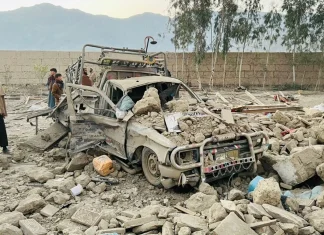
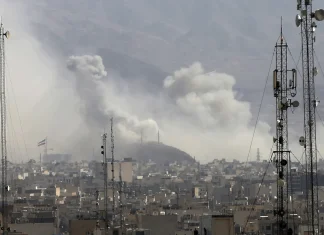
The story is both intimate and brutally simple. Ms Petrenko, a Ukrainian national who fled the bombing of her hometown, lost her mother in Kharkiv during a Russian strike. In the raw days after the death, she posted angry messages on Telegram denouncing the invasion—words she says were fuelled by sorrow and stress. Mr Dmitri Simbaev, 49, who holds both Russian and Irish citizenships and has lived in Ireland for more than two decades, visited Russia every year to see his ageing parents. He travelled on his Russian passport in late August. Within days of arriving, he was detained.
“They took him from the airport,” Daria says. “They said there were messages on his phone that justified terrorism and called for extremist acts. How can a message grieving my mother be terrorism?”
Irish officials confirm the Department of Foreign Affairs is aware of the case and is providing consular assistance. But the facts that haunt this episode are not only legal—they are human, messy, and achingly familiar to families caught between the red lines of nation-states and the reach of digital surveillance.
Dual nationality: a legal limbo
Dual citizenship is often celebrated as a bridge—an opportunity to belong in more than one place. But in Russia, and increasingly in other states, it can act like a legal no-man’s-land. Ms Petrenko believes the Russian authorities see Dmitri primarily as a Russian citizen and are therefore disinclined to engage with Irish consular appeals.
“It makes everything harder,” she says. “He has an Irish passport, but he also used his Russian passport. They keep telling me he is Russian and they will deal with him as such.”
International law gives home states duties to protect their nationals abroad, but those responsibilities are strained when a person holds multiple passports. “When an individual travels on the passport of one state, that state generally treats them as its citizen,” explains a Dublin-based human-rights lawyer who asked not to be named. “It complicates consular interventions because the detaining country can insist the other state’s role is limited.” She warns that in practice, this often leaves families in limbo.
The charges and the stakes
Russian authorities are reported to have charged Mr Simbaev under criminal code articles related to “public justification of terrorism,” “public calls for extremist activity,” and “arbitrary action committed with the use of violence or the threat of its use.” These are broad categories, frequently criticized by human-rights groups for their vagueness and the way they can be applied to speech and social-media posts.
“The language of the charges is chillingly elastic,” notes an expert on freedom of expression at an international NGO. “Across several jurisdictions, including Russia since 2022, we have seen legislation used to criminalise dissenting opinions, to make acceptable what is effectively political repression.” She points out that online platforms such as Telegram—which has become a prominent space for commentaries and communities during the war—are often monitored, and content can be read as evidence in criminal proceedings.
If convicted, Mr Simbaev could face long prison terms or, as Ms Petrenko fears, be sent to a forced labour camp. The spectre of such outcomes has galvanized her campaign for Irish government intervention and public attention.
Local voices, global echoes
In Oranmore and Claregalway, neighbours say Mr Simbaev was the kind of quiet, dependable man who mowed lawns for an elderly neighbour and kept a supply of tea in his kitchen for impromptu visitors. “He was always joking, always fixing something,” says Maeve O’Donoghue, who lives two doors down. “News like this makes no sense. Does a grieving wife’s post make someone a criminal?”
Across Europe, the case resonates with other stories of dual nationals ensnared by geopolitical tensions. There are reports—often hard to verify—of foreigners arrested in Russia on charges tied to extremism or espionage. The broader pattern points to a global trend: authoritarian governments expanding legal definitions of national security to criminalise dissent and silence critics.
Questions that linger
How should democratic states protect their citizens when those citizens are legally claimed by other powers? What responsibility does a host nation have when its resident travels on another passport? And perhaps most pressing: when grief becomes a crime in one country, where do we stand as neighbours, as friends, as fellow humans?
Ms Petrenko does not couch her plea in legal nuance. She returns to the personal facts that make a plea urgent. “We married in Oranmore in 2023,” she says. “He was here for more than 20 years. This is his home. Please, does home not mean anything at all?”
What’s next
- The Irish Department of Foreign Affairs has said it is providing consular assistance to Mr Simbaev.
- Ms Petrenko continues to gather support from local councillors and human-rights groups, urging the Irish state to press Moscow for his right to consular visits and a fair trial.
- Community vigils have been suggested in Oranmore; a small group of neighbours intend to meet to show solidarity and keep the story alive in local press and social media.
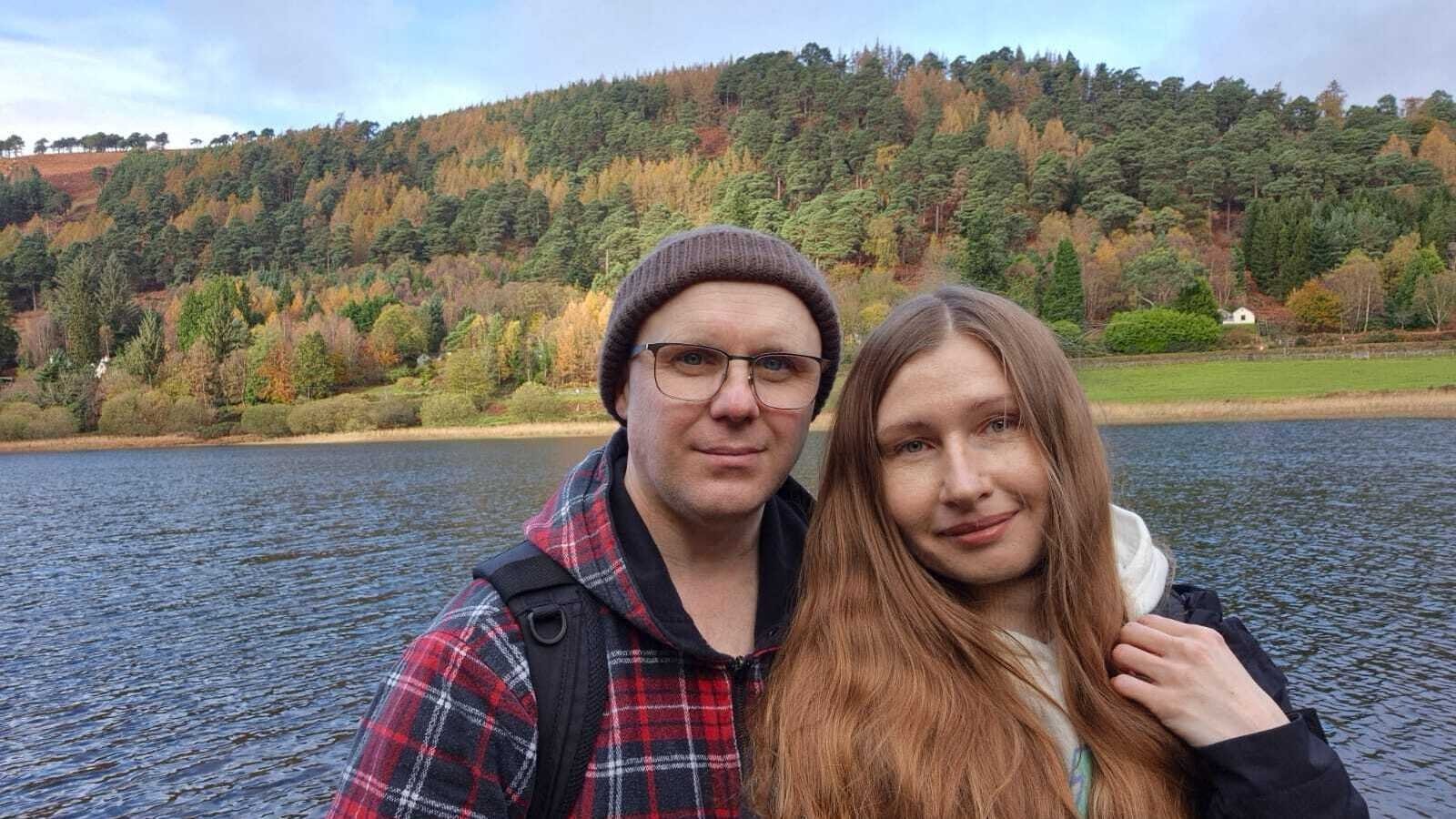
In the quieter moments, Daria looks at a photograph of the two of them near the shore in Galway Bay—Dmitri’s hand on her shoulder, the Atlantic wind tossing hair into laughter. “I think about our life,” she says. “I think about small things: birthdays, the meal we promised to make together. I also think about my mother and the moment I wrote those words. War takes everything, and now it has almost taken the man I love.”
So where does responsibility begin and end in cases like this? For readers watching from afar, it is tempting to reduce the story to diplomacy and law. But behind those dry terms lie people who loved, ate, argued, and celebrated. When the machinery of state meets the frailty of human feeling, who speaks for grief?
As this story unfolds, one thing is clear: in a world where borders are policed not only by soldiers but by surveillance and statutes, ordinary acts—grieving aloud, sharing a memory, visiting family—can assume extraordinary risk. How many more anniversaries will pass unmarked before Mr Simbaev returns? For now, in a small Irish town, a woman prepares a cake she cannot yet cut, and waits for a word that might change everything.