Rafah Reopens — A Door Ajar, Not Yet Wide Open
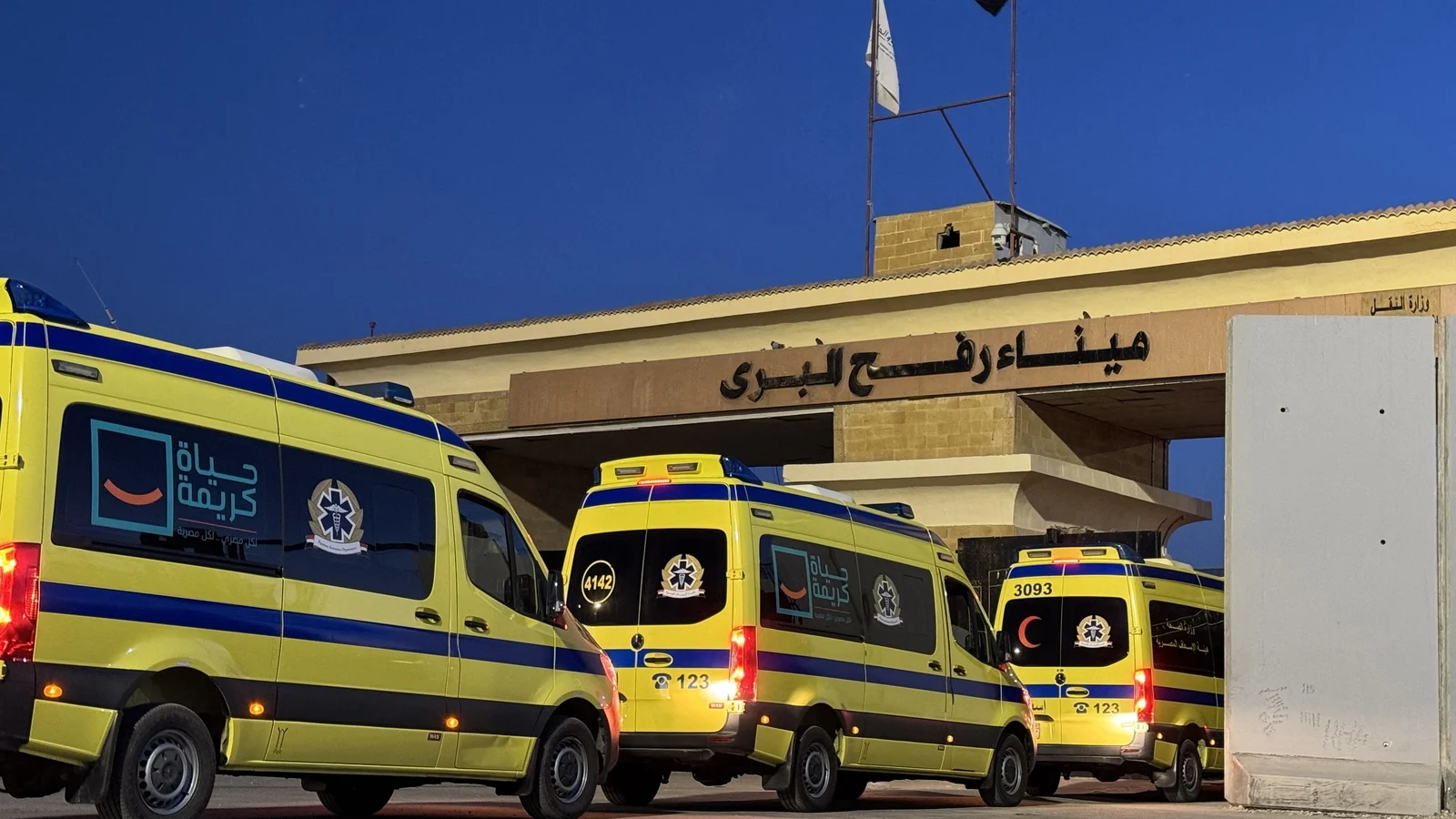
The first sight of Rafah this week was not a ribbon-cutting ceremony or a jubilant crowd. It was ambulances idling in the mid-morning heat, Egyptian medics swapping cigarettes and plastic water cups, and a line of people with shoes soiled by the same dust that carpets Gaza’s ruined avenues.
After months of silence, Israel has allowed the Rafah border crossing with Egypt to reopen for residents on foot. The move is limited, careful, and choreographed: people only, security checks at both ends, caps on daily crossings. It is, in other words, a crack in the wall rather than a door flung open.
What the reopening means, practically
European monitoring teams have been reported at the site; Israeli officials confirmed movement “for both entry and exit.” But the crossing will not instantly free a trapped population. Israel and Egypt are expected to limit numbers, require security vetting of those moving in and out, and maintain the authority to halt traffic at short notice.
For roughly two million people crammed into a narrow strip by the Mediterranean, even a small channel to the outside world is consequential. Palestinian authorities say about 100,000 people fled Gaza in the first months after the war began. Many of those left when Rafah was open; many more remain stuck on the inside, some in tents, others in ruined apartments that smell of damp and stale cooking oil.
Behind the headlines: a lifeline with strings attached
Rafah has been a lifeline for Gaza long before any of the recent politics. It is where families would cross for weddings, medical appointments, university exams, and the rare grocery shopping trip beyond the enclave. When Israel seized control of the crossing in May 2024 and effectively shuttered the Philadelphi corridor that hugs Gaza’s southern border, that everyday cross-border life stopped.
The closure has had practical, measurable consequences. Humanitarian workers and the UN reported that only a few thousand patients have been allowed out for medical treatment via Israel over the past year—while thousands more still need specialist care abroad. The Philadelphi route’s closure squeezed life-saving possibilities; hospitals in Gaza ran on generators and improvisation, and families learned to ration morphine like gold.
“We feel like people waiting for medicine that will never arrive,” said Layla, a 32-year-old mother of three from Rafah. “You count the days and hope someone—anyone—remembers that you are still alive.”
Humanitarian access and who gets a pass
International charities and UN agencies have been able to bring aid into Gaza at intervals, but the patchwork access left huge gaps. Yesterday’s announcement that Israel will end Médecins Sans Frontières’ operations in Gaza after the charity failed to hand over a list of Palestinian staff has only made the situation murkier. Filipe Ribeiro, MSF’s head of mission in the Palestinian territories, told an Irish radio programme he hopes the reopened Rafah will “be a new door” for people and supplies.
“Every day we don’t have complete access, people die who might have lived,” Ribeiro said. “Rafah opening could ease logistics and give us some room to operate.”
But the reopening does not resolve all barriers. Israel continues to assert security prerogatives at the crossing and remains deeply cautious—some would say hesitant—about allowing foreign journalists into Gaza. Since the start of the war, the enclave has been effectively off-limits to many international reporters; a petition by the Foreign Press Association demanding entry through Israel is now before the Israeli Supreme Court.
Government lawyers argue that allowing journalists into an active conflict zone risks soldiers’ safety and reporters’ lives. The FPA counters that withholding press access deprives the global public of independent information about a humanitarian catastrophe. It points out, not without irony, that many aid workers and UN personnel are granted access while journalists are not.
Violence in the margins of a ceasefire
The reopening dovetails with a fragile, uneasy ceasefire that itself is part of a broader political plan. The deal—mediated in October—set out a phased approach: governance handed to technocrats, Hamas disarming, Israeli troops withdrawing as reconstruction begins. In practice, the roadmap has been bumpy.
Since the October deal was struck, health authorities in Gaza say more than 500 Palestinians have been killed in subsequent Israeli strikes, while militants have killed four Israeli troops. In the last week alone, Israeli forces launched some of their fiercest airstrikes since the ceasefire, killing at least 30 people in what officials described as retaliation for a truce violation. The numbers are not abstractions; they are neighbors, fathers, shopkeepers, and children.
“You cannot rebuild a life when every few days the sound of bombing reminds you that nothing is final,” said Mahmoud, a 54-year-old shopkeeper who used to sell spices near Khan Younis. “We sweep the debris and count who is left.”
Security, sovereignty, and a politics of checks
Israel’s demand for security vetting at Rafah is not surprising. It seized control of the crossing in May 2024, citing operational needs. Egyptian officials, too, will be watching. Both countries have signaled that they intend to cap the number of travellers, balancing humanitarian rhetoric with political caution.
Critics argue that these conditions perpetuate a system that treats movement as a privilege rather than a right. For Gaza’s residents, the crossing has always been about more than comings and goings—it is about dignity, about being able to reach a hospital without waiting for months on a list, about attending a funeral across the border, about children taking an exam outside the enclave.
What happens next—and why you should care
Rafah’s reopening is a modest, provisional step. If it functions as intended, it will let some sick people reach care, families reconnect, and relief convoys become simpler to route. If it is used as a bargaining chip or shut down when tensions flare, it could be yet another cruel tease for a population that has endured months of displacement, shortages, and the omnipresent hum of conflict.
This is not a story only for the region. It is about how the world manages humanitarian corridors, media access, and reconstruction in war zones. It raises larger questions: who gets to document suffering, who controls the routes that aid takes, and how do geopolitical interests shape the everyday lives of millions?
“People here don’t want headlines,” Layla said, wiping dust from her sleeve. “We want the right to live and to be seen living.”
If you take anything from Rafah’s reopening, let it be this
- Small openings can matter deeply—but they are fragile and require vigilance.
- Humanitarian access is about both aid and accountability; without journalists, verification is weakened.
- The politics of borders often become the politics of survival in places like Gaza.
As the crossing begins its limited reintroduction of movement, imagine standing in that line, shoes dusty, documents clutched, wondering whether today will be the day your child receives treatment, or the day you finally cross to see a cousin you have not hugged in two years. Will the world notice? Will the monitors at the gate be more than a symbol?
Rafah’s reopening is a hopeful note in a dispiriting score—but hope needs more than openings. It needs sustained access, clear rules, and above all, a politics that prioritizes lives over leverage. Otherwise, this “new door” will be nothing more than another shuttered promise in a long winter of waiting.