Morning sirens and smoldering fields: another day in the uneasy calm between wars
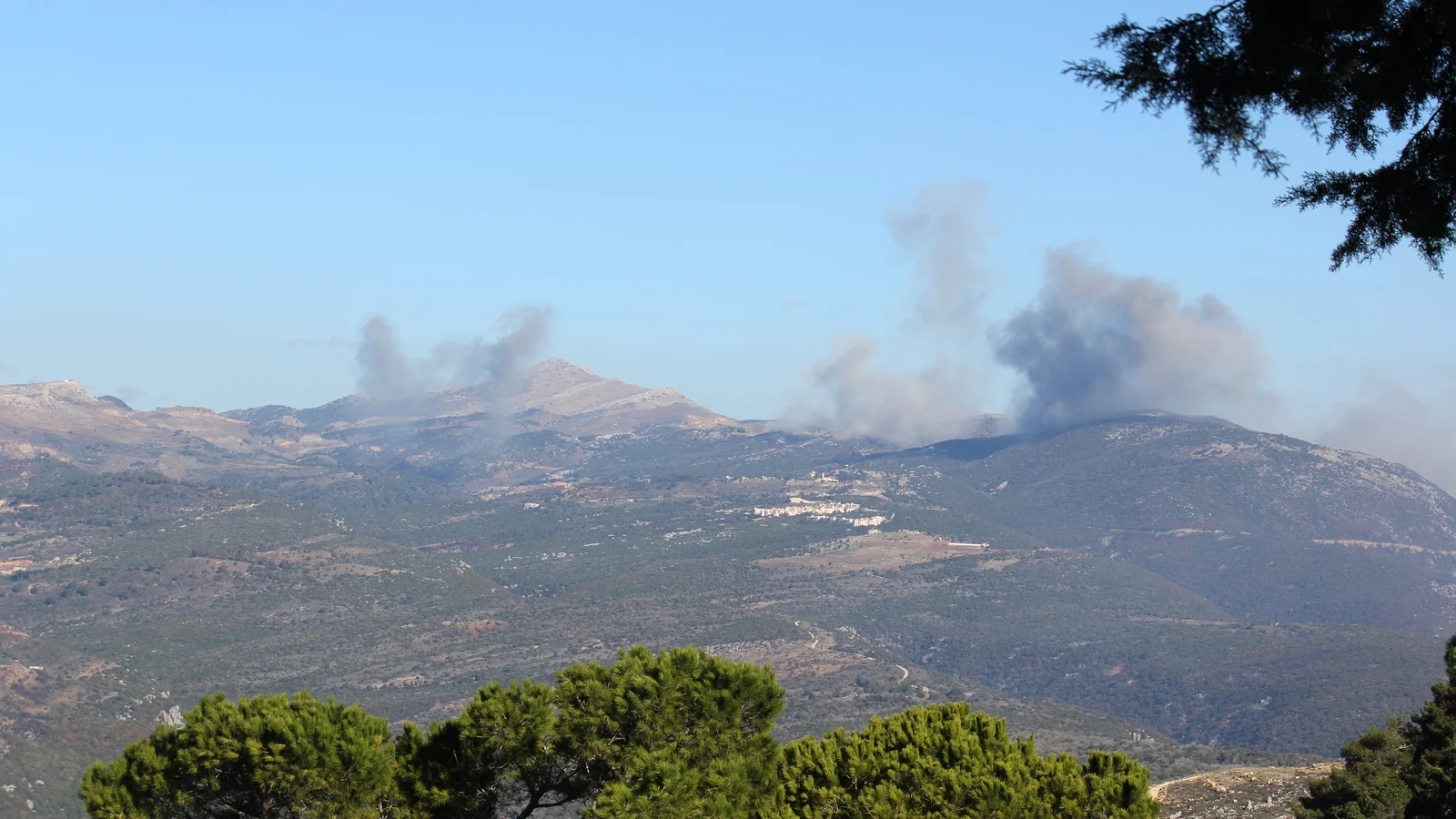
At first light, the hills east of Tyre were amber with dawn. By mid-morning, the calm had fractured. The crack of explosions stitched the horizon and a plume of smoke rose where farmers had hours before been tending their terraces. Lebanese state television and local reporters described multiple strikes in southern and eastern Lebanon; the Israeli military said it had struck “terror infrastructure sites” and a training compound used by Hezbollah. Four people were reported wounded in one of the strikes near Taybeh; others were injured when a state electricity truck passed by the targeted vehicle.
If this scene feels tragically familiar, it is because it is: a ceasefire that started in November 2024 was supposed to be a promise of pause. Instead, it has become a brittle internet of quiet and sudden violence—moments of almost-normal life interrupted by the thunder of missiles. Around 340 people have been killed by Israeli attacks on Lebanon since that ceasefire took effect, according to an AFP tally of Lebanese health ministry reports. The numbers are both a statistic and a stack of names, each one a small implosion of a family’s world.
On the ground: stories of fear, resilience and practical heartbreak
“It sounded like an earthquake,” said Rami Khalil, a shopkeeper in the town of Bint Jbeil. “We ran into the street. People were on the phone trying to find out if their children were safe. The generator at the bakery stopped because the power lines were hit. We baked what bread we had and distributed it.” His voice was steady but worn; he has learned to measure his days by what can be salvaged.
Local utility workers — often overlooked in news bulletins — took a particular toll in this round of strikes. An employee for Lebanon’s state electricity company, who asked to be identified as Hassan to avoid reprisals, described a convoys’ routine: “We move between towns, trying to keep hospitals and schools running. Our trucks are marked. We are not combatants. The last thing we expect is to be struck while we are in the middle of doing the job. When the truck was hit, there was fear, and then the miserable task of counting how many can still work tomorrow.”
Lebanon is a country built of layers: religious communities living side by side, generations on contested soil, a coastline of fishermen whose nets feed neighborhoods through fiscal collapses and sieges. The strain of sporadic attacks collapses those layers into a few immediate questions—where will I sleep tonight? Will there be bread in the morning? Can my child go to school tomorrow? For many Lebanese families the answers have become chronically precarious.
The geopolitics beneath the smoke
Israel says it is targeting the military infrastructure of Hezbollah — the Iran-backed group that still holds substantial arms and influence in Lebanon. The Israeli military described strikes on what it called a “military compound used by Hezbollah to conduct training and courses” and reported striking a Hezbollah operative near Taybeh. Israel accuses Hezbollah of rearming and argues that Lebanon’s armed forces lack the capacity to do what the Lebanese government has pledged to do: disarm Hezbollah’s presence south of the Litani River under a plan approved by the Lebanese government.
That plan, delicate and politically fraught, aims first to remove armed non-state actors from the south by the end of this year and then to implement wider disarmament steps across the country. To many Lebanese — especially those in the south — this is not simply about weapons but about identity, patronage, protection and the memory of past wars. “For some people, Hezbollah is their protector against an aggressor. For others, its guns are the reason their village is hit,” noted Lina Mansour, a Beirut-based security analyst. “You cannot parse the military calculus from the social one. Any solution has to be political as well as security-driven.”
International players are actively involved. A committee that monitors the ceasefire — comprised of the United States, France, the United Nations, Lebanon and Israel — is scheduled to meet this week. A separate high-level meeting in Paris convened the Lebanese army chief alongside American and Saudi officials. France and the United States have been pressing Beirut to accelerate the disarmament plan; Lebanon’s Parliament Speaker, Nabih Berri, called the recent Israeli strikes “an Israeli message to the Paris conference dedicated to supporting the Lebanese army.”
What’s at stake beyond Lebanon’s borders?
There is more than a local argument on the line. The intermittent strikes and the river of rhetoric touch on wider regional dynamics: Iran’s influence in the Levant, Israel’s security calculus, and the role of Western powers balancing diplomatic and military pressures. Each flare-up risks entangling other actors, stretching already thin international patience, and resuscitating fears of a wider confrontation that would be devastating for civilians across the eastern Mediterranean.
“Every strike is a reminder that escalation is a single miscalculation away,” said Thomas Reid, a retired NATO planner now consulting on Middle East stability. “The question is how to create incentives for restraint when both parties feel existentially threatened. That’s why the Paris talks matter. But so does what happens on the ground tonight.”
Humanitarian cracks: infrastructure, hospitals and a fragile economy
Lebanon’s public services have been precarious long before these strikes: years of economic collapse, fiscal mismanagement, and chronic power shortages have hollowed out the public sphere. Hospitals run on generators; food imports are subject to currency volatility; the state no longer reliably pays salaries. Add intermittent military strikes, and the practical consequences become acute. Repair crews delay fixes because of safety concerns. Schools shutter sporadically. The cost of living rises when roads are unsafe and commerce halts.
International aid groups warn of the compounding effects. “Even short, localized violence increases displacement, interrupts medical care, and raises food insecurity,” said Miriam Weiss, a humanitarian coordinator who has worked in Lebanon for a decade. “When people cannot work or access services, the humanitarian needs multiply and the social fabric frays.”
- 340 — the number of people killed by Israeli strikes since the November 2024 ceasefire, per AFP tally.
- End of year — the Lebanese government-approved target to disarm Hezbollah south of the Litani.
- International stakeholders — including the U.S., France, and the U.N. — involved in ceasefire monitoring and diplomatic talks.
Walking forward: fragile talks and the possibility of a different future
There is no single answer here. The coming days will be shaped as much by diplomacy as by strikes. The Paris meeting, the ceasefire committee, and needle-threading conversations in Beirut and Tel Aviv will determine whether these incidents remain localized or push the region toward a larger crisis. For ordinary people on the ground, however, the calculus is simpler: safety, bread, electricity, school — the basics.
“We are tired of being a buffer in other people’s wars,” a teacher in the south, Fatima Gebran, told me, her hands wrapped around a teacup. “We want to teach our children and watch them grow. We don’t want to be a chessboard.”
So how do nations balance legitimate security concerns with the human cost? How can international actors encourage disarmament without destabilizing a delicate political balance? And for readers far from the Levant, what does this pattern tell us about the limits of ceasefires in modern guerrilla-state conflicts?
These are not mere abstract questions. They are proximate to the lives of parents who tuck their children into makeshift beds, of electricians who risk their lives to keep hospitals running, and of diplomats trying to stitch a fragile truce into something more resilient. The world watches. The people in southern Lebanon live it.
When the smoke clears, the negotiations will continue, and the wounds — visible and invisible — will remain. The real challenge is not only halting an immediate escalation, but shaping a path where politics and security converge to protect civilians and restore a semblance of normal life. Until then, mornings will be measured in the sounds of airplanes, and in the quiet courage of those who remain.