Bombs at Dawn: A Region Unmoored — Eid, Holy Sites and the New Geography of War
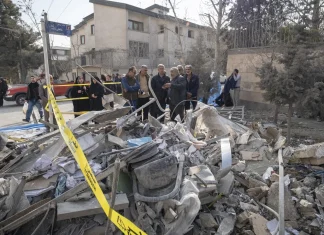
The morning air should have smelled of cardamom and roasted lamb. Instead it reeked of dust and the metallic tang of something that once was a roof, a shopfront, a street.
Across cities that cradle millennia — Jerusalem’s Old City, Beirut’s southern suburbs, towns along Lebanon’s border — smoke and sirens replaced the rituals of Eid al-Fitr. Families who had risen for morning prayer found themselves counting shell craters and checking phones for updates rather than calling relatives. A holiday became, overnight, a roll call of losses and narrow escapes.
What happened — the ledger of a spiralling week
The past three weeks have rewritten the map of a conflict that began, officials say, with a US‑Israeli strike on 28 February and quickly ballooned into a near-regionwide war. In retaliation for Iranian missile salvos aimed at Israel, the Israeli military launched strikes it said targeted regime positions inside Tehran and hit sites in Beirut.
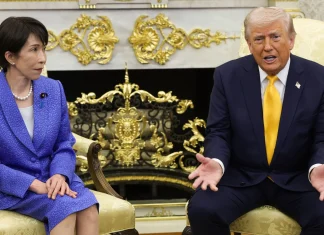
“We are getting very close to meeting our objectives as we consider winding down our great Military efforts in the Middle East,” President Donald Trump wrote on social media, signaling an apparent shift in Washington’s goals after weeks of high-intensity strikes. White House Press Secretary Karoline Leavitt told reporters that the administration had predicted it would take “approximately four to six weeks to achieve this mission.”
And yet the battlefield kept growing. Iran retaliated with drones and missiles not only at Israel but at Gulf states it accused of facilitating US operations. Kuwait reported a missile and drone attack; Saudi Arabia said it intercepted more than two dozen drones. In northern Iraq, a strike at an airfield killed a fighter, and Lebanon — already teetering — reported heavy bombardment around towns like Khiam and waves of strikes across Beirut’s southern suburbs.
Human cost and displacement
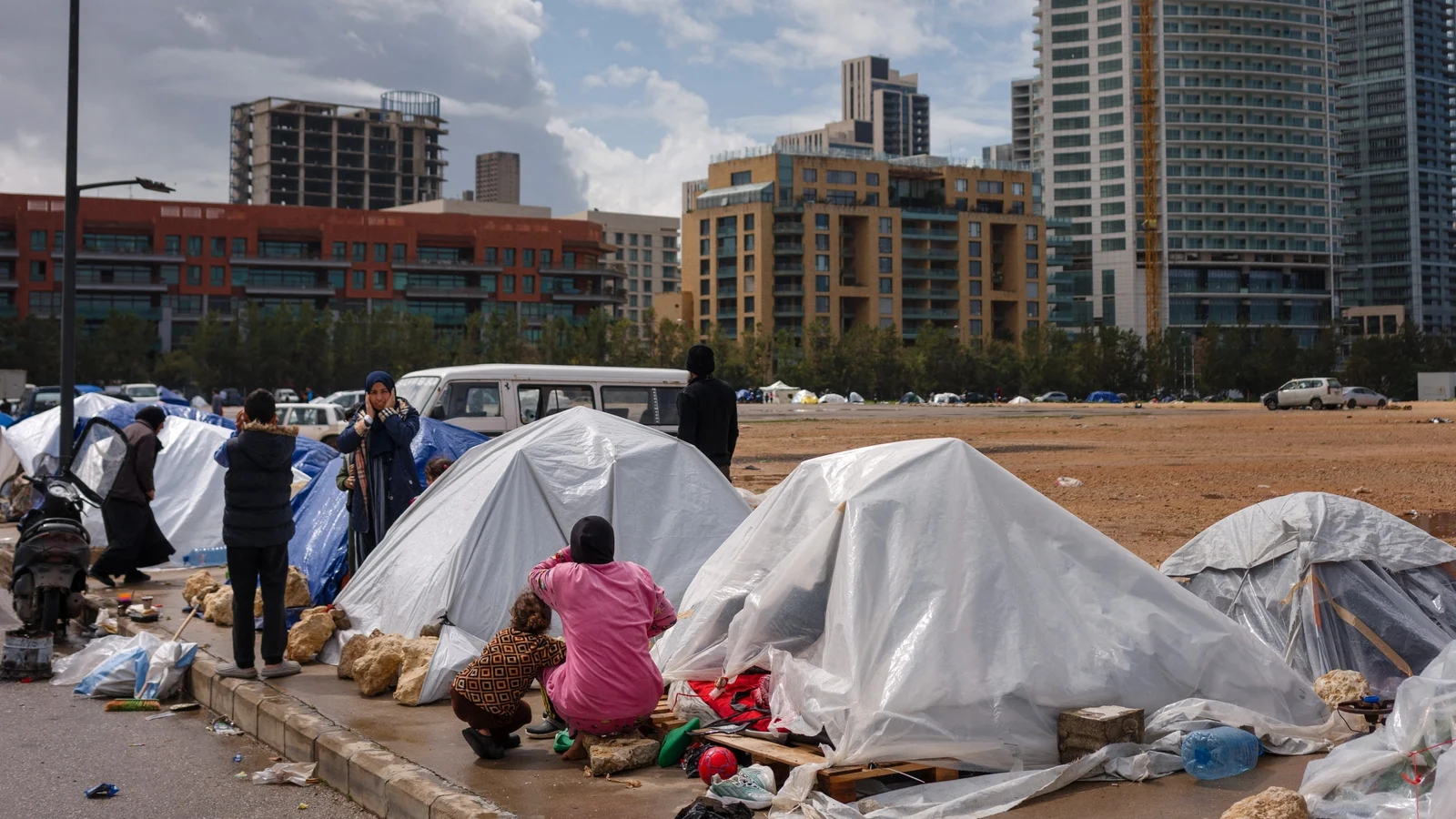
Numbers, when they arrive, are blunt instruments: Lebanon’s health ministry says more than 1,000 people have been killed and over a million displaced. Israel’s army reports two soldiers killed in southern Lebanon. Homes and livelihoods have been torn asunder; whole neighborhoods are emptying under evacuation orders.
“We packed what we could carry in an hour,” said Sami, a shopkeeper in Beirut’s southern suburbs, speaking via a jittery phone connection. “My daughter left her toy under the bed. I went back for it and the whole street was gone.”
Religion, reverence and ruptured rituals
One of the most jarring images has been the battlelines running through some of the world’s most sacred ground. Israel shut access to the Al‑Aqsa compound in Jerusalem’s Old City and restricted movement around other holy sites, citing wartime security; Muslim worshippers called the closures an affront on the day they were meant to celebrate the end of Ramadan.
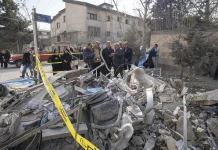
A crater was left in the Old City near Al‑Aqsa, the Western Wall and the Church of the Holy Sepulchre. Israeli authorities accused Iran of attacks that struck near these religious landmarks. For many, the violence felt like an assault on memory itself.
“You don’t just hit a building,” said Fatima, an elderly woman who has lived near the Old City for decades. “You hit what my grandchildren know as part of their story. How will we tell them the peace that was here?”
Oil, sanctions and the arithmetic of supply
As missiles flew, markets reacted. The United States Treasury temporarily lifted sanctions on Iranian oil already loaded onto vessels — crude shipped before 20 March — authorising its delivery and sale until 19 April. Treasury Secretary Scott Bessent said the move would quickly add approximately 140 million barrels of oil to global markets, a pragmatic measure intended to blunt price shocks as attacks threatened energy infrastructure across the Gulf.
The result was immediate: Brent crude climbed roughly three percent, pushing prices toward $112 a barrel as traders weighed the risk to supply from a strait that, in calmer times, carries about 20 percent of the world’s seaborne oil and liquefied natural gas.
“This region’s oil flows are both global artery and geopolitical fuse,” said Dr. Lina Haddad, an energy analyst based in Dubai. “When you threaten shipping lanes or oil terminals, prices spike not only because of physical risks but because of the fear of further escalation.”
The Strait of Hormuz and the calculus of control
President Trump warned that the Strait of Hormuz — a narrow channel through which much of the world’s crude transits — would have to be “guarded and policed” by the nations who use it if the United States chose to step back. Iran, meanwhile, announced restrictions on vessels from countries it blamed for attacks, while offering assistance to others.
Given that roughly one fifth of seaborne oil and LNG transits the Strait during normal periods, the implications for global supply and prices are not theoretical. Smaller strategic moves — a surveillance perimeter, a naval escort, sanctions lifted for weeks — ripple into the grocery aisle and the back of the family budget.
Military manoeuvres and the fog of future plans
Despite President Trump’s talk of winding down operations, there are contradictory signs on the ground. US media reported the deployment of thousands of marines to the Middle East, prompting speculation about a possible ground campaign. The president also said US strikes had “totally obliterated” military targets on Kharg island, a critical Iranian oil hub, though he denied strikes had targeted oil infrastructure.
“I may have a plan or I may not,” he told reporters when asked about possible occupation or blockades. Uncertainty is, in itself, a weapon: it shapes the decisions of allies, adversaries and oil traders.
Why this matters beyond the headlines
We live now with an unnerving adjacency: holy places shelled, cities emptied, seas where tankers drift with precious cargos paused between ports and peril. And we live with the arithmetic of displacement — a million people uprooted — and of energy dependence that turns regional skirmishes into global reverberations.
So ask yourself: how should the world respond when conflicts slice through sacred ground and global supply lines? When does intervention protect the vulnerable, and when does it prolong the violence? The answers are rarely tidy.
Voices from the ground and a closing note
“We came to Beirut for Eid,” said Noor, a schoolteacher, voice breaking. “Instead we left with the children’s shoes in plastic bags. They asked when we can go home. I don’t know what to tell them.”
Across the region, people balance the quotidian and the catastrophic: checking the bread in the oven, scouring for fuel, praying for the missing, and scrolling for news. Officials trade messages about objectives and timelines; families trade photographs of empty rooms and ruined courtyards. The scene is both intimate and geopolitically consequential.
This is not just a story of missiles and market moves. It is a story about how fragile order can suddenly become fragile flesh — about the ways decisions made in rooms with maps and models spill into alleys and kitchens and the faces of children who will inherit the history we shape today.
Where do we go from here? That depends on choices made by leaders, the resilience of communities, and the willingness of the international community to protect not only strategic lines on a map, but the lives stitched between them.