Midnight Ceasefire, Morning Uncertainty: Beirut Breathes — For Now
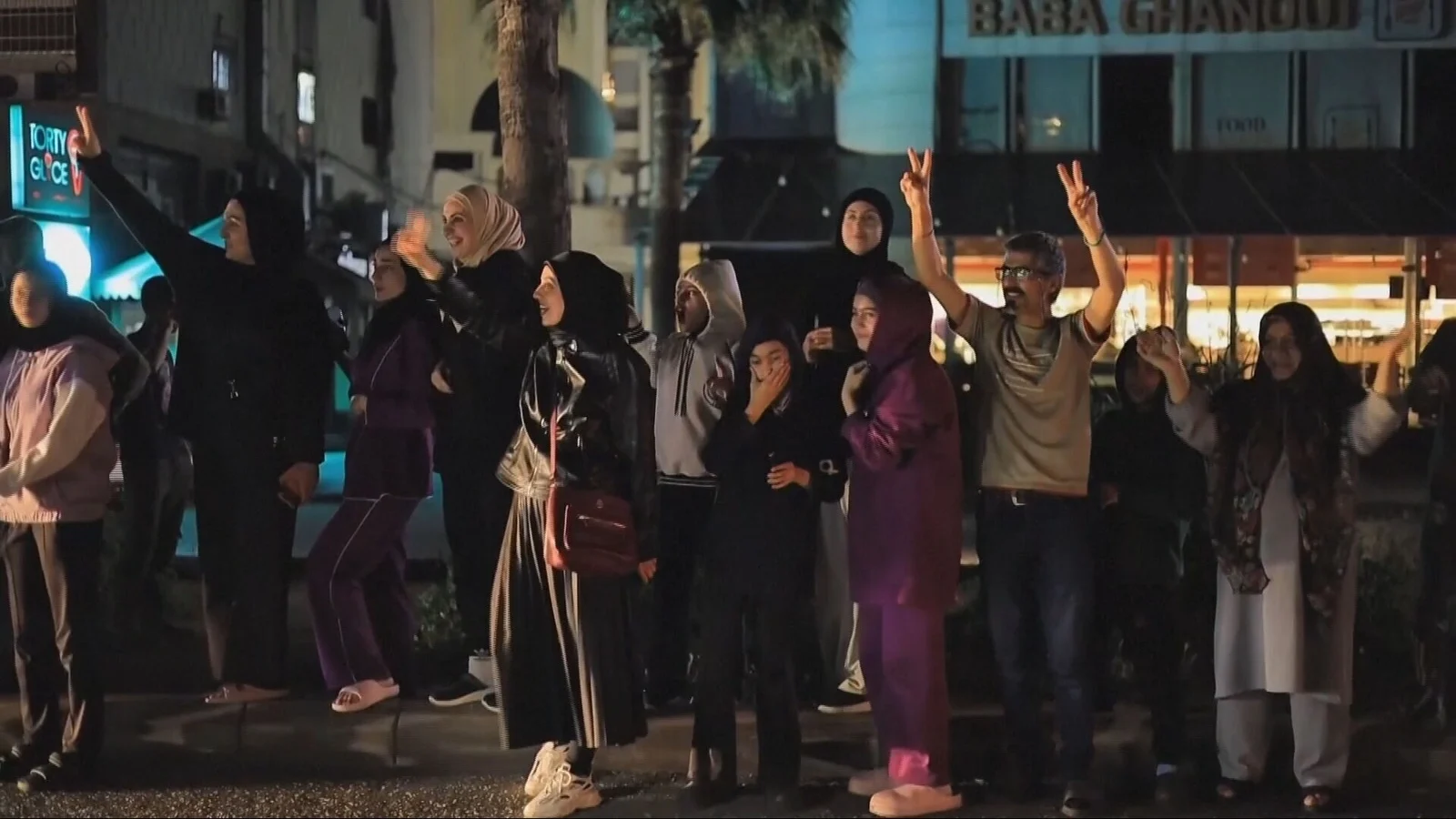
When the clock slid to midnight in Beirut, a city that remembers the sounds of war better than most, the sky answered in an old, combustible language: gunfire and rockets fired not in malice but in relief.
“We heard the shots and cheered. We are exhausted of running to basements,” said Layla, a 34-year-old shopkeeper in the Tariq al-Jadida neighborhood, standing outside her shuttered bakery as neighbors drifted in the cool air. “For one night, people feel like they can breathe.”
The ten-day ceasefire between Lebanon and Israel came into effect at 00:00 local time, a fragile pause brokered amid wider, complex diplomacy that Washington says could open the door to a broader accord with Iran. The agreement — hailed by some as a possible turning point and by others as a temporary reprieve — offered a rare moment of public jubilation punctuated by worry.
Scenes from the City: Celebration and Caution
From Beirut’s corniche to quiet southern villages, people marked the ceasefire in different registers. In the capital, celebration took the form of jubilant gunfire and the thudding rhythm of celebratory rockets; in the south, residents listened for the unnatural silence between strikes, wary of any sound.
“My children slept for the first time without waking up terrified,” said Nabil, a father of three from Tyre, voice tight. “But at 3 a.m., we heard mortar — or maybe it was a car backfiring. We would rather be wrong.”
The Lebanese Army reported that Israeli forces had committed intermittent violations after midnight, including shelling in several southern villages. The Israeli military, which prior to the ceasefire said its forces would remain deployed, had no immediate public comment on those specific allegations. Meanwhile, Hezbollah released a detailed statement saying its last attack had taken place at 11:50 p.m. — ten minutes before the ceasefire was supposed to take effect.
Such jittery exchanges are reminders that armistices on paper do not always translate to peace on the ground.
Washington’s Optimism — Realistic or Rosy?
In Washington, President Donald Trump presented the pause in Lebanon as more than a local truce: he framed it as a stepping stone toward a potential agreement with Iran that could end a regional war that began, according to official timelines, on 28 February. “We’re very close to making a deal with Iran,” he told reporters outside the White House, later telling a campaign rally in Las Vegas, “the war should be ending pretty soon.”
Trump said Tehran had signaled willingness to forego nuclear weapons for more than 20 years — a prospective concession that, if accurate, would mark a significant softening from previous red lines. He added that an accord could reopen the strategic Strait of Hormuz and bring oil prices down, easing inflationary pressures around the globe.
“If that happens, oil goes way down, prices go way down, inflation goes way down,” he said, tying diplomacy directly to economic relief.
U.S. national security aides were dispatched to coordinate with regional partners, the White House said: Vice President JD Vance, Secretary of State Marco Rubio and Chairman of the Joint Chiefs Dan Caine were named as points of contact to press for a lasting settlement between Israel and Lebanon — a lineup the administration described as evidence of seriousness.
Pakistan’s Quiet Mediation
At the center of the diplomatic choreography was Pakistan, with Army chief Asim Munir playing a discreet but pivotal role as mediator. Officials close to the talks said Munir had visited Tehran and returned with what they described as a “draft” that might bridge some of the most intractable differences — notably the fate of Iran’s enriched uranium stockpile.
Two sources familiar with the discussions said Tehran was considering shipping part, though not all, of its highly enriched uranium (HEU) abroad — a potential compromise after previously rejecting any such move. Yet Tehran has insisted on guarantees: it would reopen the Strait of Hormuz only if there were firm commitments, including UN-backed assurances, that the U.S. and Israel would not resume attacks.
What’s at Stake: Oil, Nukes, and Global Risk
The stakes could not be higher. The Strait of Hormuz is a narrow choke point through which roughly one-fifth of the world’s seaborne oil passes. When the waterway closes — even briefly — global oil markets react sharply. The International Monetary Fund warned that prolonged conflict had already pushed up energy prices and forced a downgrade to its global growth outlook; in the worst-case scenarios, sustained instability could nudge economies toward recession.
On the nuclear question, U.S. negotiators reportedly proposed a 20-year suspension of sensitive Iranian nuclear activities — a concession from demands for a permanent ban. Iran countered with a three-to-five-year freeze, according to people briefed on the talks. These timelines may sound abstract, but they are central: how long Iran is kept from weaponizable material, and what verification and enforcement mechanisms are attached, will determine whether the world is looking at a durable settlement or another fragile lull.
- Strait of Hormuz: Carries roughly 20% of seaborne oil.
- Casualties: The regional conflict has killed thousands, leaving towns and families scarred.
- Ceasefire length: Ten days — with discussions underway about extensions tied to further diplomacy.
Voices on the Ground and in the Halls of Power
“The ceasefire is necessary, but it is also a test,” said Dr. Rana Haddad, a Beirut-based political analyst. “You can stop bullets for ten days. You can’t stop the underlying grievances in ten days.”
Residents and aid workers worry about the humanitarian toll. “We have hospitals stretched beyond capacity,” said Amal, a nurse at a public hospital in southern Lebanon. “Even with the ceasefire, people need food, electricity, water. Ceasefires must be followed by aid lanes, not just press statements.”
In Tehran, officials reportedly told mediators they wanted sanctions lifted and significant guarantees. “You cannot discuss nuclear material in a vacuum,” a senior Iranian official told a visiting mediator, according to diplomatic sources. “We need relief. We need security assurances.”
Back in Washington, Defense Secretary Pete Hegseth warned that U.S. forces were prepared to resume combat operations if negotiations collapsed. That bluntness underscores the thin line negotiators walk between diplomacy and renewed escalation.
Unanswered Questions and the Long View
Will ten days be enough to translate fragile trust into durable instruments for peace? Can technical compromises on HEU and verification be paired with political guarantees strong enough to convince Tehran to halt hostile proxies, and to persuade Israel and Lebanon to de-escalate fully? And if an agreement is signed, will the economic relief — lower oil and less inflation — arrive fast enough to calm markets and voters?
These are not small questions. They are, in many ways, the test of our global institutions and the political will of regional actors.
For now, families in Beirut and villages along the border count the hours with guarded hope. “We will sleep tonight,” Layla said, wrapping a scarf tighter. “Tomorrow, we will see.” The rest of the world watches, because whatever happens in this corner of the Levant today ripples into boardrooms, marketplaces, and living rooms from Manila to Manhattan.
Final Thought
Ceasefires can be the beginning of healing — or the pause before a new round. Which will this be? It depends not just on diplomats and generals, but on whether promises are turned into action: inspections, sanctions relief tied to verifiable steps, humanitarian access, and crucially, a political will to build security beyond a string of temporary pauses.
Are we prepared to invest in that longer, harder work? Or will we applaud the silence of a single night and return to the habits that brought us here?