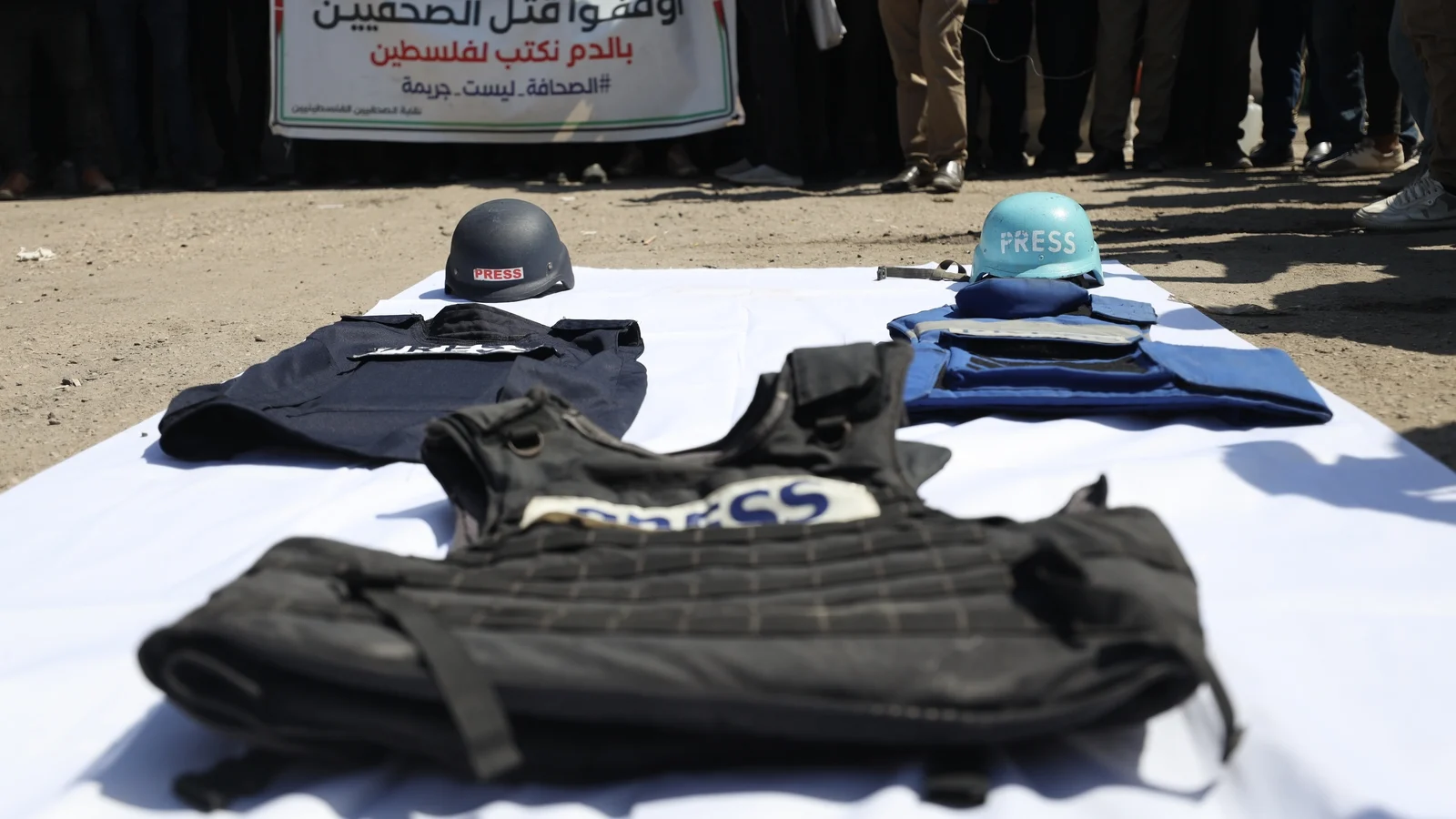
A Year the World Lost Its Witnesses: 129 Journalists Killed in 2025
On a sunlit morning in Gaza, a battered camera bag sits where a man once stood. A photo—edges curled, face frozen in work-worn concentration—tells the rest. That photograph, one of too many, is a quiet accusation: someone was listening, someone bore witness, and someone paid with their life.
According to the Committee to Protect Journalists (CPJ), 2025 closed as the deadliest year on record for members of the press: 129 journalists and media workers killed worldwide. It is a staggering figure, not only because it marks the second straight year of record-high fatalities, but because the loss came at a historical moment when independent information has never mattered more.
Numbers that insist we take notice
“Journalists are being killed in record numbers at a time when access to information is more important than ever,” CPJ CEO Jodie Ginsberg said in response to the report, adding, “We are all at risk when journalists are killed for reporting the news.”
Those words summarize a single, urgent truth: attacks on reporters are attacks on the public’s right to know. CPJ’s tally places two-thirds of the deaths in 2025 in one geography—attributed to Israeli fire—with 86 media workers recorded as killed by such fire. More than 60% of those were Palestinians reporting from Gaza, according to the organization.
- Total journalists and media workers killed in 2025: 129 (CPJ)
- Killed by Israeli fire: 86 (CPJ)
- Documented drone-related cases: 39 worldwide, including 28 attributed to Israeli strikes in Gaza (CPJ)
And the technology of death is changing. Drones, once an emblem of distant precision, are increasingly the weapon behind these deaths. CPJ documented 39 drone-related cases last year—28 in Gaza attributed to Israeli strikes, five killings by Sudan’s Rapid Support Forces, and four Ukrainian journalists killed by Russian military drones.
Voices from the ground
“We used to think the danger came from checkpoints or gunfire,” said Lina Mahmoud, a Palestinian photojournalist who managed to evacuate her family last fall. “Now you can be on your rooftop, at a makeshift hospital, or in an ambulance. The sky itself has become a threat.”
In Kyiv, an editor who wished to remain anonymous described a new, chilling normal. “We lost three colleagues to drone strikes this year,” she said quietly. “You never feel safe reporting the front lines. The lines move, and so do the weapons.”
In Mexico City, the mother of a slain investigative reporter wrapped her son’s notebooks in plastic and said, “He chased corrupt people who thought themselves untouchable. They made sure he was.” Mexico recorded six journalist killings in 2025, all unsolved—a grim echo of a long-running crisis of impunity in regions where organized crime, corruption, and local power blocs intertwine.
Not just warzones: threats from organized crime and states
Beyond battlefields, reporters continued to face mortal peril from criminals and, in some cases, from the state. In the Philippines, three journalists were shot dead. In Bangladesh, CPJ documented the brutal killing of a reporter—attacked with a machete by suspects allegedly linked to a fraud ring. Similar organized-crime-related murders were recorded in India and Peru.
Then there were cases that chillingly resembled state retribution. Saudi columnist Turki al-Jasser was executed after a conviction on charges CPJ described as “spurious national security and financial crime allegations.” It was Riyadh’s first documented killing of a journalist since the 2018 murder of Jamal Khashoggi—an event that transformed global understanding of the risks facing exiled and domestic critics alike.
Impunity: the fertile ground for more killings
One of CPJ’s most damning findings is not only the number of deaths but the lack of transparent, accountable investigations that follow them. “When killers are never held to account, the message is clear: you can silence reporters without consequence,” said Dr. Mariana Cortez, a human-rights scholar who studies crimes against the press.
Across continents—from Gaza and Kyiv to Mexico’s provinces—families await answers. Local journalists tell stories of police files that go cold, of evidence that vanishes, of prosecutors who demur or politicians who deflect. “We bury someone and the world moves on,” a veteran Iraqi correspondent said. “But we are the ones left to tell our children what their parent did—and why they died.”
The broader currents: what these deaths say about our age
What does a spike in journalist killings signal about the world? First, it reveals the weaponization of information and the lengths to which actors—state and non-state—will go to control narratives. Second, it marks a technological shift: drones and remote munitions make it easier to strike observers while eroding the distinctions between combatants and those whose only weapon is a camera or a notebook.
Third, these deaths feed a larger erosion of civic space and truth. When local reporters are silenced, communities lose their ability to hold power to account, whether that power is governmental, corporate, or criminal. When a newsroom dissolves under threats, the public’s ability to make informed choices falters.
What can be done—and what we, as readers and citizens, must demand
There are concrete steps governments and institutions can take: independent investigations into journalist killings, stronger international pressure to enforce accountability, better protective resources for reporters in conflict zones, and stricter controls and transparency around drone strikes. Media organizations, too, must invest in safety training and support for journalists and their families.
But there is also a responsibility that rests with us—the global audience. How much do we value the work of those who risk everything to report? How loudly will citizens and civil-society groups demand justice, even when answers are inconvenient?
“If the world chooses silence,” Dr. Cortez warned, “then the cost of speaking will only rise.”
Remembering those who spoke for the rest of us
Photos like the one of Al Jazeera’s Anas al-Sharif—eyes open in a moment of concentration, a camera strap around his neck—are more than mementos. They are reminders of a fragile bargain: in exchange for information, journalists put themselves between danger and the public. When that bargain breaks, everyone loses.
So I ask you, reader: when the story is someone else’s danger, will you look away, or will you insist on answers? Will you join the chorus calling for protection, for accountability, for a world where being a journalist does not carry an almost certain risk of death?
Because in the end, protecting journalists is not charity. It is preservation—of truth, of civic life, and of the right to know. The numbers in CPJ’s report are cold. The lives they represent are not. We must, urgently, remember both.