
Commercial supplies have stopped flowing into Gaza from Israel after a dispute that Israeli officials say centers on taxes and payment demands involving Hamas, cutting off a crucial stream of food and everyday goods for a population already heavily reliant on aid.
COGAT, the Israeli military body responsible for coordinating humanitarian matters in Gaza, said in a statement that commercial shipments were halted because Gazan merchants decided to stop coordinating with COGAT on bringing in private-sector goods.
According to COGAT, merchants told the agency they took the step in response to a 10,000 shekel (€2,964) fee that Hamas imposed on each truck entering Gaza, along with a requirement that 30% of all their sales in Gaza be conducted in cash.
Hamas later rejected that characterization, saying the 10,000-shekel charge was a voluntary contribution by wealthy Gazans to a national fund intended to support people in need, including widows and orphans.
It also said it was urging cash payments because Gaza is suffering what it described as an acute cash shortage amid the devastation of war.
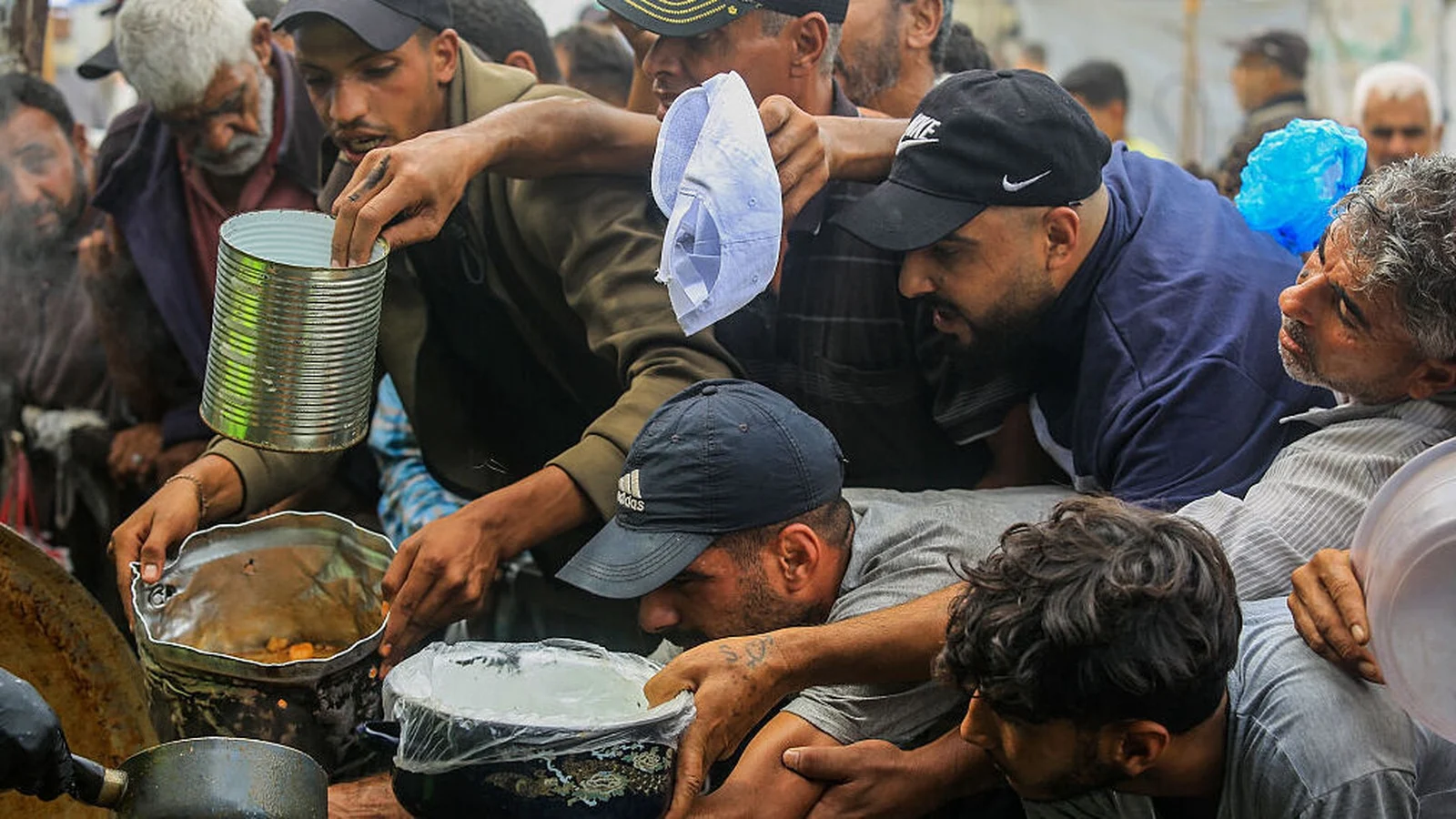
Most of Gaza’s residents depend on aid after three years of war, repeated displacement and stringent Israeli restrictions on the delivery of assistance.
Displaced Palestinians, including children, gather at a distribution point to receive warm meals
The pressure on food supplies has been underscored by a global hunger monitor, which warned in July that more than two-thirds of Gazans could face acute hunger by the end of the year. About two million people live in the territory, with most sheltering in makeshift accommodation.
Nahed Shhaibar, head of Gaza’s private transport union, said not a single truck carrying commercial products from Israel entered Gaza today.
He said, however, that humanitarian aid trucks did cross into Gaza, and that commercial goods also arrived from Egypt through an Israeli-controlled crossing.
COGAT said the merchants’ decision would reduce the combined daily flow of trucks carrying humanitarian and commercial cargo into Gaza to roughly 300 — about half.
Diplomats have said the normal daily level is far below 600 trucks. Shhaibar put the figure nearer 300, adding that two-thirds of those trucks typically carry commercial goods.
Under a US-mediated agreement, Israel is required to allow at least 600 trucks carrying humanitarian aid into Gaza each day.
Israeli officials say their obligation is to permit 600 aid trucks, and they argue that commercial shipments are necessary to complement humanitarian supplies.
Israeli forces have launched more than 1,000 attacks on Gaza over the past 12 months, killing more than 1,400 Palestinians — including at least 300 children.
Read more: Life in Gaza remains ‘absolutely horrendous’, UN official says