Flags at Dawn: When a City’s Streets Woke to the Sound of a Raid
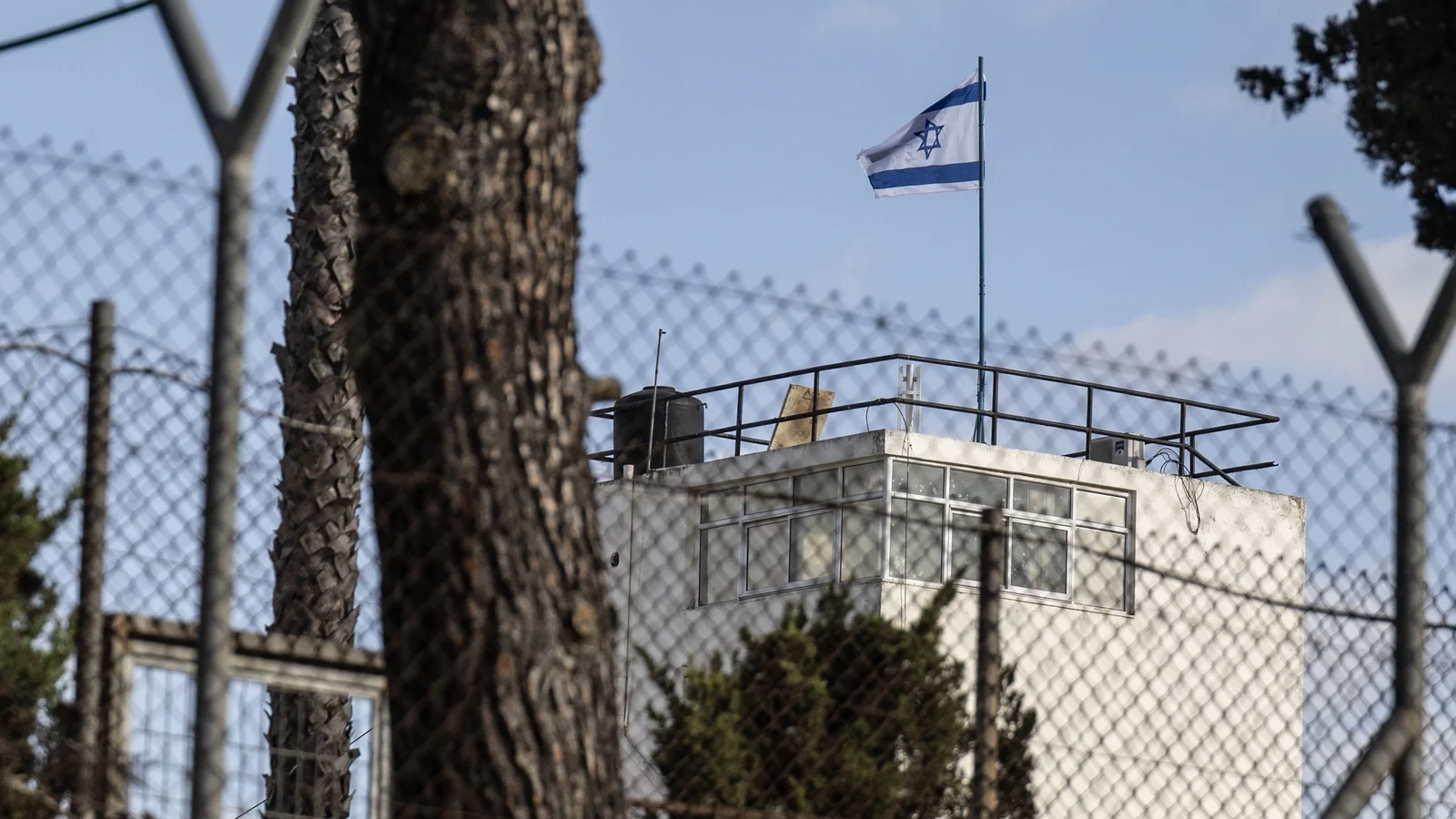
It was the kind of early winter morning in East Jerusalem that feels suspended between two timeframes: the present, with its tangle of checkpoints and municipal notices, and the long, aching history that clings to every stone and shopfront. Before the sun rose over the Old City, Israeli police, municipal officials and heavy equipment rolled into a compound once run by the United Nations Relief and Works Agency (UNRWA). Within hours, the blue-and-white of the United Nations had been replaced by the Israeli flag.
Witnesses described a scene more reminiscent of a show of force than a tax collection. Motorbikes idled at the gate. Forklifts and flatbeds moved through courtyards. Communications were cut off, and, according to UNRWA’s leadership, furniture, IT equipment and other property were seized.
What exactly happened — and why the uproar?
Israeli municipal authorities say the operation was a routine collection of unpaid property taxes: 11 million shekels, roughly €3 million, they told reporters, owed by the agency after repeated warnings. “This is a substantial debt that required collection after repeated requests, warnings and numerous opportunities given to settle it, which were not answered,” the Jerusalem municipality said in a statement.
The United Nations tells a different story. UNRWA spokesman Jonathan Fowler said the compound remains UN property despite Israel’s ban that ordered the agency to vacate its premises earlier in the year. The UN points to the 1946 Convention on the Privileges and Immunities of the United Nations — a treaty that, they say, obliges Israel to respect the inviolability of UN premises wherever the UN operates. The Secretary-General’s office, echoing that legal line, demanded the immediate restoration of the compound’s inviolability.
Antonio Guterres did not mince words. “This compound remains United Nations premises and is inviolable and immune from any other form of interference,” he said, urging Israel to “refrain from taking any further action with regard to UNRWA premises.”
Voices from the compound, on the street and beyond
Philippe Lazzarini, UNRWA’s Commissioner-General, tweeted a stark image: police motorcycles and trucks at the gates, communications cut, property taken. “This could create a dangerous precedent anywhere else the UN is present across the world,” he wrote, framing the raid not only as a local dispute but as a signal of alarm to the international community.
Inside East Jerusalem, reactions were immediate and personal. “We woke up to sirens and the sound of something being carried out of the gate,” said a shopkeeper in the nearby neighborhood of Sheikh Jarrah. “This compound used to be quiet — children coming for school, people collecting food aid. Now there’s an Israeli flag where the UN flag used to be. It feels like the rug has been pulled from under us.”
An elderly woman sitting outside a bakery nearby shook her head. “They took the things that were left,” she said. “What happens to the people who relied on that help?”
On the Israeli side, officials have been careful with language. The prime minister’s office and the foreign ministry did not respond to requests for further comment, and the municipality’s legalistic framing emphasized debt collection rather than political symbolism. But to many international law observers, the optics cannot be divorced from the wider context: East Jerusalem is territory that most of the world regards as occupied, despite Israel’s 1980 annexation and Israel’s view that the whole city is its capital.
An international law specialist, speaking on condition of anonymity, said the move raises complex questions about sanctity of UN premises and the limits of municipal powers. “There’s a body of law that protects UN assets. Whether those protections are absolute is a matter for courts and diplomats, but crossings of this sort rarely stay legalistic for long — they become political,” the expert said.
Why UNRWA matters — and why tensions have escalated
UNRWA is not a niche bureaucracy. Established in 1949, it provides schooling, healthcare, social services and emergency shelter to generations of Palestinian refugees. The agency officially registers roughly 5.9 million Palestinians as refugees across Gaza, the West Bank, Jordan, Lebanon and Syria — a number that underscores how the Palestinian refugee question is not only historic, but living and expanding.
For many Palestinians, UNRWA is woven into the very fabric of everyday survival. “My children went to UNRWA schools. My sister was vaccinated through UNRWA clinics. When the shelling came in 2014 and again in 2021, tents and food came from them,” a Gaza native who now lives in East Jerusalem recalled. “If you ask people in the camps, UNRWA is more than an organisation — it’s a memory keeper of our losses and a lifeline for our present.”
Israel’s criticisms of UNRWA have hardened since October 7, 2023, when Hamas militants launched an attack that killed about 1,200 people in Israel, according to Israeli tallies. Israeli authorities have alleged that some UNRWA staff were complicit or even participants in that attack. UNRWA has dismissed some staff and said it was not provided with evidence for many of the allegations. Meanwhile, Israel’s parliament passed a law in October 2024 banning the agency from operating in the country and forbidding officials from contact — a move that pushed the relationship to a breaking point.
Those accusations and legal moves have placed UNRWA at the centre of a bitter struggle: is it an impartial humanitarian actor or a politicized entity with a partisan tilt? To Palestinians, curbing UNRWA is tantamount to chipping away at refugee identity and the right of return. To many Israeli officials, it is a security and sovereignty issue; to the international community, it is a test of norms that protect humanitarian actors.
What the raid means for the region and the rules that usually bind it
Beyond this single compound — empty of staff since the start of the year, according to UNRWA — the seizure raises questions about how the rules of international engagement are upheld in daily life. The UN General Assembly had just renewed UNRWA’s mandate for another three years, a global show of confidence that clashed with the Israeli action on the ground. Diplomats in capitals from New York to Brussels now face awkward questions about enforcement mechanisms when a signatory state is accused of violating UN immunities.
For residents, the calculus is simple and immediate: who will teach the children, who will pick up the slack when health clinics cannot operate, and what happens to the shelters in times of fresh escalations? For policymakers, the calculus is geopolitical: the move could ripple into aid flows, further polarize local politics, and embolden other states to test the inviolability of UN premises elsewhere.
Snapshot: key facts
- Claimed unpaid taxes: 11 million shekels (roughly €3m) — Jerusalem municipality’s figure.
- UNRWA mandate renewal: extended by the UN General Assembly for three years.
- Casualties in Gaza since October 7, 2023: more than 70,000, according to Gaza health authorities.
- UNRWA beneficiaries: approximately 5.9 million registered Palestinian refugees across the region.
- Legal backdrop: Israel annexed East Jerusalem in 1980 after capturing it in 1967; most countries consider East Jerusalem occupied.
Looking forward: the questions that will not go away
Will legal channels reverse what happened at the compound, or will the action stand as a new reality? Will other countries accept a precedent if UN immunities can be challenged with municipal tax claims? How will Palestinians who depend on UNRWA services cope if the agency is further sidelined?
As the sun climbed higher, the Israeli flag at the gate of the UN compound seemed less like a municipal notice and more like a question left to the world: when the instruments of humanitarian rule collide with the instruments of state power, which rules will prevail? Look around the neighborhoods of East Jerusalem, and you’ll see lives tethered to that answer — families, students, elders waiting for clinics, teachers wondering if their classrooms will reopen.
What would you do if the agency that taught your children suddenly had to close its doors? Whose duty is it to protect the sanctity of aid in the fog of long conflicts — and who decides when that sanctity can be set aside? The answers will shape not only the fate of a compound on a quiet East Jerusalem morning, but the possibilities for an already fragile peace.