They’re Not Just Numbers: Gaza, the West Bank, and the Quiet Logic of Erasure
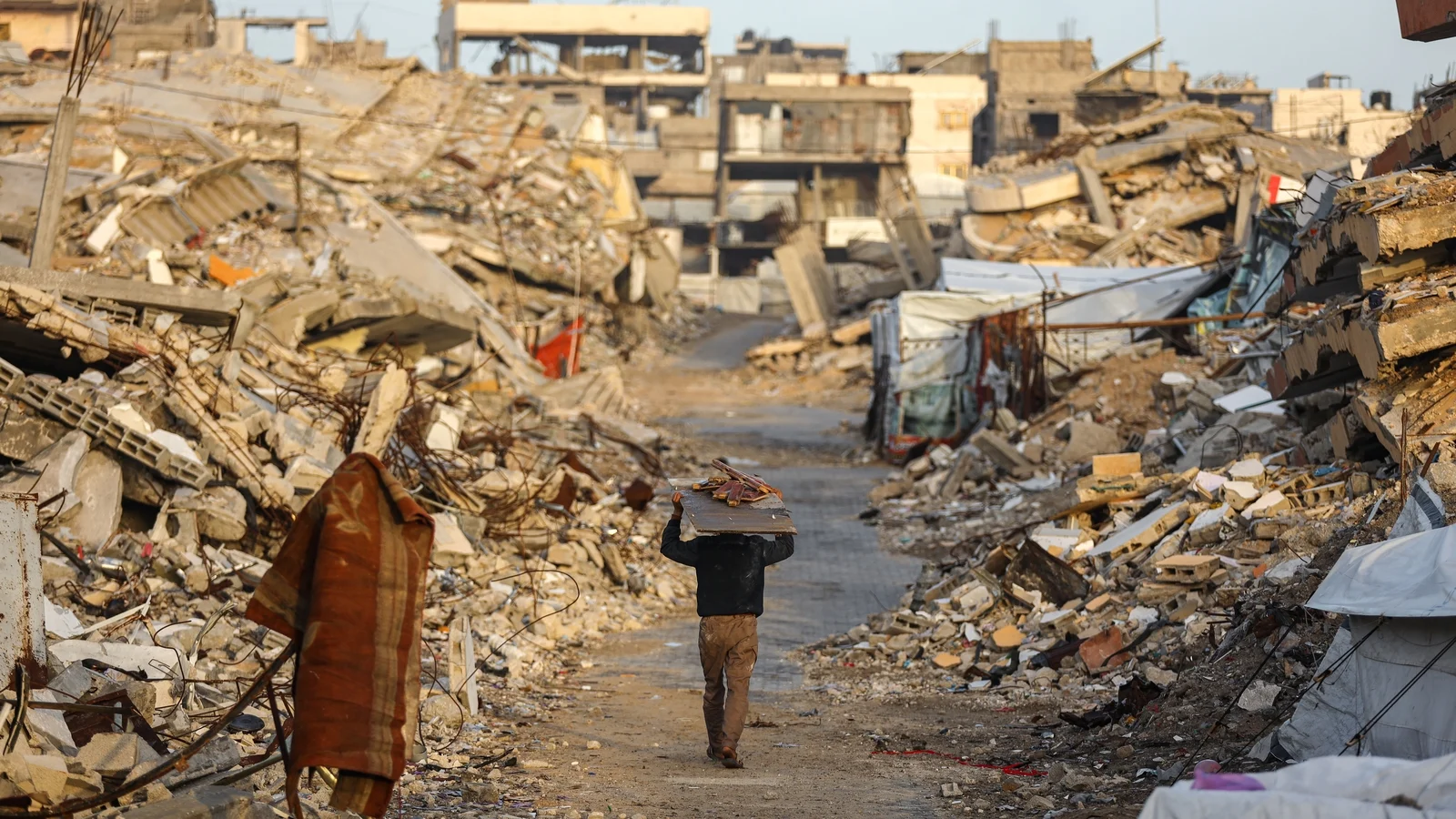
The air in Gaza has memories in it—the tang of cooking fires that no longer burn, the metallic aftertaste of dust that settles into everything, the hollow echo of a child’s laugh you don’t quite hear anymore. Walk down any street in Gaza City and you will find a story of survival scrawled across concrete: an upright doorframe standing alone between slabs of rubble, a burned refrigerator on a sidewalk, a faded school backpack draped over a collapsed wall.
These are the human traces that recent international findings say are not just incidental by-products of war. They point to a pattern—an accelerating reconfiguration of space and lives that the United Nations human rights office has warned could amount to ethnic cleansing across Gaza and the occupied West Bank.
What the UN Found
Between 1 November 2024 and 31 October 2025, the UN rights office documented a catalogue of actions that, taken together, have profound consequences for the Palestinian population. The report does not speak in metaphors: it says intensified attacks, systematic destruction of neighborhoods and restrictions on aid have produced living conditions “increasingly incompatible with Palestinians’ continued existence as a group in Gaza.” It calls forcible transfers and demographic engineering “deeply concerning.”
“Impunity is not abstract — it kills,” Volker Türk, the UN rights chief, said when the report was released. “Accountability is indispensable. It is the prerequisite for a just and durable peace in Palestine and Israel.”
On the Ground: The Human Cost
The numbers the UN highlights are stark and intimate at once. During the year under review, at least 463 Palestinians—157 of them children—died of starvation in Gaza, the report says. For many families, the choice was excruciatingly binary: stay and slowly starve, or brave the killing zones in search of food.
An aid worker who requested anonymity told me: “I have seen parents hand over the last scrap of bread to their children and then hide in a corner, refusing to eat. They do it so their kids might survive another day.”
- 463 people reported to have died of starvation in Gaza (including 157 children), UN human rights office
- UN report covers 1 Nov 2024 – 31 Oct 2025
- Lancet study estimated around 75,000 violent deaths in Gaza from Oct 2023 to Jan 2024, plus ~8,000 excess non-violent deaths
Beyond Bombs: A Strategy of Displacement?
What separates this crisis from the many conflicts that rage around the world is not just the scale of destruction but the pattern officials say it reveals: deliberate, methodical efforts to change who lives where. The report accuses Israeli forces of the “systematic use of unlawful force” in the West Bank and East Jerusalem, and cites extensive, unlawful demolitions and widespread arbitrary detentions.
Bezalel Smotrich, Israel’s far-right finance minister, added fuel to the debate publicly when he spoke of encouraging “emigration” from the Palestinian territories—comments that critics say echo a longstanding settler logic that treats the West Bank as territory to be absorbed rather than as the heartland of a future Palestinian state.
“We are witnessing acts that do not simply aim to win a battle,” said Dr. Laila Haddad, a political anthropologist who has studied displacement for two decades. “They aim to redraw the map of daily life—by depopulating towns, undermining infrastructure, and making return practically impossible.”
The Legal Line
International law frames certain practices—starvation of civilians, forcible transfer, and systematic targeting of a protected population—as potential war crimes, and under some circumstances, elements of genocide. The UN report explicitly raises these alarms. If civilians are starved deliberately as a method of warfare, it is a crime. If population shifts are engineered to remove a particular group from their homes, other legal thresholds are crossed.
Israel’s mission in Geneva rejected the UN’s characterization, accusing the office of “a vicious campaign of demonisation and disinformation,” and arguing that accountability should also apply to Palestinian leaders and armed groups. Hamas and other groups continue to hold hostages seized in the October 2023 attacks; the UN report also condemns their treatment as war crimes.
Counting the Dead: A Body of Evidence
Counting bodies is never merely a statistical exercise. A peer-reviewed analysis published in The Lancet found that between October 2023 and January of the following year, more than 75,000 people in Gaza died violently—far above official tallies. Its authors estimated an additional roughly 8,000 excess non-violent deaths, and noted a margin of error of about ±12,000 for the violent death estimate.
“We can say, with great confidence, that existing official figures are underestimates,” Prof. Michael Spagat told RTÉ. “If anything, the ministry of health’s data is an undercount.” He added that roughly 56% of violent deaths were women, children, or elderly—underscoring that entire families, not solely combatants, have been caught in the carnage.
Voices from the Rubble
Standing amid the ruins of a neighborhood once known for its morning bustle, a woman named Amina (not her real name) traced a pattern in the cracks of her shattered wall. “The people who did this to us think we will leave,” she said, her voice steady yet soft. “But we are still here. We bury our dead. We remember. That is our resistance.”
Nearby, a young teacher, Khaled, held a singed children’s workbook. “There are no schools now,” he said. “But children still ask about math, about maps. They want to know where they are. Make no mistake: knowing one’s map is how a people refuses to disappear.”
Why This Matters to the World
Why should a reader thousands of miles away care? Because this is where global questions about human rights, accountability, and the limits of military power meet the most basic human truths: every child deserves food; every family deserves a home. The patterns observed in Gaza and the West Bank are not isolated anomalies. They intersect with global trends—rising impunity, the weaponization of aid, and the demographic politics of territorial conflict.
What would justice look like here? What does accountability actually require—legal processes, political pressure, reparations, guarantees of safe return? And how do we, as a global community, prevent the normalization of conditions that amount to the slow erasure of a people?
Where We Go From Here
For now, families put one foot in front of the other. Aid convoys still arrive, sometimes. Lawyers and investigators collect testimony. Academics publish studies that try to convert grief into data. And international institutions issue reports that, for some, feel lifelessly bureaucratic; for others, they are the thin rope of evidence to hold those in power to account.
“If the world ignores what’s happening here because the news cycle moves on, we will be complicit in a slow, grinding erasure,” Dr. Haddad warned. “The cost of silence is measured in human lives.”
So I ask you, reader: when headlines fade, how should we remember what we have been told? Whose stories will we carry forward? And what will we do with that knowledge?