When a Ceasefire Feels Fragile: Deaths, Tents and the Uneasy Quiet in Gaza
The tent flaps whisper in the late afternoon wind, but the silence is brittle — the kind of quiet that could break at any moment. In Gaza City, where palm trees lean toward the sea as if listening for news, at least six Palestinians were killed in separate incidents this week, including two children, local health officials said. Each death is a small rupture in a ceasefire that has so far felt more like a pause between storms than true peace.
“We were finally learning to sleep again,” a neighbor murmured, “and now we wake to sirens and the smell of dust.” That neighbor, like so many here, is unnamed in the official tallies but not in the grief that the numbers cannot convey.
Two strikes, two neighborhoods, one family undone
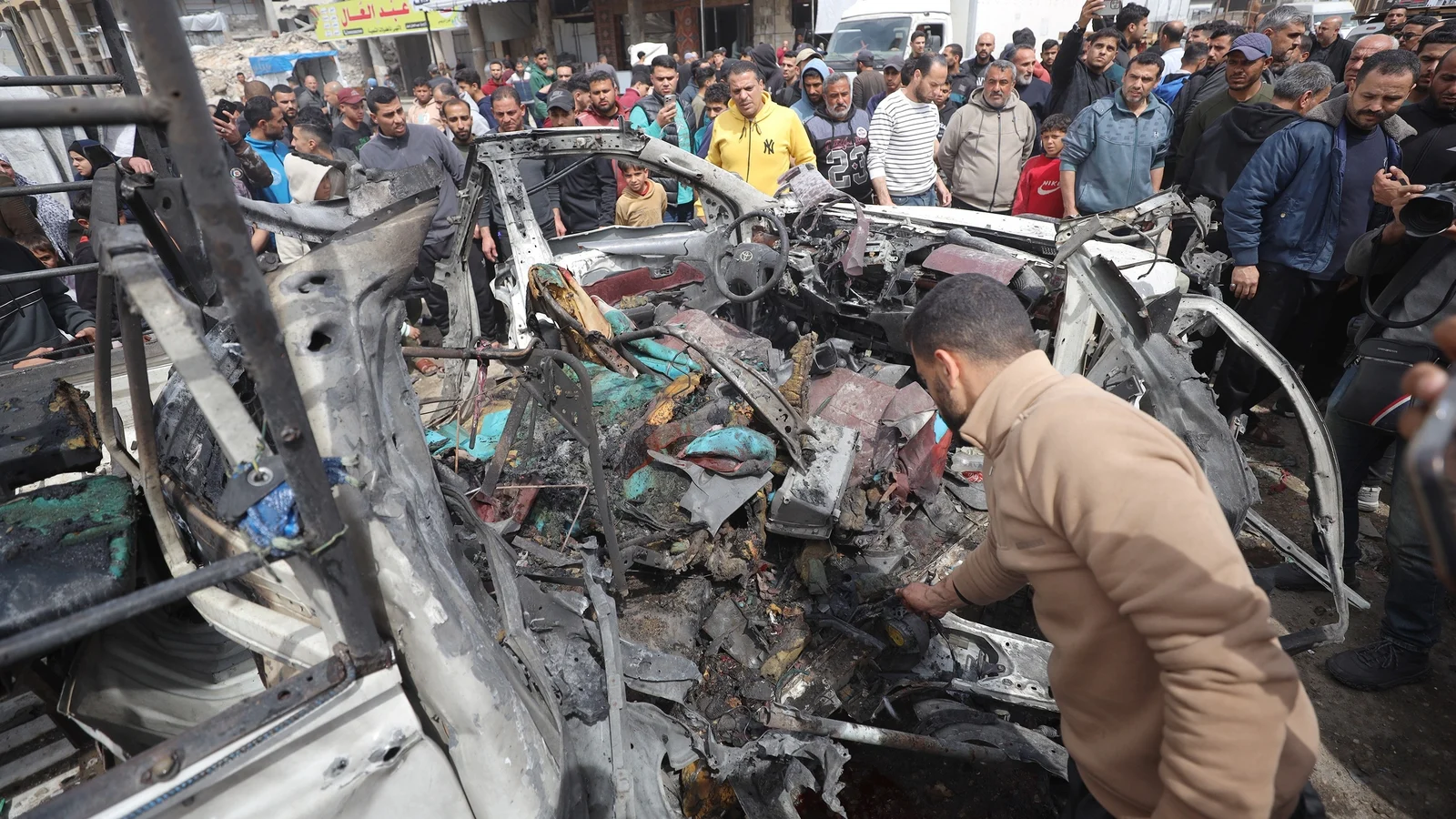
One strike, according to Gaza’s Interior Ministry, struck a police vehicle in Gaza City, killing four people including a young child and injuring nine bystanders, some critically. Another attack near Jabalia left three-year-old Yahya Al-Malahi dead, his parents told local health authorities. The Israeli military did not immediately comment on either incident.
“He loved to clap when the radio played,” said a relative, voice breaking as she described Yahya’s small hands. “Now there is only silence where he should be.”
At the northern armistice line, Israeli forces reported killing a man they described as an armed militant who approached the boundary with Hamas-controlled territory. Health authorities confirmed a man was killed in that area but offered no identifying details.
The arithmetic of a fragile truce
The ceasefire, brokered by the United States last October, brought an end to two years of full-scale conflict — but it left a landscape of sharp divisions. Israeli forces retain control of a depopulated zone that amounts to well over half of Gaza. Hamas exerts authority in a narrow coastal strip where most of Gaza’s roughly 2.3 million residents now live.
Since the armistice took effect, more than 750 Palestinians have been killed, local health records show. On the Israeli side, militants have killed four soldiers during the same period. Both sides have exchanged accusations of violations, and each fresh incident chips away at the fragile trust necessary for any durable peace.
What the statistics don’t tell you
Numbers can feel sterile when stacked on a page: “six killed,” “750 since October,” “two children” — but each statistic is a weathered living room, a displaced family, a child’s favorite toy turned forever mute. In the sprawling camps and makeshift tent cities, people count their losses in photographs, not charts.
“You can’t rebuild a rebuke,” said Dr. Lina Haddad, a physician at a crowded hospital in Gaza City. “We treat the same wounds again and again. The ceasefire reduced the roar, but it didn’t heal the underlying fracture.”
Daily life under the shadow of the armistice
Walk through Gaza’s narrow alleys and you’ll find worlds within worlds: small shops selling sugared coffee cups and plastic toys; men playing backgammon under awnings; mothers bargaining for sacks of flour. At dusk, the call to prayer rises and mingles with the distant, uneasy rumble of armored vehicles. Children chase pigeons in open lots that used to be neighborhoods.
“We cook on one burner and light candles because the power goes out,” said Mariam, a mother of four who now lives in a tent community that overlooks a strip of sand and the sea. “My eldest asks why the house is empty. I tell her the house went to sleep.”
Many Palestinians here accuse Israel of creeping expansion, saying the zone under Israeli control has grown in size and scope. Israel rejects the accusation, insisting its movements are tactical responses to security threats posed by Hamas and other armed factions.
Voices across the divide
Local officials, health workers, and residents speak to the scale of suffering; Israeli authorities emphasize security. In Gaza, officials from the Hamas-run Interior Ministry decried recent strikes as part of an escalation against its police and security forces. “They are trying to create chaos,” a senior official said, speaking on condition of anonymity. “When institutions fall apart, society fragments.”
On the other side, an Israeli military spokesperson framed operations as defensive. “Our objective is to prevent attacks and defend our citizens,” the spokesperson reportedly told reporters. “We take every action necessary to stop militant activity near the border.”
Meanwhile, humanitarian workers warn of a deeper crisis. “The ceasefire reduced large-scale hostilities, but it did not remove the danger embedded in everyday life here,” said Anna Ruiz, an aid coordinator with an international NGO. “When civilians can’t be sure a street is safe, economic and social recovery stalls. That’s how fragile peace becomes fragile hope.”
Why this matters beyond Gaza
What happens in Gaza echoes far beyond its coastline. The ceasefire — and its erosion — is a reminder that international agreements mean little without mechanisms for accountability, protection, and rebuilding. It’s a test of diplomacy, of humanitarian will, and of the international community’s appetite for sustained engagement rather than episodic outrage.
Ask yourself: what would a durable peace look like here? Is it a literal pulling back of checkpoints and forces? Is it economic investment, education, and freedom of movement? Or is it something less tangible — a shared sense of safety, a real end to cycles of retaliation?
Pathways forward
- Reinforce monitoring and verification mechanisms for the ceasefire to reduce misunderstandings.
- Increase humanitarian access to food, medical supplies and rebuilding assistance for displaced families.
- Support local governance and civil society initiatives that create space for dialogue and community resilience.
These are not quick fixes. They require trust and the political will to see beyond immediate security impulses.
Faces of resilience
Back in Jabalia, where Yahya lived, neighbors have set up a small memorial of painted stones and plastic flowers. Children, despite the danger, still squeeze games between meals; laughter finds its way through barbed wire and rubble. That resilience is both stubborn and fragile, an ember waiting to be fanned or to be snuffed out anew.
“We keep living,” said Omar, an elderly man who tends a tiny rooftop garden. “You learn to plant hope even where the soil seems barren.”
What we should keep watching
Monitor casualty figures. Watch whether the armistice lines harden into permanent zones of control or soften into a managed peace. See whether humanitarian corridors open reliably. Listen to the voices of ordinary people whose lives are measured in daily bread and nightly prayers.
Because in the end, it’s not only about preventing the next strike. It’s about whether a people can reclaim a life that has been rationed by war. Will the next October bring celebration or fresh sorrow? Will the ash of this fragile pause be raked into fertile ground? Only sustained action and genuine attention can tip the balance.
For now, Gaza breathes under a tentative quiet. But quiet, here, is not peace — it is a fragile truce whose seams need tending before they burst open again. Will the world care enough to stitch them? The answer may decide more than one childhood, one family, one coastline.