A Nation Transformed Overnight: Walking Through the Rubble of Iran’s Leadership
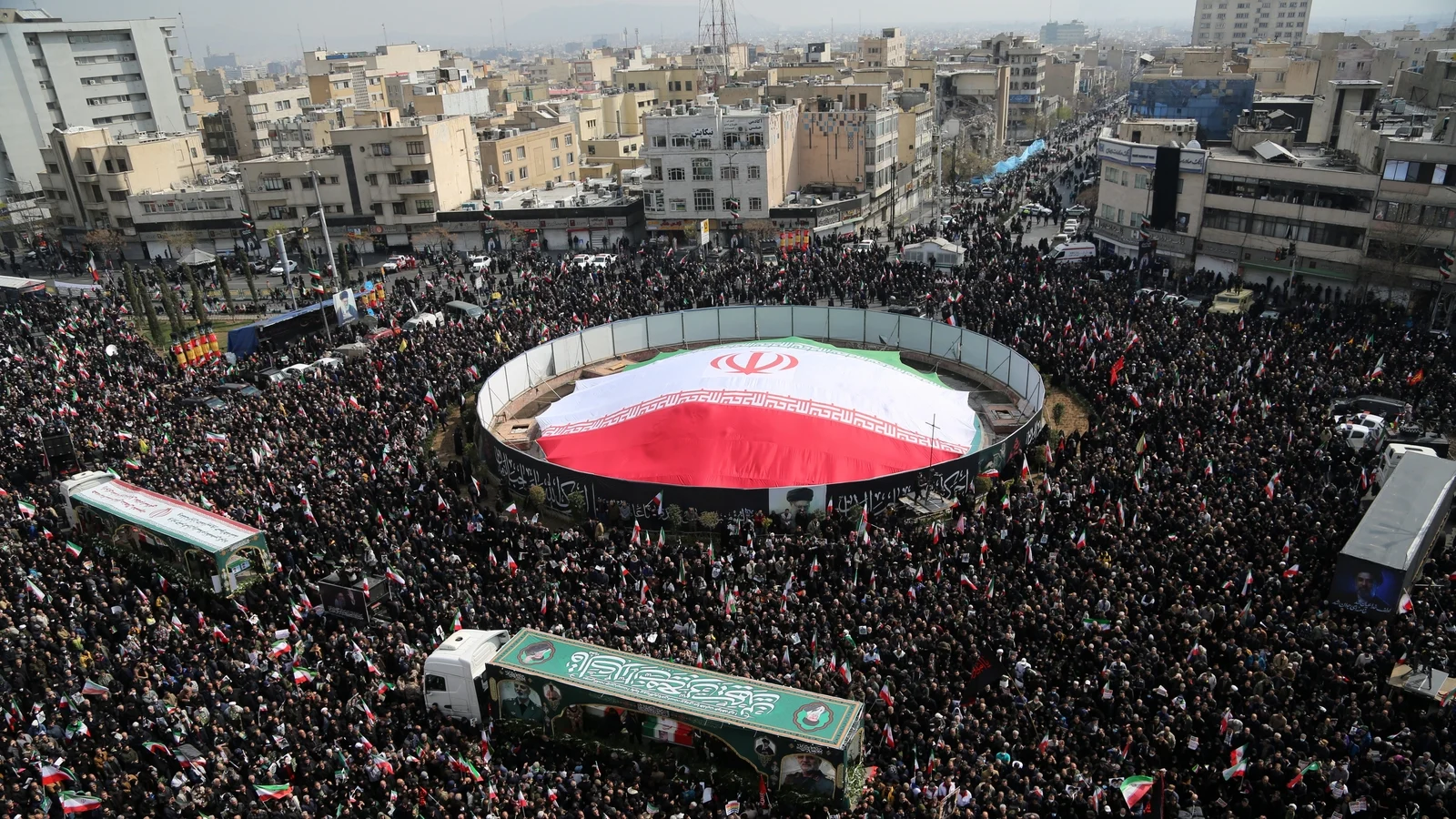
When the sun rose over Tehran after the airstrike that set this war aflame, the city did not know how to mourn. It had to learn. In a few sharp hours, a generation of leaders—clerical, military and political—had been erased from the public face of the Islamic Republic. Streets that once hummed with the everyday choreography of life—chai shops filling, taxis arguing with traffic, men playing backgammon under plane trees—were suddenly the backdrop for funerals, official processions and whispered rumors about succession and survival.
“It feels like the axis that held everything up has been yanked away,” said a shopkeeper near Tehran’s Tajrish bazaar, his hands still dusted with flour from baking sangak bread. “Who do we turn to now?”
At least a dozen senior figures have been reported killed since the conflict began on 28 February. Among them: the supreme leader who had been the country’s political anchor for more than three decades, several top Revolutionary Guards commanders, the intelligence minister and a cluster of trusted advisers who once coordinated Iran’s complex web of domestic control and regional strategy.
The immediate shock: what happened, and why it matters
In the opening hours of the war, an airstrike on a convoy or a meeting in Tehran—details remain contested—killed Ayatollah Ali Khamenei, the highest authority in the Islamic Republic since 1989, according to official statements. The death of such a figure is both a human event and a tectonic geopolitical moment. If you want to understand why, consider two images: one, a cleric who for decades had been the final arbiter of policy; and two, a region where leadership vacuums rarely stay empty for long.
Then-US President Donald Trump—whose name has resurfaced repeatedly in diplomatic backchannels around this crisis—declared that the strikes had ushered in “regime change” and that “we’re dealing with different people than anybody’s dealt with before.” Whether one views that as triumphalism or analysis, the comment cuts to the heart of what the strikes aimed to do: decapitation of a state’s command to reshape behavior and capability.
Faces from the list: who was lost
Names are not just names in a place like Iran; they are the threads in a tightly woven social and political tapestry. When those threads are cut, the pattern that held ministries, militias and informal networks together shifts. Here are several of the most consequential losses reported so far:
- Ayatollah Ali Khamenei — Supreme leader since 1989; reports say he was killed in the opening strike that also claimed members of his family. His son Mojtaba reportedly survived and has been named as successor, though he has yet to appear in public.
- Ali Larijani — Security chief and a longtime figure in the system; his death on 17 March was described inside Iran as one of the most significant losses after the supreme leader.
- Mohammad Pakpour — Former head of the Guards’ ground forces, tapped as commander-in-chief in June 2025 after a previous wave of losses; killed on day one of the new war and replaced by Ahmad Vahidi.
- Alireza Tangsiri — Commander of the Revolutionary Guards’ naval forces and a veteran of the 1980–1988 Iran–Iraq war; Israel accused him of orchestrating operations to mine and block the Strait of Hormuz.
- Ali Shamkhani — A decades-long fixture in Iran’s security apparatus who was reportedly killed during the opening strikes; state funerals and conflicting reports about the manner of his burial added grim surrealism to the aftermath.
- Esmail Khatib — Intelligence minister since 2021, a cleric who had been implicated by rights groups in suppressing protests; killed in mid-March.
- Aziz Nasirzadeh — Defence minister and veteran of the Iran–Iraq war, also killed in the opening phase.
- Gholamreza Soleimani — Commander of the Basij militia, a controversial force often called upon to quell unrest; died in an airstrike on 17 March.
- Ali Mohammad Naini — Guards spokesman, who was reported killed at dawn in what the Guards described as an attack by the United States and Israel.
- Mohammad Shirazi — Head of the military office coordinating between Iran’s security branches; killed on the first day of hostilities.
- Abdolrahim Mousavi — Armed forces chief who had been appointed recently after earlier losses; killed on the first day.
What this tells us about resilience and replacement
Counting the dead is one thing; counting the consequences is another. The Islamic Republic is less a single person than a diffuse network of clerical authority, paramilitary organizations, state institutions and informal patronage. When leaders are killed, those networks flex, adapt and sometimes snap back. Tehran has already signaled rapid appointments: Mojtaba Khamenei’s ascension as supreme leader, Ahmad Vahidi stepping into a top Guards post, others moving laterally to fill gaps.
“They have a long memory and a deep bench,” said Leila Haddad, a regional analyst who studies Iran’s security institutions. “Decapitation is a shock, but it doesn’t automatically mean collapse. It changes tactics, often toward deniability and decentralization.”
The guards and their proxies still operate across a region where the stakes are global. The Strait of Hormuz remains a chokepoint: roughly a fifth of the world’s seaborne oil trade passes through it, and any sustained closure would ripple across energy markets and economies far beyond Tehran and Jerusalem.
Scenes from the city: how ordinary people are reacting
At Tehran’s hospitals and mosques, grief is a public performance—parades of black-clad mourners, chants, and state broadcasters framing sacrifice and resistance. At the same time, there’s a quieter strain: neighbors checking on elders, shopkeepers opening for business out of necessity, families trying to stitch some normalcy together for children who have known little but sanctions and political drama.
“My grandson asked me why the men on the TV are dead,” said an elderly woman leaving a funeral in Tajrish. “I told him war is expensive. I don’t think he understood, but he asked for more sweets. Kids keep living, and so we keep going.”
Questions we should be asking
Where does a state go when its vertical leadership is hollowed? Will the loss of senior commanders create opportunities for reformers, or will it harden the hands that still control coercive power? How will global actors—oil markets, neighboring states, and international institutions—respond to a vacuum that can invite both instability and opportunism?
These are not rhetorical in the abstract; they are practical queries with human consequences. For the families who lost fathers, brothers and sons, for the displaced who cannot go home, for markets that test each headline against supply and demand, this war is already more than a geopolitical chess game.
Final thoughts: beyond the tally
History remembers the fall of leaders, but it is also made by the people who remain. Iran’s story is now a tightrope act between grief and governance, between state narrative and street-level reality. Around the world, policymakers and citizens alike should watch not just for new names on paper but for how power is exercised on the ground—through schools, hospitals, checkpoints and courtrooms.
As you read this, consider one question: when the institutions that keep a country running are hit, what replaces them—the rule of law, or the law of the gun? The answer will help determine whether this moment becomes a catalyst for change or a protracted descent into cycles of violence that stretch far beyond Iran’s borders.