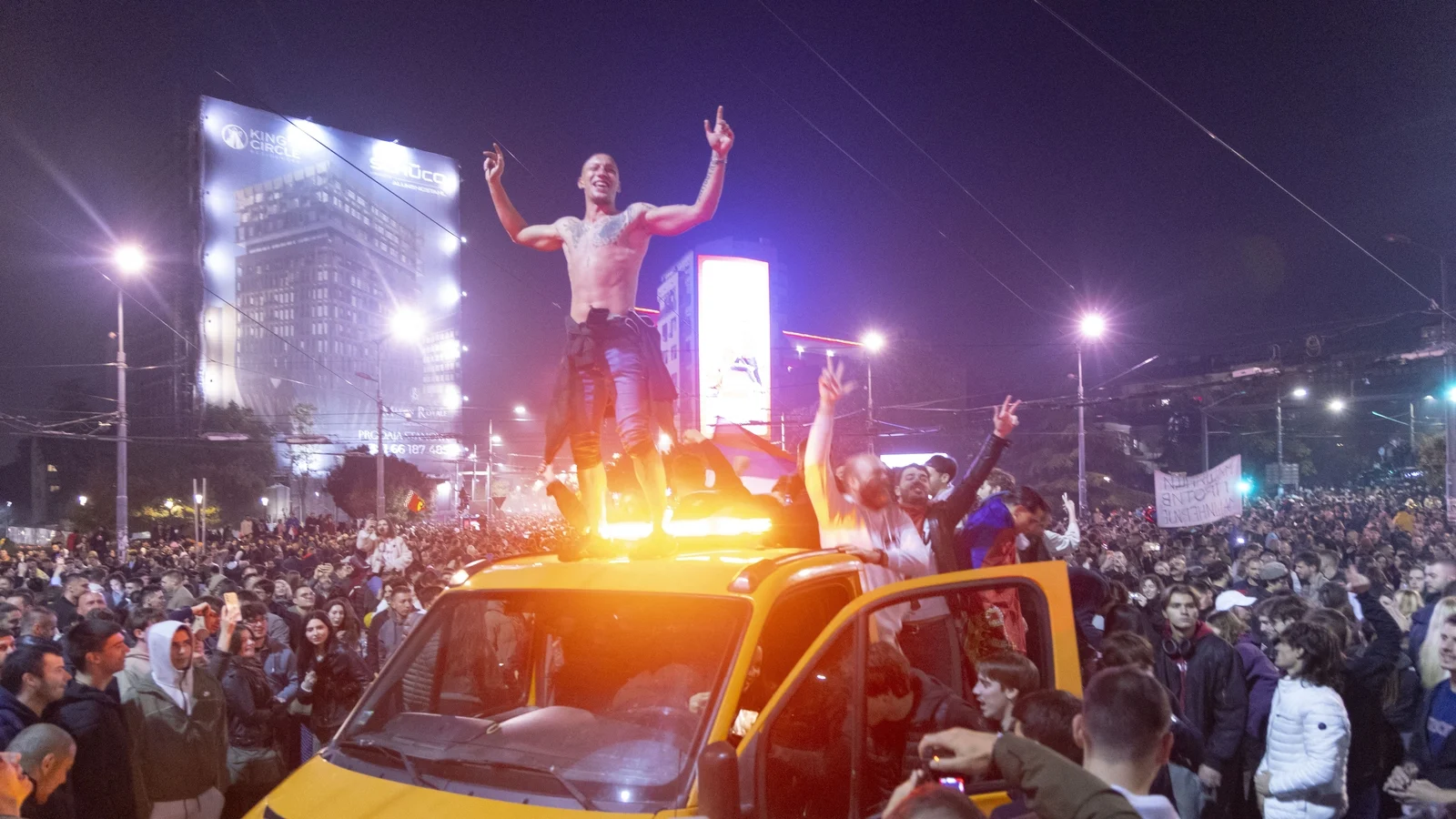
Serbia woke up to a political earthquake after a student-led protest movement scored what it called a historic breakthrough in yesterday’s parliamentary election, bringing an end to the long rule of Aleksandar Vučić and setting off celebrations across the country.
The victory, however, also hands the Students’ List — whose leaders have yet to be formally named — a demanding to-do list from day one.
Here are a few of them.
Kosovo
The Student List maintains that Kosovo, which declared independence from Belgrade in 2008, is still an integral part of Serbia.
On the campaign trail, student-backed candidates described Kosovo as a temporarily occupied territory and argued it could be brought back into Serbia through peaceful means, diplomacy and dialogue.
Their priorities include stopping the outflow of Serbs from northern Kosovo and reinforcing Serbia-funded institutions that operate under the Serbian legal system, including healthcare and education. They want Serb communities in Kosovo to function autonomously and have rejected earlier agreements reached with the ethnic Albanian-led government in Pristina — including deals on energy, vehicle licence plates and use of the dinar currency.
Frayed EU relations
Serbia’s negotiations to join the European Union have largely stagnated amid what Brussels has described as a lack of required reforms, and the Student List largely steered clear of divisive foreign-policy debates during the campaign.
Leading figures on the ticket, among them former central bank governor Dejan Šoškić and cardiologist Ilija Srđanović, have argued that a new government should prioritise domestic reforms and close all EU negotiating clusters before asking voters to deliver a definitive verdict on membership in the bloc.
The Student List’s stance on Kosovo also conflicts with the EU’s accession conditions, which require Belgrade to normalise relations with Pristina.
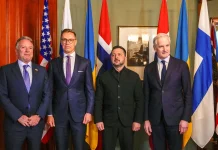
European Commission President Ursula von der Leyen said the EU was ready to back reforms — including on the rule of law and media freedom — and to work with Serbia to advance its future in the EU.
Ilija Srđanović celebrates the Students’ List’s victory
Russian relations and US sanctions
The Student List now faces a delicate balancing act in energy and foreign policy with Russia, a long-standing Serbian ally. The students have said they do not intend to follow the EU in imposing sanctions on Moscow over its war in Ukraine.
Any new administration would depend on US sanctions waivers to keep crude imports flowing while awaiting the sale of Russia’s stake in energy company NIS — which runs Serbia’s only oil refinery — to Hungary’s MOL.
Gazprom, meanwhile, remains Serbia’s largest gas supplier, providing about 2.2 billion cubic metres annually at below-market prices. The Student List has insisted this reliance should not be mistaken for geopolitical alignment, describing it instead as an acute economic dependency.
Top candidates for the Student List have also said a future government would halt all Serbian arms exports to war zones, including sales routed through Western intermediaries that ultimately send weapons to Ukraine. Mr Vučić had cultivated strong personal ties with both Ukrainian President Volodymyr Zelensky and Russian President Vladimir Putin.
Corruption
Fighting corruption sits at the core of the Student List’s platform, with proposals centred on rebuilding institutions. That includes setting up an independent police unit answerable to prosecutors rather than the Interior Ministry, along with a purge of officers tied to organised crime or to violent crackdowns on protests.
The movement also wants to block the placement of party loyalists in state-owned companies, replacing that system with transparent, merit-based recruitment.
On financial oversight, the plan calls for a strict asset origin law that would empower the state to audit, seize and return illegally obtained wealth from officials to the state budget.
Under the proposals, convicted officials would be banned from public office. The programme also envisages full public scrutiny of major state infrastructure contracts and the creation of independent oversight bodies designed to reduce the misuse of public funds.
Mr Vučić, the SNS and the authorities repeatedly rejected allegations of repression and corruption.
Economy
Serbia’s economy is closely intertwined with European markets and global investment flows, leaving any new government with limited room for error.
The IMF has projected economic growth of 3% in 2026 and 4% in 2027. Inflation reached 4.1% in September — nearly double August’s 2.2% — while the central bank has kept its benchmark rate at 5.75% since 2024.
The Student List says it wants to reorient Serbia’s growth model away from state-backed infrastructure building and reliance on cheap labour, placing more weight on domestic market security and labour rights.
At the heart of its agenda is a push against retail monopolies aimed at lowering food prices, alongside a tax overhaul that increases levies on wealthier citizens while reducing them for lower-income groups.
The movement has promised to sharply cut the maximum permitted duration of temporary employment.
It says fiscal sustainability would depend heavily on savings from anti-corruption measures and tougher state oversight. Social spending, meanwhile, would target the youth exodus through an affordable housing programme for young couples, teachers and healthcare workers, while also guaranteeing free school textbooks and cheaper, state-subsidised medication.