In the Shadow of the Noose: Israel’s Parliament Poised to Reintroduce Capital Punishment for Palestinians
There are days in politics when the room itself seems to lean one way or another. Today, in the marble corridors of the Knesset, it leans toward a question that will reverberate far beyond Israel’s borders: should the state restore, as a default, the death penalty for Palestinians convicted by military courts of killing Israelis?
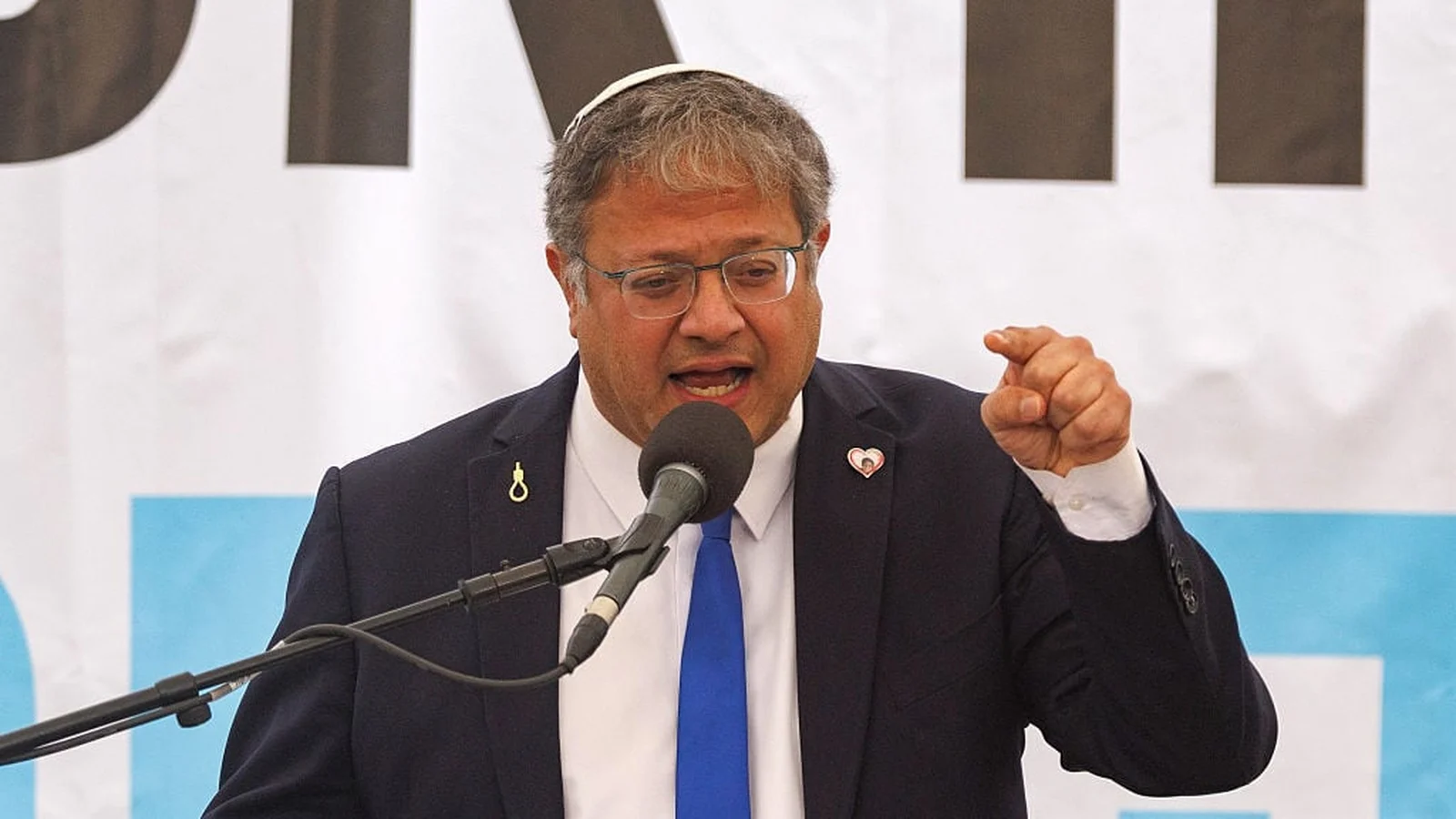
It is not a dry legal amendment being debated behind closed doors. It is a law that carries a terrible theatricality. Supporters of the bill have worn noose-shaped lapel pins in recent days, a grim accessory that has been photographed and posted across social media. Opponents call it a political stunt that traffics in fear and spectacle.
What the bill would do — and who it targets
The proposed law would require military courts in the occupied West Bank to impose the death penalty for the killing of Israelis, with sentencing to take place within 90 days and almost no possibility of clemency. The original text reportedly mandated the death sentence for non-Israeli citizens convicted of deadly “terrorist” acts in the West Bank; revisions ahead of today’s vote expanded judges’ discretion to include life imprisonment in some cases. But critics say the core remains: it singles out Palestinians tried by military courts.
“This is a measure aimed squarely at those who live under occupation,” said Layla Mansour, a teacher from Ramallah, as she folded a scarf against the spring wind. “It isn’t just law; it’s a signal of who is considered human, and who is disposable.”
The bill was drafted by Itamar Ben-Gvir, the national security minister known for his uncompromising rhetoric. Proponents argue it is a necessary deterrent in the wake of the horrors of October 7, 2023, when nearly 1,200 people were killed in an assault by Hamas militants. For many Israelis still raw with grief, the proposal is framed as an answer: a way to ensure that the atrocity never repeats.
“We cannot be naïve about deterrence,” a member of the bill’s backers told a local newspaper. “There must be consequences so severe that those who would murder know the cost.”
Why critics say the law is discriminatory
Human-rights groups and European governments have been blunt. Foreign ministers from Germany, France, Italy and the United Kingdom called the draft law “de facto discriminatory,” warning that it risks undermining democratic principles. A group of United Nations experts cautioned that the bill’s definitions of “terrorist” are vague and overbroad, opening the door to execution for acts that may not meet recognized thresholds for terrorism under international law.
“When the legal text is vague, it gives enormous power to prosecutors and judges,” said Dr. Rachel Stein, a legal scholar at Tel Aviv University. “In the backdrop of military courts—where due process safeguards are weaker—the risk of irreversible miscarriages of justice becomes very real.”
Military courts, conviction rates and the weight of occupation
These are not abstract concerns. The West Bank is governed in practice by military courts that try Palestinians; Israelis are generally tried in civilian courts. According to B’Tselem, an Israeli human-rights organization, the conviction rate in these military courts hovers around 96 percent. The group also reports patterns of coerced confessions and interrogation practices that rights advocates describe as tantamount to torture.
“Our prisoners are being slowly killed by neglect and abuse,” said Abdallah Al Zughari, head of the Palestinian Prisoner’s Club, invoking a statistic that has been repeatedly cited since October 2023: more than 100 Palestinian detainees have died in Israeli custody or during transfers since the start of the war. “To add a legal death sentence on top of slow violence—this is a moral abyss.”
These voices matter because the mechanism the state would use—military courts—is built into the architecture of occupation. They operate behind barbed wire, behind checkpoints. For Palestinians living under them, the outcomes feel preordained.
Global context: the death penalty in retreat
It is worth stepping back: the global trend is toward abolition. Amnesty International’s tally places 113 countries that have abolished the death penalty for all crimes, while roughly 54 retain it in law or practice. A handful of established democracies, including the United States and Japan, still maintain the penalty; many others have moved to a moratorium or legislated abolition.
“History shows capital punishment is not a reliable deterrent,” said Miriam Lopez, a policy analyst at an international human-rights NGO. “Research comparing capital punishment and life imprisonment finds no consistent advantage in preventing homicide.”
Israel itself abolished the death penalty for ordinary crimes in 1954; the only civilian execution in the state’s history was that of Adolf Eichmann in 1962—an extraordinary, singular case tied to the Holocaust’s crimes against humanity. The military remained, technically, capable of imposing capital punishment. But it has never done so.
On the ground: fear, grief and a fracture in the public imagination
Walk through a West Bank olive grove in autumn, and you hear a different register of politics: the clack of pruning shears, the conversation about picking times, the complaint about settler harassment. The bill sits in stark contrast to these everyday concerns—yet it reaches into them.
“We harvest olive oil the same way my grandfather taught me,” said Ahmad Nasser, who lives in a village near Nablus. “But now, every military jeep that passes, every raid, every arrest—those are not statistics. Those are our children. I am afraid for them.”
On the other side of the Green Line, there are parents who see the proposal as the only morally defensible response to unspeakable violence. “We’ve buried our sons from Kibbutz Be’eri,” said Aviva Rosen, whose son was killed on October 7. “I don’t want revenge—I want guarantees that no family will ever go through what we went through.”
Can the state have both security and justice? That is the question — and there are no easy answers. Security measures without procedural safeguards risk transforming law into a blunt instrument; procedural safeguards without credible deterrence risk eroding trust in the state’s ability to protect its citizens.
What comes next — and why you should care
The parliament’s vote today is more than local politics. It is a test of how a democracy balances the imperatives of security and human rights under the strain of prolonged conflict. It will shape how Israel is perceived by its neighbors and by partners in Europe and beyond. It will determine whether the death penalty—rare, heavy, irreversible—returns to regular use in a context where those who would face it are from an occupied population that lives under a separate legal regime.
How do we weigh suffering against principles? How do societies respond to mass trauma without sacrificing the institutions that prevent future abuses? As this debate unfolds, ask yourself: what do we hope the law will be when it is at its best? And what are we willing to lose in the name of immediate security?
Regardless of today’s vote, expect challenges. Israeli rights groups have already signalled plans to take the measure to the Supreme Court. International pressure will intensify. And in towns and villages on both sides of the divide, families will continue to live with the consequences.
For now, the noose lapel pins still catch the light. They are a symbol, yes—and also a warning. Laws engraved in haste and politics offer little room for mercy. In the end, the most lasting judgment may be the one that history renders, not on individuals, but on the integrity of the legal and moral order a society chooses to uphold.