When the Sky Broke: A Jet Falls and an Old Rivalry Reignites
The sun had not yet finished its climb when the news came in: a United States fighter jet had been shot down over Iranian territory. For hours the world watched through a blown-out kaleidoscope of official statements, social media images, and pictures of a sky suddenly thin with consequence.
It is tempting to flatten such moments into headlines: aircraft down, pilots missing, diplomats scrambling. But beneath the brevity of the bulletin is a braided story—of pilots and families, of city markets and command centers, of historical memory and the real arithmetic of escalation. This is what happened, and how the reverberations spread.
On the Ground in Two Capitals
Tehran: A city that remembers
In Tehran’s bazaar, where spices live like pigment and shopkeepers measure time by afternoon prayer, people gathered around tiny TVs and clutched their phones. “We saw the images, we heard the planes,” said Hossein, a 62-year-old carpet trader, voice carrying the careful weariness of someone who has sat through many regional storms. “There is fear, yes. But also a sense that our country will not be bullied in its airspace.”
The memory of past confrontations is long in Iran. Since the 1979 revolution, Tehran’s relationship with Washington has been one of diplomatic freeze and episodic confrontation—sanctions, proxy clashes, and incidents that have at times brought the two to the edge of direct conflict. That historical shadow colored reactions in the capital: for some, the downing represented defiance of incursion; for others, a risky escalation.
Washington: A corridor of urgent-phone calls
In Washington, the mood was equal parts disbelief and calculation. “We are verifying facts and protecting our people,” an anonymous U.S. defense official told reporters, urging patience while intelligence was marshaled. Inside the Pentagon, meetings convened, watch officers shifted positions, and commanders reviewed contingency plans that had been dusted off from other crises.
A moment like this forces uncomfortable questions into the open: Did the jet stray across a border? Was this an intentional act or a tragic mistake? Who will bear the responsibility for the next move?
Conflicting Narratives and the Fog of War
Within hours of the incident, competing accounts surfaced. Iranian state media framed the action as a sovereign response to an intruding aircraft violating its airspace. U.S. officials, cautiously, suggested the jet was on a routine mission and vowed to establish the facts.
“We’re dealing with partially overlapping claims—radar tracks, visual confirmation, and intercepted communications that don’t always tell the same story,” explained Dr. Leila Rahimi, an aviation analyst who has studied Middle Eastern airspace incidents for years. “In tense regions, even routine flights can be misread as hostile actions.”
The truth is often granular and technical: identification friend-or-foe transponders, altitude vectors, minutes of consultation between commanders. But the public language of state TV and press briefings reduces complexity into clear causes and clear villains—at least for a while.
Faces Behind the Facts
Stories like this are never only geopolitical abstractions. There are human faces: a squadron leader on the ground, a pilot’s family on a couch, air controllers, and ambulance crews preparing for possibilities.
“My son called me this morning and said he’d be back by dinner,” said Miriam, the mother of a servicemember stationed in the region, voice trembling as she spoke to a reporter. “We turn the TV on and we wait. We pray. That is all one can do.”
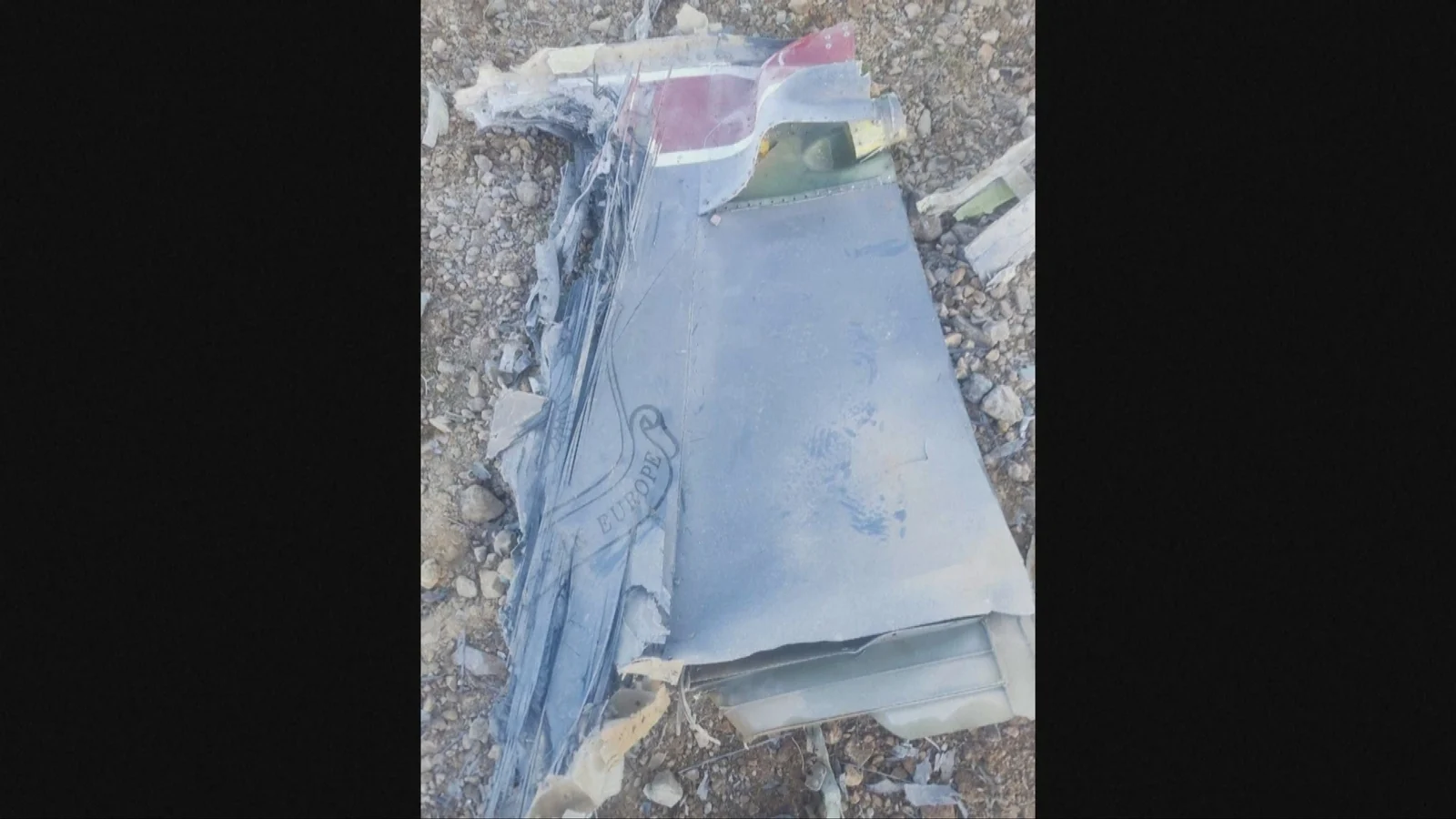
On the Iranian side, volunteers gathered to comb mountainous terrain where debris was reported. “We heard a loud boom,” recalled Farhad, a shepherd who tends goats near the border. “I went up the ridge and found metal. I cannot say more—I am not an expert—but I know what it feels to see a broken machine in a field.”
Immediate Ripples: Markets, Airways, and Allies
When the world’s automakers and investors track crises, they use maps and dashboards. Markets blinked. Energy traders watched the Strait of Hormuz and nearby shipping lanes nervously; even the faintest suggestion of disruption in the Persian Gulf sends price ripples into global supply chains.
Airlines altered flight paths to avoid the corridor, adding hours and fuel costs. “We rerouted several flights away from the area for safety,” said an airline operations manager in the region. “Even if the risk is low, the perception matters, and we must prioritize passenger safety.”
What Comes Next? Scenarios and Stakes
There are always three things to watch after an incident like this: the facts that emerge from collected evidence, the rhetoric that leaders employ, and the actions they take.
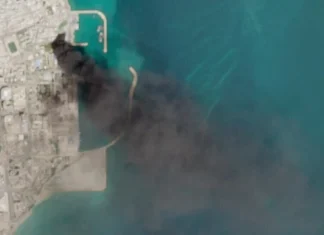
- Fact-finding: Black box data, radar logs, and satellite imagery will be essential. Independent verification will be sought by international observers and, possibly, the United Nations.
- Diplomacy: Back-channel diplomacy often becomes the unsung instrument of de-escalation—urgent calls between capitals, offers of joint investigation, or the quiet involvement of third-party mediators.
- Escalation risk: Hardliners on either side may push for retaliatory actions. Restraint by decision-makers could prevent a single incident from spiraling into a broader confrontation.
“No modern conflict remains purely local for long,” said Andrew Collins, a former diplomat who served in the region. “When a state down an aircraft of another state, you immediately see domestic politics taking center stage—leaders who must show strength to their constituencies, and opponents who demand clarity.”
Why You Should Care
It would be easy to write this off as another headline in a long series. But consider the costs: human life, the strain on regional stability, and the economic toll. Think too of precedent—what happens when airspace sovereignty is disputed, and what norms get reshaped as a result?
Ask yourself: what would you want your leaders to do in this moment? Push for calm and verification, or for an assertive response? Public opinion, especially in democracies, often steers policy—but in crises like this, the margin for error is razor-thin.
Looking Beyond the Day’s Drama
History is not just a litany of events; it is patterns. This episode belongs to a broader narrative about contested airspaces, the modern reliance on high-speed aerial platforms, and the difficulties of managing rivalry in crowded geopolitical neighborhoods. Technology has enabled states to project power more precisely, but it has not made confrontation less dangerous.
In the days to come expect more detail: data shared by both sides, perhaps an open-source sleuthing community piecing together satellite imagery, and diplomatic envoys carrying offers or warnings. Perhaps cooler heads will guide a path to clarity; perhaps not.
As you read these lines, remember the people who will carry the consequences—families, pilots, neighbors—and the fragile infrastructure of trust that sits between nations. The sky can no longer be a neutral theater when politics and power collide. To borrow a thought from an old airman I once met: “The sky tells the truth slowly. It reveals the cost of our choices in metal and smoke.”
Where do you stand when the sky becomes the front line—on restraint, on verification, or on immediate reprisal? The answer shapes more than strategy; it shapes the lives of those who fly, and those who wait for them to return.