A Midtown Murder, a Courtroom Confrontation, and a Question That Reverberates Nationwide
On a crisp December afternoon in Midtown Manhattan, a man in a dark coat walked into a crowd of commuters and changed the tenor of a city — and perhaps a nation — with a single, brutal act. Brian Thompson, the chief executive of United Health, fell on a busy sidewalk, a life ended where glass storefronts reflected holiday lights and morning rush-hour impatience. The shock of that killing still hangs in the air as New Yorkers move between the polished towers, subway grates exhaling steam into the winter sky.
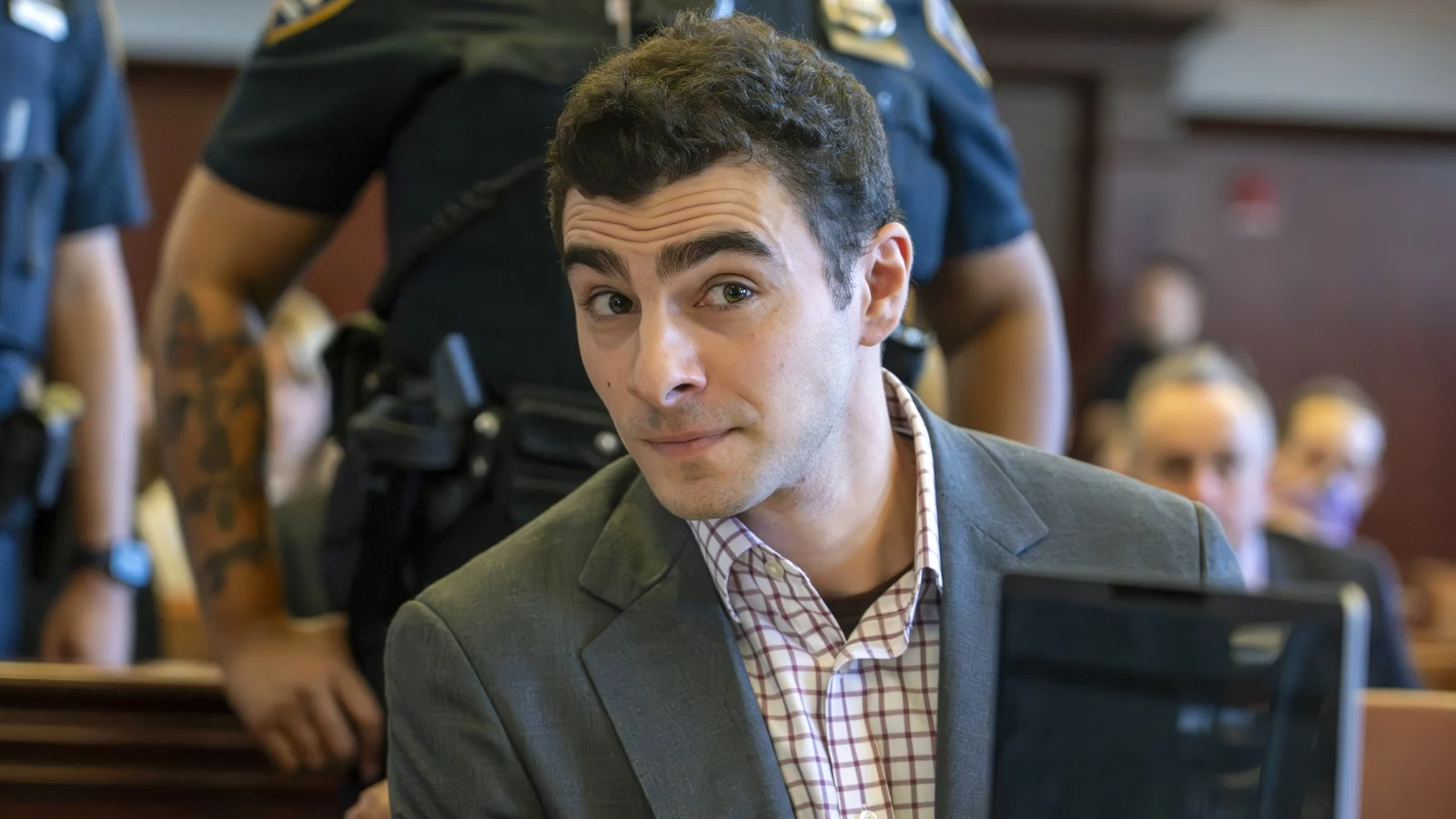
Now, months later, the man accused of the shooting — 27-year-old Luigi Mangione — is set to stand before a federal judge not to be tried for murder but to argue whether he can even be exposed to the ultimate criminal sanction: death.
The Hearing That Could Turn a State Case into a National Flashpoint
At 11 a.m. Eastern in a Manhattan federal courtroom presided over by U.S. District Judge Margaret Garnett, lawyers for Mangione will press for the dismissal of a specific federal charge — murder with a firearm — on the grounds that prosecutors failed to satisfy the statute’s technical demands. That single charge is the one that would permit the government to seek the death penalty.
“This hearing is pivotal,” said defense attorney David Ruiz, pacing outside the courthouse like a boxer waiting for the bell. “If the death-penalty allegation survives, my client faces a constitutional nightmare — one that could carry him to death row. Our statutory and constitutional objections are not academic. They go to the core of due process.”
The government, represented by Assistant U.S. Attorney Jane Alvarez, framed the issue more starkly: “This was an assassination in broad daylight. We will argue the evidence supports a capital charge and that the legal prerequisites were satisfied. This office has an obligation to use every lawful tool to pursue justice.”
Two Parallel Tracks: Federal and State Charges
Mangione has pleaded not guilty to a raft of federal counts — murder, stalking and weapons offenses — and remains jailed pending trial. But the procedural skirmish now unfolding is not simply about one indictment’s wording. It sits at the nexus of federal authority, state sovereignty and a debate that has roiled American politics for decades: when, if ever, should the state be permitted to prescribe the death penalty?
New York State does not even have that option. In 2004, the state’s highest court found the state death-penalty statute to be unconstitutional, effectively banning capital punishment for state crimes. But federal charges operate under a different system. If federal prosecutors secure the required finding, Mr. Mangione could be exposed to a penalty New York hasn’t used in two decades.
What’s at Stake Beyond One Man’s Fate
There are personal stakes: the family of Brian Thompson, who described him in public statements as a devoted husband and an executive who rose from modest roots. “He loved this city,” said Evelyn Thompson, the victim’s sister, her voice catching. “He shouldn’t have had to walk home that day. No one should.”
There are civic stakes: how a city and a nation protect public figures and deter politically motivated violence. And there are constitutional stakes: whether prosecutors followed procedural rules and respected Mangione’s rights in building their case.
“This is where federalism becomes concrete,” said Dr. Emily Carter, a professor of criminal law at Columbia Law School. “New York has policed the moral judgment of capital punishment within state law, rejecting it. But the federal government can superimpose its own judgment. The court will have to navigate statutes, precedent, and the Constitution, all while the public watches.”
How Rare Is a Federal Death Case?
Capital punishment at the federal level is uncommon relative to state prosecutions. In recent decades, the federal government has invoked the death penalty in select, often high-profile cases — terrorism, mass slayings, and certain murders — but most federal homicide prosecutions end in life sentences or other penalties. The rarity of federal capital cases adds to the drama: a judge’s decision here could ripple beyond Manhattan, influencing how federal prosecutors approach assassinations, contract killings, and politically charged crimes in the years ahead.
Midtown Aftermath: Streets, Cameras, and Questions of Security
Walk the block where the shooting happened and you’ll feel the odd mix of routine and rupture that defines modern urban life. A bodega owner remembers the day it happened: “Cabs, tourists, the bank around the corner — one minute it’s like any other Wednesday, the next there’s a crime scene.”
Security cameras in Midtown are ubiquitous. They recorded the event, and they will play a role in court. Yet cameras don’t answer why — the motive, the backstory, the deeper currents that push someone toward violence. That ambiguity fuels speculation, and where facts are sparse, rumors rush in to fill the gaps.
“We saw him on the tapes,” said Detective Marcus Bell of the NYPD, hands folded in the precinct’s break room. “You don’t want your grandchildren watching the news and seeing this. It’s about prevention as much as punishment.”
Questions for the Reader—and for the Nation
As the courtroom drama unfolds, ask yourself: Should the federal government be able to impose the death penalty in a state that has expressly rejected it? Does the public’s desire for retribution ease or harden when the accused is a stranger, a name in a headline? And what do we want our criminal justice system to accomplish — deterrence, retribution, rehabilitation, or some uneasy combination?
These are not abstract inquiries. They touch on crime policy trends, attitudes toward gun violence, and the balance of power between state and federal courts. They also force us to consider whether capital punishment, practiced selectively and rarely, becomes a political tool rather than a consistent legal standard.
What Comes Next
Judge Garnett’s rulings in the next few weeks will determine the map of the prosecutions: whether the door to a federal death sentence remains open and whether parts of the indictment survive at all. If the death-penalty charge is tossed, Mangione still faces state prosecution — where, under New York law, the maximum penalty for murder is life in prison.
No trial date has been set. The public, meanwhile, continues to bargain privately with grief, anger, and a desire to see the legal system work clearly and fairly.
Final Thought
This is a story about more than one man’s alleged crime. It is about a city’s sense of safety, a constitutional system that divides power between state and federal law, and a nation wrestling with whether the most extreme punishment should ever have a place in our courts. What do you think justice looks like in such a case? What would you want the courtroom to say about the values we live by?
- Defendant: Luigi Mangione, 27
- Victim: Brian Thompson, United Health CEO
- Key legal question: Whether the federal “murder with a firearm” charge — the only count that allows the death penalty — should be dismissed
- Judge: U.S. District Judge Margaret Garnett