France’s president weighed in on the fast-moving Greenland agreement with a clear message: Danish sovereignty must stand — and, he said, the new deal does exactly that.
French President Emmanuel Macron said the arrangement between the United States, Denmark and Greenland helps “to reaffirm Danish sovereignty” over the Arctic territory.
Speaking during a visit to the French overseas territory of Saint Pierre and Miquelon, Mr Macron said the outcome matched what France and others had been pressing for.
“I simply note that Danish sovereignty is respected, that international law is respected, and that this is what we were asking for. So it’s a good thing,” he said.
His comments followed Denmark’s endorsement of what it called a “binding” agreement announced by US President Donald Trump — a deal Washington says will give it “permanent control” over Greenland’s security and prevent Russian and Chinese bases on the island.
Since returning to the White House in January 2025, Mr Trump has repeatedly argued that the United States needs control of Greenland for strategic reasons, an approach that has rattled NATO ally Denmark and drawn sharp resistance across the alliance.
Denmark and Greenland — an autonomous Danish territory — both welcomed the agreement and said they would sign it on the sidelines of the UN General Assembly in New York next week.
“A long period of uncertainty will hopefully be replaced by a binding agreement that strengthens security in the Arctic and North Atlantic,” Danish Foreign Minister Lars Lokke Rasmussen wrote on social media.
Denmark and Greenland said they would sign it on the sidelines of the UN General Assembly in New York next week
Mr Rasmussen said the deal stayed within Denmark’s “red lines” and described it as “important” given the shifting security landscape.
‘Danish sovereignty’
Key provisions have not been publicly detailed, but Copenhagen has insisted that the agreement does not compromise Danish sovereignty.
Prime Minister Mette Frederiksen said the pact with the United States “recognises the sovereignty and territorial integrity of the Kingdom and the Greenlandic people’s right to self-determination”.
She called the deal “good for NATO and Europe”.
Greenland Prime Minister Jens-Frederik Nielsen said the agreement “recognises Greenland’s interests” and “strengthens” security for the island.
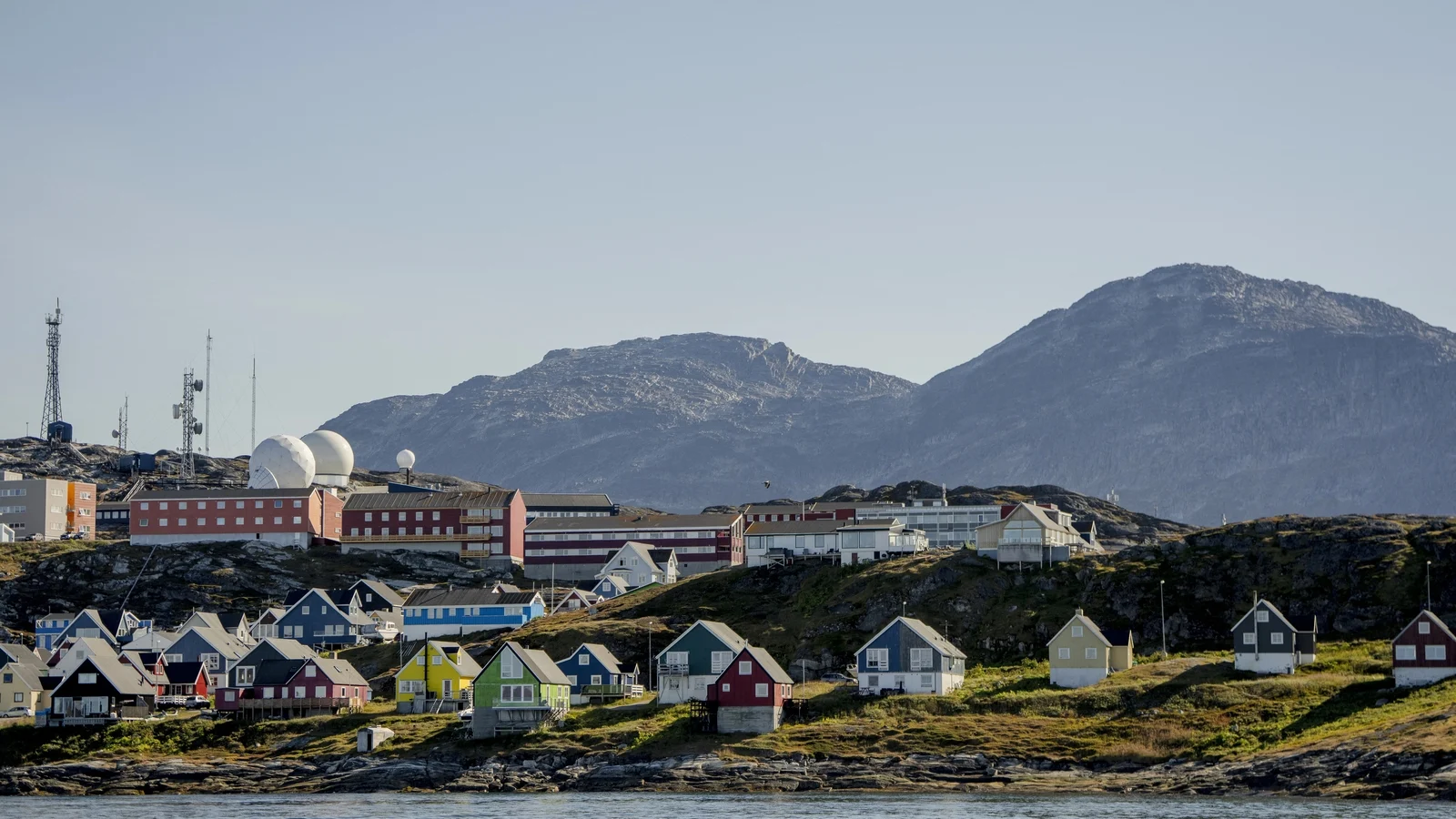
In Nuuk, Greenland’s capital, the announcement landed with mixed emotions among residents, reflecting both uncertainty and the desire for stronger protection in a region increasingly watched by global powers.
“I don’t know exactly what the agreement is or what has been signed. But whenever the US and Trump are mentioned, I have mixed feelings. I’m not entirely comfortable with how much attention Greenland has right now,” said Soren Kreutzmann, a 29-year-old hairdresser.
“We hope the leaders have made a good agreement, because our country needs to be protected, both from the air and sea. Denmark had not given that enough attention for many years,” said Bibbi Kleist Jepsen, a 64-year-old educator.
Mr Trump celebrated the announcement as an ”Infinite Life’ Agreement, there is no end”.
He said the United States would begin building up a large military presence in Greenland immediately.
“From now on, no US adversary can EVER have a base in Greenland, have a military presence in Greenland, or make sensitive investments in Greenland, without our express written approval,” President Trump added.
Even as Mr Trump framed the deal as a major victory, Danish commentators argued he may have secured less than he suggested.
They pointed to a 1951 defence pact, updated in 2004, that already allows the United States to expand its military footprint on the island as long as Denmark and Greenland are informed in advance.
Greenland Prime Minister Jens-Frederik Nielsen said the deal ‘recognises Greenland’s interests’
“Shhh. Don’t tell Trump that it’s the Kingdom of Denmark that has prevailed,” US correspondent Jacob Heinel Jensen wrote yesterday in the Danish newspaper Berlingske.
Ulrik Pram Gad, a researcher at the Danish Institute for International Studies, said Mr Trump “obviously didn’t get in this agreement what he originally set out to have, that is, sovereign control over all of Greenland as a part of the United States”.
China, Russia concerns
Mr Trump has repeatedly warned that Russia and China are seeking a foothold in Greenland as competition intensifies in a warming Arctic.
The US State Department made clear that blocking such a presence was central to the agreement.
“This agreement guarantees that China and Russia cannot have a base in Greenland, they cannot send troops to Greenland, and the necessary mechanisms are in place to prevent investment in sensitive sectors,” a State Department official said.
Mr Gad said Russia appears to have limited interest in Greenland, while China has been investing in extractive industries as part of a broader push into the Arctic.
“The US is worried that any kind of Chinese footprint could be turned into military assets,” he said.
Still, with the deal’s finer points not yet known, Mr Gad said a major concern is how any “exclusive access” for the United States to build bases in Greenland might affect NATO allies in Europe.
“Trump has been flirting with breaking up the NATO alliance. If Europe is an adversary, how would that position Europe, Denmark and Greenland in that situation?” he added.
Several media outlets have reported that the United States wants to open three new military bases in southern Greenland, in addition to the Pituffik base it already maintains in the territory’s north.
At the height of the dispute over Greenland, Mr Trump would not rule out using force to seize the territory of 57,000 inhabitants, stirring anxiety in the EU and NATO.
Tensions have since eased. In an apparent effort to reassure Mr Trump, NATO launched a mission to bolster Arctic security.