When the Web Went Quiet: A Morning Without DownDetector
There was an odd hush on the internet this morning — not the polite silence of a slow news day, but the sudden, unnerving quiet that comes when familiar signposts blink out. DownDetector, the site many of us habitually check when an app misbehaves, was itself out of reach. Social feeds filled with terse, baffled messages: “Is it just me?” “Anyone else?” “Downdetector is down?”
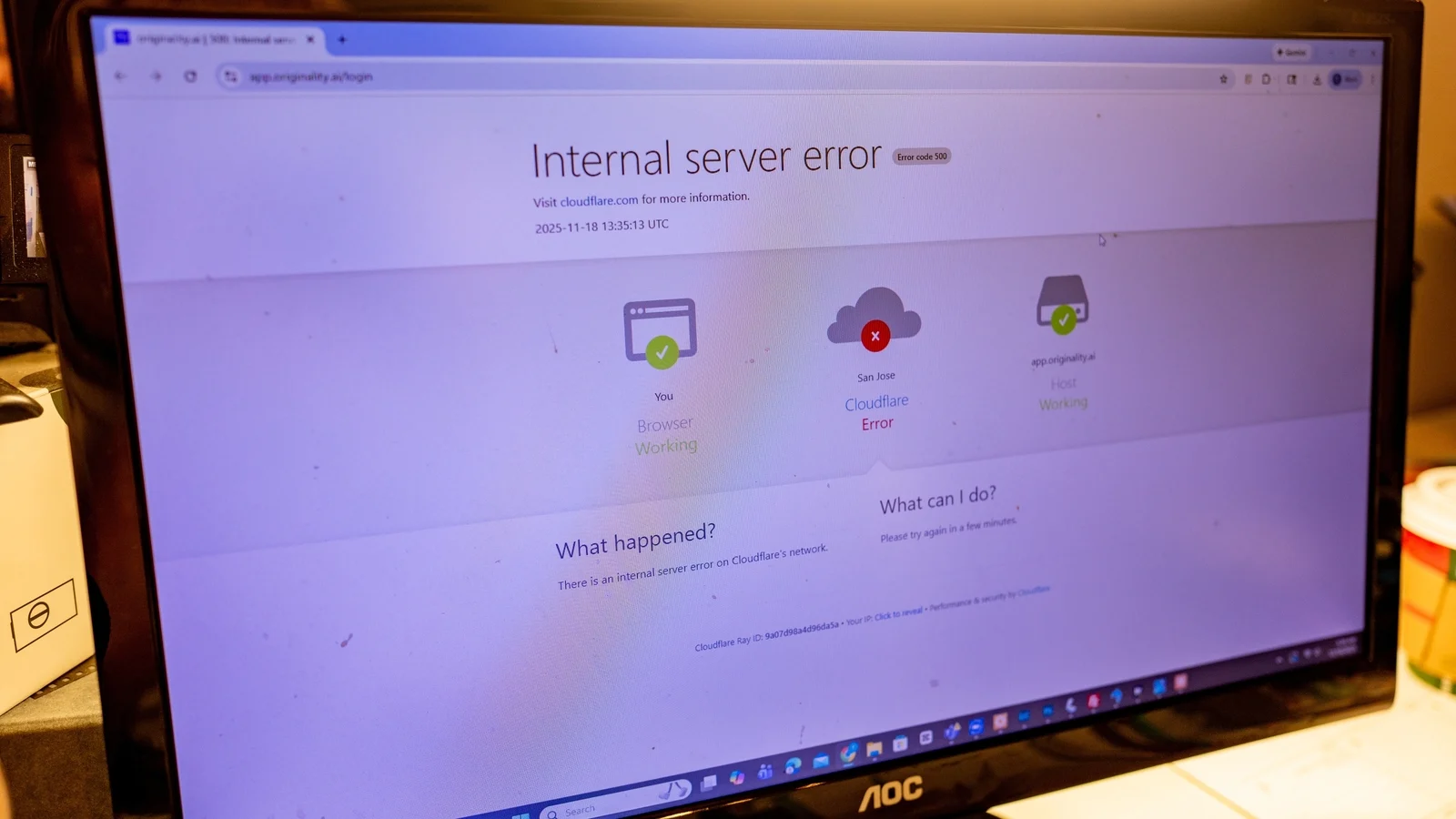
By 09:00 local time, Cloudflare — the company that sits behind a huge swath of the web’s plumbing — had issued a terse status update: teams were investigating problems with the Cloudflare Dashboard and related APIs. Minutes later, engineers pushed what they called a potential fix and began watching to see whether the lights would come back on.
The pause felt small at first, a blip on the map. But then more services reported trouble. Indian stock broker Groww told customers it was battling technical issues caused by “a global outage at Cloudflare.” Heartbeats quickened among traders and retail investors tapping their phones during market hours. Within an hour, Groww announced its systems had been restored. For a few tense minutes, however, customers in Mumbai and beyond watched markets and their portfolios through a fog of uncertainty.
Which services were affected?
Because Cloudflare provides network, content delivery, and security services to a vast range of businesses, outages ripple quickly. This morning’s disruption touched a number of sites and platforms — among them the very services people rely on to check whether a problem is widespread.
- DownDetector — the primary site people use to confirm outages — was unreachable for many users.
- Regional financial apps, including Groww, reported interruptions before restoring service.
- Various smaller websites and online services experienced degraded performance or temporary downtime.
Importantly, the outage came only three weeks after another incident at Cloudflare that affected widely used platforms including X (formerly Twitter), ChatGPT, Spotify and multiplayer games such as League of Legends. The recurrence raises a bigger question: how resilient is the architecture that powers the modern internet?
Behind the Lines: Why One Failure Feels Like Many
Cloudflare is not some obscure utility — it’s a foundational layer for countless digital services. The company operates a sprawling global network composed of data centers and edge points that help speed up traffic, prevent attacks, and keep apps online under heavy load. Because it sits at the crossroads of content delivery and security, any disruption there is amplified downstream.
“We’re seeing the internet’s wiring in real time,” said Dr. Asha Menon, a network systems researcher based in Bangalore. “When an edge provider stumbles, you don’t just lose one website — you lose the ability to verify that sites are down at all. That’s why DownDetector being unreachable is more than ironic: it’s a symptom of systemic fragility.”
Consider this: many small and medium-sized companies rely on third-party services for everything from DNS resolution to bot protection. When a single provider slips, those companies can’t easily switch traffic. The result is a cascade — slight at first, but potentially severe for businesses that operate on thin operational margins.
A Human Hour: Traders, Gamers, and Everyday Users
Outages read like a human-interest story when you look at who is affected. In Mumbai, Rajeev, a 34-year-old investor, described his morning as “a mini heart attack.”
“I logged into Groww to check an order and it wouldn’t load. For five or ten minutes it felt like being blind,” he said. “You start imagining worst-case scenarios. We rely on real-time access and when that disappears, it’s unnerving.”
Across the world, gamers and streamers have similar tales. “You’re in the middle of a match and then, nothing,” said Lena, a 22-year-old esports enthusiast from Madrid. “It’s frustrating and it breaks the flow. For competitive games, a few minutes of downtime can ruin everything.”
Operators and customers alike don’t always have the luxury of patience. Businesses often lose revenue by the minute during outages, and reputational harm is hard to quantify.
Root Causes, Remedies, and Resilience
Cloudflare’s engineers usually publish candid postmortems after significant incidents — a practice that earned the company praise in the industry. Early messaging this morning suggested the company had isolated a fault and implemented a fix, then entered a monitoring phase. For many customers, restoration came within hours; for others, the lag between symptom and solution felt too long.
“No system is immune to failure,” said Marco Rivera, a former site reliability engineer for a major streaming service. “The question is how you design for failure — can traffic be rerouted? Do you have multi-provider architecture for critical services? Those choices cost money and complexity, but they buy peace of mind.”
Security experts also point to the trade-offs inherent in convenience. Consolidating services with a single provider reduces overhead and simplifies deployment, but it concentrates risk. The more of your stack sits behind one glass pane, the more likely a single crack will let in the rain.
What companies can do
- Embrace multi-provider strategies for critical services like DNS and content delivery.
- Invest in robust fallbacks and degraded-mode experiences so users still get essential functionality during outages.
- Prioritize transparent incident communications — users want to know timelines and workarounds.
Big Picture: The Cloud and the Cost of Convenience
We live in an age when convenience is a service promise. From banking to entertainment, economies are built on the expectation of always-available apps. Outages such as today’s are reminders that the infrastructure powering modern life is complex and, at times, brittle.
There’s another layer to consider: public trust. When widely used monitoring tools go down, the public loses a neutral barometer for outages, which complicates accountability. “We need distributed observability,” Dr. Menon said. “The tools we use to diagnose incidents should not be single points of failure themselves.”
So what should readers take away? First, that resilience is not free — it’s a design choice companies and policymakers should take seriously. Second, that outages are now a global phenomenon with the power to disrupt daily life across continents in minutes. And finally, that the convenience of centralized cloud services carries with it responsibility: for engineers, for executives, and for regulators worried about systemic risk.
As the internet hums back to life, you might find yourself checking a little more often, or wondering where you would go if the lights went out completely. Who do you trust with the keys to your data, your money, and your moments online? And what would you do if that trust faltered?
Today’s brief silence was a small rehearsal for a larger conversation about the future of a resilient, trustworthy online world. It’s a conversation worth having — together.