Nightfall in Huntsville: The Quiet Closing of a Violent Chapter
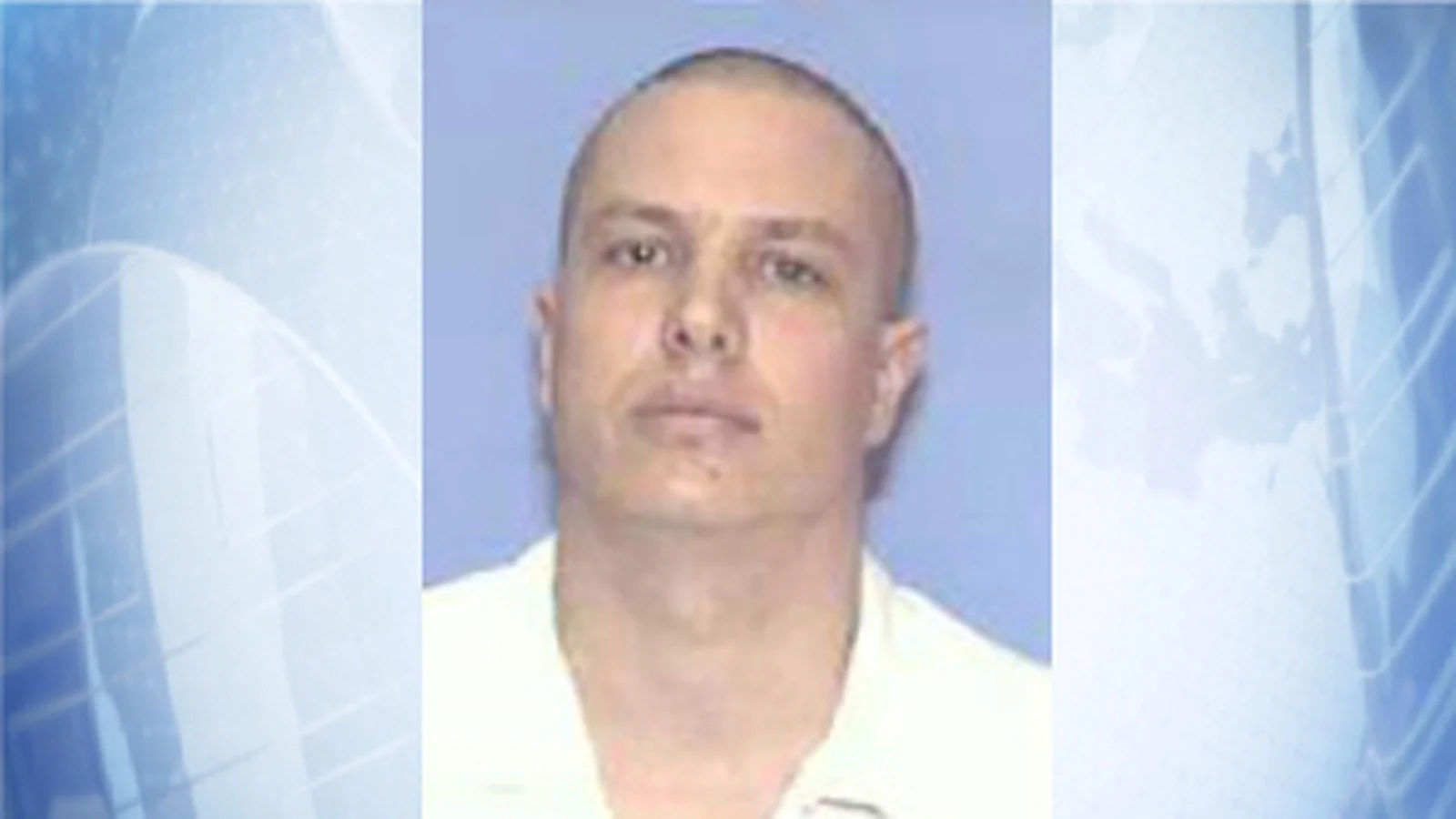
On a humid evening in Huntsville, Texas, time folded in on itself. The sky carried that late-summer heaviness—low, flushed clouds, the kind that seems to pull sound into itself. Inside the towering, beige walls of the state penitentiary, a routine once reserved for bureaucratic calendars unfolded with its usual clinical precision: needles prepared, records reviewed, witnesses wanded through metal detectors. At 6:50pm Central Time, officials announced what the machinery of state law had been set in motion to accomplish. Charles Thompson, 55, was pronounced dead.
The execution brings to a close a case four decades in the making: the 1998 shooting at an apartment in a Houston suburb that claimed the lives of 39-year-old Dennise Hayslip and 30-year-old Darren Cain. Cain died at the scene; Hayslip clung to life for a week before succumbing. Thompson was convicted and, after years of appeals, placed under the state’s ultimate sanction.
Faces in the Visitors’ Gallery
Among the few who traveled to Huntsville was Wade Hayslip, Dennise’s son, who was 13 when his mother was killed. He sat in a folding chair, his hands folded in his lap, the expression of someone who has rehearsed grief and forgiveness in equal measure. “This isn’t a celebration,” he told a reporter before the execution. “It’s the end of a chapter and the beginning of a new one. I’m looking forward to the new one.” His voice had the soft firmness of someone handing themselves permission to move on.
Nearby, people who opposed the death penalty held vigils, candles bobbing like small, persistent moons. “Killing someone won’t bring her back,” said Laila Ahmed, a volunteer with an anti-death-penalty collective, her scarf fluttering in the humid night. “It’s a moral line we keep redrawing, and every time we do it hurts a bit deeper.”
What This Execution Reveals About America’s Capital Punishment Landscape
This was the first execution in the United States this year, a grim signal flare in an ongoing national debate over the death penalty’s place in a modern justice system. Last year’s numbers—47 executions, the highest since 2009’s 52—illustrate the renewed momentum in certain states for applying the ultimate punishment.
- Florida carried out 19 executions last year, far more than any other state.
- Alabama, South Carolina, and Texas each reported five executions.
- Of the 47 executions, 39 were by lethal injection, three by firing squad, and five by nitrogen hypoxia.
Those numbers are stark, but numbers alone do not capture the texture of the public conversation. Across the country, states are divided. Twenty-three have abolished the death penalty altogether, while California, Oregon and Pennsylvania sit in limbo with moratoriums in effect. The patchwork of policies reflects deep regional, cultural and political cleavages.
Methods, Morality, and the Narrowing Choices
Lethal injection, long the default method, still accounts for the majority of executions. But as pharmaceutical companies refuse to supply drugs for executions and legal challenges crop up over the possibility of botched procedures, states have been experimenting with alternates: firing squads and, more controversially, nitrogen hypoxia—pumping nitrogen into a face mask to induce suffocation.
Human rights experts have been unequivocal. “Nitrogen hypoxia is an untested and brutal experiment,” said Dr. Elena Márquez, who researches capital punishment at an international human rights institute. “It’s been denounced by United Nations experts as cruel and inhumane. The transition toward these methods says more about logistical desperation than anything else.”
How Communities Live with Violence
In the Houston suburb where Dennise lived, neighbors still remember her laugh and the steady cadence of her steps as she walked a grocery aisle. “Dennise was someone who loved cooking for kids on the block,” said Marcus Delgado, who grew up two doors down. “The hole she left is both practical—who’s going to make the food now—and spiritual.”
Across the United States, stories like this fold into wider patterns: domestic violence that escalates into lethal encounters, guns that make final chapters irrevocable. The Hayslip case is no outlier in that sense. It sits at the intersection of intimate violence and public policy, where private loss becomes a state-administered consequence.
Voices in Contrast
The state’s spokesperson framed the execution as the end of arduous legal process. “This was the result of careful review, repeated appeals, and the adjudication system in action,” a Texas Department of Criminal Justice representative told me. Meanwhile, human rights organizations and many abolitionists see each execution as a failure of the civic imagination.
“We don’t see justice in retribution; we see it in prevention,” said Professor Hannah Ortiz, a criminologist who studies restorative practices. “Investing in early intervention, mental health, community safety—these are long-term, uncomfortable commitments. Yet they reduce the conditions for violence in a way that state-sanctioned killing never will.”
National Politics and the Death Penalty’s Place in the Culture War
The death penalty is also a political fault line. Former President Donald Trump remains an outspoken proponent, calling for expanded use of capital punishment “for the vilest crimes.” That rhetoric has energized some voters while alienating others. For many politicians, tough-on-crime stances play well in certain constituencies, but polls show a more complicated public mood: some Americans want harsher penalties, others want the system reformed or abolished.
What happens in Texas often reverberates nationally. The state’s death chamber in Huntsville is part of a larger infrastructure of capital punishment—courts, forensic labs, public defenders, victim advocates, and county jails—each portion of the system bearing weight from budget debates to moral reckoning.
Questions That Stay with Us
As you read this, consider the threads that tie such a case to broader concerns. Is capital punishment a deterrent or a relic? Can a legal system that makes mistakes, that is influenced by race, wealth, and geography, justly wield the power of life and death? How do families—of victims, of perpetrators—find closure or continue to carry pain across decades?
These are not questions with easy answers. They are, however, essential ones. The execution of Charles Thompson is a punctuation mark, not an explanation. It ends a legal sentence, but it opens up a wide conversation about how justice should be carried out in a society that describes itself as civilized.
After the Curtains Close
Back in the Houston suburb, a neighbor left a bouquet by an apartment door. In Huntsville, custodial staff began the slow, methodical work of clearing the evening. Wade Hayslip, who attended, said he hoped for peace more than vengeance. “I’m not here to gloat,” he told me. “I want to live. I want to heal.”
And so the country watches, argues, legislates, and grieves. The machinery of punishment turns, catching in its gears people’s deepest fears and highest ideals. How we answer these questions in the years to come will say as much about our future as any headline.