Ireland’s draft blueprint for the EU’s next seven-year budget has drawn fire from multiple sides, but the Taoiseach insists it has not derailed hopes of sealing a deal before December’s make-or-break summit.
The Government published its draft last Saturday, setting out Ireland’s proposed negotiating text for the budget cycle beginning in 2028. It has been criticised by member states seeking steeper cuts than those in the European Commission’s original €1.72 trillion proposal, while the commission has argued the Irish version strips out key flexibilities and buffers that would help the budget withstand shocks.
Diplomats from the so-called Frugal member states, who favour a smaller overall package, have also questioned whether agreement can realistically be reached by mid-December, when the Irish EU presidency culminates at the final summit.
Securing a deal by then has been widely viewed as crucial. A raft of elections next year could return eurosceptic parties to power in major member states, and there is also a tight legislative calendar to ensure the budget can be implemented from 1 January 2028.
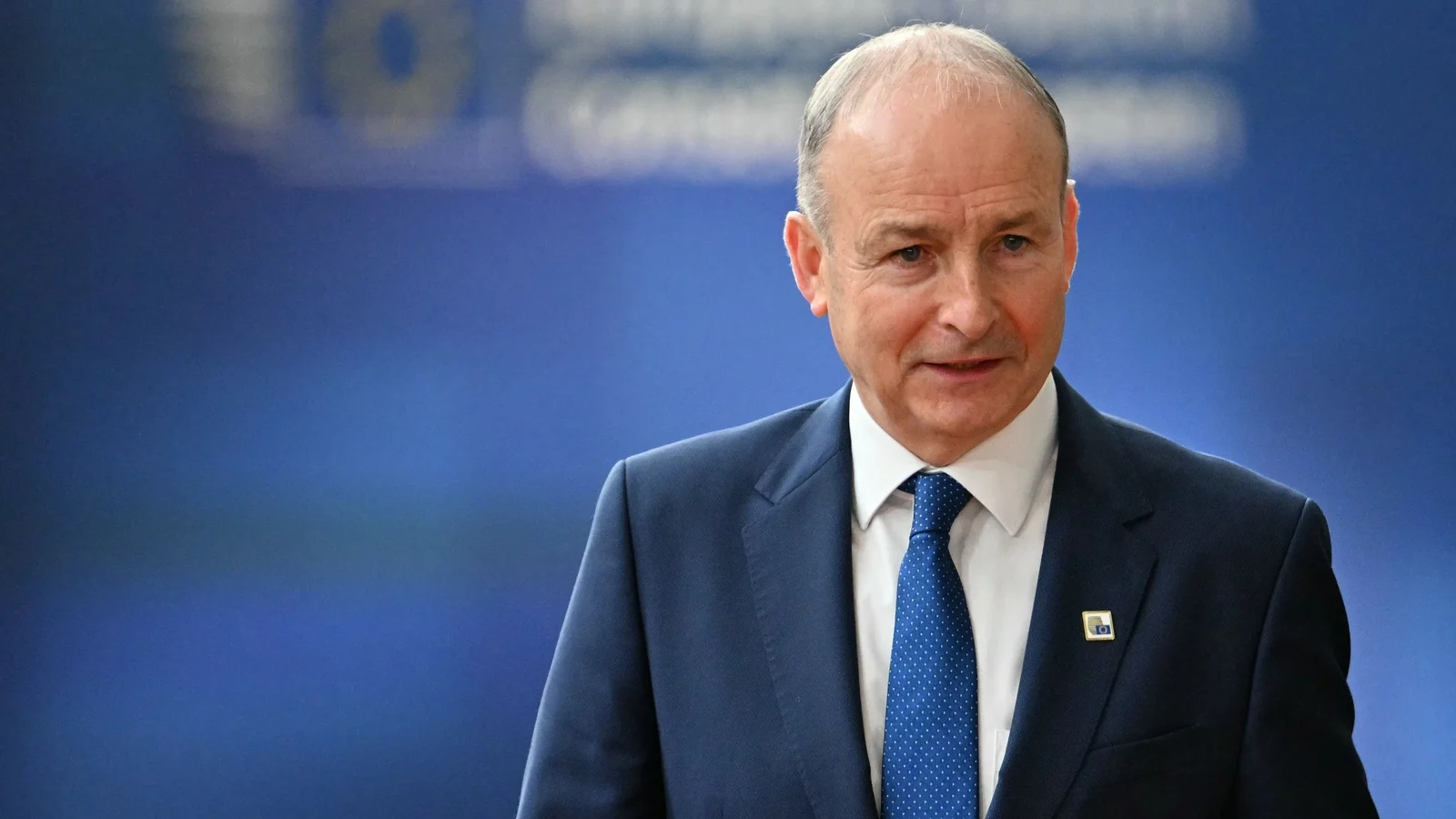
Speaking in Brussels, Mr Martin said he was not sensing, “behind the scenes”, that a December agreement was slipping out of reach.
He said: “To be frank with you, we were never going to please everybody on this one. In fact, the response you have might be positive in a way in terms of how these negotiations work.
“There is a journey to go. It’s challenging and it’s complex and there’s a wide divergence of opinion between, say, a number of countries which make up 46% of the [national] contributions [to the EU budget].
“Those countries are of the opinion that the [European] Commission budget was too high altogether. They wanted it to come down substantially. We’ve brought it down significantly.
“There are others who want cohesion and CAP protected at all costs. So it’s a very difficult balancing exercise. The function of the [Irish negotiating] box was to be a catalyst to get negotiations going in earnest. That will happen.”
European Council President Antonio Costa speaks with European Commission President Ursula von der Leyen ahead of the beginning of the summit
From here, the budget talks shift into the hands of Antonio Costa, the President of the European Council, which brings together the leaders of the EU’s 27 member states, and the leaders themselves.
Even as discussions intensify at the highest political level, the Taoiseach said Ireland would continue to act as an impartial chair.
“We have the [EU] presidency, so we’re going to be constructive players in respect of getting an outcome to this.
“My view all along has been that a larger budget is required for Europe to retain its objectives. Even though we’re net contributors, we benefit from the single market.
“But that said, this budget, even after the work we’ve done, is still higher than the outgoing budget.
“It’s very clear to us from our consultations that people want to protect CAP and cohesion [funding], but there are other issues that will come onto the table as well that may give more latitude by the time this is all over. So there’s a lot to play for.”
Leaders will also range across other pressing issues at the summit, including worsening trade tensions with China, the US-Israeli war on Iran and its knock-on effects for energy costs, migration and the next seven-year budget.
Another surge in electricity prices will also feature after global gas and oil markets tightened because of the US-Israeli war on Iran, with winter approaching and household bills expected to climb further.
The meeting comes less than a week after the European Commission reached an agreement with the Chinese government to curb imports of hybrid cars from China.
The move is being treated as an early step in a wider effort by the EU to address its goods trade deficit with China, which reached €360 billion in 2025 and is on course to exceed that figure this year.
The next EU-China meeting is scheduled for March.
Draft summit conclusions show leaders are expected to urge the commission to keep up talks with China, while also using the EU’s trade defence tools to the fullest and developing additional instruments to bolster protection for the bloc.
The summit also takes place against a backdrop of growing economic unease across Europe, an atmosphere far-right parties have been exploiting in election campaigns.
EU leaders instructed the commission in June to deliver tangible progress in trade negotiations with Beijing by October.
While the hybrid cars agreement was presented as an opening move, the deeper imbalance across sectors including chemicals, steel and machinery has yet to be resolved.
China, for its part, has argued that emphasising economic imbalances is being used as a pretext for protectionism and as a way to pressure and restrict China.
We need your consent to load this rte-player contentWe use rte-player to manage extra content that can set cookies on your device and collect data about your activity. Please review their details and accept them to load the content.Manage Preferences
German U-turn on Chinese imports
Attention is also expected to turn to French and German proposals published last week, which are likely to drive much of the debate.
The EU’s two biggest economies said urgent action is needed to address imports of chemicals and PET — the plastic widely used in packaging — and they argued for mechanisms that would allow the bloc to respond rapidly against countries that damage EU interests.
An investigation into PET is expected to begin soon.
The paper represents a notable shift from Germany, which just two years ago was the strongest opponent of EU anti-subsidy tariffs on Chinese electric vehicles.
Energy costs have also been pushed up the agenda by several member states, and draft conclusions describe high prices as an issue of “critical importance”.
Those conclusions point to measures the European Commission has already floated, including a one-year delay to the EU’s methane emissions rules for oil and gas imports, and they ask the EU executive to develop additional short-term options.
Meanwhile, Ukraine’s President Volodymyr Zelensky, who will attend the summit tomorrow, faces increasing pressure from Russia and US President Donald Trump.
Mr Trump has drawn widespread criticism for lifting sanctions on Russian diesel, effectively injecting $4 billion into Russia, and then apparently withdrawing intelligence support from Ukraine during a week of intensifying Russian air attacks.
That was to punish Ukraine for hitting Russian oil refineries.
EU leaders will consider how to bolster moral, political and military backing for Ukraine in response to the US president’s actions.