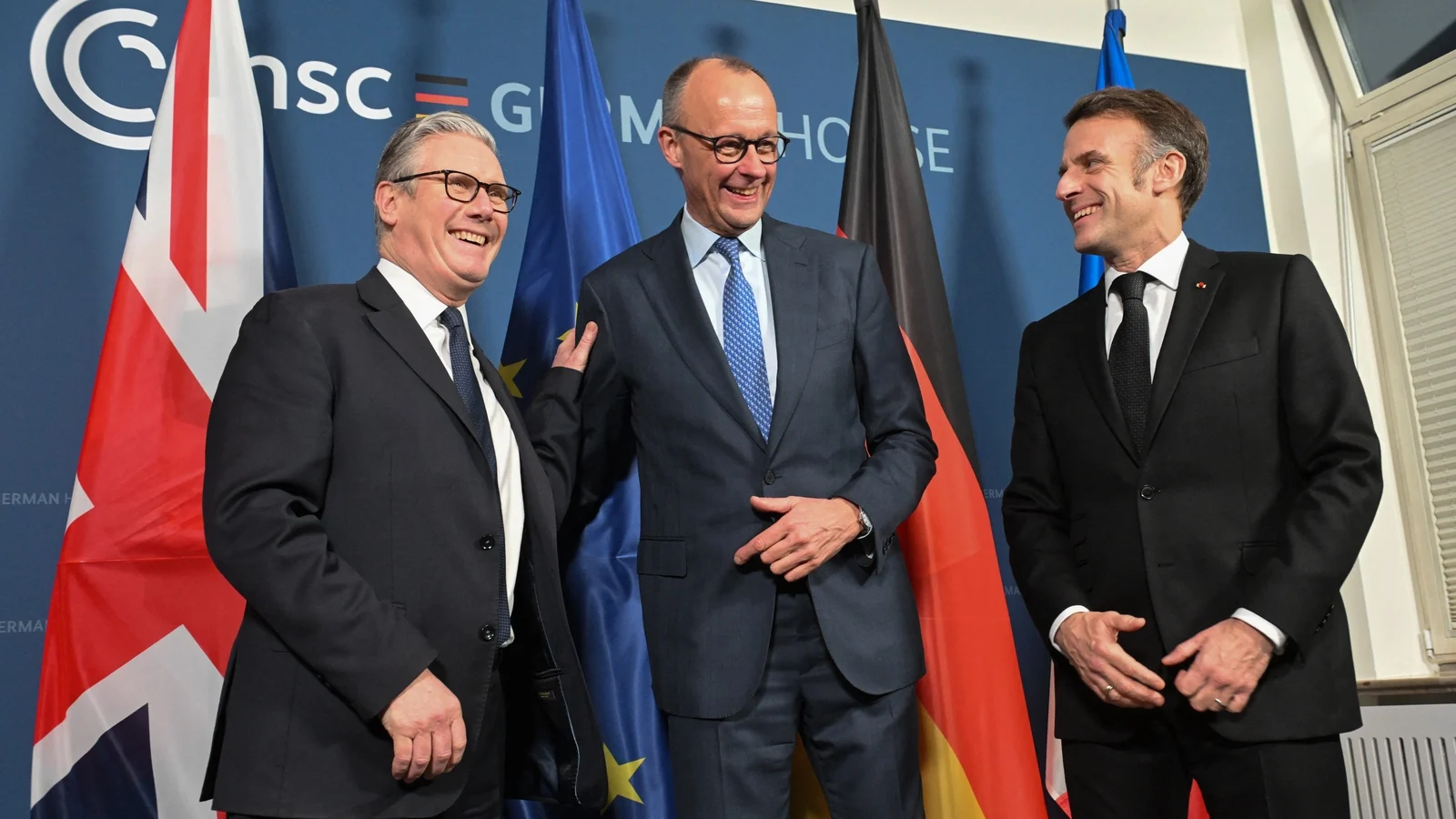
A Quiet Storm in Munich
On a cold February morning, the Bavarian sky was the pale colour of newsprint and the halls of the Munich Security Conference thrummed with the low, purposeful hum of diplomacy—suits, scarves, nametags that carried the weight of capitals. It felt, for a few intense hours, like the world was concentrated into one conference center: a place where old alliances are inspected, new anxieties negotiated, and futures quietly sketched on folded napkins over coffee.
Amid that hum, Germany’s chancellor stepped up to the lectern and dropped a line that stopped conversation across rooms: Berlin has opened confidential conversations with Paris about a European nuclear deterrent. The words were crisp, even cautious, but their echo will be anything but. For Europe—still reeling from Russia’s aggression in Ukraine, tectonic shifts in global trade and a fraying relationship with its most powerful ally—this was not just a policy tweak. It was a challenge to the assumptions that have held Western security together since 1945.
What was said, and what it means
The announcement wasn’t theatrical. It was deliberate. Germany, a nation that constitutionally and legally has long restrained itself from acquiring nuclear weapons, framed the talks as “strictly embedded” within NATO arrangements and in keeping with existing obligations. But the subtext was clear: the continent is reconsidering how it defends itself.
“This is less about a new arms race than about sober contingency planning,” said an experienced European diplomat who asked not to be named. “We are trying to buy time: time to repair trust with Washington, time to convince domestic publics that our security will not be left to chance.”
France, of course, sits at the centre of this conversation. As the European Union’s only country with an independent nuclear arsenal, Paris carries a disproportionate share of the continent’s strategic weight. According to open-source estimates, France maintains roughly 200–300 nuclear warheads—far fewer than the United States or Russia, but still the umbrella that some in Brussels and Berlin now contemplate expanding into a broader European architecture.
Why now? The fraying transatlantic anchor
The backdrop to these talks is a transatlantic relationship that has looked less like a firm alliance and more like a marriage navigating a row. A YouGov survey of the six largest European countries delivered a jolt: favourability towards the United States has sagged to its lowest point since the poll began in 2016. Complaints from both sides—about trade, culture wars, and perceived unilateralism—have eroded the automatic assumption that Washington will always be the continent’s primary security guarantor.
“Europe’s strategy has to be two-fold,” said a defence analyst in London. “We need to keep NATO alive and thriving, while also making sure we aren’t waking up to discover our security is wholly contingent on Washington’s domestic politics.”
That anxiety is not merely abstract. In parliamentary cafes and university corridors in Berlin, conversations are haunted by scenarios that once seemed remote: a sudden decoupling of US military support, economic coercion, or another conflict that stretches America’s attention. Hence the push to ensure “no zones of differing security” open up across the continent—phrases that sound technical but point to a raw political fear.
Munich in microcosm: voices from the floor
Walk through Munich during the conference and you meet a cross-section of Europe—defence ministers, NGO activists, students from Kyiv, a Bavarian barista who makes the best espresso within ten blocks. The air is punctuated by bursts of optimism and the dull thump of fatigue.
“We come here with hats in our hands but boots on the ground,” said a Ukrainian researcher, who travelled to Munich to press her government’s case. “European security isn’t an abstract debate for Ukrainians—it’s the difference between a future and ruin.”
A local café owner, polishing a tray between shifts, offered a view that felt both blunt and human: “People here will fight for peace, but they do not want to be told peace is free,” she said. “It costs money. It costs choices.”
Greenland, the Arctic, and the geography of anxiety
Far from Munich’s polished rooms, another corner of the European security story plays out across ice and tundra. Greenland—nearly 2.2 million square kilometers of ice and strategic real estate—has become a flashpoint between allies. Conversations in Munich spilled into discussions with Danish and Greenlandic officials about sovereignty, development, and the creeping interest of powers who view the Arctic as the next strategic frontier.
“Greenland is small in population but very big in consequence,” a Nordic security adviser told me. “Control of airspace, sea lanes, resources—these are world-class headaches wrapped in local communities.”
Denmark and Greenland have said meetings with external powers have been “constructive” and that a working group will press on. For Greenlanders, the calculus is intimate: choices about autonomy, economic opportunity, and cultural survival sit beside the strategic chessboard of great powers.
Numbers, budgets, and the geometry of defence
Since 2022, European defence budgets have risen noticeably. Many NATO members moved toward the alliance’s 2% of GDP defence spending guideline—some to meet it, others to edge closer. The trend is not uniform, but the pressure is evident: electorates demand security without the drama of conscription or open militarisation, while politicians juggle inflation, energy crises, and social spending.
“You can’t rehearse deterrence on a spreadsheet,” an ex-general from a NATO country told me over lunch. “But you can’t pretend it doesn’t need funds, doctrine, and clear political will.”
What should readers take away?
There’s a simple truth beneath the diplomatic parlance: Europe is asking uncomfortable questions about independence and interdependence. How far should it go to build its own shield? How much can it rely on partners whose politics swing like weather?
These are not academic puzzles. They ripple through towns like Munich and Nuuk, through parliaments and kebab shops, through the lives of soldiers and the dreams of students. They force a reckoning with the old idea that peace could be managed by a handful of guarantee-givers in distant capitals.
Ask yourself: when institutions fray, where does responsibility move? To experts with models and graphs? To citizens who demand security and sovereignty? To neighbours who stand together, or to alliances that stretch across oceans?
The answer will not be found in a single speech or a single conference room. It will be forged, messy and political, in the years that follow. But in Munich this week, amid coats and coffee cups, the conversation turned from assumption to agency. That, in itself, is a lasting story worth following.