Nightfall on Friar Gate: A Quiet Derby Street Interrupted
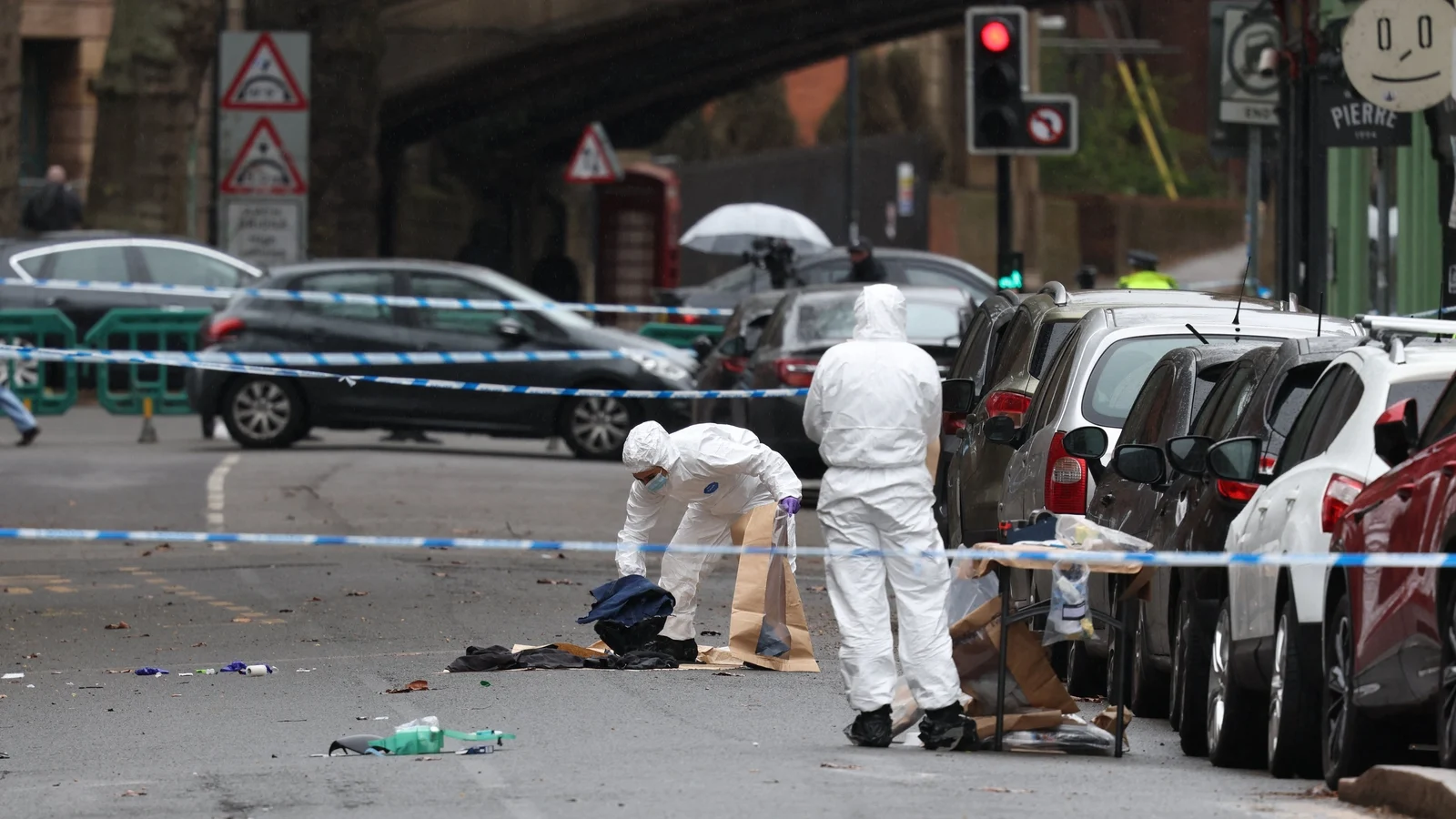
There are nights when Friar Gate feels like a page torn from an old English novel—narrow, cobbled, lit by the amber wash of streetlamps, with the cathedral spire watching over pubs and independent shops that cling to their histories. On one of those ordinary evenings, just after 9.30pm, the routine of the Cathedral Quarter was shattered. A black Suzuki Swift mounted the pavement and struck a group of people, leaving seven injured and the community stunned.
It is the kind of moment that magnetizes a town: sirens, flashing blue lights, and throngs of people pulled from the theater of their weekly rhythms into the sharp clarity of an emergency. “When something like this happens in a place you walk past every day, it changes how you look at the street,” said Hana Begum, who runs a small art gallery on Friar Gate. “You notice every curb, every gap in the pavement. You remember faces that were there one second and gone the next.”
What We Know So Far
Derbyshire Police say seven people were treated at the scene and transported to hospital with serious but not life-threatening injuries after the vehicle struck pedestrians.
A 36-year-old man from Derby—who police say was originally from India but has lived in the UK for a number of years—was arrested shortly after the incident. He was detained on suspicion of attempted murder, causing serious injury through dangerous driving, inflicting grievous bodily harm with intent, and dangerous driving, and remains in police custody as detectives continue their inquiries.
Police confirmed the car involved was a black Suzuki Swift. Counter Terrorism Policing teams are assisting local detectives, a standard move in incidents where the motive is unclear, but officers were careful to stress that their involvement does not mean the attack is being investigated as terrorism.
“We are treating this as a major, complex incident,” said a police spokesperson, whose calm tone belied the urgency of the scene. “Counter Terrorism colleagues are supporting detectives while we establish the full circumstances. At this stage we are keeping an open mind about motive.”
Voices from the Scene
People who were nearby that evening are still replaying the chaos in their minds. Mark Lucas, 47, who came down with his son after hearing the commotion, described seeing paramedics kneeling over two people on the pavement. “They weren’t moving,” he told me, his voice still edged with the shock of what he had witnessed. “There was a lot of blood and a lot of noise. My first thought was to get my boy away from it—kids shouldn’t see this.”
At The Old Silk Tap, a pub that has been pouring pints near the river for decades, owner Sana Patel stood at the doorway and watched police tape flutter in the wind. “This is our patch,” she said. “We feed the students from the university, the folk that work in the mills, the couples going to the theatre. It’s not just a street—it’s people’s lives. We need answers, and we need to know how to prevent this happening again.”
A paramedic who attended the scene, preferring not to be named, described the response as “fast and controlled” but added, “Seven people requiring hospital treatment in one incident is a heavy night for services. The focus is stabilising the injured and getting them the care they need.”
Context and Concern: Why Counter-Terror Support Matters, and Why It Doesn’t Confirm Motive
When counter-terrorism units step in, the image of a deliberate attack is easy to conjure. Yet specialists often explain that their involvement is pragmatic: they bring additional forensic, intelligence, and investigative capacity to incidents involving multiple casualties or potential public safety risks.
“Their role is about capacity and expertise,” said Dr. Naomi Reeves, a criminologist who has studied major incident responses. “It allows local forces to pursue lines of inquiry they might otherwise struggle to resource at pace. It does not, by itself, indicate an ideological or terrorist motive.”
That nuance matters because in the aftermath of violent acts, speculation can harden into a narrative that unfairly targets communities. Derby is a diverse city; its history is a weave of industrial innovation and migration, its neighborhoods home to myriad cultures and faiths. Community leaders, already wary of the fallout from a traumatic night, urged restraint and patience as investigations proceed.
Practical Answers People Want
In the hours after the incident, three urgent questions circulated among residents: Will the injured recover? Was this deliberate? What will be done to prevent it happening again?
-
On medical outcomes: Authorities reported the victims were taken to hospital with serious but not life-threatening injuries. In situations like this, hospitals often keep updates private to protect patient confidentiality.
-
On motive: Police are keeping an open mind. The fact that the driver was arrested within minutes suggests swift detective work but does not speak to why the incident happened.
-
On prevention: Calls are already mounting for urban safety measures—bollards, traffic calming, and clearer pedestrian protections—but experts caution that no single fix removes all risk. “You design cities for life and community,” Dr. Reeves said, “but you also have to design for tragedy.”
Small Town, Big Questions
Derby is not anonymous to headlines; it is a city with a proud industrial past—home to the Derby Silk Mill and the manufacturing that helped shape Britain’s transport age. It is also a place where people know one another, where pub owners know regulars by name, and where parents watch their children cross the Market Place on the way to school.
That intimacy makes shocks like this both rarer and more jarring. “We tell our kids they can walk down Friar Gate and grab a sandwich,” said local teacher Malik Rahman. “We never tell them to look over their shoulder because of cars. That expectation has changed tonight, and that’s the part that hurts.”
Beyond Tonight: What This Means for Cities Everywhere
Across the world, urban planners, police forces, and communities are grappling with how to safeguard bustling civic spaces while keeping them open and welcoming. Vehicle-ramming incidents—whether accidental or deliberate—have prompted cities from Barcelona to New York to rethink street design. The debate sits at the intersection of policing, mental health services, road safety, and social cohesion.
There are no easy answers. Strengthening emergency services and improving forensic capabilities matters. So does investing in mental health support, community policing, and local youth services that can diffuse tensions before they boil over. And there is the quieter work: rebuilding trust, offering space for mourning, and resisting the urge to rush to scapegoats.
Tonight, Friar Gate is quieter than usual. A handful of lights in the gallery windows blink on as artists return to their studios. The cathedral bells keep their steady watch. And a city holds its breath.
What You Can Do
In moments like these, small acts have meaning. If you live locally, check on your neighbours. Support the businesses that line the street so their livelihoods do not become a casualty of fear. If you witnessed the incident and haven’t yet spoken to police, come forward—every piece of information helps.
And ask yourself: how do we balance our freedom to live in public spaces with the need to feel safe in them? How do we protect our streets without turning them into fortified zones?
Derby will, like other cities, answer these questions the only way it can—together. For now, the focus remains on recovery, on the facts, and on making sure that a night which began like any other does not become the new normal.