Nepal to officially declare flood-missing people dead after deadly deluge
 Caalamka
Three months after catastrophic summer floods tore through Nepal, the government has begun the legal steps to declare thousands of still-missing people dead, officials said — a move families say is essential to start rebuilding their lives.
The disaster began on 26 August when a high-altitude glacier on the Nepal-China border collapsed, sending a violent surge of water, ice, rock and debris downstream.
In Nepal, the floods killed more than 1,400 people and left over 5,500 missing.
Among those unaccounted for are two Irish citizens, 46-year-old Santosh Sahu and 18-year-old Spandan Sahu, who were travelling on a tour when the flooding struck.
“We have started the process to declare the missing dead by verifying their details,” Ram Bahadur KC, spokesman for the disaster management authority, said.
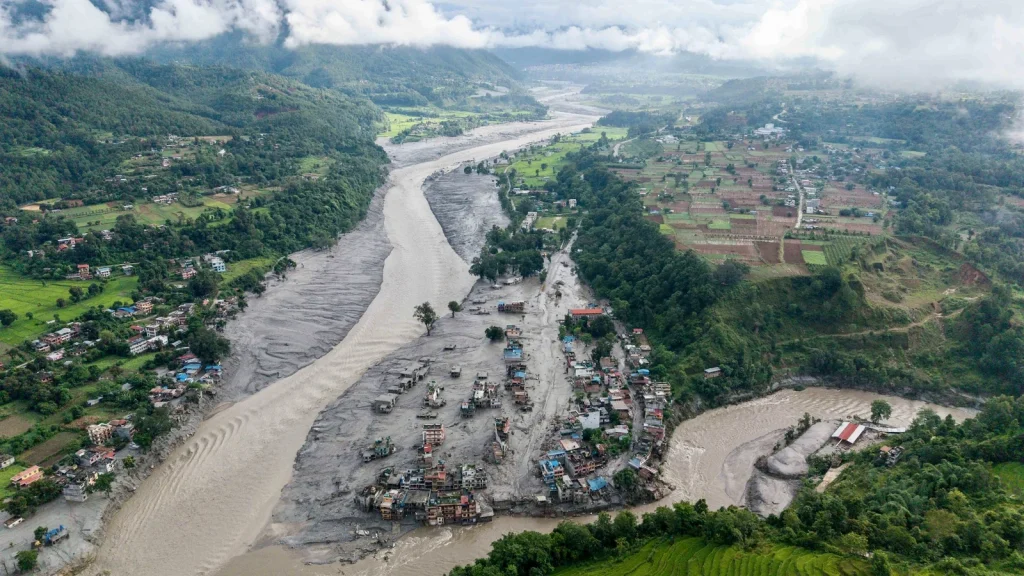
Drone footage from September shows Nepal flood zone bried in mud
Officials have published public notices listing about 4,000 missing people — including 623 foreign nationals — and invited objections or corrections before the state issues formal death declarations.
Authorities said more names may be added as checks continue, and the government is expected to proceed with official declarations once the required legal process is completed.
The effort follows a change in Nepal’s laws last month that shortened the time required to legally presume disaster victims dead, cutting the wait from 12 years to around six weeks.
The flood ranks among the deadliest disasters in the Himalayan nation’s history.
Read more:
Hope and horror: Families in Nepal await news of missing
‘Everything is lost’ – Inside Nepal’s devastated flood zone
Even after weeks of intensive search and rescue — with hundreds of workers digging through vast fields of mud and debris — rescuers found only a handful of people alive.
So far, just 112 bodies have been identified and returned to relatives.
Without death certificates, many families remain unable to access compensation, transfer property, or complete other legal processes that hinge on formal documentation.
Some relatives, left with no remains to bury, have already carried out symbolic cremation ceremonies for loved ones whose bodies were never recovered.