Morning Sirens, Evening Threats: The Gulf Caught Between Bombs and Bargains
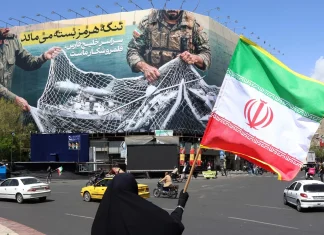
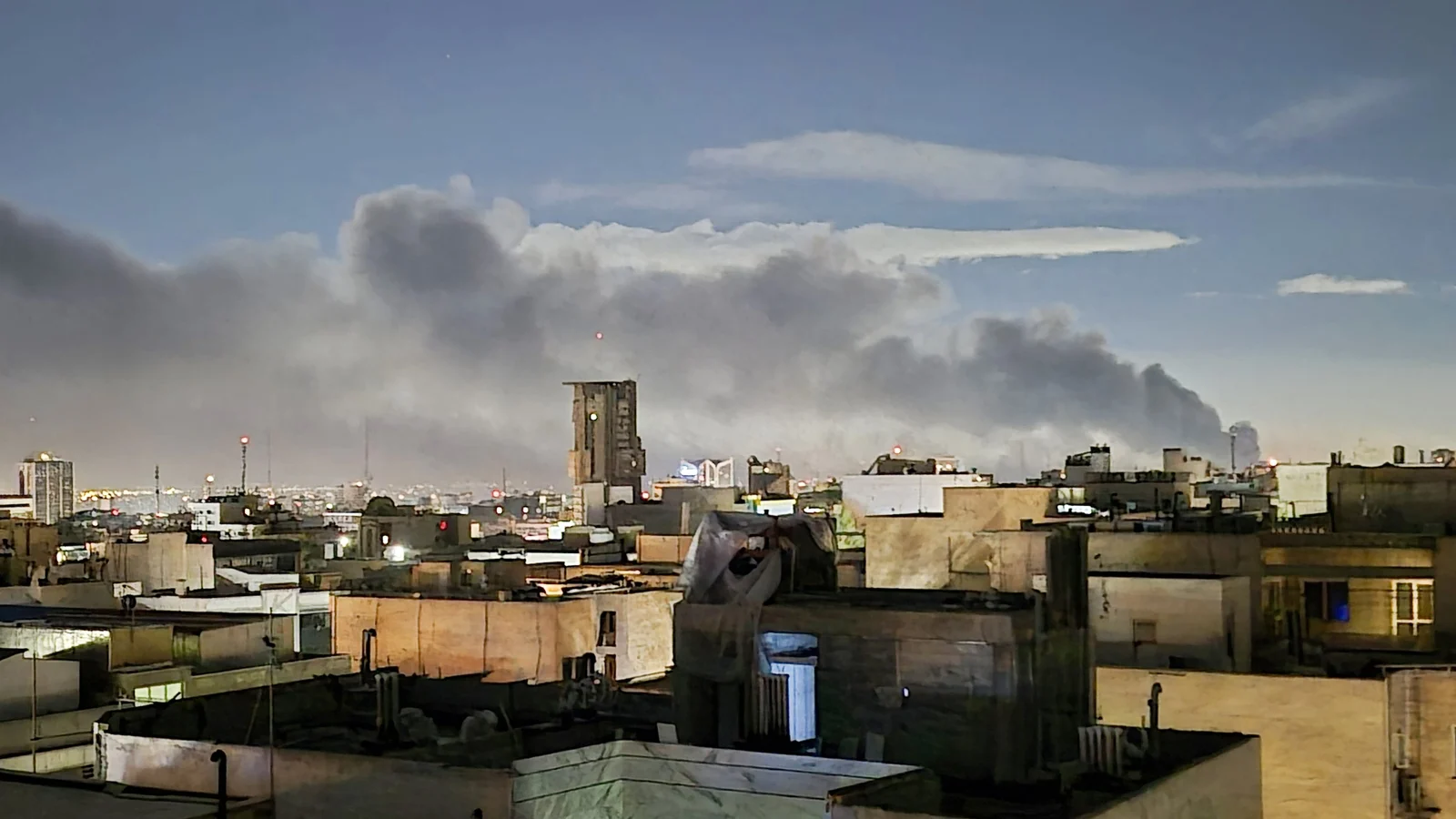
Tehran woke to the smell of dust and scorched concrete. Blast tape fluttered like limp bunting on apartment windows; shopkeepers swept shards of glass into cardboard boxes while children watched from the stairwells with wide, frightened eyes. In the city’s quieter neighborhoods, the sound of an explosion lingered in the air like bad weather — an invisible thing that people checked for before they stepped outside.
That same morning the world seemed to tilt on its energy axis. The Strait of Hormuz — a narrow ribbon of water through which roughly one-fifth of the world’s seaborne oil transits — remained effectively closed, choked by months of retaliatory strikes and naval harassment. Economists who had become used to thinking in decimals and derivatives woke to a different calculus: supply routes can be cut off as quickly as an electricity line, and the human cost behind every blackout is not found on a balance sheet.
Voices Under the Rubble
“We heard two big bangs, then people were running,” said Fariba, a widow who runs a small tea stall near the southern edge of the city. “My son phoned from work and told me his building had been hit. We are tired. We are used to fear now, but that doesn’t make it easier.”
State media reported new aerial strikes and claimed a US‑Israeli attack on a residential building south of Tehran killed at least 13 people; international agencies had yet to independently verify the figures. What journalists and aid workers on the ground can confirm is less tidy but, perhaps, truer: people are dying, infrastructure is crumbling, and markets are jittery — a dangerous combination.
Rhetoric That Roars
Across oceans, American rhetoric has been blistering. The former president used his social platforms to threaten an intensification of strikes aimed at Iran’s energy and transport grid. “Hell” was the shorthand; analysts called the language both tactical and combustible. A senior analyst in Washington noted, “When you couple inflammatory language with the ability to strike critical infrastructure, you cross a line that has legal and moral consequences — and the regional fallout can be catastrophic.”
Iran’s leaders responded in kind. The speaker of parliament in Tehran took to social media to denounce what he called reckless provocation, warning that the policies being pursued by foreign capitals would “drag the region into a living hell.” It was a sentiment repeated in softer terms by ordinary people who pointed to the years of sanctions and the grinding effect of isolation.
The Short and the Long of a Possible Truce
Behind the bluster, negotiators were reported to be quietly exploring a two-phase arrangement: an initial 45‑day ceasefire that might pave the way for broader talks and, eventually, a lasting agreement to end hostilities. The proposal, if it existed, would be fragile — a bandage on an open wound. Ceasefires can hold for months or for a single night, depending less on text and more on trust, and trust has been in short supply.
“A pause buys time,” said Leila Hamidi, a veteran regional mediator who has worked on Gulf crises. “But pauses are meaningful only if there are clear steps: verifiable de-escalation, humanitarian access, a limited monitoring mechanism. Without that, both sides will simply use the lull to rearm.”
Across the Gulf: Fires, Ports, and Vulnerabilities
The conflict has not been confined to Tehran or to military bases. Iran’s Revolutionary Guard has continued to project force across borders, launching drone and missile strikes on petrochemical facilities in Kuwait, Bahrain and the UAE. In Kuwait, fires caused “severe material damage” at plants operated by affiliates of the state oil company. In Dubai, authorities reported an Israeli-linked vessel at Jebel Ali port was struck.
At the docks, workers spoke not of grand strategy but of interrupted shifts and unpaid hours. “We are trying to keep ships moving,” said Hassan, a longshoreman who has worked at Jebel Ali for two decades. “When there’s a strike, the whole chain collapses: fuel that should go to hospitals, food warehouses, and factories is delayed. We are the ones who feel it first.”
Asymmetry, Precision, and the Price of Rescue
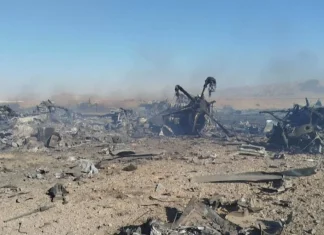
Alongside the strikes and the political theater came a dramatic rescue that read like a scene from a novel: under cover of darkness, special forces inserted deep into Iranian terrain to retrieve a downed weapons officer from an F-15. The mission — lauded by some American officials as daring and decried by others as a violation of sovereignty — reportedly involved the loss of two MC‑130 transport aircraft that suffered mechanical issues and several helicopters that were subsequently destroyed to prevent their capture.
A US official described it simply: “We went in, got our people, and we got out. It was a high-risk operation, but we couldn’t leave anyone behind.” Critics argued the operation ratcheted up hostilities and risked widening the conflict.
Neighbors Burn, Neighbors Bleed
In Israel, too, people were sifting through rubble after a missile strike on a residential building in Haifa; medics reported a handful of wounded and at least two fatalities. Lebanon’s health ministry said Israeli strikes had killed several more, underscoring how the war’s shockwaves have spread beyond any single battlefield.
“There is a sense that rules no longer apply,” said Miriam Cohen, a Haifa resident involved in local relief efforts. “People don’t know whether to stay or go. We’re clinging to community centers because at least there we can get water and a roof for a little while.”
What This Means for the World
-
Energy security: Interruptions in the Strait of Hormuz can reverberate through supply chains, raising fuel prices and inflation across continents.
-
Human cost: Beyond headline death tolls lie thousands more whose lives are disrupted — families, displaced children, shuttered clinics.
-
Diplomatic erosion: When military action outpaces talks, backchannels fray and mediators lose leverage.
Questions Worth Holding
How many more cities must have their mornings broken by explosions before negotiators find a path that protects civilians? What price are we willing to pay in the name of deterrence — and who gets to set that price? These are not abstract inquiries. They are the questions families ask as they count their dead and examine the charred bones of their neighborhoods.
“We want our children to go to school,” said Fariba, the tea stall owner, eyes wet. “We don’t want to be chess pieces. We want a life.”
Closing Scene
The day that followed remained unclear. Markets trembled, diplomats exchanged terse messages, and in Tehran a young man taped another strip of plastic across his shop window. It was a small thing, an almost ritualistic act of making safe what little he could. Outside, the air carried the electricity of anticipation: a negotiation might succeed, or it might not. The people in the streets did not have the privilege of certainty — only the compulsion to endure.
So I ask you, reader: when the geopolitics of energy, pride, and power collide, where do ordinary lives fall in the ledger? And what responsibility do distant capitals hold when their rhetoric becomes a thunderbolt that splits cities in half?