When Paperwork Becomes a Lifeline: The Human Cost of New NGO Rules for Gaza
Walk through any makeshift shelter in Khan Yunis and you’ll see how fragile life has become: children sleeping on thin mattresses, mothers sipping tea from chipped cups, the call to prayer punctuating a day that stretches on without predictable water or power. In a place where every bit of help — a bag of flour, a bottle of clean water, a teacher for a traumatized child — counts for more than one can measure, the arrival or absence of an aid worker can mean the difference between survival and despair.
Now imagine those aid workers told they must reapply for permission to do their jobs, under a new registration framework that two dozen groups say threatens to close doors that have been open for years. This is not abstract bureaucratic language; it is a living crisis with names, faces and urgent needs attached.
What the New Rules Say — and Why They Matter
Israel has set a deadline — 31 December — for non-governmental organisations operating in Gaza, the West Bank and Israel to register under a new system. Officials describe the move as a security measure: the stated goal is to ensure no “hostile actors or supporters of terrorism” are operating under the cover of humanitarian work.
According to a ministry statement provided recently, roughly 100 registration requests have been submitted, of which 14 were rejected and the others either approved or still under review. Rejection reasons are framed in stark terms: involvement in terrorism, antisemitism, Holocaust denial or what is described as “delegitimisation” of Israel — a phrase that aid workers say is alarmingly vague.
Key conditions cited by authorities
- Evidence that an organisation is not linked to extremist activity.
- No engagement in practices labelled as “delegitimisation” of Israel.
- No endorsement or denial of the crimes of October 7; no Holocaust denial.
On paper, these look like straightforward safeguards. In practice, humanitarian actors say the language is elastic, and leaves too much room for interpretation. “What does delegitimisation mean today? Is it a political statement? Is it a historical critique?” asked Yotam Ben-Hillel, an Israeli lawyer advising several NGOs. “If reporting what you see becomes the basis for exclusion, then we have a system that will quietly erase witnesses.”
On the Ground: Who Wins and Who Loses?
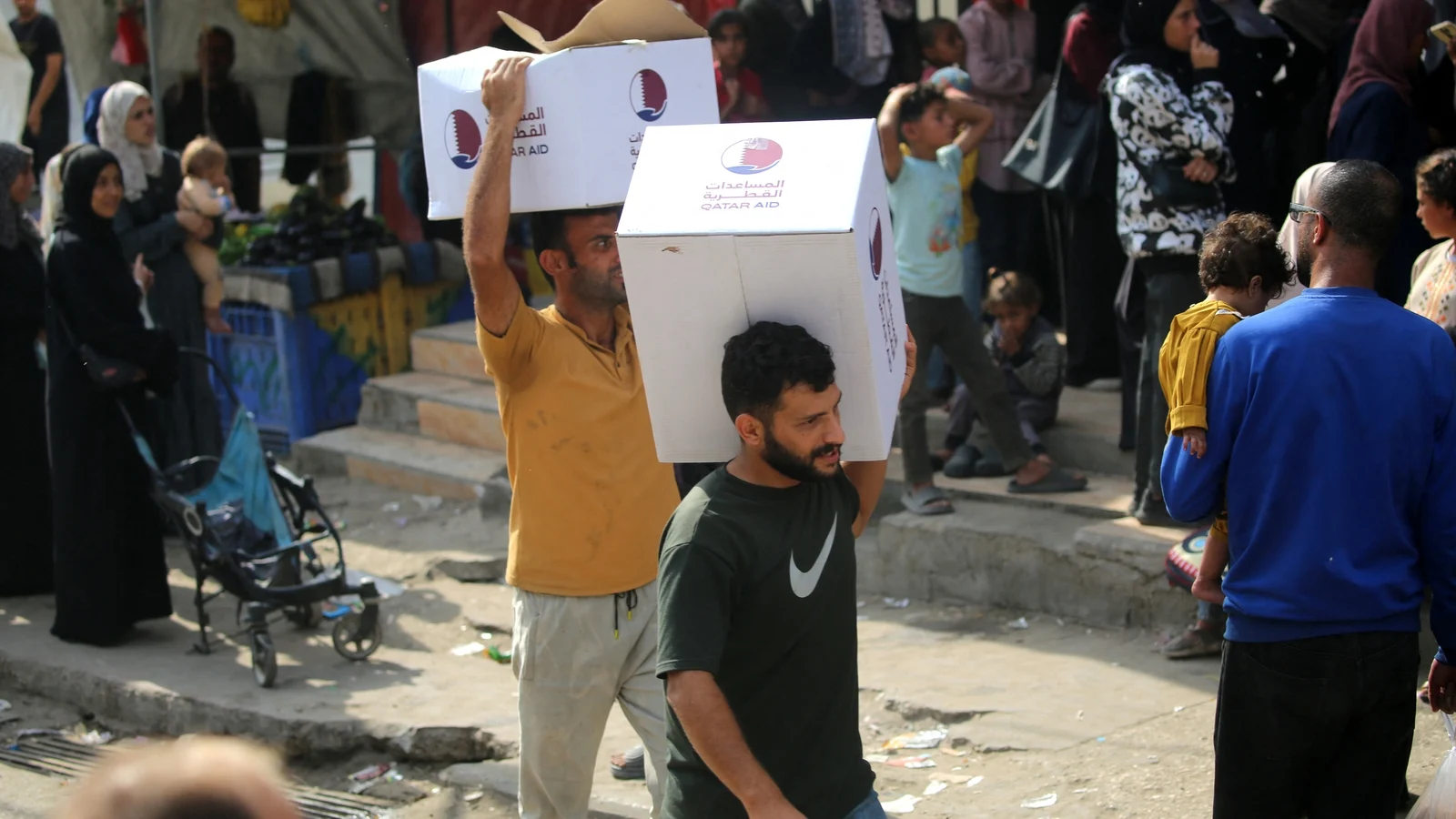
The stakes could not be higher. Gaza still reels from a war that began with the Hamas attacks of 7 October 2023 and saw a US-brokered ceasefire in October (the agreement envisaged a flow of 600 aid trucks per day). Yet aid deliveries have never matched that figure; UN agencies and aid groups report between 100 and 300 humanitarian trucks crossing daily, far below needs.
Among those challenged by the new rules are long-established organizations — Save the Children, which supports roughly 120,000 children in Gaza, and the American Friends Service Committee — who have been told to withdraw their international staff within 60 days and are barred from sending supplies across the border.
Local staff, meanwhile, are left holding the line. “Our team is exhausted, but we stay,” said Amal, a teacher with a local partner organisation in Gaza who asked to be identified only by her first name for security reasons. “We run child-friendly spaces, we give children a chance to breathe for a few hours. If international partners leave, the strain will be unbearable.”
Humanitarian coordination bodies warn that even when some organisations are permitted to continue, those listed are often unfamiliar names with no established presence on the ground. “We know the response is built on a mosaic of actors — UN agencies, long-standing NGOs, local groups,” said a senior humanitarian official in Jerusalem. “You cannot replace institutional memory and networks overnight.”
Practical consequences
- Withdrawals of international staff and suspension of cross-border deliveries.
- Potential gaps in specialized services: psychosocial care, child protection, surgical teams.
- Increased pressure on local staff who face security risks and dwindling support.
Voices from Across the Divide
Not all of the commentary is forensic; much of it is human, raw and immediate. “If NGOs are considered harmful for passing on testimonies and saying what is happening, then this is very problematic,” said Jean-Francois Corty, president of Medecins du Monde, reflecting a fear shared across humanitarian circles.
On the Israeli side, government spokespeople maintain that the new framework is about balance. “We are committed to ensuring that aid reaches civilians quickly and safely,” a ministry representative told a recent press briefing. “The measures are not intended to impede assistance but to prevent exploitation of humanitarian channels by hostile entities.”
Still, some aid workers see pressure points that go beyond legitimate security concerns. “After speaking about genocide, denouncing the conditions under which the war was being waged and the restrictions imposed on the entry of aid, we tick all the boxes to fail,” said one NGO head, speaking on condition of anonymity. “Once again, bureaucratic pressure is being used for political control, with catastrophic consequences.”
Local Color: Daily Life in the Shadow of Policy
In the souks and back alleys of Gaza, the decisions made in conference rooms and ministries become small, human tragedies. A shopowner in Deir al-Balah, Ahmad, talks about rerouted trucks that arrive with goods late or not at all. “You plan for Eid, you plan for school openings. Then a convoy is delayed, and everything shudders,” he said, rolling a cup of coffee between his palms. “We are used to delays. But you can’t live on patience forever.”
Children coloring in emergency learning centers draw beaches and bicycles, not bombs. When aid workers hand out crackers and juice, a child might ask, “Will my dad come home soon?” Those questions echo loudly when institutions that help answer them are told their work may no longer be welcome.
Wider Implications: Civil Society, Security and the Global Picture
This is not only about Gaza. Around the world, civil society groups operate where state power, security concerns and humanitarian need collide. Tightening the space for NGOs — through registration hurdles, restrictions on funding, or vaguely defined prohibitions on speech — is part of a broader trend scholars and advocates warn about: the shrinking civic space that erodes accountability and transparency.
What happens when witnesses are sidelined? What happens when the organisations that document, treat, and testify about suffering are told their presence itself is a suspect act? These are questions for anyone who cares about human rights, conflict response, and the fragile instruments we rely on to keep aid flowing across borders.
Where Do We Go From Here?
There are practical ways forward. Transparent criteria, time-bound reviews, and participation by neutral international observers could temper fears on all sides. Stronger protections for the safety of local staff, financial guarantees to keep essential programs running, and a commitment to separate legitimate security concerns from political expression would help.
But beyond policies and paperwork lies a moral question for the global community: when humanitarian channels narrow, who will stand in the breach? Will we allow hunger to be addressed only by those who can prove their neutrality to a standard that is itself contested? Or will we insist that access, impartiality and protection for witnesses be preserved?
As the December deadline approaches, the people of Gaza — and the workers who serve them — are caught in a story that is at once bureaucratic and heartbreakingly intimate. If ever there was a moment to ask what kind of world we want to be, this is it. What do we owe the children drawing bicycles instead of battlefields? And who will answer when the trucks stop coming?