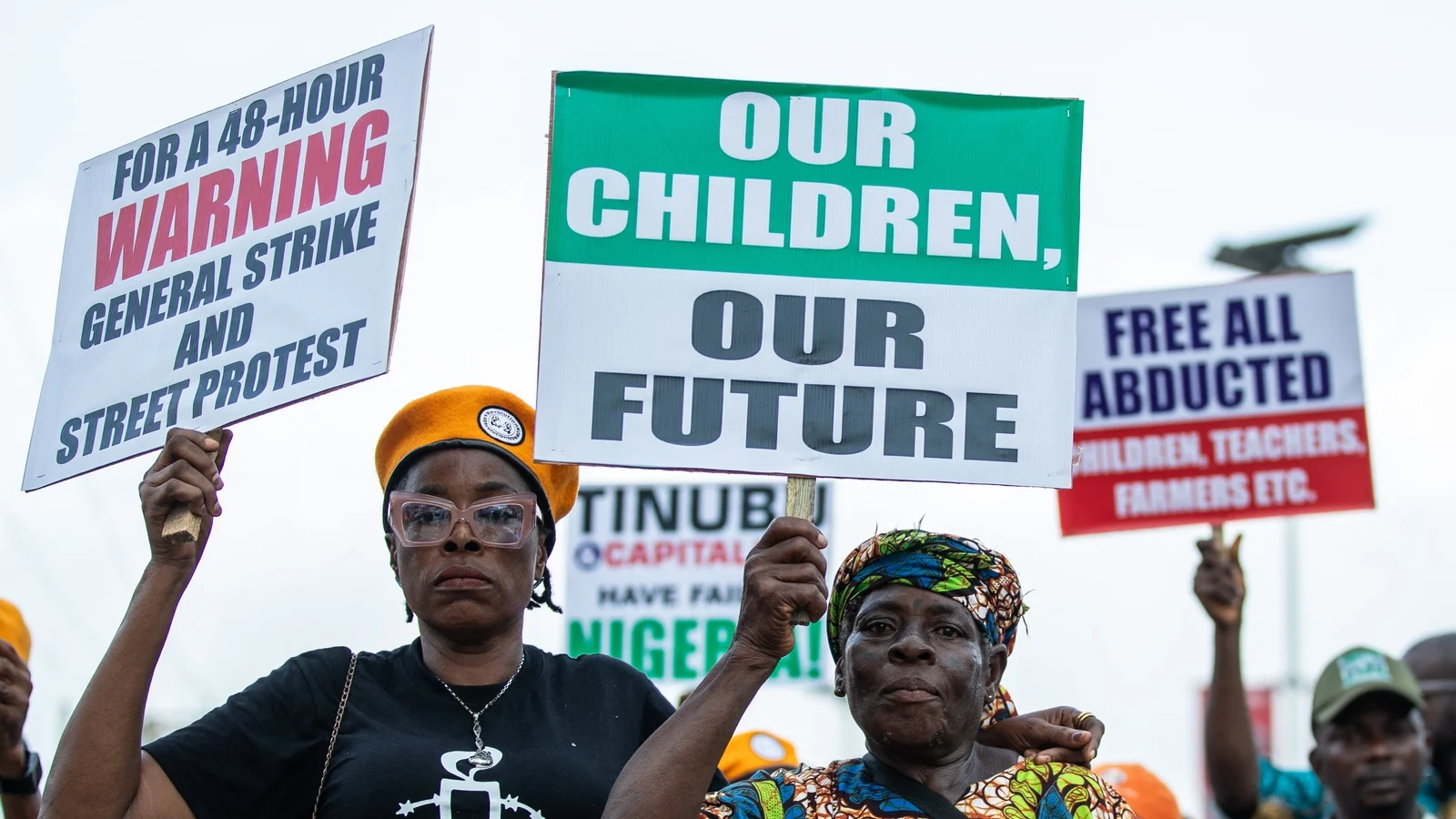
More than 300 Nigerians who had been seized in a wave of abductions have been freed, the government said, in what officials described as a landmark rescue operation that included 163 people taken from a single community in western Nigeria earlier this year.
Kidnapping for ransom by criminal groups, jihadists and non-ideological gangs known as bandits has become a major crisis in Nigeria, especially areas with little state presence in the north and centre of the country.
The February assault that triggered one of the largest single incidents unfolded in Woro, a village in Kwara state near the border with Benin. Suspected jihadists attacked the community, killing more than 150 people and abducting roughly the same number.
“President Bola Ahmed Tinubu warmly welcomes the successful rescue of 308 Nigerian citizens who were abducted in different attacks in Niger and Kwara states,” presidential spokesman Bayo Onanuga said.
He said the rescue included 163 victims from Woro and 145 from Niger State.
Authorities said the hostages were recovered from a site inside the Kainji Lake National Park Forest.
Sprawling, often sparsely governed forests and reserves across the country have turned into hideouts for Nigerian criminal groups.
Onanuga called it “the largest rescue operation ever carried out” in a single day, saying the effort involved the National Counter-Terrorism Centre, the military, the Department of State Services intelligence agency and the police.
Scores held since February attack
Residents previously told AFP that suspected jihadists had swept into Woro earlier this year after sending a letter to the village declaring their intention to preach, only for no one to attend.
Those residents said the attackers appeared to retaliate by setting homes alight, killing upwards of 165 people and abducting an unknown number, although local authorities issued a lower death toll.
Media reports had estimated that 176 people were kidnapped, but as recently as last Friday police in Kwara state said that figure was unsubstantiated.
Much of the village was left as piles of ash and rubble after the assault.
Mr Tinubu condemned what he called a “beastly attack” at the time, sending an army battalion to the troubled area and blaming the Islamist movement Boko Haram — a name often used generically for jihadist groups operating in Nigeria.
Just months before the Woro attack, the Al-Qaeda-linked Group for the Support of Islam and Muslims (JNIM) claimed its first operation on Nigerian soil in the state, near Woro.
Abductions have proved lucrative in Nigeria.
Between July 2024 and June 2025, kidnappings generated about $1.66 million in ransom payments, according to a tally by SBM Intelligence, a Lagos-based consultancy.
The latest rescue comes as insecurity persists elsewhere: over the weekend, gunmen abducted at least 52 people, including children, during an attack on a village and a military base in northwest Nigeria’s Zamfara state.