A Moment of National Embarrassment — and the Quiet, Heavy Work of Repair
There are images that stick to the bones of a country. Sometimes they are small — a single second of film — and sometimes they are the slow drip of a thousand lesser humiliations. Last week the United States woke to one of those images: a clip shared on a popular social platform that briefly superimposed the faces of Barack and Michelle Obama onto the bodies of monkeys.
It lasted a blink, but its echo felt enormous. For many, it was more than a crude insult; it was a reminder of a history of mockery and dehumanization that stretches back centuries. For others, it was one episode among many in a media ecosystem where outrage is manufactured and churned for clicks. For citizens trying to make sense of it all, the question was simple and painful: how did we get here?
From Platform to Pod: How the Story Unfolded
The video appeared on Truth Social, a network closely associated with Donald Trump. It promoted claims about the 2020 election and, in the final frame, flashed the image of the Obamas in a way that many observers called racist. The post drew swift, bipartisan condemnation—yet even the rebukes felt tangled. The White House initially dismissed the furor as “fake outrage,” only to later attribute the offensive clip to a staff error and remove it.
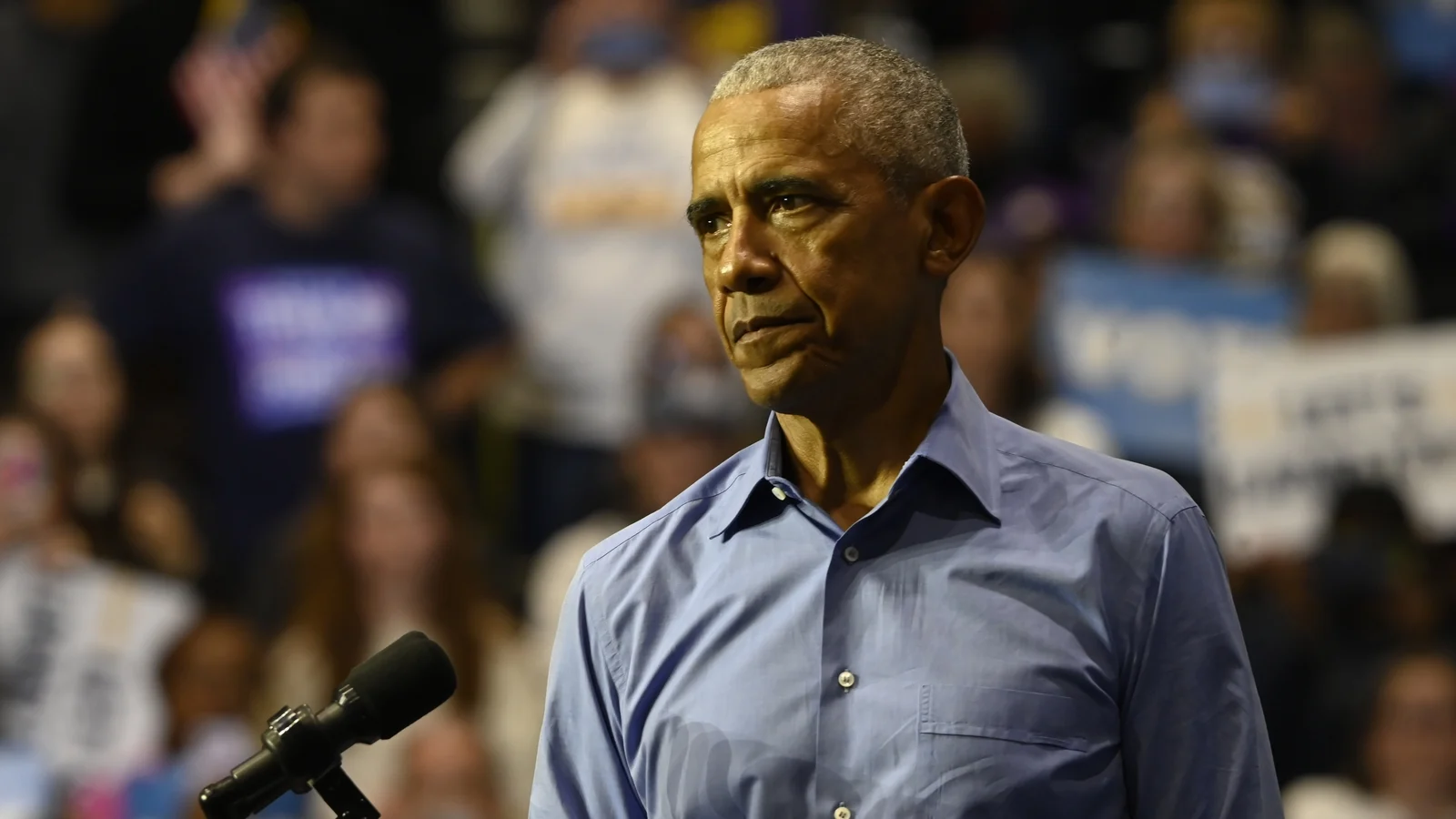
Barack Obama himself spoke about the episode for the first time on a popular political podcast, and his tone was weary but clear. Without naming names, he described a “clown show” quality to the current media landscape and warned that “decorum” once associated with public office had frayed.
“People are tired of the cruelty,” said a retired school principal in Chicago’s Hyde Park, the neighborhood where Mr. Obama rose to political prominence. “We expect our leaders to show restraint, to hold themselves to a standard. When that vanishes, it trickles down into everything else.”
A Short Clip, a Long History
To outsiders, equating public figures with animals might read simply as mean-spirited satire. To many Black Americans, though, that gesture taps into a long, ugly archive — from minstrel caricatures to demeaning political cartoons — that was always meant to strip away dignity.
“This isn’t just about politics,” said Dr. Amina Johnson, a historian of race and media at a Midwest university. “There’s a cultural grammar here. The imagery is not neutral; it’s freighted with a history of dehumanization. That is why the reaction was so visceral.”
Politics, Performance, and the Business of Outrage
We live in a time when social feeds reward velocity more than veracity. Platforms are engineered to amplify content that provokes reaction. According to the Pew Research Center, roughly seven in ten Americans regularly use social media — and an increasing share say these platforms are a net negative for public discourse. When a political actor chooses to trade in spectacle, the result is often a feedback loop that benefits attention and punishes nuance.
“The economics of outrage are real,” observed Evan Mercer, a former campaign strategist who now consults on digital advertising. “It’s cheaper to provoke than to persuade. But there’s a cost: the steady erosion of shared norms that make democratic debate possible.”
And that erosion has electoral consequences. Moments like this are not neutral for parties or campaigns. Observers and some voters worry that coarse messaging could alienate moderates and independents at exactly the kind of moments where swing margins matter most.
“I’ve always leaned conservative, but that image crossed a line for me,” said Mariana Lopez, a teacher and mom in Atlanta who voted Republican in local elections. “I want policy fights, not personal cruelty. I think a lot of people feel the same.”
Beyond the Headlines: Small Scenes, Big Meaning
Walk through neighborhoods across the country and you see the ripple effects of what many call a coarsening of public life. In barbershops, teachers’ lounges, and living rooms, people are less inclined to treat political opponents as fellow citizens. The language becomes sharper; the gestures, more performative.
“It’s not just what happens on TV,” said Jamal Rivers, who runs a community center on Chicago’s South Side. “When our kids see leaders normalize mocking and dehumanization, it gives them permission to do it in schoolyards. That has real consequences for community cohesion.”
What the Polls Suggest
Surveys over recent years have painted a picture of deep fatigue. Large majorities say they are concerned about the tone of political discourse; many report that social media makes the problem worse. While Americans remain divided on many policy issues, there is surprising consensus around the notion that incivility harms democracy.
- Most Americans use social media daily, increasing exposure to instant, amplified commentary.
- Large segments of the electorate—especially independents and suburban voters—report discomfort with personal attacks and inflammatory rhetoric.
- Public trust in institutions has seen a long-term decline, which makes civility one of the few remaining, fragile norms that could anchor public life.
Where Do We Go From Here?
There are no easy fixes. Platforms can change moderation policies, political leaders can adopt higher standards, and voters can punish or reward behavior at the ballot box. But cultural repair is slow. It happens in small, persistent ways: teachers modeling respectful disagreement, faith leaders convening cross-partisan dialogues, newsroom editors refusing to traffic in dehumanizing imagery.
“If we want different outcomes, we have to expect different behavior,” Dr. Johnson said. “Institutions set norms by example. When leaders show restraint, others follow.”
Barack Obama’s message—muted, measured—was a plea to reclaim a sense of public decency. “The majority of Americans find this behavior deeply troubling,” he said on the podcast. “Ultimately, the answer is going to come from the American people.”
An Invitation to Reflect
So here’s a question for you, the reader: what kind of public square do you want to live in? One that rewards spectacle and cruelty, or one where vigorous disagreement coexists with basic respect? Your choices—what you click, what you share, how you vote—help decide.
For those tired of the spectacle, the remedy is not nostalgia. It’s active civic labor. It is calling out dehumanizing rhetoric when you hear it, supporting leaders who model restraint, and demanding that platforms prioritize community standards over engagement metrics. It is also remembering that, despite the noise, many institutions and people still work quietly to keep democracy functioning.
“We can be better,” Jamal Rivers said as we closed our conversation. “Not because of one speech or one piece of content, but because of the daily choices ordinary people make. That’s where hope lives.”
Closing Thought
That single second of video was meant to degrade. Instead, for a moment, it forced a national conversation about dignity, history, and the rules that bind citizens together. The larger question is whether that conversation will lead to change—or whether the next outrage will merely distract us from the slow, necessary work of rebuilding trust.