

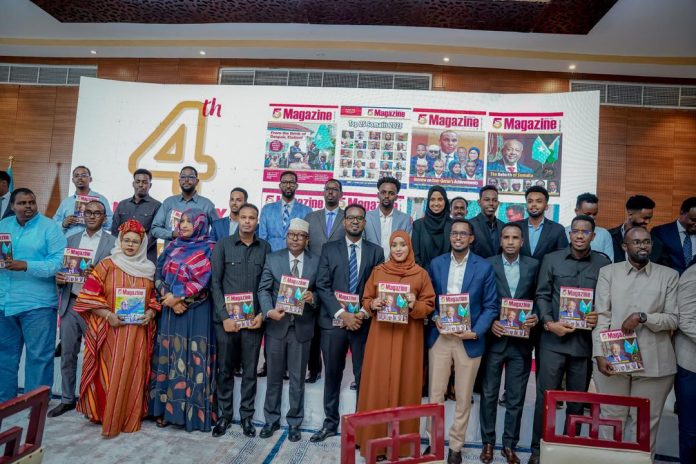
Nov 18(Jowhar)-On 15 November, Hotel Jazira in Mogadishu hosted a special event for 5 Media Group, specifically for 5 Magazine, which celebrated its fourth anniversary.
Following Trump’s U-turn, U.S. House to proceed with Epstein vote
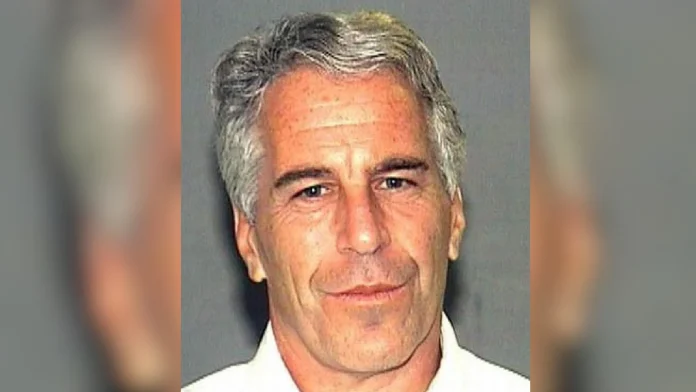
When the Capitol’s hum turned toward a long-buried set of files
There is a certain hush that falls over the House floor when the ordinary rhythm of bills and budget rows collides with something darker — with papers that smell of secrecy and grievance. On a crisp morning in Washington, the Republican-majority House prepared to vote on an unusual, politically combustible resolution: force the Justice Department to hand over investigative files connected to Jeffrey Epstein, the disgraced financier whose crimes sent shockwaves through the global elite.
The vote, by all accounts, was suddenly no longer in doubt. What made it stranger than usual was not just the subject — a case that has spawned lawsuits, conspiracy theories, and a raw public anger — but the fact that a president who had resisted the effort for weeks reversed himself at the eleventh hour. Donald Trump, who once called the push a partisan “hoax,” signed off on letting Congress proceed. For lawmakers and onlookers alike, the switch felt like watching a weather front change direction: quick, decisive, and with consequences swirling in its wake.
Why these files matter
Jeffrey Epstein’s name is shorthand for a network of power, predation, and institutional failure. Convicted in Florida in 2008 on state charges related to the sexual abuse of underage girls, Epstein was later arrested on federal sex-trafficking charges in July 2019. He died in a Manhattan federal jail cell on 10 August 2019; the ruling was suicide. The case left hundreds of questions in its wake — some about who enabled him, others about why earlier opportunities for accountability were missed.
For survivors and advocates, the files are not mere documents; they are traces of lives disrupted, names that could confirm patterns, and, potentially, evidence about whether people with power escaped scrutiny. “We are not here for salacious gossip,” said a survivor advocate I spoke with. “We’re here for truth. We need to know why systems failed the way they did, and who profited from that silence.”
From a petition to a partisan pivot
A group of House Republicans, led by a small but determined contingent, used a procedural tool — a petition to force consideration of the files — to bring the issue to the floor. Such moves are rare and carry the unmistakable air of rebelliousness: a chorus of lawmakers effectively saying, “We will make you address this.” That chorus became louder when it collected enough signatures to require a vote.
The intervention that surprised everyone, however, was the White House. Until recently, the president and his aides had actively opposed releasing the files, concerned about privacy for victims and, perhaps more pointedly, about political fallout. Then on Sunday night the tone shifted. In curt social-media language he once favored, the president called on House Republicans to proceed, framing the matter as something Democrats would weaponize — a line that did not calm critics.
A senior White House aide, speaking off the record, said the reversal sprang as much from political calculation as from principle. “He wanted the floor to talk about cost of living and jobs, not the files,” the aide said. “But the pressure on the rank-and-file to be seen as transparent — and the rare public pushback — made him relent.” Whether the calculation was prudent or not depends on whom you ask.
Voices on the ground and in the halls
In the narrow restaurants and town squares of Palm Beach, where Epstein kept homes and a pattern of elite socializing has been etched into local memory, people reacted with a mix of fatigue and vindication. “We’ve heard the rumors for decades,” said Ana Delgado, who runs a pastry shop in the shadow of a gated estate. “If these papers finally show how people used their money and status to hurt others, then maybe my niece finally gets to see the truth.” Her voice carried a weary hope: the kind of hope that has been sharpened by repeated disappointments.
Inside the Capitol, the debate folded into larger partisan rhythms. A senior Democrat on the oversight committee told me he believed the president had “misread the political weather” and was trying to blunt a rebellion before it cost him support. “This isn’t about headlines,” he said. “It’s about accountability.” A conservative backbencher, meanwhile, argued the files might reveal political bias in earlier investigations. “If the DOJ is protecting allies or hiding facts out of fear, we have to know,” she said.
What the vote could — and won’t — do
The resolution on the floor was crafted with what lawmakers called a careful balance: it demands disclosure while carving out protections for victims. The Justice Department, according to the measure, would be allowed to redact personally identifying information to safeguard those who suffered. Yet that safeguard has not quieted all concerns that the review could drag on or be narrowed in scope through exemptions like “ongoing investigations” or claims of national security.
A constitutional law scholar I spoke to warned against expecting a cinematic flood of revelations. “Document dumps rarely look like courtroom drama,” she said. “They are dusty, bureaucratic, and take time to parse. But they are also where accountability sometimes starts. We should be prepared for partial releases, appeals, and a long slog.” The legal scholar added that if the resolution reaches the Senate and the president’s desk, the political calculation will only grow more complex.
Beyond the files: a reflection on power and secrecy
Why does the release of a stack of documents matter so much beyond Washington and Palm Beach? Because it tests a larger idea: whether democratic institutions are mechanisms that allow people to know what their leaders and the powerful are doing, or whether they protect a privileged few behind layers of confidentiality.
Consider the international angle. Across democracies, there is a growing impatience with opacity. From corporate boardrooms to political campaigns, citizens increasingly demand transparency — not because they crave scandal, but because secrecy corrodes trust. The Epstein files, in this context, are a lens. They ask: when institutions fail, who bears the cost? Victims, most immediately. Then society, in the form of eroded faith.
And so I ask you, reader: what do you think justice looks like here? Is it the unvarnished release of every paper and email, or is it a careful, victim-centered disclosure that protects privacy while revealing patterns? Can transparency and compassion coexist without being turned into a partisan club?
Where we go from here
The House vote is only a step in a longer journey. If the resolution passes, it heads to the Senate, where timing and political math will determine whether it becomes law. The Justice Department will have its own judgments and legal obligations. Victims’ advocates will watch every redaction. Meanwhile, the political fallout — from rhetoric on talk shows to campaign trail soundbites — will keep the story alive.
Accounts like Epstein’s are ugly reminders that the architecture of power can shelter wrongdoing for years. They are also reminders that public institutions, imperfect though they may be, remain a venue where citizens can demand answers. The papers in question are not an end; they are a chance — perhaps one of the last — to illuminate the shadows, to reckon with the past, and to ask how we build systems that protect the vulnerable rather than the well-connected.
Puntland iyo ICRC oo ka wada hadlay xal u helida dadka ku barakacay dagaalada Calmiskaad
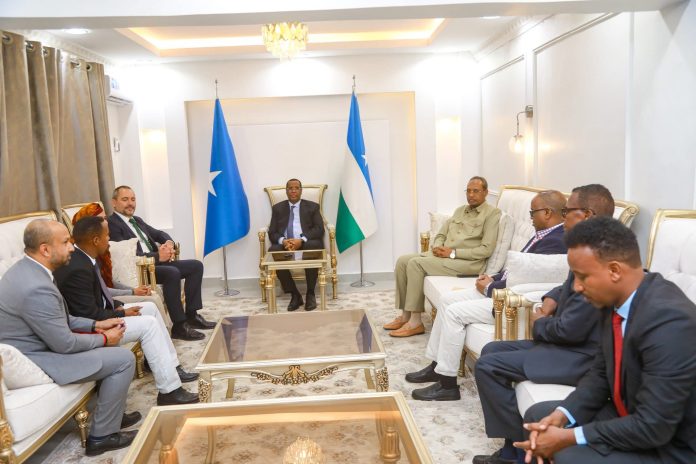
Nov 18(Jowhar)-Ku-simaha Madaxweynaha, ahna Madaxweyne Ku-xigeenka maamulka Puntland H.E Ilyas Osman Lugatoor, ayaa xafiiskiisa ku qaabilay Wafdi uu hoggaaminayo Madaxa Guddiga Caalamiga ah ee Laanqayrta Cas (ICRC) ee Soomaaliya, Mudane Antoine Grand.
Wasiir Maareeye “Adduunku wuu nala yaabaa markaan wax weydiisano annagoo kheyraad badan heysano”
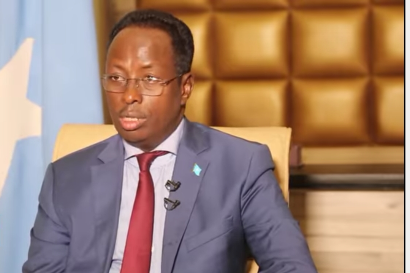
Nov 18(Jowhar)-Wasiirka Beeraha iyo Waraabka Soomaaliya Maxamed Cabdi Xayir (Maareeye) ayaa ka hadlay sababta adduunka ula yaabo marka la sheego kheyraadka dabiiciga ah ee Soomaaliya ay leedahay, isla markaana la is weydiiyo sida dal leh hodantinimo noocaas ahi uu weli u wajaho gaajo iyo baahi joogto ah.
UK tightens asylum rules in sweeping immigration overhaul
On the pebbled shores of Britain’s debate: a country remaking who can stay
On an overcast morning along the Kent coast, seagulls wheel like punctuation marks over a shoreline that has, in recent years, come to mean something far larger than its cliffs and cafés. Small rubber boats — faint, resilient, anonymous — have become the most visible motif in a story that reaches from the North Sea to Westminster, and from living rooms in working-class towns to the boardrooms of political strategists.
Last week, in what ministers called the most radical rewrite of asylum policy in modern British history, the Labour government proposed sweeping changes that would make refugee status temporary, speed up deportations, and reframe how British courts interpret the European Convention on Human Rights (ECHR).
The announcements landed like pebbles dropped into a shallow pond: concentric ripples. For some, they are a long-overdue tightening of borders and a reset of an immigration system described by the prime minister as a “significant pull factor.” For others, they are a moral and legal U-turn that risks punishing people who have already lost everything.
The policy in plain terms
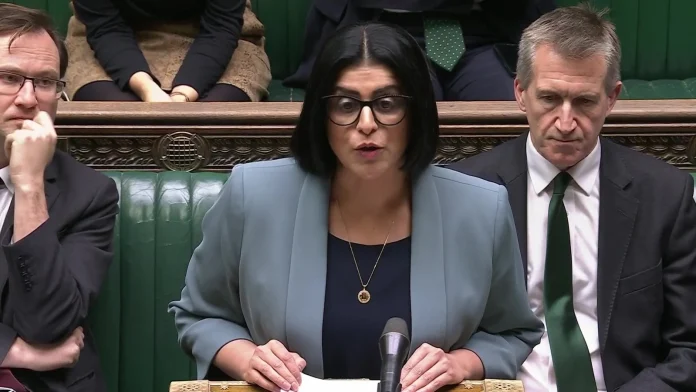
Interior Minister Shabana Mahmood — who has spoken openly about her family’s Pakistani roots — outlined the measures in blunt prose: lengthen the wait for settlement to 20 years, reinterpret Article 8 of the ECHR so “family life” covers only immediate relatives, and take a harder line on removals, including from families whose asylum claims have been rejected.
The government also threatened visa bans for Angola, Namibia and the Democratic Republic of Congo if those countries refused to take back nationals deported from the UK. And ministers signalled they would urge partner states to narrow interpretations of Article 3 of the ECHR, the provision that forbids torture or “inhuman or degrading treatment,” arguing that in recent years the scope of that protection has expanded beyond what the government thinks was intended.
“We want a system that is generous to those who genuinely need sanctuary, and robust against those who exploit legal loopholes,” Mahmood wrote in a newspaper column. “Unless we act, we risk losing popular consent for having an asylum system at all.”
Numbers that explain a noisy debate
Numbers help explain why the issue has become political dynamite. In the year to the end of March, 109,343 people applied for asylum in the UK — a 17% increase on the previous 12 months. Net migration, which crept up through 2022 and 2023, hit a record 906,000 in the year to June 2023 before falling to 431,000 in 2024, partly as a result of tighter rules and enforcement.
Still, Britain accepts fewer asylum claims annually than several of its European neighbours: France, Germany, Italy and Spain all register higher numbers of people claiming sanctuary. Most migration to the UK happens through legal channels — work visas, family reunification, study — not in small boats.
Voices from the shore
At a fish-and-chip shop near Dungeness, 62-year-old owner Sheila Harris shakes her head. “It’s not about being cruel,” she says, tea cooling in her hands. “It’s about order. We used to know what to expect — jobs, council houses. Now it feels like someone kicked the rulebook out the window.”
Opposite the promenade, a volunteer at a local refugee centre, who asked to be called Amina, offers a different view. “People don’t leave their homes unless they’re desperate — fleeing war, persecution, fear. When you meet them, you see mothers who are terrified, and children who have crossed the sea on the promise of safety. Making status temporary is a terrifying idea for families trying to rebuild.”
Politics, protest and a populist tide
The political stakes are high. Migration has surged to the top of voters’ concerns, and Reform UK — led by Nigel Farage — has ridden that concern to the top of opinion polls. Zia Yusuf, a senior figure in Reform, told reporters he felt the public are “sick of being told there is no way to stop people landing on our beaches.” But Yusuf added a dose of realism: “Legal constraints and political resistance mean many of these proposals may never be fully realised.”
Tony Vaughan, a Labour politician and legal expert, was quick to criticise the rhetoric. “Language like this fans the flames of division,” he said. “It gives licence to the dark murmurings of racism and abuse we’ve seen outside migrant hotels.”
Local protests, national fractures
In towns across England, debates have spilled from town halls into the streets. Protesters decrying migrant arrivals have clashed with locals who donate clothes and tutor children in English. The mood is often contradictory and raw: hospitality mingles with hostility, charity with fear.
Legal fault lines: the ECHR in the spotlight
At the heart of the government’s legal rethink is Article 8 of the ECHR, the right to respect for private and family life. Under current British case law, a wide interpretation of “family life” can, in some cases, prevent deportation. The government proposes narrowing that definition to immediate family — parents, children, spouses — to prevent what it calls “dubious connections” being used to stay in the UK.
Similarly, ministers argue Article 3 protections have been stretched too far. Human rights advocates warn that narrowing such protections risks sending people back to danger, and could contravene other international legal obligations.
What experts and charities fear
Sile Reynolds, head of asylum advocacy at Freedom from Torture, said the proposals would “punish people who’ve already lost everything,” and warned of a chilling effect on victims of trafficking and torture seeking help.
“Temporary protection sounds neat on paper,” said Professor Martin Elwood, an immigration law scholar. “But legal uncertainty creates long-term social and psychological damage. If you tell someone they can be here for 20 years with no route to settlement, you don’t just delay integration — you institutionalise precariousness.”
How this fits the global picture
This is not a debate confined to Britain. Across the world, countries are wrestling with the twin pressures of rising displacement — driven by conflict, climate change and economic upheaval — and political backlashes fuelled by populist movements. Europe, North America, Australia: each has recalibrated asylum rules in recent years, sometimes tightening, sometimes reshaping legal interpretations.
So here’s a question for you, the reader: what kind of society do we want to be when the next wave of displacement comes? How much should compassion cost in political capital and public money? And what do we owe people whose lives have been fractured by forces beyond their control?
Possible outcomes and the road ahead
Practically, a number of things could happen. The government could press ahead and face legal challenges that go to the Supreme Court. It could seek bilateral agreements with origin countries to accept returns — with visa bans as leverage. Or political pressure, both from within Labour and from human rights groups, could soften the proposals.
- Potential legal challenges: the courts may be asked to interpret Article 8 and Article 3 under the proposed framing.
- International diplomacy: threatened visa bans could spark reciprocal moves from affected countries.
- Local impact: increased enforcement may alter the patchwork of hotel accommodations, community services and charities that currently support asylum seekers.
Final miles of the journey
On the beach, a group of schoolchildren scatter to chase a crab. Their laughter is small and indifferent to the legal arguments unfolding in London. Yet they will grow up in the country shaped by these decisions — a country that must reconcile the desire for border control with a claim, ancient and moral, to be a refuge.
Policy talk often reduces people to numbers and categories. But behind the 109,343 asylum claims and the headline-grabbing small boats are human lives — stubborn, messy, resilient. If the government’s goal is to restore public confidence in the asylum system, it will need more than legal tightening; it will need a clearer moral compass, humane processes, and public conversations that don’t pit compassion against order as if they were mutually exclusive.
Whatever happens next, the pebbles on Britain’s beaches will continue to remind us: migration is not an abstract policy problem. It’s a story of movement, of families, of hope and fear. How we answer it tells us who we are.
Pope Condemns Global Political Inaction on Climate Change
Belém at the Crossroads: A Pope, the Amazon, and a World Running Out of Time
The air in Belém is thick with river mist and the sweet, peppery smoke of street kitchens as COP30 unfurls along the banks of the Amazon. Boats drift like slow thoughts, and the city’s market—Ver-o-Peso—sings with the clatter of produce, fish, and a thousand human stories. It is here, in the humid, green cradle of the world’s largest rainforest, that a sharply moral voice rose above negotiations, exhortation and the hum of diesel generators: Pope Leo XIV, urging concrete action and calling out the absence of political will.
“Creation is crying out in floods, droughts, storms and relentless heat,” he told a gathering of southern-hemisphere church leaders during a sideline address. His words landed like rain and like warning—familiar to communities who have watched river levels swell and seasonality warp over the past decade.
A living symbol with an urgent need for care
For many in Belém the Amazon is not an abstract carbon sink or a line item in a negotiating text. It is family, livelihood and the reason daily life tastes the way it does—tacacá at dawn, carimbó beats late into the night, the fishmongers who can name by sight where each species was hauled from the river. “We feel the heat before the papers print a story,” said Maria dos Santos, a community organizer from a riverside neighborhood, her hands stained with açai as she gestured toward the mangrove flats. “When the floods come earlier, when the dry season burns the land—this is our emergency.”
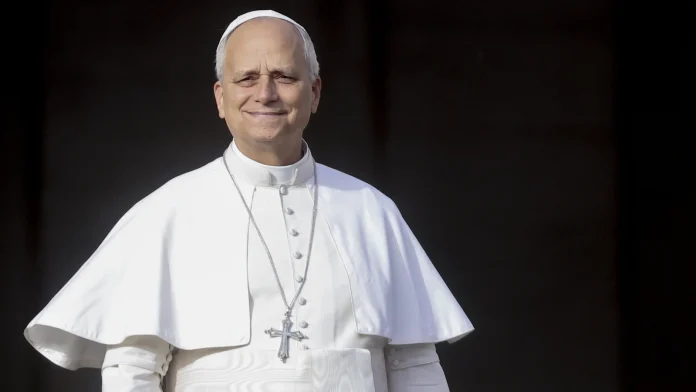
Pope Leo XIV—an American-born pontiff who spent decades as a missionary in Peru—has made climate justice a theme of his early papacy. His speech in Belém became more than pastoral reflection; it was a diplomatic nudge, a moral ledger called to account. “One in three people live in great vulnerability because of these climate changes,” he said, reminding delegates that climate change is not a distant worry for boardrooms and think tanks. It is immediate, human, urgent.
The climate talks: fragile consensus, looming decisions
Inside the glass-and-steel convention halls, government ministers began trickling in to take the baton for final negotiations. The mood was a mix of determination and exhaustion. For weeks negotiators have haggled over language and timelines—how quickly to ramp up ambition, how to finance loss and damage, whether rich and poor countries can agree on a common roadmap to phase out fossil fuels. The Paris Agreement—signed in 2015 to hold warming “well below” 2°C and pursue 1.5°C—became the baseline the pope defended. “True leadership means service,” he said, “and support on a scale that will truly make a difference.”
“There is still time to keep the rise in global temperature below 1.5°C, but the window is closing,” he warned—a line that echoed the sober calculations of scientists. As of 2023, the planet has warmed about 1.1°C above pre-industrial levels, and experts say drastic cuts are needed this decade to avoid dangerous warming. The Intergovernmental Panel on Climate Change estimates that global CO2 emissions must fall roughly 43% by 2030 from 2019 levels to give a reasonable chance of limiting warming to 1.5°C.
Where politics meets livelihood
“What is failing is the political will of some,” the pope added, and it’s a sentiment echoed in negotiation rooms. Delegates differ not only on ambition but on the economics of the transition, on trade measures, and on who pays for the inevitable losses occurring today—eroding coastlines, failing crops, flooded homes. For small island states, for the countries bordering the Amazon, these are not hypothetical debates. They are questions of survival.
“We see families pushed to the city after rivers swallow their farms,” said Dr. Ana Pereira, a climate scientist at the Federal University of Pará. “We see biodiversity drop. We see livelihoods destabilized. Scientific models match social reality: delayed action multiplies the suffering.”
Voices from the ground
Outside the negotiating halls, voices layered the city—a chorus of urgency and skepticism. Jonas Rivera, 22, a youth activist from Manaus, carried a hand-painted sign that read: “Ambition Now.” “We grew up watching promises,” he said. “We need more than words from leaders who fly in for a photo-op and fly out with commitments half-kept.”
A local fisherwoman, Lúcia Ribeiro, told me she had seen fish stocks shift with changing river temperatures. “My grandfather taught me the seasons. Now the seasons don’t teach. We fish where we can and pray there is enough tomorrow.” Her voice, like the river, carried steadiness and exhaustion.
Not every reaction was despair. “The pope brings a different language to this table—the moral language of stewardship,” said Ambassador Rafael Costa, a Latin American diplomat. “It reframes climate policy as a responsibility not merely to future generations but to those already harmed. That matters in these negotiations.”
Concrete actions demanded—and missing
The pope’s appeal for “concrete actions” is not ambiguous. Civil society groups have been asking for the same: clear finance commitments to pay for adaptation and loss-and-damage; faster, legally-binding timelines to phase out fossil fuels; technology transfers that don’t keep developing nations on the back foot. The pledge by rich nations to mobilize $100 billion per year for developing countries, established nearly a decade ago, has repeatedly been criticized as insufficient and slow to materialize.
- Major demands on the table at COP30 include: accelerated emissions cuts aligned with 1.5°C, an operational loss-and-damage fund, and a roadmap for phased fossil fuel reductions.
- Countries remain split on unilateral trade measures and the balance between mitigation and adaptation finance.
- Observers note the absence or ambivalent posture of some major emitters complicates consensus.
UN climate chief Simon Stiell welcomed the pope’s injection of moral clarity. “His words urge us to continue to choose hope and action,” Stiell said—an encouragement, and a challenge, to negotiators watching the clock tick down.
The larger story: morality, power, and the future of our common home
What happens in Belém matters far beyond Brazil’s riverine horizons. The Amazon stores carbon, shelters species and cultures, and sustains local and global weather patterns. Losing it—through deforestation, fires or hydrological change—would be a blow to planetary stability. Yet the decisions here also reveal broader truths: that climate solutions require political courage, equitable finance, and transformation of economies that have long benefited some while exposing others to harm.
Are we ready to accept the scale of change required? Can global systems be rewired to prioritize long-term resilience over short-term gain? These are not technical questions alone; they are moral ones. Pope Leo XIV’s message is not only to leaders in suits and flags: it is for each of us, to consider what solidarity looks like in practice.
Invitation to reflection
As the sun sets and the Amazon hums with night insects, consider what kind of leadership you want to see—locally and globally. Will it be measured by the words leaders utter on podiums, or by the policies they implement, the money they mobilize, and the protection they provide to the most vulnerable? The window for a safer climate is narrowing. In Belém, where water and life interweave, the choice is strikingly obvious.
“We cannot treat the Amazon as a backdrop,” Maria dos Santos said softly. “It’s the heartbeat of many lives. If it fails, we all feel the pulse slow.”
Golaha Amaanka oo taageeray qorshaha Nabada Trump ee Gaza
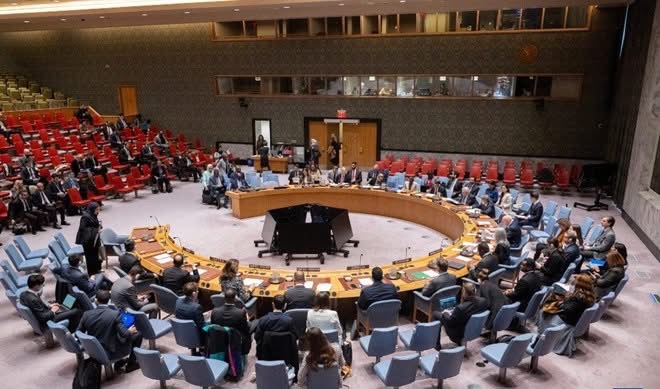
Nov 18(Jowhar)-Qorshaha nabadda ee Trump ee Gaza ayaa hadda galay wajigii labaad ka dib markii uu ansixiyay Golaha Ammaanka ee Qaramada Midoobay iyadoo uusan jirin waddan ka horyimid.
COP30 negotiators work overnight seeking breakthrough climate agreement
Nightfall in Belém: A City of Rivers, Rain, and Relentless Negotiation
They told us the Amazon would be the backdrop for drama, but standing under the damp, humming canopy of Belém’s evening sky you sense the negotiations are as much a human story as a political one.
Delegates shuffle in and out of conference halls, their faces lit by the glow of laptops and the hum of air conditioning. Outside, vendors pack up from the Ver-o-Peso market — a riot of açaí, dried fish, and carved wooden bowls — while the river slips black and inexorable a few blocks away. This is not a postcard of the climate crisis; it is one of its front lines, and the tension is almost tactile: a sense that what happens in the rooms tonight could change lives across the planet.
Stretching the Hours: A Deadline Looms
COP30’s presidency has asked negotiators to keep going through the night. “We can’t pretend these are easy conversations,” said the summit chair at dusk, voice steady, eyes rimmed with fatigue. “But if we don’t try now, we risk losing the chance to agree on something meaningful before the clock runs out.”
After a bruising first week of talks, the hosts set a near-term deadline — finish a “significant part” of the text tonight for a formal sign-off tomorrow — a move designed to force clarity where ambiguity has thrived. The mood is urgent; not elegant, and not guaranteed.
The Map of Disagreement
In practical terms, the summit has become a mosaic of clashing priorities: trade rules that some countries call protectionist, financial pledges that many developing nations call miserly, and fossil fuel language that divides those whose economies still depend on oil and gas from those for whom the science leaves no room for delay.
Carbon tariffs and commerce
One of the sharpest skirmishes centers on the EU’s Carbon Border Adjustment Mechanism (CBAM) — a policy meant to level the playing field by pricing embedded carbon in imports. It’s a policy scheduled to become fully operational in 2026 and has been piloted since 2023.
“We urge everyone to avoid measures that shelter domestic industries under the guise of climate action,” said a senior negotiator speaking for a bloc of manufacturing-heavy countries. “If you erect new barriers, you risk turning climate policy into geopolitical football.”
Responding from across the table, an EU delegate defended the approach: “Pricing carbon — whether at home or at the border — is about aligning economies with the reality of the climate crisis. We’re not seeking trade wars; we’re trying to stop runaway warming.”
Money, always money
Finance has returned as the beating heart of the talks, the familiar sore point in global climate diplomacy.
For decades, developing countries have pressed wealthy governments to deliver predictable funding for both emissions cuts and adaptation. There remains an unresolved promise — the long-discussed $100 billion per year target from developed to developing countries — and many in the Global South say it has never materialized in full. That enduring shortfall, more than any technical detail, fuels distrust.
“We are not asking for charity,” said an African climate minister at a small press gathering, voice low but fierce. “This is compensation for a crisis we did not create. Without reliable finance for adaptation, millions will be uprooted.”
Small Islands, Big Voices
Among the most vocal are representatives of small island states and low-lying nations. To them, the debate is not academic. For many communities, a half-degree of warming is the difference between survival and displacement.
“For our people, 1.5°C is not a line in a report. It is a threshold between life and death,” said a minister from a Pacific island coalition. “We know the science. We live the consequences.”
Those pleas collide with a more defensive posture from some major emerging economies and fossil fuel exporters. Any language that feels like finger-pointing is met with caution; nobody wants a text that could be read as singling out their national development model.
The Fossil Fuel Question
One of the most emotionally charged debates is whether the summit will call explicitly for a phase-out of fossil fuels. Supporters argue that science — and the latest climate models — leave little room for compromise: to have a decent chance of limiting warming to 1.5°C, global greenhouse gas emissions need to fall roughly 40–50% by 2030 relative to recent levels, according to the Intergovernmental Panel on Climate Change (IPCC) assessments.
“Phasing out fossil fuels isn’t ideology; it’s arithmetic,” said a European delegate between meetings. “We can have a just transition or mass displacement, but we cannot have both.”
Brazil, the host, has signaled it wants a strong signal on fossil fuels. Walk the streets of Belém and you’ll hear mixed sentiments: a vendor who depends on diesel for his refrigerated truck, an indigenous leader whose forest is threatened by illegal clearing, a young researcher who speaks with optimism about renewables. “You cannot eat a slogan,” said one local fisherman. “But I also don’t want my home drowned by a tide in twenty years.”
At the Edge of the Forest, a Larger Story
Belém itself gives the summit a texture that’s hard to ignore. This is a city where riverboats carry both goods and stories; where the scent of grilled fish competes with diesel; where indigenous leaders have come with carved ceremonial objects and scientists with satellite data. The Amazon looms not only as a backdrop, but as a moral accumulator — a place where promises will be checked against real land and real livelihoods.
“The forest is not a prop for a photo-op,” said an indigenous activist during a late-night panel. “It is our home, our pharmacy, and our climate buffer. We are tired of being spoken for.”
What’s Really at Stake — For Everyone
These talks may seem arcane — paragraphs and brackets, clauses and footnotes — but the implications are visceral. Here are some of the stakes negotiators are wrestling with:
- How money moves from rich countries to vulnerable ones to fund adaptation, mitigation, and loss and damage.
- Whether international trade rules will become a tool to accelerate decarbonization or a way to shield incumbents.
- Whether the global community will acknowledge the scale of change needed to keep 1.5°C within reach, and who bears responsibility for easing the transition.
Night Work, Morning Consequences
As midnight runs toward dawn in Belém, the mood is a strange mix of hope and exhaustion. Deals are possible; so are stalemates. “If we wait to solve the hardest issues, everyone loses,” said a representative of a UN climate body earlier in the day. “But solving them requires trust, and trust is built on money, fairness, and willingness to make hard choices.”
So, reader: what do you think? Should trade tools like CBAM be embraced as necessary instruments to cut emissions, even if they ruffle commerce? Or do they risk deepening divides and slowing cooperation? And when powerful economies balk at stronger language on fossil fuels, who should make the first move?
Tonight, negotiators will keep at it beneath fluorescent lights and the low forest sounds beyond the city. They will argue, cajole, and compromise. And somewhere between the Ver-o-Peso stalls and the polished halls, the fate of communities — and perhaps the planet’s — will be decided in language as delicate as any ecological balance.
Follow an Irish climate scientist’s candid COP30 video diary
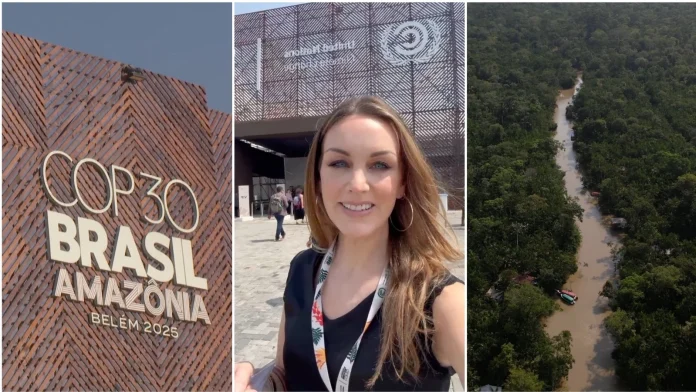
Belém at the Brink: The Amazon, Diplomacy, and the Final Week of COP30
Belém wakes before dawn. Mango crates clatter in the tide of the Ver‑o‑Peso market, boats return from the river with sacks of tucupi and smoked fish, and a humidity so thick it feels like a prayer hangs over the city’s colonial facades.
It is into this humid theatre that the world has descended. More than 50,000 delegates — negotiators, scientists, indigenous leaders, campaigners, and journalists — have come to the mouth of the Amazon for COP30, the climate summit that must do more than talk. It must produce a plan that reaffirms the 2015 Paris Agreement and gives the planet a credible pathway forward.
“Everything, everything. It’s very complicated,” COP30 President André Aranha Corrêa do Lago said when asked if any single issue dominated the talks in Belém. The plainness of that sentence has the gravity of a weathered map: every route forward is entangled with others.
The stakes leak into the air
The Amazon is not a backdrop; it is part of the agenda. The rainforest spans roughly 5.5 million square kilometers and holds an estimated 100 billion tonnes of carbon in its trees and soils — a living ledger for the world’s climate. Its rivers contribute almost a fifth of the planet’s riverine freshwater. Lose the Amazon, and the world loses a major brake on warming and a bathtub for carbon humanity cannot easily refill.
“Protecting the rainforest is essential if we are to reach net zero emissions targets,” Dr Clare Noone, a climate scientist from the University of Galway who is attending COP30, told RTÉ News from Belém. Her voice—equal parts scientist and citizen—cut through the diplomatic rhetoric: the math is clear; preserving carbon-dense landscapes is not optional.
From the negotiation halls to the riverbank
Inside the summit rooms, the language is technical: nationally determined contributions, adaptation finance, loss and damage, transparency frameworks. Outside, in the shade of the giant kapok trees and on the banks where children kick up mud, the impacts are more immediate. “We used to fish right here under the big tree,” said Ana, a local fisherwoman, wiping her hands on her apron and smiling with an edge of sorrow. “Now the catches are smaller, and the weather, it surprises us more.”
An Indigenous elder, speaking through an interpreter, told me: “The forest has its own voice. When its voice is ignored, the weather answers in storms.” She looked out across the water with a hard, gentle stare. “We did not come to COP to be a photo. We came because the forest is our law.”
These are the people who live the climate’s everyday fluctuations — not in emissions charts, but in failed crops, shifted river seasons, and the slow hollowing of traditions. Their testimony has a way of stripping jargon down to essentials.
Negotiations: where the emotional and the technical collide
Diplomacy is a tug-of-war between urgency and caution. Delegates pore over text line by line, each clause a battlefield. For poorer nations and small island states, “loss and damage” has become the moral fulcrum of this meeting: the recognition and compensation for irreversible harms already being inflicted by climate change.
“You cannot ask communities to adapt when the debt is already stacked against them,” said Laila Mensah, a policy delegate from Ghana. “Finance is not charity; it’s responsibility.”
High-income nations are under pressure to pledge more public finance, to shift flows away from fossil fuels and toward quick, scalable support for adaptation — infrastructure, crop resilience, and early-warning systems. But money alone won’t heal rivers or reforest devastated tracts; it must be paired with land rights, indigenous stewardship, and enforcement that resists illegal logging and land grabs.
Money, the elephant in the room
How much finance is enough? The answer is both technical and moral. The Intergovernmental Panel on Climate Change (IPCC) has repeatedly underscored the need for rapid emissions reductions and large-scale investment in adaptation. Estimates for global adaptation needs run into the hundreds of billions annually, but current global flows fall far short.
“We cannot keep asking the poorest to shoulder the cost of a crisis they did least to create,” said Helena Duarte, an economist with a climate finance NGO. “This summit must sharpen the instruments: clear commitments, transparent delivery mechanisms, and predictable funding.”
Ecology and economy, entwined
Belém itself is a study in contradictions — a city of brilliant markets and pressing poverty, of scientific institutes and neighborhoods feeling the weight of environmental change. The people who live here know what the negotiators sometimes forget: the Amazon is not just carbon or canopy. It is food, medicine, ancestry, and microclimates that sustain agriculture across South America.
Global empires of consumption rely in part on the Amazon’s quiet generosity. Meanwhile, local entrepreneurs are trying to translate biodiversity into sustainable livelihoods — acai cooperatives, rubber-tapping collectives, community-run ecotourism. “We want development that keeps the forest standing,” said Paulo Lima, who manages a cooperative producing sustainably harvested oils. “It is our economy and our identity.”
What success would look like
A successful COP30 would thread together at least three things: credible emission reduction commitments that keep 1.5°C within reach; meaningful, predictable finance for adaptation and loss and damage; and robust international support for protecting and restoring vital ecosystems like the Amazon, paired with respect for indigenous rights and local stewardship.
It would mean clear timelines, enforceable milestones, and mechanisms that translate promises into projects on the ground. It would mean the kind of multilateralism that tolerates compromise but refuses cynicism.
Why you should care
Ask yourself: when a forest burns in Brazil, who pays? When floodwaters reshape a coast in Bangladesh, what account balances will be adjusted? The answers are global. The Amazon is not just Brazil’s; its fate shapes weather, food security, and climate risk around the world.
Climate decisions made in the glass-and-steel halls of COP30 will ripple into the shops, farms, and frontlines of distant communities. If you eat beef or soy from land with unclear provenance, if your pension is invested in fossil fuels, if your city plans for infrastructure without accounting for a changing climate — COP30 matters.
A closing note from the river
Walking along the mangrove-lined estuary at dusk, I watched men mend nets, and children chase the last gulls of the night. The skyline of Belém glows with fluorescent energy and quiet resilience. There is an earnestness to this place — a sense that the world’s negotiators are not acting on an abstract climate, but against a living, breathing landscape.
Whether COP30 will deliver the “clarity” the planet needs is still up in the air. But sitting beside the Amazon, amid the smoke of grilled fish and the murmur of languages, one truth is clear: conservation here is not a niche policy. It is a planetary imperative.
What will we choose — to invest in the systems that hold the climate together, or to keep stealing the world’s safety net until it tears? Belém is asking the question out loud, and the world must answer.
Netanyahu to block Knesset vote on Gaza stabilisation force
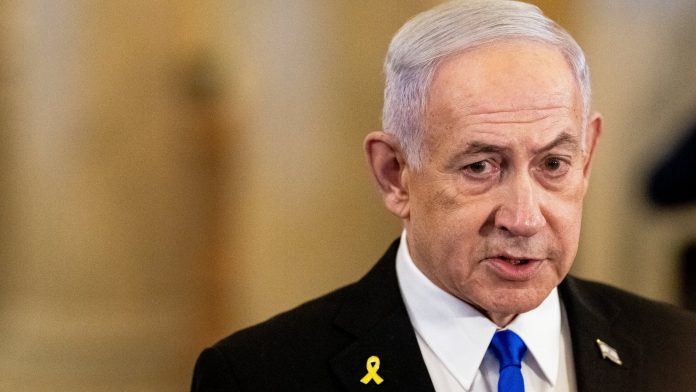
At the Edge of a Vote: Netanyahu’s Defiant Promise and a Region Holding Its Breath
On the eve of a United Nations Security Council vote that could reshape the map of the Middle East, Israeli Prime Minister Benjamin Netanyahu stood before his cabinet and issued a line so plain it sounded like a vow: Israel will not accept the creation of a Palestinian state.
“My position has not changed one bit,” he told ministers, his voice measured, his words carrying the weight of decades of policy and political compromise—or the refusal to compromise. “I’ve fought this for years. We will not reward terrorism with statehood.”
The scene was familiar: a leader rallying his base, a coalition of hard-right partners urging firmness and the cameras dutifully capturing the moment. But in the corridors beyond the cabinet room—among diplomats, humanitarian workers and ordinary families—the mood was anything but scripted.
A UN Vote and an Unsettled World
Tomorrow, the Security Council is slated to vote on a US-drafted resolution that seeks a UN mandate for an international stabilisation force in Gaza. It is a compromise document, reworked after months of intense diplomacy and growing pressure from prospective troop-contributing countries.
Crucially, the revised resolution includes language that opens the door—albeit cautiously—to Palestinian self-determination, saying a political process could create a “credible pathway” to statehood. That phrase, for some, is a lifeline. For others, an affront.
Russia and China have signalled reservations. A rival Russian proposal goes even further in favour of Palestinian statehood, underscoring how the dispute is not only regional but global in temperament: different capitals, different priorities, one volatile neighborhood.
Why this matters
Many diplomats and analysts say a two-state solution remains the only realistic long-term way to end the cycle of violence between Israelis and Palestinians. The rationale is simple: without a viable political horizon, grievances calcify into permanent conflict. And yet, the political will—even among longtime allies—is fraying.
“Countries don’t just split territory on a map overnight,” said Miriam Alon, a Middle East specialist at a think-tank in Tel Aviv. “It takes negotiation, security guarantees, and above all, trust. Right now, trust is in extraordinarily short supply.”
Pressure from All Sides—and the Politics at Home
Netanyahu’s posture has been shaped by more than international debate. His governing coalition includes figures who see any move toward Palestinian independence as existentially dangerous. These partners have pushed the prime minister toward a hard line—part political calculation, part ideology.
“If Israel steps back now, it is sending a signal,” said a senior cabinet minister who asked not to be named. “A signal to terrorists, and to those who wish to see this state dismantled.”
Yet the outside world is not quiet. Countries that could contribute troops to a stabilisation mission pressed Washington for clearer language about a future political framework. The result: a compromise that tries to thread a narrow needle—assuaging troop contributors while not fully alienating Netanyahu’s base.
On the Ground: West Bank Tensions and Settler Violence
While diplomats spar over phrasing in New York, violence in the West Bank has surged—feeding the sense that the prospects for peace are slipping. Palestinian health officials reported that a 19-year-old man was killed by Israeli military fire during an operation near Nablus. According to those officials, he was the seventh person killed in the West Bank in two weeks by Israeli forces.
In other incidents over the same fortnight, authorities say six teenagers—aged 15 to 17—were shot and killed in separate clashes. Families and rights groups described scenes of chaos and grief that have become, tragically, all too familiar.
“I lost my son on a Tuesday,” said Fatima, a mother from a village outside Nablus who declined to give her last name. “He was a child. We buried him with my brother’s old blankets. How do you explain that to a father?”
Accompanying the clashes has been an alarming spike in attacks by Jewish settlers. The United Nations human rights office recorded more than 260 attacks by settlers against Palestinians and their property in a single month—October—the highest monthly total since at least 2006, according to the UN spokesperson who released the figures.
“There’s a sense among Palestinians that these attacks are carried out with impunity,” said Lina Haddad, a lawyer with a West Bank human rights organization. “When local leaders who support settlements sit in the government and oversee policing, accountability becomes nearly impossible.”
Official responses and denials
Netanyahu described the settler violence as the act of a “small minority” while acknowledging the rise in incidents. That characterization sits uneasily with the accounts of those who live under its shadow.
“I don’t know what ‘small minority’ means when the olive groves are burning and children cannot walk to school,” said Ahmed Mansour, a teacher in Hebron. “This is our reality—everyday.”
Voices from the Region and Beyond
For diplomats, the stakes extend beyond ballots and press conferences. A senior UN official said privately that a stabilisation force could provide breathing room—humanitarian access, de-escalation, space for political talks. But without concrete steps toward statehood, that breathing room risks becoming a mere pause between waves of violence.
“We must think in decades, not headlines,” said Dr. Sophie Renard, a scholar of conflict resolution. “Temporary solutions without a political horizon become permanent injustices.”
On the streets, voices are raw and immediate. A settlers’ leader interviewed outside an outpost north of Ramallah framed the debate differently: “We are defending our homes,” he said. “You cannot tell a family to leave because someone far away signed a paper.”
And in Gaza, where the stabilisation force is meant to operate, people alternately hope and fear. “We’ve come to expect promises,” said a shopkeeper in Gaza City, wiping dust from his hands. “I want peace not for slogans but so my children can go to school without sirens.”
What comes next—and what it all means
The Security Council vote is not an endpoint; it is a pressure point. Whether the resolution passes, and in what form, will shape diplomatic options and ground realities. The questions it raises are profound: Can global institutions help shepherd a return to political talks? Can communities traumatised by years of conflict imagine coexistence? Will leaders choose risk or reconciliation?
These are not just geopolitical riddles. They are moral and human ones. They ask us to consider what justice means after so much loss, and how societies rebuild trust when the very structures of governance feel fragile.
As you read this, ask yourself: what would a credible pathway to statehood look like to you? Would a decade of international guarantees be enough? Or does peace require more than treaties—a reweaving of everyday life, school by school, neighborhood by neighborhood?
Tomorrow’s vote will not answer these questions. But it may tilt the odds. For those living between checkpoints and parliament buildings, the outcome is not abstract. It is the difference between a future with a door to diplomacy—and a future where that door is bricked shut.

Coachella is back: Carpenter, CMAT, Justin Bieber headline star-studded lineup
Under a Furnace Sky: Coachella's Opening Salvo
By late afternoon the desert becomes a mirage of sequins. Heat and helium mingle; the wind smells faintly...

McIlroy stays composed after incredible day at Augusta National
Rory McIlroy’s Saturday to Dream On: A Record-Breaking Midway Masterclass at Augusta
There are moments at Augusta National that feel almost sacred — the hush...
US and Iran Begin High-Stakes Peace Negotiations in Pakistan
In Islamabad’s Quiet Before the Possible Storm: A City Holding Its Breath as Iran and the US Sit Down
There was an almost unnatural hush...

Haiti Couleurs seeks third consecutive national championship crown
Aintree Dreams: Wales, Ireland and the Unfinished Business of the Grand National
There is a particular smell to Aintree race day: damp turf, frying chips,...
Hungary Election Showdown: Parties Clash Over the Country’s Future
Tomorrow’s Vote: A Quiet Town, a Roaring Choice for Hungary’s Future
On a clear morning in Aszód, a small commuter town an hour east of...