

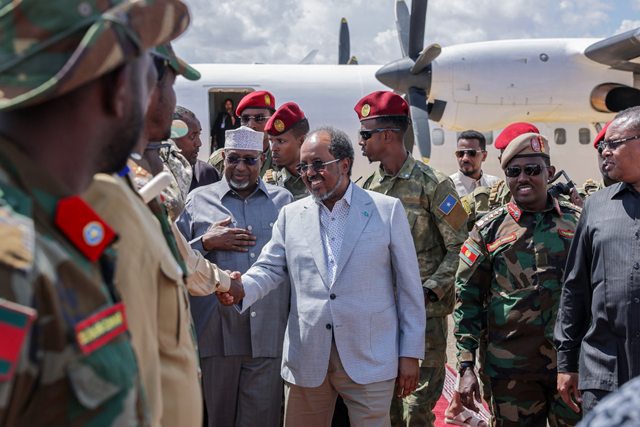
Apr 03-(Jowhar)- Madaxweynaha Jamhuuriyadda Federaalka Soomaaliya, Mudane Xasan Sheekh Maxamuud iyo wafdi uu hoggaaminayo ayaa maanta gaaray magaalada Baydhabo ee Xarunta KMG ah ee Dowlad Goboleedka Koonfur Galbeed,
United States Vows Broader Targeting of Iran’s Key Infrastructure
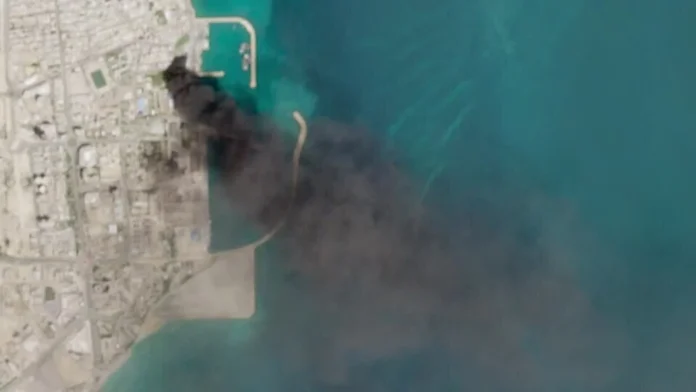
Smoke Over the Strait: How a Narrow Waterway Became the World’s Pressure Point
There are places on the map that, for most people, exist as a thin blue line on a globe. The Strait of Hormuz is one of them — a 21-mile throat between Iran and Oman that funnels a chunk of the planet’s energy lifeblood. Now imagine that same narrow channel turned into a bargaining chip, a battleground, and a chokehold on countries half a world away. That is the stark reality unfolding as strikes, threats, and retaliations ripple out from Tehran and touch harbors, markets, and kitchen tables from Mumbai to Madrid.
“We haven’t even started destroying what’s left in Iran. Bridges next, then Electric Power Plants,” President Donald Trump declared on social media late one night, his words landing like a fuse. The post, and video he shared showing smoke pouring from a newly built Karaj bridge, set off a cascade of reactions—grief in the Iranian suburbs where families counted the dead, fury in Tehran’s foreign ministry, and alarm on trading floors where oil tickers blinked nervously.
A bridge, a bomb, a neighborhood in mourning
Karaj, once a commuter spillover from Tehran where children play in alleyways beneath a sky of fluorescent laundry, awoke to a different kind of sound: the mangled silence after sudden violence. State media reported eight dead and 95 wounded after the strike on the B1 bridge, a structure meant to relieve the city’s snarled traffic.
“They hit a bridge that wasn’t even open,” said Leyla Azimi, a vendor who runs a tea stall near the damaged approach. “We sell bread and tea. People come, talk. Now people come and cry.” Her voice broke as she described neighbors bringing blankets to the injured at a temporary triage station set up in a schoolyard.
Iran’s foreign minister, Abbas Araqchi, answered in blunt terms: “Striking civilian structures, including unfinished bridges, will not compel Iranians to surrender.” That declaration was matched by satellite images of smoke rising from Qeshm island’s port — images that, for a cargo captain somewhere off Fujairah, meant one thing: routes are changing and bills will rise.
International law on edge
More than a hundred American international law scholars have written to Washington warning that the public rhetoric and some actions “raise serious concerns about violations of international human rights law and international humanitarian law, including potential war crimes.” The letter cited particularly incendiary comments: a mid-March remark where President Trump said the U.S. might strike Iran “just for fun,” and a Pentagon official’s dismissal of “stupid rules of engagement.”
“When senior leaders rhetorically normalize harm to civilians, you lower the threshold for catastrophic mistakes,” said Dr. Miriam Thompson, an international humanitarian law professor in Geneva. “Words become permission slips unless checked by law and oversight.”
Diplomacy by relay—and by brink
Behind closed doors, intermediaries have been running shuttle diplomacy, with fresh faces in Tehran responding only intermittently to offers from Western capitals. The rhetoric in public, however, has remained blistering. “Iran’s leadership knows what has to be done, and has to be done, FAST!” the president added, leaving no velvet on the threat.
The drumbeat of escalation has prompted a virtual meeting chaired by Britain with some 40 countries probing ways to reopen the Strait to commerce. Participants left the call with agreement on a principle—freedom of navigation—but little in the way of a shared plan. “We’re looking for collective ideas, not collective war declarations,” a British official said afterward, exhausted by the diplomatic treadmill.
The narrow mouth that feeds the world
The stakes are literal: the Strait of Hormuz normally handles roughly one-fifth of global seaborne oil trade. In recent weeks, Iran has demonstrated it can, and will, make passage hazardous by attacking tankers and striking nearby bases that host U.S. troops. That has reverberated through economies that rarely think about the geography of fuel until their pumps run dry.
“Ships used to queue for days to pass,” said Captain Rafiq al-Hassan, who has ferried crude through the strait for 25 years. “Now owners wonder whether a permit will get you through or a missile will.” He describes crews staying awake longer, engines burning more fuel for evasive maneuvers. “It’s a different trade. Everyone pays for it.”
Tehran has proposed a draft protocol with neighboring Oman that would require vessels to obtain permits and licenses — in effect, a toll on maritime movement. The European Union’s foreign policy chief, Kaja Kallas, pushed back publicly: “International law doesn’t recognise pay-to-pass schemes,” she wrote, insisting that the waterway remain open to all in peacetime and conflict alike.
Security Council, vetoes, and a fragile consensus
On the diplomatic front, a Bahraini resolution to protect commercial shipping is set for a Security Council vote, but China’s UN envoy, Fu Cong, has signaled opposition to any authorization of force. “Any military action would be legitimising the unlawful and indiscriminate use of force,” he said, warning that escalation would have “serious consequences.”
That split at the UN leaves practical solutions in limbo, even as global markets react. Oil prices jumped on the news of continued hostilities, insurance premiums for tankers spiked, and shipping companies began penciling in longer, costlier detours around the Cape of Good Hope.
Human cost, global ripple
The war has already exacted a heavy toll. Thousands have been killed and tens of thousands wounded across the region, according to humanitarian groups on the ground. The head of the International Federation of Red Cross and Red Crescent Societies delegation warned that medical needs are “rising exponentially” and that supplies could run short at any moment.
“We are not only responding to bullets and shrapnel,” said Ahmed Hariri, a field coordinator for a regional aid NGO. “We are treating panic, displacement, broken livelihoods. There’s a long shadow beyond the immediate wounds.”
And the shadow is economic as well as physical. Fuel shortages have already pinched economies in Asia, and analysts warn Europe may soon feel the squeeze. A joint report by two UN agencies cautioned that a sharp slowdown could trigger a cost-of-living crisis in parts of Africa where food and energy are heavily imported.
What now? Questions we cannot duck
What does it mean when a waterway—an artery of global commerce—can be held hostage by a single nation’s choice to retaliate or to extract leverage? How do international institutions respond when the mechanisms they rely on—diplomacy, trade law, maritime norms—are tested by raw force and theatrical threats?
Those are not abstract queries for the people in Karaj repairing a home with their bare hands, or for the mother in Kuwait who watched air defenses flare in the sky, or for the captain altering course and adding weeks to a round trip. They are the questions that will shape lives and balance sheets alike. “We sleep less, we worry more, but we go on,” said Leyla, the tea vendor, pouring a cup for another customer. “Until someone makes it stop.”
As the world watches, the Strait of Hormuz has become a mirror: reflecting our dependence, our diplomatic fragility, and the way localized violence can cascade into global uncertainty. How we answer the questions it poses will say a great deal about the world we want to live in—one where waterways hum with commerce, or one where a single bridge or a single tweet can set the seas aflame.
Agaasimaha Sirdoonka Soomaaliya oo la kulmay Madaxda CIA Iyo FBI
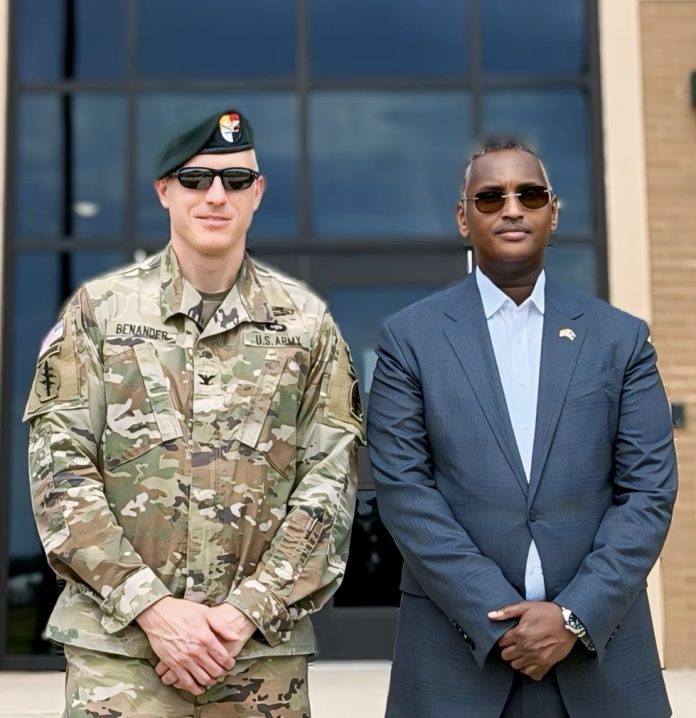
Apr 03-(Jowhar)-Agaasimaha Guud ee Hay’adda Sirdoonka iyo Nabadsugidda Qaranka (NISA), Mudane Mahad Maxamed Salaad ayaa maalmihii la soo dhaafay kulamo muhiim ah kula yeeshay magaalada Washington madaxda hay’adaha CIA iyo FBI,
Artemis Crew Breaks Free of Earth Orbit, Sets Course for Moon

They lit the sky: Artemis II’s bold shove toward the Moon
When the Orion capsule’s engine roared to life, it felt less like a technical procedure and more like a promise. The six-minute burn — a controlled, thunderous shove — nudged four astronauts out of Earth orbit and sent them on a three-day arc toward Earth’s companion. For anyone who watched the telemetry and listened to Mission Control’s clipped confirmations, the moment was electric: “Looks like a good burn, we’re confirming.”
Onboard, astronaut Jeremy Hansen grinned into a camera and said, “The crew is feeling pretty good up here on our way to the Moon.” You could hear the pride in his voice. Outside, along Florida’s Atlantic coast, people paused their conversations and turned toward a sky still tinged with dawn orange where the Space Launch System had cleared the horizon the day before.
A return after a long silence
It’s worth sitting with the history here. Apollo 17, in 1972, was the last time humans looped beyond low-Earth orbit. Now, half a century later, a new generation is carrying a different flag into the same dark. Artemis II is not a landing mission; it is a rehearsal, a pathfinder. But its symbolism is huge: the first crewed lunar flyby in more than fifty years.
“We’re not just reliving old glories,” said Dr. Amaya Reyes, a space policy analyst. “We’re preparing the logistics for sustained presence — habitats, transport, industry. The burn today was the start of that choreography.”
Speed, suits and small human moments
The Orion engine gave the capsule a shove with the kind of force that would launch a parked car to highway speed in under three seconds. That surge set the craft on a “free-return” trajectory — a clever gravitational path that will use the Moon’s pull to slingshot the crew back towards Earth without needing further propulsion. It’s a safety net built with orbital mechanics rather than hardware alone.
On the human side, the crew has been busy with mundane and meaningful tasks: systems checks, troubleshooting a communications hiccup and, yes, a temperamental toilet. They also took time for Earthly comforts. “We kicked off our second day with ‘Green Light’ by John Legend and Andre 3000,” a mission update said — a tongue-in-cheek nod to the literal green light they’d soon receive to start the engine.
Exercise matters up there. Each astronaut will carve out 30 minutes a day on a flywheel exercise device designed to mimic resistance so muscles and bones don’t melt away in microgravity. And the suits they wear are more than ceremonial; they are survival systems. For up to six days they can keep oxygen flowing and pressure regulated if the cabin ever loses integrity — a sobering buffer for a small but not impossible risk.
Meet the crew
Four voices, four backgrounds, one tight little capsule: Reid Wiseman, Victor Glover, Christina Koch and Jeremy Hansen. Hansen, a Canadian, brings an international thread to what is broadly an American-led mission. Their presence underscores Artemis’s new character: a mixed team pioneering a platform intended to host partners from around the world.
“Being the first non-American on this leg feels like carrying both a personal dream and a national one,” Hansen said in a post-burn interview. “We’re doing this together.”
Quick mission facts
- Mission duration: 10 days
- Trajectory: Free-return, leveraging lunar gravity
- Engine burn that put them on the path: just under six minutes
- Projected farthest distance: more than 400,000 km from Earth — potentially a new record for human distance from our planet
SLS, politics and the price of reaching back out
The Space Launch System, the orange-and-white giant that peeled off Earth, is the first rocket purpose-built to ferry humans beyond low-Earth orbit since the Saturn V. It’s also a political and fiscal lightning rod. Years of delays, technical setbacks and escalating costs have shadowed SLS’s development. “It’s been an expensive, complicated piece of engineering,” said Dr. Victor Chen, an aerospace economist. “But the question policymakers keep asking is: what does the public get in return?”
That question has multiple answers: technological spinoffs, renewed STEM interest among young people, strategic positioning in a new space environment and scientific returns. Still, critics point to the price tag and say investments might be better spent on pressing problems at home.
There’s also an unmistakable geopolitical angle. China has outlined ambitions to land humans on the Moon by 2030, and other nations are expanding lunar and deep-space plans. “Competition has a way of accelerating innovation,” remarked a NASA spokesperson. “But the Artemis program is also about partnerships.”
Onlookers, local color and the human ripple
At Cocoa Beach and the Merritt Island National Wildlife Refuge, locals tracked the mission with a mix of awe and routine. Retired teacher Rosa Alvarez brought a thermos of coffee and a foldable chair. “I watched Apollo on a black-and-white television,” she said. “To see it again — in color, with people from different backgrounds — it stirs something in you.”
Children drew rockets in the sand. A surf instructor joked that the rocket’s plume made for “the longest, loudest bonfire of my life,” and an elderly veteran offered a quiet nod: “It’s not just science. It’s poetry.”
Why it matters — and what to watch next
Artemis II is a hinge point. The mission’s success opens the door to Artemis III and the first planned human landing later this decade, with a stated 2028 target. But timelines are slippery; hardware and partnerships must align. The program leans heavily on private-sector partners for landers and logistics, a model that stretches public funds and private ingenuity together in new ways.
There are wider questions, too. Whose footprints will be prioritized on this next phase of exploration? How will lunar activities be governed and shared? Will the economic benefits ripple equitably across societies, or be captured by a narrow set of contractors and nations?
“Every deep-space mission is a mirror,” Dr. Reyes mused. “It shows us our ambitions, our anxieties, our collaborations. We can choose to look away, or we can use it to set a course that reflects our better values.”
Looking up—and inward
Tonight, as the capsule arcs toward the Moon and the crew settles into their eight- to nine-hour sleep cycles, people around the globe will be thinking different things. Some will be analyzing flight data. Others will find themselves transported back to a childhood nighttime watching a streak of light. Many will argue about budgets and priorities. All of them, ultimately, will be part of the ripple this mission creates.
So I’ll ask you, quietly: when you look up at the Moon tonight, what do you hope we’ll bring back with us? Knowledge? Resources? A better way of working together? The answer you give says a lot about the future you want humanity to build off-world — and here on Earth.
Officials Report Russia Launches Widespread Aerial Attacks Across Ukraine
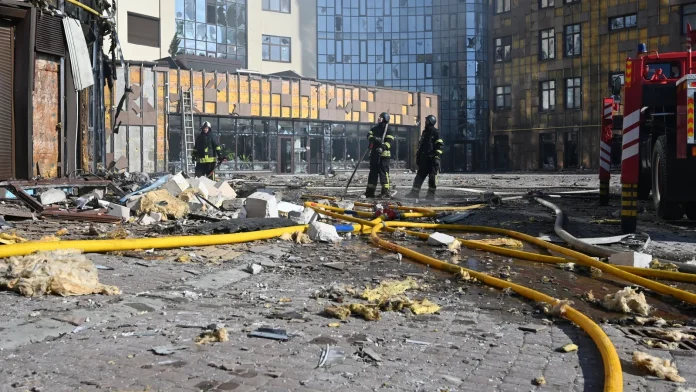
Night of a Thousand Shadows: When the Sky Became a Frontline
There are nights when a city hears only the ordinary sounds—distant traffic, a dog barking, the hiss of a late tram. Then there are nights that fracture time, when the ordinary is ripped away and the horizon itself feels like the front line. Last night, that boundary blurred across a wide swath of eastern Ukraine and spilled over into neighbouring Russia: the sky turned into a conveyor of danger, and people woke to a new kind of fear.
Ukraine’s air force reported what amounted to a rolling aerial offensive — more than 400 long-range drones launched over roughly 24 hours, accompanied by at least ten ballistic missiles aimed principally at areas near the frontline. “We are seeing an unprecedented tempo of strikes,” Yurii Ihnat, a spokesman for the Ukrainian Air Force, told state television, his voice tight with the kind of exhaustion that follows a long vigil.
The Anatomy of an Attack
These weren’t the thunder of massed artillery alone: this was precision, persistence, and a war of machines in the sky. Operators sent swarms of loitering munitions and strike drones across contested airspace, probing air defenses and hunting for soft targets—warehouses, energy infrastructure, apartment blocks near the front.
“It felt like a swarm,” said Anya, a volunteer firefighter who spent the night battling blazes in Kharkiv, Ukraine’s second city. “We’d put one fire out and another would begin. You could hear a different kind of silence after each impact, as if the buildings were holding their breath.”
Kharkiv: A City Punctured by Explosions
Kharkiv bore a heavy part of the blow. Mayor Ihor Terekhov posted updates throughout the night, describing strikes that hit at least four districts. Local officials said there were roughly twenty confirmed impact sites from drones, some of them in densely populated neighbourhoods. Fires broke out in high-rise apartments, and images circulating on social media showed charred facades, shattered windows and furniture strewn through ruined flats.
Two people were reported injured in the evening assault, including an eight-year-old girl. “We wrapped her in a blanket and tried to keep her warm while we waited for the ambulance,” recounted Olena, a neighbour who helped carry the child down seven flights of stairs. “She kept asking if the sky was angry.”
Scenes like these are familiar now to many Ukrainians: the smell of smoke lodging in stairwells, the ritual of checking cell phone battery percentages to ensure you can call for help, the small libraries of neighbours’ names and where they shelter in a building. Still, each strike reshapes a community’s sense of safety.
Further South: Zaporizhzhia and the Ripple Effect
Further down the map, in Zaporizhzhia, regional governor Ivan Fedorov reported damage to a residential high-rise and a local business; by luck or design, there were no injuries in that attack. But the psychological toll was immediate—residents who had slowly returned to routines hours earlier found themselves packing bags again, preparing to sleep in basements or under stairwells.
“You think you’ve adjusted to the noise, but it always surprises you,” said Maksym, a shopkeeper who keeps his business curtains drawn as a reflex. “You start counting the seconds between an impact and the echo—it’s how you remember where you were.”
Across the Border: Belgorod’s Civilian Toll
The violence did not stop at international lines. In Russia’s Belgorod region, officials said dozens were affected by a string of drone strikes, with 13 people reported injured—11 of them in the border village of Shebekino. The cross-border dimension — attacks landing on both sides — underscores a grim reality: modern conflicts with long-range drones can make geography porous in a way that traditional frontlines did not.
“My grandmother used to say the border was a line you could cross on foot,” said Andrei, a teacher from Shebekino, as he helped clear glass from a shattered storefront. “Now a border is something that can be reached by flying metal.”
Moscow’s Night Watch
Even Moscow’s skyline felt the tremor. Mayor Sergei Sobyanin wrote that air-defence units intercepted a drone heading toward the capital after midnight, along with two others earlier in the day. Whether intended as strategic strikes or provocative incursions, these interceptions are a reminder that major cities, not just front-line towns, now factor into aerial defence calculations.
Voices from the Ground
On a night like this, statistics matter—but human voices carve out meaning. A volunteer medic in Kharkiv, who asked to be called Dmytro, described the hospital corridors as a map of small miracles and exhausted hands.
“We treated burns, contusions, panic attacks. There’s a child on bed 12 drawing pictures with a black marker of a rocket. His drawings are all upside-down,” he said, attempting what sounded like levity in the face of trauma. “You try to make room for humanity in a place that smells of antiseptic and fear.”
An international security analyst in Kyiv, Dr. Marta Serhiyenko, noted what military analysts have been watching for months: “The saturation use of unmanned systems has become a tactical choice. Hundreds of drones in a single operation are not just about physical damage—it’s about draining air defenses, misdirecting forces, and eroding civilian morale.”
What This Moment Tells Us
There are broader themes stitched into last night’s bombardment. Drone technology—smaller, cheaper, and increasingly lethal—has democratized sky-borne strikes. Air defenses, designed for missiles and aircraft, are being forced to adapt to a flood of loitering munitions. For civilians, the front line has metastasized; infrastructure that once seemed beyond reach is now vulnerable.
- Over 400 long-range drones reported in a 24-hour period
- At least 10 ballistic missiles reportedly launched toward frontline areas
- Multiple urban districts in Kharkiv damaged; at least two injuries, including a child
- Damage reported in Zaporizhzhia and cross-border injuries in Russia’s Belgorod region
What does it mean to live under a sky that can be weaponised so readily? How do cities preserve normalcy when the ceiling above them is uncertain? These are not rhetorical questions; they are urgent policy puzzles for governments, planners and humanitarian organisations.
Global Ripples
The strategic shift we’re witnessing is not confined to Eastern Europe. Militaries around the world are watching and recalibrating. Drone proliferation raises legal and ethical questions, from accountability for civilian harm to the arms-control frameworks that have not yet caught up with remote, unmanned lethality.
“This accelerates a global debate about the rules of the air and the protection of non-combatants,” said Dr. Julian Morales, a policy researcher specialising in unmanned systems. “If one conflict normalises saturation drone tactics, others may follow. That’s a dangerous precedent.”
After the Smoke: Resilience and Reckoning
By morning, firefighters were hosing down smouldering apartments in Kharkiv. Volunteers carried blankets and tea to people who could not sleep. A makeshift table near a stairwell hosted a rota of residents serving warm dumplings and offering clothes. Small rituals of care reasserted themselves like stubborn perennials pushing through asphalt.
Still, the damage lingers: broken windows, a child’s trauma, a family’s furniture scattered, a town’s sense of safety frayed. For many who lived through the night, the question is not only how to rebuild what was broken, but how to live forward in a world where the sky can be weaponised with such speed and stealth.
When you look up tonight, what do you see? For some, stars. For others, the underside of conflict. For communities in Kharkiv, Zaporizhzhia and beyond, the sky tells a story of endurance—and an urgent call for solutions that protect people, not just borders.
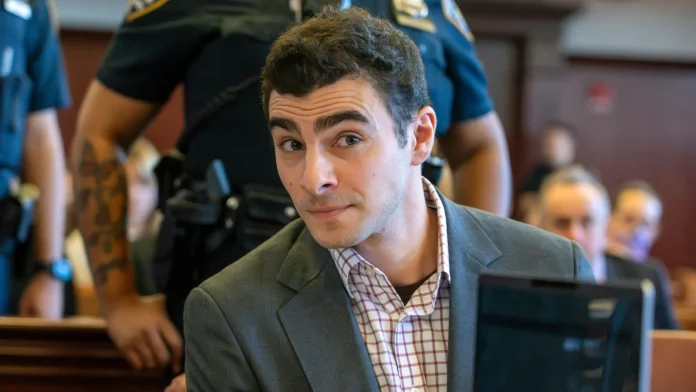
Mangione’s federal trial in CEO murder case postponed until January
The Long Wait for Justice: How One Killing Reverberated From a New York Sidewalk to a Nation
It was a raw December night in 2024 — the kind that makes the steam from subway grates look like ghosts. Outside a midtown New York hotel, a security camera blinked in monochrome, capturing a moment that would not leave the national airwaves for months: the killing of healthcare CEO Brian Thompson. The footage, grainy and stark, became more than evidence. It became a symbol, a spark, an argument made into a headline.
Now, more than two years later, the legal calendar has stretched once again. Court filings show that the federal trial of 27-year-old Luigi Mangione — accused in connection with Thompson’s death — has been rescheduled to 25 January 2027. The state trial, meanwhile, will not begin until September 2026. Those new dates were confirmed in a scheduling order signed by U.S. District Judge Margaret Garnett, who noted the federal timetable was adjusted “in light of the … decision in the defendant’s state court case to adjourn the state trial to 8 September 2026.”
One Act, Two Arenas
The mechanics behind the dual trials are as American as the courts themselves. State prosecutors have charged Mangione with murder; federal authorities have lodged interstate-stalking charges. It’s a legal quirk rooted in the “dual sovereignty” doctrine — the idea that state and federal governments are separate sovereigns and can, therefore, bring distinct charges arising from the same conduct. It’s why a single crime can lead to separate cases in different courthouses.
“People hear ‘double jeopardy’ and assume the Constitution prevents multiple prosecutions,” said Professor Hana Kline, a criminal law scholar. “But the Supreme Court’s precedent allows both state and federal governments to prosecute when their statutes protect separate interests. It’s not about punishing twice for the same offense so much as enforcing two different laws.”
The Ripples of a Shooting
The shooting itself galvanized a national conversation. Brian Thompson, by most accounts, was not merely a CEO — he was the face of a private healthcare firm at a time when public frustration with the U.S. health system was simmering. For many Americans, private healthcare is a tangle of high prices, denied claims and unequal access. The killing, captured so plainly on camera, became a lightning rod for those grievances.
“When people saw that footage, it wasn’t just shock — it was recognition,” said Maria Alvarez, a nurse who joined a small protest outside the hotel days after the attack. “We see the system fail patients all the time. That anger was terrible and raw, and it found an outlet in public grief. But grief and anger aren’t the same thing as justice.”
A Personal Detour Between Cities
Mangione was arrested five days after the shooting at a McDonald’s in Pennsylvania — roughly 370 kilometers away from the hotel (about 230 miles). The image of an ordinary fast-food joint as an arrest scene underscores how a single act can ripple through mundane places and distant lives. In a state police report, investigators said the suspect left the city and was located during what they described as routine surveillance; video surveillance and tips reportedly played a part.
“I was at that McDonald’s when the van pulled up,” recalled Tom Reed, a trucker who eats there on long hauls. “You never expect the drama to reach a place like that. We’re just people trying to get coffee and burgers, and suddenly there are cops talking to somebody like it’s a movie.”
Delays and the Human Cost
Behind the sterile language of scheduling orders are real people living in limbo. For the victim’s family, each postponement stretches the strain of remembrance and legal anticipation. For the defendant, it lengthens the period of public scrutiny and uncertainty. For reporters and the public, it raises familiar questions: what does a delayed trial mean for the truth? How does time shape testimony, memory, and the public’s appetite for closure?
“Defense counsel told the court that a tight turn between the state and federal calendars would make adequate preparation impossible,” said Mark Rosen, a criminal defense attorney unaffiliated with the case. “That’s not an unusual claim. Complex cases—especially those involving extensive evidence, forensic timelines, and high-profile media coverage—require months of work. You can’t sprint justice without risking mistakes.”
At the same time, prosecutors warn that delay can be an injustice of its own. “Victims’ families deserve answers and resolution,” said a federal prosecutor who agreed to speak on the condition of anonymity. “Every adjournment is another season of life for them where the legal closure they seek stays out of reach.”
The Broader Context
The Thompson killing didn’t occur in isolation. It unfolded against a backdrop of rising anxiety about healthcare costs, corporate influence, and a national conversation about accountability. Polling in recent years has repeatedly shown healthcare ranking near the top of voters’ concerns, whether measured by access, affordability, or the ethics of private firms driving decisions about care.
It also took place in a country wrestling with gun violence and the lengths to which people will go to target public figures — or those perceived to represent controversial systems. Legal experts point out that federal interstate-stalking statutes exist precisely to address conduct that crosses state lines and poses a broader risk to public safety.
Questions for the Reader
As the calendar pages turn toward 2026 and 2027, what should we expect? Is staggered prosecution an example of thoroughness, or does it compound suffering? Does a public figure’s role in a controversial system change how we think about culpability and motive? And how do we, as a society, separate a single violent act from the larger systems that may have inflamed it?
“We often look at court dates and see only the procedural progress of a case,” said Professor Kline. “But each date is also a deadline on human emotion. The law’s tempo rarely matches the tempo of grief or outrage. That mismatch is part of the challenge.”
What Comes Next
The immediate calendar is set: the state trial pushed to 8 September 2026, and the federal trial set for 25 January 2027. Between now and then there will be filings, motions, investigations, evidence reviews, and likely more public arguments over fairness, speed, and the meaning of justice. Witnesses will be found; memories will be tested; the nation will again be invited to look closely at a case that intersects with broader anxieties.
And through it all, ordinary places — a hotel doorway, a McDonald’s parking lot, a neighborhood vigil — will continue to hold the quiet friction of everyday life against the glare of the headlines. That is where justice is not only argued in courtrooms, but lived by families, friends, and strangers who watched a night on a security feed become part of the national conversation.
What would justice look like to you in a case like this? Is it a verdict, a sentence, a public reckoning, or something else entirely? As the trial dates inch forward, these are the questions that will outlive the scheduling orders and stay with us long after the cameras have moved on.
Trump swaps Bondi for his former personal attorney in reshuffle
When the Justice Department Changed Hands Over Truth Social: A Washington Moment
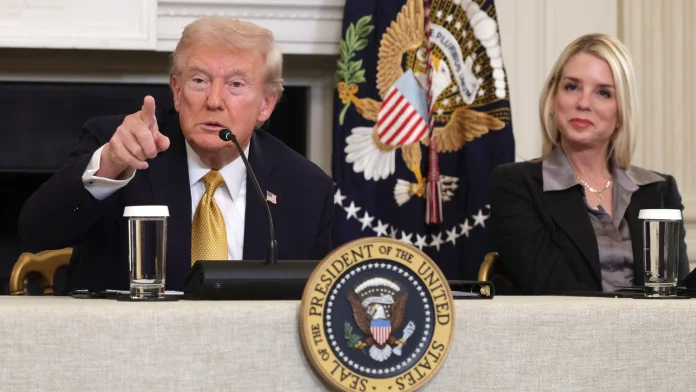
On a damp, gray morning in Washington, an announcement blinked across screens and phones: President Donald Trump had dismissed Attorney General Pam Bondi and tapped Todd Blanche—his deputy and longtime legal ally—as acting head of the Justice Department.
It was the sort of digital trumpet blast that has become routine in this era of politics. “Pam Bondi will be transitioning to a much needed and important new job in the private sector,” the president posted on Truth Social. “Our Deputy Attorney General, and a very talented and respected Legal Mind, Todd Blanche, will step in to serve as Acting Attorney General.”
The terse public message belied the messy, private unraveling that had been building for months: frustration about how records from the Jeffrey Epstein investigations were handled, tension over the pace of prosecutions against political foes, and a growing whisper that the Justice Department’s long-standing traditions of independence had been frayed beyond repair.
Behind Closed Doors: The Epstein Files and a Department Under Strain
If you’ve followed the Epstein story at all, you know the files are not merely paperwork. They are a knot of power, pain, and secrecy: court transcripts, witness testimony, names of alleged associates and alleged victims. The Department of Justice eventually released roughly three million pages related to investigations of Jeffrey Epstein—an ocean of documents that inflamed passions and provoked countless questions about who knew what, and when.
“There comes a point when transparency becomes more than a talking point,” said a former federal prosecutor who asked not to be named. “For many survivors, each sealed page is a denial. For many in Washington, each redaction is another erosion of trust.”
Bondi, a former Florida attorney general who rose to the top of the department amid fierce partisan divides, defended the handling of those files. She argued DOJ lawyers worked on a compressed timeline and that her team had been more open than predecessors. She has countered accusations that the department covered up or mismanaged the release of sensitive material.
But public hearings in January offered a different tableau. Survivors of Epstein’s trafficking ring came to the podium; some wore determined lines on their faces, others trembled, gripping notes. When Bondi took questions, critics say she responded with political jabs rather than contrition—refusing, according to several attendees, to meet the eyes of victims in the hearing room.
“We asked for truth. We wanted our stories to be treated like evidence, not theater,” said Ana Ruiz, who described herself as a survivor present that day. “When someone who controls what gets released won’t look at you, it feels like being erased twice.”
A Department Reshaped: Staff Changes and the Perception of Partisanship
Beyond Epstein, Bondi’s tenure was defined by what many saw as a reshuffling of institutional priorities. “Dozens” of career prosecutors who had been working on investigations deemed unfavored by the White House were reassigned or removed, say multiple sources—moves critics describe as politicizing a once-technocratic agency whose legitimacy rests on impartiality.
“The long-term damage isn’t headlines,” said Dr. Miriam Klein, a legal scholar who studies prosecutorial independence. “It’s the slow burn of perception—people begin to see the Department of Justice as an instrument of whoever sits in the Oval Office.”
Supporters counter that Bondi restored focus on violent crime and worked to rebuild trust among rank-and-file Americans who felt overlooked by elite prosecutors. “She moved the DOJ back toward issues that matter in Main Street communities,” said a former state-level law enforcement official allied with Bondi. “That realignment angered some in the federal bureaucracy who were comfortable with how things were.”
Politics, Power, and Personnel: What a New Acting Attorney General Might Mean
Todd Blanche, the deputy elevated to acting attorney general, stepped into the role at a volatile moment. His appointment opens questions about whether the department will pursue a different strategy—particularly with the president reportedly unhappy that Bondi had not moved quickly to prosecute critics and adversaries he wanted to see charged.
“Changing the captain in the middle of the voyage doesn’t just affect direction; it affects morale,” said an analyst who tracks federal appointments. “People in the department will be watching to see whether precedent and practice hold, or whether politics dictates prosecutions.”
The political reverberations could be immediate. Bondi was set to appear before a Republican-led House Oversight Committee on 14 April; the committee had already voted to subpoena her. Whether that testimony will now occur, and under what circumstances, will be watched closely by lawmakers, lawyers, and a public increasingly anxious about the health of democratic institutions.
Beyond the Department: A Story of Renovation and Pageantry
While the drama at the Justice Department played out in the capital, another of the president’s ambitions cleared a procedural hurdle—this one less about law and more about legacy. Washington planning authorities voted to approve an East Wing Modernisation Project: a privately financed, $400 million ballroom intended to expand the ceremonial life of the White House.
At 8,400 square meters and accompanied in the plan by a proposed 250-foot arch across the National Mall, the ballroom has been billed by its backers as a “lasting symbol” of this presidency. Will Scharf, who chairs the National Capital Planning Commission and previously represented the president in legal matters, spoke of the ballroom in lofty terms.
“I believe that, in time, this ballroom will be considered every bit as much of a national treasure as the other key components of the White House,” he said.
But not everyone sees it that way. Preservationists and civic activists have raised concerns about private funding, the environmental and historical review process, and the optics of building grandiosity amid political turbulence.
“We’re not against beautiful things,” said Laila Morgan, a city planner and community organizer. “We’re against the idea that public space can be reshaped as the pet project of one leader without a full, transparent debate.”
What This Moment Reveals—And Asks of Us
So what are we witnessing here? A routine personnel change. A routine planning approval. Or a more profound cultural shift—an acceleration of a trend where public institutions bend to political will, where legal norms are debated as strategy, and where pageantry and power intertwine?
Around the globe, similar conversations are happening: about the strength of courts, the independence of prosecutors, the meaning of transparency. In capitals from Lisbon to Lagos, citizens are asking similar questions: can the law be both a tool of justice and a weapon of politics? What keeps institutions honest when leaders demand loyalty over law?
As the drama unfolds—new leadership at the Justice Department, the continuing fallout of the Epstein disclosures, and plans for a gilded ballroom in the nation’s most symbolic residence—one thought lingers. History teaches that institutions can be repaired, and they can be hollowed out. Which path a country takes often depends less on a single appointment and more on the quiet, daily choices of people inside and outside power.
In the end, perhaps the question is not just about Bondi or Blanche, about a ballroom or a subpoena. It is about us: the witnesses, the voters, the survivors, the ordinary public servants who still turn up for work. What will we demand of those who hold power? What will we accept?
“If we want a functioning democracy,” the former federal prosecutor warned, “we have to treat institutions like common goods—not trophies.”
EU prosecutor widens probe into Greek MPs over subsidy fraud
Under the Olive Trees: How a Subsidy Scandal Is Shaking Greece’s Political Heartland
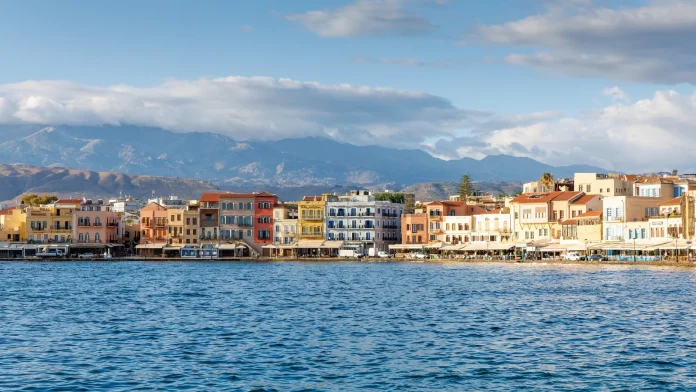
There is a specific hush that falls across a Cretan plateau at dusk. Goats bleat from low stone terraces, the last light gilds an ancient olive tree, and the smell of wood smoke rides the wind. It is the kind of landscape that has lured politicians and poets alike — and, as this year’s biggest political controversy shows, also the attention of auditors and prosecutors.
What began as a dry, technical investigation into European farm payments has become a story about power, trust, and the fragile seam between rural tradition and modern statecraft. The European Public Prosecutor’s Office (EPPO) — the EU body set up in 2021 to combat fraud against the Union’s budget — has widened a probe that now touches dozens of people in and around Greece’s ruling New Democracy party. As of the latest count, prosecutors are scrutinizing 20 politicians; they have formally asked that the immunity of 11 members of parliament be lifted to allow criminal proceedings. Seven other public figures were newly named as persons of interest, and state news agency ANA confirmed two more MPs under suspicion.
The scheme, in plain language
At its bluntest, investigators say, the scandal involves people claiming EU agricultural subsidies for land they did not own or for livestock that did not exist. In some cases, payments flowed to people with no evident link to farming. The EPPO first flagged irregularities last May; by October, raids and arrests had punctured the relative quiet of Greek politics. Farmers who play by the rules have watched their own payments get held up while auditors sift through files — a humiliation for hardworking producers and a blow to fragile rural incomes.
Numbers and stakes
These are not trifling sums. The EU’s Common Agricultural Policy steers tens of billions of euros to Europe’s farmers each year; while the CAP’s seven-year budget runs to the hundreds of billions for 2021–2027, direct payments alone typically total in the tens of billions annually. In this case, prosecutors say the network in Greece may have channeled “tens of millions” of euro in improper subsidies. For a small-scale olive farmer on Crete, that amount could fund dozens of harvests.
“We’re talking about money that was meant to keep fields alive, terraces maintained, and families fed,” said Elsa Kouris, an agricultural economist at Athens University. “If those funds are siphoned off, the damage is twofold: immediate financial harm to legitimate farmers and a broader erosion of public trust in European institutions.”
Crete at the center
Most of the allegedly misdirected payments were concentrated on Crete — an island where family ties and patronage patterns have woven through local politics for generations. The Mitsotakis family, to which Prime Minister Kyriakos Mitsotakis belongs, has long roots in Crete. That proximity, real or perceived, has made the story a lightning rod for opposition anger and popular unease.
“People here like to say Crete is a country in an island,” joked Giorgos Antonakis, who runs a kafeneio in Heraklion and sells raki by the glass. “But when your name gets dragged into something like this, it’s not funny.”
Across villages, conversations have turned from planting schedules to legal briefs. A woman who asked to be identified only as Maria, who tends four hectares of olive trees outside Rethymno, summed up the exasperation: “We’ve always been small, honest, late to collect money sometimes, but we never forged documents. Now everyone thinks we cheat.”
Politics, prosecutions, and the countdown to elections
The political stakes are immediate. Opposition parties have demanded resignations from any ministers or officials under investigation and have used the scandal to accuse the government of lax oversight. Prime Minister Mitsotakis has pushed back, insisting that much of the alleged wrongdoing predates his administration (he took office in 2019) and promising that the “thieves” will be held to account and the funds recovered.
“We will not tolerate those who steal from the common good,” Mitsotakis told reporters in a terse briefing. “Where there is evidence of criminality, the law will be applied.”
Yet words and investigations are different things. Media outlets report that the prime minister is considering a reshuffle to remove ministers under scrutiny. With national elections due next year and New Democracy leading in opinion polls but not tipped to win an outright majority, every seat — and every reputation — matters.
Voices from the street and the courtyard
Local reactions have an instinctive candidness. “The worry is not only who took the money,” said Nikos Charalambous, a retired teacher in a village west of Chania. “It’s how easy it seems to be. That’s the alarm bell. If our institutions fail to stop even this, what else slips through?”
At the same time, some defend the accused, warning against a rush to judgment. “There are family names and histories here,” said Eleni Papadopoulou, whose son works seasonally on a neighboring farm. “Sometimes things look worse from outside — documents misfiled, names mixed up. We must let justice do its work.”
Why the EU is watching — and what it means beyond Greece
The EPPO’s involvement is more than a legal curio: it reflects an EU effort to police the continent’s money flows. The office, based in Luxembourg, explicitly told reporters it could confirm an ongoing probe but would not disclose names. “I can confirm that,” said Tine Hollevoet, an EPPO spokesperson, “however, I will not confirm any names.”
This is part of a larger European conversation about how to safeguard public funds while ensuring that rural development programs reach the people who need them. Around the continent, anti-fraud units track dishonest claims, and many countries have faced similar scandals, from fake farm grants to phantom livestock.
What does that mean for ordinary Europeans? It’s a reminder that the systems we rely on — subsidies for food security, climate-friendly farming transitions, rural development programs — depend on both good rules and good enforcement. If either is missing, the consequences ripple out: communities lose income, trust dissolves, and democratic faith frays.
Quick timeline
- May (previous year): EPPO first flags irregular subsidy claims in Greece.
- October: Police raids and arrests; farmers’ payments delayed amid investigations.
- Most recent: EPPO now probes around 20 politicians; immunity-lifting requests for 11 MPs.
Questions that linger
There are political questions and human ones. Will the investigations change voters’ minds next year? Can the government recover the funds and restore faith in the system? For the smallholders in the hills of Crete, the more immediate question is how to harvest olive oil and make payroll while answers come slowly.
And there’s a broader, philosophical question: how do prosperous democracies balance local traditions, political families, and the impersonal machinery of European governance? Is oversight from Brussels a necessary corrective, or does it feed narratives of distant control that populists can exploit?
As the sun sets again over stone walls and olive groves, the fundamentals remain stubbornly simple: people want a fair shot, honest officials, and a system that rewards work, not paperwork. Greece’s prosecutors are asking hard questions; the answers will tell us something about the health of public life here and across Europe.
What would you do if your community’s livelihood was held up while investigators sorted the truth? It’s a question worth holding — because beyond the headlines are livelihoods and landscapes that depend on how we answer it.
Watch live: NASA launches Artemis II rocket on crewed mission

Under an Orange Sky: Humanity’s Return to Lunar Neighborhood
When the sun tipped toward the Gulf of Mexico and painted the Florida sky a molten orange, a sound like thunder rolled across Cape Canaveral. It was not a storm. It was four people leaving Earth.
At sunset, NASA’s towering Space Launch System awakened — flame and fury, steel and sound — and lifted the Orion crew capsule and its four-person crew away from the Kennedy Space Center. For those assembled on the sand and in temporary bleachers, the moment felt less like a mechanical event and more like a story beginning to unfold.
What’s happening: a ten-day voyage beyond the familiar
This mission is a carefully staged rehearsal: roughly ten days, a trajectory that will carry the crew around the far side of the Moon and then home again, a series of systems checks conducted farther from Earth than humans have ventured in more than half a century.
The crew — NASA astronauts Reid Wiseman, Victor Glover and Christina Koch, joined by Canadian Space Agency astronaut Jeremy Hansen — will push systems to their limits, doing things like manually steering the Orion capsule around its spent upper stage should automation fail. It’s a mission that tests both metal and mettle.
Distance matters. This voyage will carry them to nearly 406,000 kilometers from Earth — farther than any human has traveled in decades — eclipsing the roughly 400,000-kilometer mark that marked Apollo-era records. If all goes according to plan, they will return having proven hardware, procedures and international partnerships that must function flawlessly before humanity tries to settle the lunar surface again.
Who’s onboard
- Reid Wiseman — mission pilot and seasoned spacewalker
- Victor Glover — veteran of long-duration missions
- Christina Koch — engineer and record-holder for longest single spaceflight by a woman
- Jeremy Hansen — representing Canada, a symbolic and practical partner
Why this matters — a hinge in a longer story
This isn’t simply a test flight. It’s the new chapter of a program launched in 2017 with a far-reaching ambition: to reestablish an enduring human presence on the Moon as a stepping-stone to Mars. NASA’s Artemis programme is meant to move from demonstration to construction — habitats, logistics, and eventually a surface lander that will take boots back down to lunar regolith.
Plans on the drawing board aim for a crewed landing near the lunar South Pole within the decade. The mission now underway is designed to be the dress rehearsal for that bold step: validate Orion and the SLS, validate crew operations, validate the international choreography of spacecraft, contractors and ground support.
“We’re building the scaffold for an enduring presence,” said a senior mission official at mission control, voice steady over the chatter of telemetry. “This flight proves the pieces talk to one another at distances we haven’t tested with people aboard.”
On the ground at Cape Canaveral: community, ritual and salt air
Locals and tourists sat with folding chairs on the beachfront, the smell of grilled food mixing with diesel and sea spray. Vendors hawked shirts emblazoned with the mission patch. A volunteer fireman, who drove two hours from a town inland, summed up what many felt: “We come for the noise, sure,” he said, “but really we come because something in us still wants to see people do impossible things.”
A few miles back, in a small diner, a waitress wiped her hands and said, “My grandfather saw Apollo. I bring my baby so he can say he saw Artemis.” The layers of generational witness were visible in the faces there: awe, quiet pride, an almost sacred attention to the moment.
Technology, contractors and costs — the heavy lifting behind the spectacle
Behind the cheers are engineers and billions of dollars. The SLS has been years in the making, and its contractors — industry giants like Boeing and Northrop Grumman — have treated this launch as essential validation. Orion, manufactured under Lockheed Martin’s purview with an international service module contribution, separated cleanly from the rocket’s upper stage hours after liftoff as planned.
Artemis missions don’t come cheap. Independent estimates put the cost per SLS-Orion launch in the range of $2 billion to $4 billion, and NASA’s overall budget hovered near the mid–$20 billion range in recent fiscal years. Skeptics ask whether those funds might be spent more efficiently; proponents point to the program’s returns in jobs, technological advances and international partnerships.
“Space is expensive,” said a space policy analyst who has been tracking Artemis. “But investments pay forward — in science, spin-off technology and the inspiration economy. The question is governance: can we coordinate public resources, private innovation, and international partners to make those costs sustainable?”
Geopolitics and partners: a global enterprise with competitive undertones
There’s a geopolitical beat to this narrative too. The United States sees Artemis as reasserting leadership in deep space exploration. International partners — including Canada and Europe — bring expertise, hardware and a stake in the endeavor. At the same time, nations such as China have publicly articulated lunar ambitions of their own, and competition for the Moon is as much about prestige as it is about science.
“This is not just about who gets there first,” said an international relations scholar who studies space policy. “It’s about who sets norms, who builds infrastructure, and who writes the rules on the Moon. Cooperation matters — and competition will shape the next decade.”
Human resonance: more than a mission patch and press release
Flying crews beyond low-Earth orbit after fifty-plus years is a cultural moment. It invites simple, human wonder: What is it like to look back and see Earth hanging in total black? How does seeing our planet, fragile and finite, change a person?
One of the astronauts called down before liftoff — calm and crisp over the link — and said, “We go not for one nation but as part of the human story.” That sentiment echoes in the crowd: a shared belief that exploration, when done responsibly, can knit people together.
And yet the endeavor raises honest questions. Who decides what happens on the Moon? Who benefits from lunar resources? How do we make sure that the next frontier does not reproduce the inequalities we see on Earth?
What to watch next — and what it might mean for you
Over the coming days, the world will watch technical milestones: course corrections, health checks, the re-entry burn and splashdown. Each tick of the mission clock is a test of engineering and coordination. But beyond the telemetry, there are deeper currents at play: the shaping of international partnerships, the balance between public funding and private innovation, and the broader question of why we invest in exploration at all.
Will a renewed human presence on the Moon lead to breakthroughs in energy, materials science, or even climate observation? Will it inspire a generation of students to study math and engineering? Or will it become another arena where wealth and influence determine access?
As you read this from Nairobi, São Paulo, Seoul or Oslo, ask yourself: what do you want the next chapter of space exploration to look like? A race for prestige? A shared platform for science? Or a legacy project that lifts up terrestrial concerns at the same time?
For now, four people are on a voyage that threads technology, politics and a very old human desire to push farther. In a few short days, they will return to tell the tale — and the rest of us will have a little more of the unknown mapped into the known.
Watch the skies. Ask questions. And, if you can, stand with someone and watch the horizon glow. You might just feel what an entire planet has felt before: the simultaneous smallness and grandeur of being alive at a moment like this.
Trump Imposes New Drug Tariffs, Overhauls Metal Import Duties

A New Trade Drumbeat: Medicine, Metal and the Return of Tariff Politics
On a brisk morning that felt equal parts political theater and industrial decree, the White House unveiled a fresh set of trade measures that will reverberate across factories, hospital supply rooms and the ports that stitch the global economy together.
President Donald Trump signed two executive orders that, together, aim to pull more manufacturing back onto American soil and to simplify — and toughen — how metals are taxed at the border. One hits foreign-made patented medicines with steep tariffs unless companies commit to building U.S. factories or secure trade carve-outs. The other rewires decades-old customs accounting by levying duties on many finished products that contain substantial amounts of steel, aluminum or copper.
Not just policy — a message
“We’re trying to end the hollowing out of American production,” a senior White House official told reporters, summing the administration’s argument in blunt terms. “This is about jobs, national security and stopping schemes where foreign actors game the system.”
The moves are part of a high-stakes gamble: drive industrial revival on home soil while pressing foreign suppliers and global companies to rethink where they build and buy. For some, that’s a welcome push toward resilience. For others, it’s the start of another round of costly retooling — and possibly higher prices.
How the new measures actually work
The medicine order is the sharper of the two instruments. It imposes a 100% tariff on patented pharmaceuticals made abroad unless countries reach trade deals that reduce the rate — or drugmakers pledge to build manufacturing capacity in the United States. Firms that do commit to onshore production, and complete plants by the end of the president’s second term, would face a reduced 20% tariff.
There are exceptions and sweeteners. The European Union, Japan, South Korea and Switzerland — all of which negotiated earlier pacts with Washington — will be exempt from the harshest duty and instead face a 15% tariff. Britain has secured a temporary arrangement allowing UK-manufactured medicines tariff-free access for three years, according to the U.S. Trade Representative’s office.
Generics are spared from these duties for now, and officials say the framework will be reviewed in 12 months. The administration also signaled that manufacturers who struck “Most Favored Nation” price deals with the U.S. could receive waivers — a conditional path designed to bring both investment and affordability ostensibly into balance.
The metals proclamation takes a different tack. Rather than tax imported steel, aluminum and copper purely on content, the administration is requiring tariff payments tied to prices U.S. buyers are facing, and applying a simpler threshold: finished products that contain more than 15% of those metals will be taxed at 25% of their full value. The order is due to take effect 12:01 a.m. Eastern on Monday.
What industry and workers are saying
Reactions have been immediate and varied. In a plant on the outskirts of Pittsburgh — the city whose smokestacks once symbolized America’s industrial might — a foreman named Luis Alvarez wiped his hands on his coveralls and paused before speaking.
“If they mean real jobs, we welcome it,” he said. “But talk is cheap. We need contracts, long-run orders. Not headlines.”
Pharmaceutical executives sounded wary. “A 100% duty on patented medicines is an enormous lever,” said Elena Park, CEO of a mid-sized biotech that makes niche oncology drugs. “We have complex supply chains — active ingredients, sterile fill-finish plants, regulatory validation. Building that here isn’t a flick of a switch.” Park warned that while the policy may produce some near-term investment pledges, changing the economics of drug manufacturing will take years and hundreds of millions of dollars.
Independent pharmacists in cities from Houston to Nairobi — who rely on predictable supply — voiced concern, too. “Patients don’t care whose flag is on the label,” said Rashmi Patel, who runs a community pharmacy in Queens. “They care about price and availability. If this shakes that, someone’s going to lose.”
Numbers that matter
To understand the scale, consider a few facts. The U.S. still imports a large share of the active pharmaceutical ingredients (APIs) used in drug production; recent estimates put that reliance on foreign suppliers in the broad range of 60–80%, with China and India accounting for substantial portions of the global API market. Meanwhile, U.S. crude steel production hovered near 80–90 million metric tons in recent years, while the manufacturing sector employs roughly 12–13 million Americans — a labor pool that politicians often promise to revive.
Tariffs have consequences: academic studies and Treasury analyses have repeatedly found that when tariffs rise, some costs are passed to consumers. A senior administration official insisted this time would be different: “We do not expect these measures to meaningfully affect affordability for households,” the official said. “The aim is to restructure supply chains, not squeeze pocketbooks.”
Winners, losers and gray areas
Which countries and companies will be winners? Those that can strike quick trade deals or move manufacturing investments to the United States stand to escape the worst duties. Smaller drugmakers and generic manufacturers, for now, face fewer immediate risks. But importers, downstream manufacturers that use metals in complex parts, and consumers of finished goods could see higher costs depending on how companies respond.
“Tariffs aren’t a silver bullet,” said Priya Menon, an economist who studies industrial policy. “They redistribute costs across supply chains. If a car part becomes more expensive because of a blanket 25% duty on the whole item, both automakers and consumers feel it. If the goal is reshoring, incentives — tax credits, infrastructure support, workforce training — often work better than penalties alone.”
Local color and human stakes
Walk through the pharmaceutical corridor in New Jersey and you’ll see lab benches, espresso machines, weary graduate students and night-shift technicians. Talk to the tool-and-die makers outside Detroit and you’ll hear similar rhythms: decades of craft, punctuated by layoffs and long waits for capital investment. Policy may be drafted in executive suites and legal chambers, but its effects land on these people.
“My dad learned to weld on the old line and taught me,” said Maria Santos, a line worker at a small sheet-metal shop. “If they bring work back, it’s not just pay — it’s pride. But if the price tags go up at the grocery, that’s a trade-off families will debate at the kitchen table.”
Beyond borders: Why the world is watching
Global supply chains are woven across continents; a policy in Washington ripples in New Delhi, Basel and Seoul. Trade partners excluded from the steepest medicine duties will breathe easier, but many other countries — especially those whose firms supply key chemical precursors and metals — will need to renegotiate production strategies.
And there is politics: with midterm elections looming, debates about cost-of-living, jobs and national resilience are amplified. The administration frames these orders as a long overdue reset. Critics call them protectionism dressed up as policy. Which narrative prevails will depend on outcomes that will take months or years to unfold.
What to watch next
In the coming weeks watch for corporate announcements: will big pharma firms pledge U.S. factories? Will automakers or appliance makers reconfigure sourcing to avoid tariffs? Keep an eye on prices at pharmacies and hardware stores, and on whether Congress or courts intervene — this administration has already seen earlier tariff moves face legal pushback.
At the heart of it lies a question for readers to consider: do we want an economy that prizes self-reliance even if it costs a bit more today, or one that relies on global specialization to keep costs low? The answer isn’t only economic; it’s moral, civic and generational.
Either way, the clang of policy on steel and the hum of a pharmaceutical clean room are now louder than before. The debate over where medicines and metals should be made has moved out of textbooks and into towns where people clock in, raise families and wonder whether the next shift will bring work, higher prices — or both.
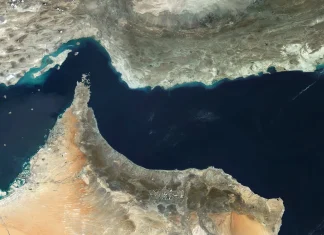
Second Turkish-owned vessel passes through the Strait of Hormuz
Another Turkish-owned vessel has successfully passed through the strategically significant Strait of Hormuz, marking the second such passage in recent weeks. The vessel, carrying...
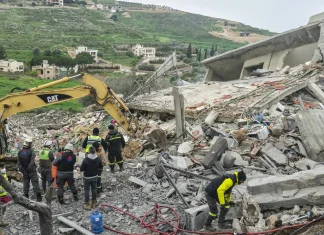
MP warns Israeli occupation in southern Lebanon has become ‘very dire’
In Southern Lebanon, Homes Become Frontlines — Voices from a Region Holding Its Breath
The sky over southern Lebanon has settled into a kind of...
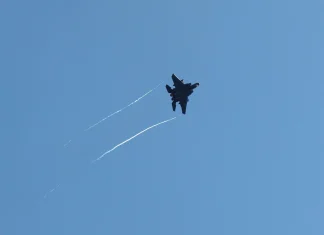
U.S. and Iran hunt for missing American pilot after warplane shot down
Skyfall: When the Night Became a Hunt — Two US Jets Downed, a Pilot Missing, and a Region Holding Its Breath
The Gulf night stank...
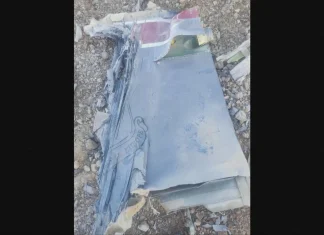
Live: US fighter jet shot down over Iranian airspace
When the Sky Broke: A Jet Falls and an Old Rivalry Reignites
The sun had not yet finished its climb when the news came in:...
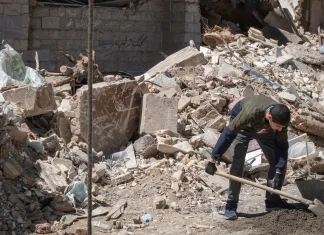
US fighter jet downed by Iran; pilot reportedly rescued
Smoke over the desert: an American warplane falls, and a region holds its breath
There are moments when the desert seems to inhale, as if...