Home Blog Page 21

Trump says Iran reluctant to admit it wants a deal

Trump says Iran 'afraid' to admit it wants a deal
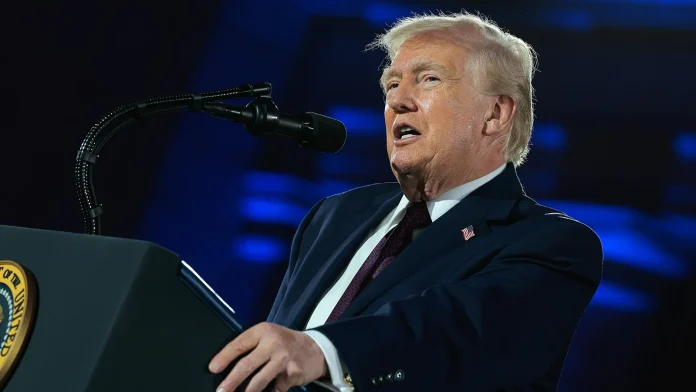
Mr Trump repeated his assertion that Iran was being 'decimated' in the conflict now in its fourth week

When a Dinner Room Remark Echoes Around the World

It began, as so many seismic moments do, with an off-the-cuff line at a private dinner: a president telling allies that the adversary was eager to make a deal but too frightened to admit it, for fear of retribution from within and without.

Those words—sharp, theatrical, reckless depending on your angle—landed far beyond the Washington dining room. They ricocheted across Tehran’s wide boulevards and into the corridors of oil traders in Singapore, onto the tractors of farmers in Kansas and into the UN’s debating chamber in New York. When leaders speak in that register, the microphones never fully go off.

“Negotiating—but silent”: Two Narratives Collide

On one side, a White House insisting that channels of communication remain open, quietly working through intermediaries and diplomats to shape a 15-point plan it says would disarm Tehran’s most dangerous capabilities. “Talks are ongoing and productive,” a senior U.S. official told reporters this week, while warning that the administration is prepared to escalate strikes if Iran does not capitulate.

On the other, Iran’s foreign ministry publicly declares that there is no intention to negotiate—an emphatic refusal amplified on state television and in the streets of Tehran, where portraits of the deceased supreme leader and his son have become focal points for both mourning and defiance.

“They want to talk. They are whispering. But in public they must shout resistance,” said a mid-ranking Iranian official who asked not to be named. “This is as much about survival of our leaders as it is about posture.”

Theatre and Reality: Military Claims and the Human Cost

The spectacle of high-stakes rhetoric is matched by hard numbers. U.S. Central Command, in a rare televised briefing, said more than 10,000 targets inside Iran had been struck. The commander claimed that 92% of the country’s largest naval vessels were out of action and that missile and drone launch rates were down by more than 90%.

“Our goal is to cripple Tehran’s ability to project power,” Admiral Brad Cooper said in the briefing. “We are on track.”

Whether those numbers, released in the fog of conflict, hold up under independent scrutiny is another question. What is indisputable is the human ripple effect. The World Food Programme warned that if the conflict drags on into June, tens of millions more people could face acute hunger—compounded by supply-chain disruptions, soaring fuel costs and blockages at the Strait of Hormuz, the narrow chokepoint that carries roughly 20% of the world’s oil and liquefied natural gas.

“We are seeing an energy shock unlike any in recent memory,” said Dr. Lina Karim, an energy economist at the Institute for Global Studies. “Insurance premiums for tankers are surging, alternatives are hard to source quickly, and nations with thin fiscal buffers are already recalibrating budgets. It’s a domino set tilted against the world’s poorest.”

Tehran’s Streets: Portraits, Tea, and Fear

Walk through central Tehran and the scenes are layered. Men sip strong black tea in cafés while news anchors parade grainy footage of damage. A woman clutches a framed image of the supreme leader’s son, eyes wet and resolute. Shopkeepers in the Grand Bazaar talk in low voices about the price of diesel for delivery vans and the risk that sanctions or naval seizures could starve the market of basic goods.

“The day the fuel trucks don’t arrive, people will remember these days as the beginning of something worse,” said Reza, a 45-year-old grocer whose small shop has sold saffron and pistachios for three generations. “We are proud, we are angry, but also we are scared.”

Those anecdotes are the immediate human geography of global policy. Behind the numbers and the bravado, ordinary lives are redrawing their expectations.

Pakistan, Proxies and a Fragile Diplomatic Ladder

Diplomacy, when it exists, seems to travel circuitously. Reports indicate Pakistan is serving as a conduit between the U.S. and Iranian officials, ferrying proposals that aim to remove enriched uranium stockpiles, cap missile programs and choke funding to regional proxies. U.S. spokespeople have declined to detail interlocutors; Iranian leaders have rebuffed the overture in public.

Meanwhile, the president has framed the campaign as a “military operation” rather than a formal war—language he says shields him from congressional oversight. “Words matter,” said a constitutional law professor in Washington. “Calling something a military operation is a political decision with legal consequences.”

And yet, as UN Secretary-General António Guterres warned, the world faces the specter of a widening regional conflict. “We must climb the diplomatic ladder,” he urged, in a plea that felt more like a life preserver tossed into a stormy sea.

Markets, Meals and the Moral Question

Back on the ground in Omaha, a soybean farmer named Amy scrubbed her hands on an oil-stained rag and shook her head at the notion that the fight was far away. “If diesel doubles, we can’t plant. If fertilizer can’t get here, yields drop. That’s food for fewer people—and that’s not a purely economic problem,” she said.

Across the globe, governments are dusting off emergency measures last used during the COVID pandemic as they try to blunt the shock to households and small businesses. Central banks are on alert as inflationary pressures spike; one forecaster has warned that energy-driven inflation could push consumer prices up several percentage points in the coming quarters.

What price, then, do we put on the certainty of peace versus the certainty of victory? Is military success worth the economic and humanitarian hangover? These are not rhetorical questions for the families who now delay hospital trips because fuel is scarce or the merchants who count dwindling stock under lock and key.

Choices Ahead: Escalation or Engagement?

Officials in Washington say timelines for military operations are measured in weeks—four to six, they suggest—while moving thousands of troops and marines to the Gulf to provide options that might include a ground operation. Opponents at home call for congressional oversight; allies abroad urge restraint.

“We have to ask ourselves whether the instant gratification of a military ‘solution’ outweighs the long-term instability it could sow,” said Professor Amrita Sen, a scholar of Middle Eastern geopolitics. “Decades of history show that power vacuums, whether economic or political, breed new—and sometimes worse—instabilities.”

Where Do We Go From Here?

The question lands at the doorstep of every reader, whether you are an investor recalibrating risk, a parent worrying about grocery bills, or a citizen watching from afar. Can quiet diplomacy prevail when leaders trade theatrical threats? Is there enough political bandwidth left—across capitals and within fractious legislatures—to build a sustainable settlement?

History will judge this moment not just by the statements issued in dinner rooms or the number of targets struck, but by whether we chose the harder path of patient, inclusive negotiation over the seductive clarity of military triumph.

What do you think? When governments wield force and words with equal intensity, who ultimately pays—and how do we, as a global community, ensure that the price is not counted only in headlines?

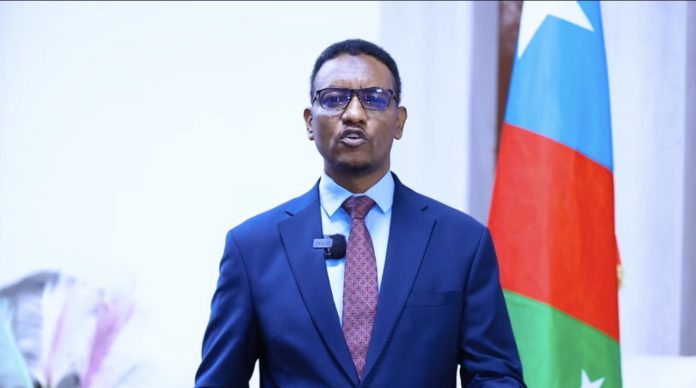
Xildhibaan Murjaan oo sheegay in xubno NISA ka tirsan ay fariimo hanjabaad dil ah usoo dirayaan

Screenshot

Mar 26(Jowhar)-Xildhibaan Murjaan wuxuu kamid yahay xildhibaanada Federaalka ee deegaan doorashadooda ay tahay Koonfur Galbeed, waxaa dhawaan laga mamnuucay in uu dalka ka baxo iyo in uu aado deegaankiisa, taas oo uu sheegay in Hay’addaha amniga ay ka shaqeeyeen.

Hungary heads to polls as accusations of Russian links mount

Hungary election draws near amid claims of Russian links
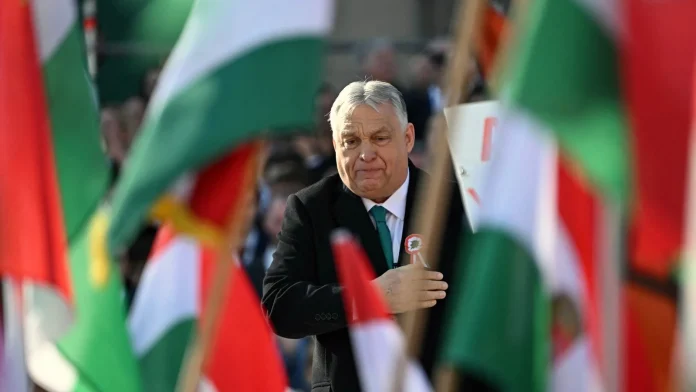
Vitkor Orbán is facing the toughest challenge yet to his 16 years in government ahead of a parliamentary election on 12 April

Budapest, 10 days before the vote: a city draped in posters and tension

On a brisk morning beside the Danube, the Hungarian capital looked like a town caught between two histories.

Along the tramlines, campaign posters fluttered in the wind: one showed a smiling Volodymyr Zelenskyy next to Péter Magyar with the blunt caption “Ok, the decision.” Another, pasted onto the stone face of an old building near Deák Ferenc tér, urged voters: “Don’t let Zelensky have the last laugh.”

Between the ruin-bars and state-built monuments, shopkeepers and pensioners passed under those images as if through two different weather systems—one warm with nostalgia for years of stability, the other cold with worry about what comes next.

Why this election feels like a hinge moment

For 16 years Viktor Orbán and his Fidesz party have steered Hungary’s political ship, often at storm-speed. But the parliamentary vote on 12 April has the look and feel of a genuine contest: polls show Péter Magyar’s centre-right Tisza party about nine points ahead, transforming his party from footnote to front-runner in a matter of months.

“You can’t understate the mood change,” said Éva Horváth, a 52-year-old nurse who lives in central Budapest. “People are tired. Not just of the politics—of the way things get done, or not. Wages feel stuck, and the costs keep climbing. We want someone who looks outward again.”

Magyar, 44, is a lawyer who once moved in the same corridors as Fidesz insiders. His campaign leans on two overlapping promises: clean up corruption and make Hungary more attractive to business. That message, combined with strong performances in the 2024 European and local elections, has buoyed Tisza into real contention.

The political geometry

It’s not simply a personality contest. The stakes are institutional. For more than a decade Fidesz’s parliamentary supermajority—won four times, each with a two-thirds margin—allowed sweeping changes: rewrites of the constitution, sustained pressure on the independence of the judiciary and public media, and the 2021 law restricting LGBTQ+ content for minors that shocked Brussels and human-rights advocates.

“This isn’t just about who sits in a chair,” said Márk Szabó, a political scientist at a Budapest university. “It’s about whether the checks and balances that remain in this country will be reinforced or further hollowed out.”

Foreign policy: the tug of Moscow, the pull of Brussels

On foreign policy, the contrast between Orbán and Magyar is stark, but complicated.

Orbán has cultivated, at times, an unusually cordial relationship with Moscow for an EU leader, and his government has frequently broken with EU consensus—over migration quotas, social policy, and, crucially, over how to handle the war in Ukraine. His rhetoric has often leaned toward “peace-first” messaging that critics say echos Russian talking points. For many in Brussels, Hungary under Orbán has been a persistent irritant.

Magyar, for his part, has pledged to “re-align” Hungary with its Western partners and promises to work with the EU to unfreeze billions in structural and cohesion funds that have been withheld amid rule-of-law concerns. He has said a Tisza government would hold a referendum on whether Hungary should support Ukraine’s accession to the European Union. He also insists he would not send weapons to Kyiv—an attempt, perhaps, to thread a needle between voters wary of escalation and a desire to mend ties with Brussels.

“I visited Kyiv’s Wall of Remembrance last year,” Magyar told a rally in a converted warehouse. “We honour the lost. We will work with our friends in Europe to heal and to rebuild.”

The line is delicate. Magyar has condemned Russia’s full-scale invasion, but he also wants to reassure a sizeable portion of the Hungarian electorate that he would not drag the country deeper into an external conflict.

Accusations, intelligence leaks and a thickening fog

If the campaign were a drama, recent reports have added a thriller subplot.

The Washington Post published a report that an internal Russian intelligence (SVR) document suggested a staged assassination attempt on Orbán could swing the campaign in Fidesz’s favour. The story—based on material shared by a European intelligence agency—read as if a KGB-era worst-case scenario had been revived for 21st-century politics.

“These are explosive allegations,” said Elena Kovács, a former EU security adviser. “If substantiated, they would point to an audacity in the methods used by foreign services that we have not seen on this soil for decades.”

Separately, reporting claimed Hungary’s foreign minister shared live updates from EU foreign council meetings with the Russian foreign minister. The minister called those claims “fake news”; the Kremlin dismissed the coverage as “disinformation.” The European Commission has asked for clarifications. Prime Minister Orbán ordered an investigation into what he described as the wiretapping of his foreign minister.

Independent Hungarian outlet VSquare reported three Russian operatives were active in Hungary, manipulating social media ahead of the vote—a claim based on interviews with unnamed European intelligence sources. Whether these threads will knot into a coherent picture before ballots are counted remains unclear. But the mere presence of such allegations raises a larger question: in an era of hybrid warfare, how free is the battlefield of information?

The practical stakes: money, oil and a €90bn loan

Beyond the moral questions, there are concrete, near-term consequences. A Tisza victory could unlock billions in EU cohesion funds frozen over rule-of-law concerns. It would also remove a key veto: under Orbán’s watch, Hungary delayed approval for a proposed €90 billion EU loan to Ukraine—meant to cover Kyiv’s budgetary needs over the next two years—after voicing concerns about repair work to the Druzhba oil pipeline, which sustained damage in Russian drone attacks. Hungary and Slovakia remain two EU members still importing Russian crude directly.

“For Ukraine, Hungary is not just another vote,” said Oksana Melnyk, a Kyiv-based analyst. “Budapest sits at a junction of geopolitics and cash flows.”

Alliances, applause and air kisses from the far-right

Orbán’s camp remains buoyed by loud, visible friends. Last week Budapest hosted a gathering of nationalist leaders from across Europe—Marine Le Pen, Matteo Salvini and Geert Wilders among them—and drew an endorsement from Donald Trump in a video address to CPAC Hungary.

“International endorsements matter,” said a Fidesz campaign coordinator who asked not to be named. “They signal to our base that Hungary’s path has global resonance.”

Still, for many ordinary Hungarians, economics and daily life are trumping transnational ideological solidarity. “I don’t care for the fireworks,” said Gábor, a taxi driver in his 40s. “I care if my daughter can afford to keep renting, if my pension buys bread. That is what decides my vote.”

What the rest of Europe should be watching

What happens in Hungary will ripple far beyond the Carpathians. Will a country that has tested the limits of EU solidarity return to the fold? Or will the continent gain another sturdy outpost of a nationalist, ‘sovereignty-first’ movement that believes in charting its own course, sometimes at odds with Brussels?

We are watching a nation weigh up competing desires: stability versus change, sovereignty versus solidarity, a cautious peace narrative versus alignment with a military and political bloc confronting a war on its borders.

What would you choose if you were deciding for a country—pragmatic distance from conflict, or lucid recommitment to collective European action? It’s the question Hungarian voters will answer on 12 April, and the consequences will be felt across an anxious continent.

Key questions to keep in mind

  • Will the promised investigations and clarifications satisfy Brussels and voters alike?
  • Can a new government reconnect Hungary to frozen EU funds without alienating a large swath of its electorate?
  • How resilient are Hungarian institutions to outside interference in the information space?

In the final days before the vote, the city hums with a kind of expectant fatigue. Campaign trucks blare messages in broadcast tones; friends turn to each other and ask, quietly, “What do you think will happen?”

The answer is not yet written. But when people stand in lines to hand over a small piece of paper on 12 April, they will be choosing not just a leader but a direction—for Hungary, for its neighbours, and for a Europe still figuring out how to be both united and diverse in a contested age.

Trump Says Iran Is ‘Afraid’ to Acknowledge It Seeks a Deal

Trump says Iran 'afraid' to admit it wants a deal
Mr Trump repeated his assertion that Iran was being 'decimated' in the conflict now in its fourth week

Between Bluff and Bombs: A Gulf on Edge

There is a peculiar hush that has settled over parts of Tehran and the ports hugging the Persian Gulf — not the silence of calm, but the taut silence of people waiting to see which wire will snap. Across the world, trading floors, government halls and kitchen tables are watching the same shared spectacle: a superpower loudly threatening to unleash overwhelming force, and a defiant state publicly insisting it will not bend.

The dinner that became a declaration

At a private dinner with Republican lawmakers, the U.S. president leaned into a line that has been ricocheting across cable networks and social feeds. He said Iran wanted a deal, he said Iranian negotiators were afraid to admit it, and he framed the whole episode as a military operation — carefully avoiding the “w” word that would trigger a constitutional chorus demanding congressional approval.

“They want an agreement badly, but they’re scared to say so,” he told his audience. “They’re worried about reprisals from their own side — and yes, they’re wary of us too.”

Inside the White House, aides spoke in a language of maximal pressure. “We’re delivering a clear message: if Tehran does not accept the reality of their situation, we will strike harder than before,” a senior administration official said on background. “This is not bluster.”

Tehran’s public posture — and the private unease

In Tehran, senior diplomats were equally categorical but in the opposite direction. “We do not intend to negotiate,” one foreign ministry statement bluntly asserted, reflecting official defiance. On the ground, though, the mood was more complicated.

“People talk in whispers — in the teahouses, in the bazaars,” said Sahar*, a middle-aged tea seller near the Grand Bazaar. “The men who used to shout in the square are quieter now. You can feel fear in the air, not for the war itself, but for what comes next.”

A university student, who asked not to be named, echoed that private strain. “Publicly we are told to be brave. But everyone knows a negotiation behind closed doors looks different than the slogans on the billboards,” she said. “There are families with sons at the border and they don’t want this to get worse.”

What’s actually at stake: oil, shipping, and the global economy

Less poetic and more fearsome is the geometry: the Strait of Hormuz, a narrow funnel of water through which roughly one-fifth of the world’s seaborne oil passes. Close that faucet, and the global oil market gasps.

Analysts remind us that chokepoints like Hormuz are not abstract strategic prizes; they are arteries. “Even short-term disruptions in flows through Hormuz can spike tanker rates, scramble refining margins and feed inflation,” said Laila Chen, an energy policy analyst at a Washington think tank. “Economies that import energy will feel it in a matter of days.”

Central banks and economists are already doing the math. Some estimates suggest that a sustained supply shock could add several percentage points to inflation in vulnerable economies and shave growth in import-dependent nations. In several countries, officials are watching forecasts that show inflation trajectories deteriorating if the conflict widens.

Military moves and media moves

The U.S. has signaled it is reinforcing its presence in the Gulf: thousands of airborne troops, additional marines, and a heightened naval posture. Officials say the build-up is calibrated — deterrence, they argue, not escalation. “Troops are being staged to give us options,” a Pentagon source said. “But the president has been explicit: this is a limited operation unless Tehran changes course.”

Yet rhetoric matters. “Words like ‘unleash hell’ or talk of hitting someone ‘harder than they’ve ever been hit’ change calculations,” said Amal Haddad, a professor of Middle East studies in Beirut. “They can compress decision timelines and ratchet up paranoia on both sides.”

Inside the negotiation room — if one really exists

There is a persistent narrative that talks are happening quietly — in third countries, through backchannels, with non-clerical figures in Iran acting as interlocutors. Islamabad has been mentioned as a potential mediator; Islamabad’s officials have historically played that role between Washington and Tehran on several occasions.

“Diplomacy often goes underground when stakes are high,” noted a former diplomat who has worked Gulf negotiations. “Public denials and private contacts are two sides of the same coin. Neither side wants to show weakness at home.”

For the public, the lack of clarity is maddening. “Who is talking to whom? Who’s representing who?” asked Reza, a taxi driver in Shiraz, frustrated. “We hear headlines but nothing that comforts us. The fear is the not knowing.”

Domestic politics: a theater as much as a strategy

In Washington, the unfolding drama has been folded into domestic political battles. The administration’s choice to term the campaign a “military operation” instead of a “war” is not just semantics. It is a legal and political strategy to manage congressional oversight.

“This administration has repeatedly chosen language to keep options open, both in theater and at home,” said a congressional staffer who asked to remain anonymous. “They’re trying to limit the political fallout while keeping the pressure on.”

Democrats have criticized the approach as reckless and designed to sidestep Congress; Republicans counter that decisive action is needed to deter a state they describe as aggressive and destabilizing. The partisan reverberations add a new, domestic front to an already complicated conflict.

Human stories and the moral calculus

Beyond geopolitics lies the quieter ledger of human cost: sailors rerouted, merchants watching insurance bills spike, families who have lost breadwinners in earlier rounds of violence. “We are small merchants,” said Farideh, a rug trader in Isfahan. “If ports close, people don’t have work. If the price of fuel doubles, everything becomes harder. Politics plays out on our tables.”

And then there is the psychological cost. Long decades of conflict have left scars — in memory, in urban landscapes, and in the way people speak to one another. “Every time a new crisis flares, it reopens old wounds,” said Haddad. “And it teaches new generations that force is a language of politics.”

So what now?

We sit between two kinds of certainty: the near certainty that something will change — markets, troops, rhetoric — and the uncertainty of how big that something will be. Will cooler heads prevail and broker a face-saving exit? Will escalation be contained to naval and aerial exchanges? Or will the fractures deepen into a longer, messier war?

Ask yourself: when a nation boasts about “decimating” another — even in the hyperbole of a political dinner — what does that do to the incentives for diplomacy? And when leaders publicly deny negotiation while quietly nudging channels open, who really wins? The winners are rarely the grand strategists; they are the people whose lives are spent navigating the fallout.

Final thought

In a world where headlines travel faster than compassion, it’s worth pausing to listen to the smaller sounds: the shopkeeper’s slow exhale, the captain’s worried call to his agent, the student asking whether a future is being gambled away. Wars and operations begin in capitals, but their echoes settle in kitchens, classrooms and marketplaces. That is where the true cost is counted.

Savannah Guthrie Says We’re in Agony — The Pain Is Unbearable

Savannah Guthrie: 'We are in agony. It is unbearable'
Savannah Guthrie during her interview with fellow NBC News anchor Hoda Kotb - "Someone needs to do the right thing" Photo: NBC/Today

A Daughter’s Plea Echoes Through Tucson’s Desert Night

When Savannah Guthrie walked on to the set of the Today show this week, the polished studio lights could not banish the rawness in her voice. Her words landed not as headlines but as a human sound—half-prayer, half-plea. “We are in agony,” she said, and for a moment the corporate gloss of morning television gave way to something unguarded and urgent.

It has been nearly two months since 84-year-old Nancy Guthrie vanished from her home in Tucson, Arizona—taken, authorities say, in the early hours of February 1. Security footage released by investigators shows a masked figure at the home; the video is a shadowy freeze-frame of a crime that has refused to yield answers. Since then, leads have dried. No arrests. No confirmed sightings. Just silence punctuated by grief.

Up close: a family suspended in limbo

“To think of what she went through. I wake up every night in the middle of the night,” Savannah confessed in the interview. “In the darkness, I imagine her terror. And it is unthinkable, but those thoughts demand to be thought. And I will not hide my face. But she needs to come home now.”

Those sentences are easy to summarize and impossible to forget. They are the compressed ache of anyone watching a mother become a headline. They are also a public mobilization: Savannah Guthrie has put up a $1 million reward for information leading to her mother’s return. The FBI has added $100,000 to the pot. But money, as the family plainly knows, does not always translate into answers.

Tucson: a city of heat, history, and unanswered questions

To picture this story, imagine Tucson at night—the desert wind carrying the distant clatter of coyotes and the silhouette of saguaros standing like watchful sentinels. The city wears layers: Indigenous and Spanish histories, Route 66 neon, student life around the university, and neighborhoods where people still get to know one another on porches. It is a place that can feel both close-knit and sprawling, where a missing elder can slip across the grid and into a void.

“You’d think someone would have seen something,” said Maria Lopez, who lives three blocks from the Guthrie home and brought over tamales the morning after the news broke. “But Tucson is big at night. People keep to themselves. Still, this is our neighborhood. We all feel it.”

Local investigators have been unusually tight-lipped, citing the ongoing nature of the probe. That hush only amplifies a community’s need for narrative—any detail to hold onto. Reports described a masked, apparently armed man caught on a home security camera. Authorities found discarded gloves that briefly flared as potential evidence. Each revelation invited a spike of hope, then receded, leaving the family and the public to weigh what it means to wait.

What the numbers tell us—and what they don’t

Missing-persons cases are a complex part of American life. Every year, hundreds of thousands of reports are filed across the United States; the vast majority are resolved quickly. A smaller number, often involving elderly adults or circumstances of potential criminality, remain stubbornly unsolved and become long-term investigations.

“When an elderly person goes missing, time is particularly crucial,” said Dr. Renee Alvarez, a gerontology specialist who studies elder vulnerability. “Factors like cognitive decline, mobility issues, and medical needs change the parameters of a search. Families are racing against both time and physiological risk.”

There is also an attention gap. High-profile cases—those that attract celebrity involvement or viral traction—can mobilize resources and public interest. But they can also produce unwanted noise: rumors, false leads, and the psychological turbulence of hope dashed and reignited.

The daily life of waiting

Waiting, for the Guthries, is not a static state. It is a series of small ritualized acts—refreshing social media feeds, answering phone calls, staring at places where a person should be. Savannah Guthrie has spoken openly about sleeping badly, about imagining the darkness her mother might have faced. “Those thoughts demand to be thought,” she said—a line that captures the moral compulsion, the need to confront the worst so one can perhaps prepare for the best.

“It feels like the house is holding its breath,” said a neighbor who asked to remain unnamed. “You can see the curtains twitching less. People drive slower down the street now. Mothers watch their kids a little longer.”

When the national conversation gravitates toward sensational details, it’s easy to forget that somewhere, ordinary people are living inside the story. Friends of Nancy recall her as a woman who loved gardening and Saturdays at the local market, an elder who braided her grandchildren’s hair and kept a jar of candy in the kitchen. These are the textures that grief presses into memory—and the human reasons why a family will not relent.

Broader questions: safety, media, and justice

What does a high-profile disappearance teach us about the systems that are supposed to protect the vulnerable? How does the rush of media attention help—and where does it hinder? And what responsibility do communities bear when a person is missing in their midst?

  • Community response: Neighbors organizing search parties, social media groups sharing tips, churches and local organizations offering support.
  • Criminal justice: The coordination between local police and federal agencies, like the FBI, can be decisive but is often opaque to those outside the investigation.
  • Media dynamics: Celebrity involvement brings visibility—and sometimes a flood of unvetted information.

“We need to be careful not to let the spectacle drown out the facts,” said an investigative journalist who has covered missing-persons cases for decades. “But attention does move the needle. It can prompt people with information to come forward.”

What can you do?

If this story has stirred you, consider concrete steps rather than only outrage. Share verified information from official sources. Donate to local search-and-rescue organizations. Check in on elderly neighbors. If you live in or near Tucson, be vigilant about the details you report—times, descriptions, anything a police investigator could use.

And ask yourself this: when a neighbor becomes a missing person, how does our community respond? Do we circle in, or do we look away? Are we equipped to protect those most at risk?

The human bottom line

In the end, this is a family’s story and a community’s wake. There are no tidy arcs, no guaranteed endings—only the persistent labor of those who refuse to accept silence. Savannah Guthrie’s public grief is a summons: to look, to listen, to act.

“Someone needs to do the right thing,” she implored on national television. “She needs to come home now.”

As Tucson turns from night toward its famously luminous mornings, neighbors continue to watch the horizon. The desert keeps its secrets, but so far, the people who love Nancy Guthrie have not stopped asking questions. Would you do the same for someone you love?

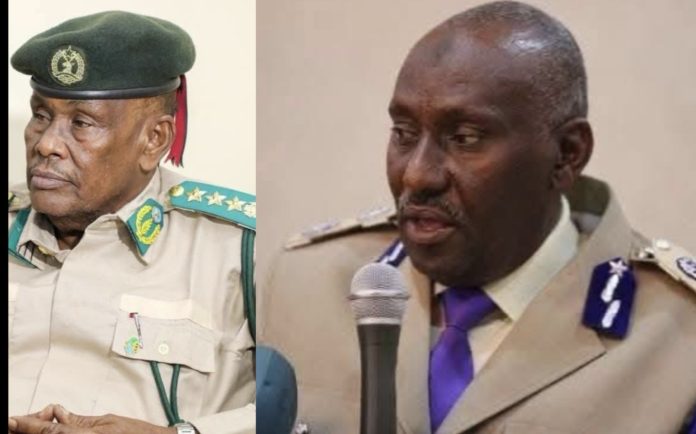
Golaha Wasiirada oo xilkii ka qaaday taliyaha ciidanka Asluubta Jeneraal Shub

Screenshot

Mar 25(Jowhar)-Waxaa jira warar sheegaya in Dowladda Federaalka ah ay maanta xilka ka qaaday taliyaha ciidanka asluubta Jen Mahad Cabdiraxman Aadan (Taliye Shub), oo ah sodogga madaxweyne Lafta Gareen.

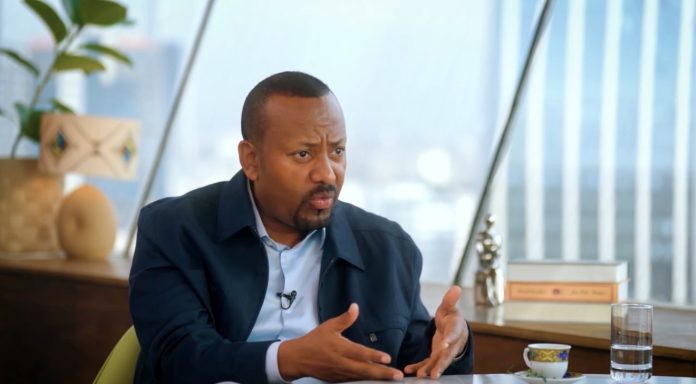
Abiye Axmed oo beeniyay iney faragelin ku hayaan siyaasada gudaha Soomaaliya

Screenshot

Mar 25(Jowhar)-Ra’iisul wasaaraha dalka Itoobiya oo lahadlayay warbaahinta dalkiisa ayaa la weydiiyey in ay Itoobiya faragalin kuhayso dalalka gobalka, wuxuuna sheegay in aysan taasi waxba ka jirin, ayna derisyada dhan nabad kula nool-yihiin.

Russian strikes cause widespread power outages, leaving thousands without electricity in Ukraine

Russian attacks knock out power for thousands in Ukraine
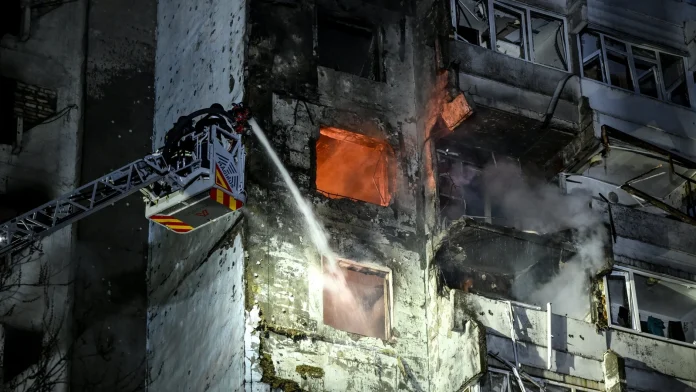
Firefighters work at a building badly damaged in a drone strike on Zaporizhzhia on 24 March

Blackouts at Dawn: How a Night of Drone Strikes Left Towns in the North Shivering and Silent

When the lights went out in Chernihiv in the pale hours before sunrise, the city did not simply lose illumination — it lost a thread of ordinary life. Stoves cooled, elevators stalled between floors, hospital corridors reverted to torchlight and the hum of freezers went quiet. For many, the silence was the loudest thing of all.

“We were woken by the boom and then everything went dark,” said Olena Ivanova, a nurse who lives near the city centre. “I packed my children’s chargers into a bag and sat with neighbors in the yard. You could see the stars again, but it didn’t feel like freedom.”

Numbers that Tell a Nighttime Story

Regional energy utility Chernihivoblenergo reported that two separate Russian strikes damaged energy facilities across the Chernihiv region, cutting power to roughly 212,000 consumers. Nearly 150,000 of those were in Chernihiv city and its immediate district; a further 62,000 were left in the dark after damage in the Nizhynskyi district, the company said.

This blackout followed an earlier strike that had already left large parts of the region without power on Saturday, compounding hardship for residents who had been patching together warmth and heat for weeks.

The scale of the attack

Ukraine’s air force put the night’s tally into stark relief: 147 drones were launched over the country, 121 of them intercepted or neutralised before they could find their targets.

“The number is not only large, but indicative of a tactical shift,” said Maksym Hrytsenko, a Kyiv-based security analyst. “Swarms of drones are cheaper and, when coordinated, harder to stop. Overnight figures like this show Russia’s ongoing focus on degrading energy and critical infrastructure.”

Beyond Chernihiv: Slavutych, Odesa and Belgorod

The ripple effects were not confined to one city. About 21,000 residents of Slavutych — the unusual, pastel-painted town built for Chernobyl workers and tucked into the neighbouring Kyiv region — briefly lost electricity after a morning attack, regional authorities reported. Critical infrastructure there was switched to backup power supplies to keep essential services running.

In the south, Odesa’s emergency services reported a Russian strike that killed one person and wounded another, damaging a private house, igniting a fire and scarring six nearby buildings. Firefighters posted images of charred facades and a partially destroyed building — the kind of intimate damage that becomes an indelible memory for those who live under it.

And across the border, in Russia’s Belgorod region, the head of the region, Governor Vyacheslav Gladkov, said Ukrainian strikes left almost half a million people without electricity — roughly 450,000 residents across multiple districts, including the regional capital. Heating and water supplies were also disrupted, and night-time temperatures were expected to hover around zero degrees Celsius, he added.

“Repair works have already started,” Gladkov said, “but it will take several days to complete.” Belgorod sits just 40 kilometres from the Ukrainian border and has repeatedly been on the receiving end of cross-border strikes and drone incursions.

Energy as a Target: The New Frontline

There is a grim logic to these attacks. Energy systems are the circulatory system of modern life: once they falter, so do hospitals, schools, factories and kitchens. Russia has methodically targeted Ukrainian energy facilities throughout the war, producing long, disruptive blackouts that shape people’s days and planning. Ukraine, too, has focused fire on Russia’s energy network, striking refineries, fuel depots and transport hubs — a tit-for-tat that turns power grids and pipelines into strategic weapons.

“This isn’t collateral damage, it’s deliberate disruption,” said Dr. Anna Lysenko, an energy security expert at a Kyiv institute. “When you attack electricity infrastructure, you attack the capacity of a society to carry on. That has immediate humanitarian consequences and long-term economic ones.”

On the ground: small acts, large endurance

In Chernihiv, residents improvised. Shopkeepers lit candles behind plastic shields and sold hot bread from gas-fired ovens. A schoolteacher brought extra blankets to neighbors who lived alone. A taxi driver ferried seniors to a municipal warming point.

“You learn to live in parts,” said Serhii Kovalenko, who runs a small bakery. “We keep batteries charged when power comes back for a few hours so that when the next blackout hits, we can run the tills. We heat water on a single gas burner and play cards at night.”

What this means for civilians — and for the world

These nightly episodes of warfare are not isolated incidents; they are part of a larger arc in which vulnerabilities in critical infrastructure are exploited to gain strategic leverage. The consequences are global: disruptions in Ukraine ripple through food supply chains, energy markets and geopolitical alliances. Europe watches closely because the tactics used here could be exported — and because winter temperatures and interdependence mean that outages can cross borders in price and policy.

Is the world prepared for the next scale-up? Are power grids hardened enough, and are communities supported with redundancy plans? These are questions not just for Ukraine or Russia, but for any state whose citizens rely on fragile, centralized systems.

Small lights in the dark

As crews work to repair transformers and patch damaged lines — a slow, dangerous business in a war zone — people in northern Ukraine keep tending to the small lights. Volunteers hand out soup at intersections. A barber opened his shop to charge phones. In Slavutych, a muralist painted a strip of sky on a blackout wall, an act of defiance that said: we will still mark the horizon.

“We don’t want pity,” said Olena. “We want to be seen. We want people to understand what living under these attacks feels like. It’s every night — you fall asleep listening for the drone hum and wake up hoping the heaters are still on.”

Key figures from the recent attacks

  • 212,000 consumers in Chernihiv region left without power after strikes on two energy facilities
  • 147 drones launched overnight; 121 intercepted or neutralised, according to Ukraine’s air force
  • 21,000 residents of Slavutych experienced temporary outages
  • 1 person killed and 1 wounded in an Odesa strike; six buildings damaged
  • Approximately 450,000 people in Russia’s Belgorod region affected by power outages

In the end, this is a story about resilience and rupture. It is about the humbling reality that everyday comforts — light, heat, the ability to charge a phone — are both fragile and vital. And it asks us, as readers and citizens of an interconnected world: how will we respond when the targets of modern warfare are the systems that keep life running?

Tonight, somewhere in Chernihiv, a child will watch their breath fog in a living room as a parent tells a story by a single lamp. Small acts of care are being stacked against strategic blows. For now, they hold.

Koofur Galbeed oo cafis u fidisay ciidanka kasoo horjeeda maamulkooda hadii….

Screenshot

Mar 25(Jowhar)-Koonfur Galbeed ayaa sheegtay in ay cafis u fidinayso soona dhaweynayso ciidamada DFS, gaar ahaana kuwa kasoo jeeda deegaanadeeda ee ay sheegtay in lagu qasbayo ajendaha weerarida deegaankooda ee aysan raalida ka aheyn, ayna ka faa`iideystaan cafiskaas.

Israel Reports Strike on Tehran’s Naval Missile Installation

Israel says it struck naval missile site in Tehran

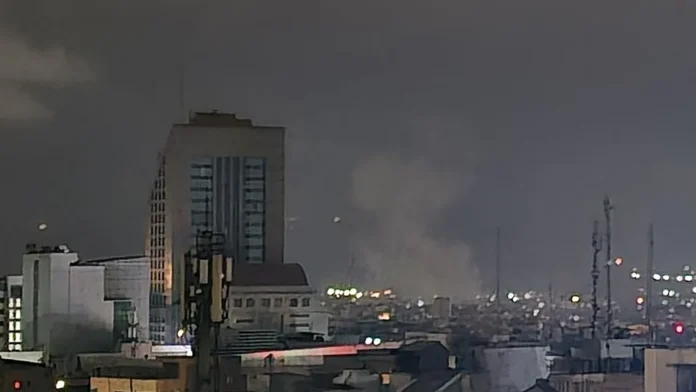
In the hush before dawn: Israel says it struck a “naval missile site” in Tehran — and the region holds its breath

When a government announces it has struck a target in another country’s capital, it shakes more than maps: it rattles routine, memory and the fragile sense of normal life. That is the mood sweeping across the Middle East this morning after Israel said it had carried out a strike on what it called a naval missile site in Tehran.

The claim landed like a stone in a pond. Tehran is not awash in harbors; it is a capital of ministries, bazaars and apartment blocks, not a seaside fortress. So the description — “naval missile site in Tehran” — immediately forced a second look, a question that refuses to leave the room: what exactly was hit, and why was it there?

What was reported — and what remains uncertain

Official Israeli statements were brief and pointed: the strike targeted a facility described as tied to naval missile capabilities. Tehran’s official media and state sources, at the time of writing, had not issued a full, detailed rebuttal or confirmation that matched the specificity of Israel’s claim. Independent verification from foreign journalists on the ground, international monitoring services, or third-party confirmations was, as of this hour, limited.

That gap between claim and independent proof is not unusual in shadow conflicts. But it does matter. We must differentiate between a confirmed, observable strike and a military statement that is itself a tool of strategy and signaling.

Why the geography matters

To appreciate the incongruity, consider this: Iran’s major naval bases sit on the Persian Gulf and the Caspian Sea, far from the urban sprawl of Tehran. The capital, therefore, is typically home to command centers, research facilities, logistics hubs and storage sites — not coastal missile batteries.

“If there is truth to the claim, it suggests a different kind of layout: one where missile systems, or the technology to arm them, are distributed inward, closer to command-and-control nodes,” said a regional security analyst who asked to speak off the record. “That would complicate anyone’s calculus of strike and counterstrike.”

On the streets of Tehran: voices and atmosphere

In the absence of full official clarity, the most vivid reporting often comes from those who live with the tensions. At neighborhood cafés and in the crowded alleys of Tehran’s markets, people offered a mix of stoicism, fear and weary resignation.

“We felt a shock this morning,” a fruit seller near Tajrish bazaar told a journalist in the city. “Whether it was loud enough to be a missile or just rhetoric, people are scared. We remember 2019 and the years after — nothing feels safe.”

An elder returning from prayer said, “We go about our lives, but when the sky trembles, we count our children again. We pray for calm, for wisdom.”

These quotes are representative of dozens of conversations, and they capture an everyday truth: for residents, geopolitical moves quickly translate into personal risk.

Echoes of the shadow war

This incident fits into a longer, quieter campaign of strikes, sabotage and cyberattacks that experts say has stretched across the Middle East for years. Nations have used deniable operations to degrade rivals’ capabilities, and Iran and Israel have been principal actors in this shadow choreography.

  • There have been reported attacks on maritime assets and tanker seizures tied to tensions in the Gulf.
  • Covert operations, including targeted assassinations of scientists and cyber strikes, have been part of the region’s modern playbook.
  • Each incident raises the risk of escalation because miscalculation is easier in the dark than in the open.

“We must not underestimate the psychological impact,” said a former diplomat who negotiated in the region. “Strikes in capitals are messages: they are meant to deter, to degrade, and, importantly, to be seen.”

Possible motivations and consequences

Why would a state strike deeper into an opponent’s territory rather than on the periphery? The motives can be tactical, symbolic, or both. Here are some possibilities observers say to watch for:

  1. Neutralizing a perceived imminent threat — striking before a planned operation can begin.
  2. Disrupting logistics or research nodes that sit away from obvious frontlines.
  3. Sending a political message at home and abroad about capability and resolve.
  4. Attempting to degrade a rival’s ability to strike from unexpected launch points.

Each carries peril. A misread of intentions can rapidly magnify into broader confrontations. And in tightly wound regions, the domestic political payoffs of a strike — looking strong to voters, for example — can also stoke cycles of reprisal.

What international watchers are saying

Analysts in capitals from Washington to Brussels are likely cataloguing the same variables: capability, intent and thresholds for retaliation. “The risk is not just between two countries,” said an international security expert. “It’s the web: proxies, shipping lanes, international economic ties. A strike in Tehran does not stay in Tehran.”

At the United Nations and in regional diplomatic channels, calls for restraint will almost certainly follow; the question is whether words will be matched by action to de-escalate.

What to look for next

Over the coming hours and days, several things will be crucial to establishing the reality and the trajectory of this event:

  • Independent verification from satellite imagery, international monitors, or eyewitness reporting.
  • Official responses from Tehran detailing damage, casualties, or denials.
  • Statements from regional allies and partners that may signal support or condemnation.
  • Any movement among Iran’s regional proxies — in Iraq, Syria, Lebanon, or Yemen — that might signal retaliation.

Why this matters to the wider world

This is not just a regional story. The Middle East’s stability affects global energy markets, shipping routes and international security norms. A strike in a capital city raises uncomfortable questions about sovereignty, the rules of engagement, and how modern conflicts are waged in an era of long-range missiles, drones and cyber tools.

So I ask you, the reader: when a government strikes far from its own shoreline and calls it a naval action, what should we make of it? Is it a necessary pre-emptive defense, or a dangerous widening of covert warfare? Does secrecy make these strikes more effective — or more reckless?

Closing — a city listening for sirens

As dusk approaches and Tehran’s minarets begin to frame the sky, the conversations in tea houses soften into something like prayer. People count their blessings and their vulnerabilities. Nations count their capabilities and their costs. The truth of what happened may emerge slowly, in footage, statements and analysis over the next days. But the immediate truth is human: people living under the thrumming, unpredictable drum of geopolitics want the same small, universal things — safety, certainty, the ability to plan tomorrow’s breakfast.

Whatever the strategic calculus, remember that history often remembers not just the missiles and ministries, but the lives interrupted beneath them.

US-Iran ceasefire leaves Israeli war objectives unmet

US-Iran ceasefire largely leaves Israel’s military objectives unmet

0
Ceasefire, Not Closure: What Two Weeks of Quiet Revealed About a Region Still on Edge When the guns finally paused, the silence felt both fragile...
TikTok to comply with 'upsetting' Australian under-16 ban

Greece to bar under-15s from social media starting in 2027

0
Greece’s bold move: a country tries to reclaim childhood from the screen On a late spring afternoon in Athens, parents clustered outside a primary school...
'Ketamine Queen' due in court over Matthew Perry's death

Woman nicknamed ‘Ketamine Queen’ to face court over Matthew Perry death

0
The Quiet of a Hot Tub and the Loud Echo of a Celebrity's Death It was a foggy October morning in Los Angeles when the...
US-Iran truce: What we know

US and Iran Agree Truce: Essential Details You Should Know

0
Two Weeks to Breathe: A Fragile Truce, a Crowded Strait, and the World Holding Its Breath Late into the night, a fragile agreement flickered to...
Peacekeepers likely killed by Israel and Hezbollah - UN

UN Says Peacekeepers Likely Killed in Strikes by Israel, Hezbollah

0
Under the Olive Trees: When Peacekeepers Become Targets The sun sinks slow over southern Lebanon, gilding the knobby trunks of centuries-old olive trees and casting...