Home Blog Page 23

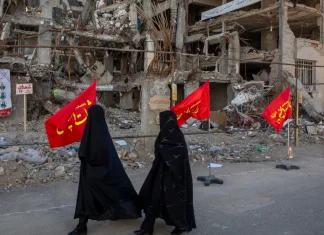
WHO warns Middle East war entering a perilous, escalating phase

WHO warns Middle East war at 'perilous stage'

When a Narrow Waterway Becomes the World’s Pulse: A Deadline, a Strait, and the Weight of Oil

There is a line on the world map that looks innocuous—just a thin choke where the Persian Gulf kisses the Gulf of Oman—but that narrow, sun-scorched ribbon of water is the heartbeat of global energy and geopolitics. The Strait of Hormuz is where fortunes are made and fragile peace is tested. This week, that heartbeat found itself under a deadline.

In a terse statement that landed like a pebble thrown into a very large pond, the White House gave Tehran an ultimatum: reopen the Strait of Hormuz to commercial traffic or face unspecified consequences. The demand, framed as a matter of “freedom of navigation,” set off ripples across markets, naval decks, and dinghies bobbing off the Iranian coast.

On the decks, in the bazaars

In Bandar Abbas, a port city that feels both ancient and militarized, sailors and stevedores moved with the practiced indifference of people who have weathered fogs of uncertainty before. “We tied up the morning’s tanker and then everyone started watching the satellite channels,” said Hossein Rahimi, a crane operator in his late 40s. “You learn at the port: if the sea is quiet, the money keeps coming. If the sea is not quiet—then nobody eats as well.”

On a fishing boat two miles west, an old man named Ali adjusted a weathered cap and squinted at a horizon bright with sunlight and anxiety. “We want peace,” he said softly. “We fish. My grandson studies in Shiraz. This is not the first time we worry about the Navy passing by.”

Why this strait really matters

Here are the hard numbers that explain the hubbub: roughly one-fifth of the world’s petroleum liquids—about 17 to 21 million barrels per day at historic peaks—pass through the Strait of Hormuz. Much of that oil supplies Asian giants like China, Japan, and South Korea. Even a small interruption can jolt global oil prices, strain refining operations and send tremors through economies already juggling inflation, renewable transitions and fragile supply chains.

“The strait is not just a local road—it’s a global artery,” says Dr. Naomi Feldman, a maritime security analyst at an international think tank. “When you threaten that artery, you are effectively pressing on the whole body of global commerce. The symbolism is huge; the practical consequences even bigger.”

Naval chess and legal shoals

For decades, the waters have been patrolled by a rotating cast of players: the U.S. Fifth Fleet stationed in Bahrain, a contingent of British frigates, European maritime patrols and the increasingly assertive navies of the Gulf states. Iran, for its part, operates a dense constellation of small fast boats, coastal missiles and patrols that make the Strait’s narrow passages especially tense.

“This is maritime deterrence meeting maritime coercion,” said Commander Laura Gibbs, a retired naval officer who now consults on shipping security. “The legal framework is clear—innocent passage is protected under international law—but enforcement is the hard part, especially when regional actors feel existentially threatened.”

The deadline and its human fallout

Deadlines are dramatic devices. They force decisions, or they reveal the unwillingness to make them. In practical terms, a demand to “open the strait” can mean everything from the removal of minefields and an end to boarding of commercial vessels, to an assurance that Iranian forces will not interfere with traffic. But the rhetoric does more than that: it sends merchants backing away from booking cargos, insurers hiking premiums, shipowners diverting thousands of miles around Africa to avoid the risk.

“We’ve already received two calls from clients wanting their cargo rerouted,” said Maria Tan, operations manager at a Singapore-based tanker firm. “Rerouting adds days and hundreds of thousands of dollars—sometimes millions—per voyage. For smaller companies, there’s simply no margin for that.”

On the floor of international commodity exchanges, the news translated into immediate volatility: benchmark crude spiked in early trading, then eased as traders weighed likelihoods. Markets hate uncertainty; they price it, and then they try—often imperfectly—to hedge against it.

Local economies and global politics

In Dubai’s shipping offices and in the pottery stalls of Muscat, conversations turned to tariffs, cargo manifests and the weathered wooden dhows that have plied these waters for centuries. “History is here,” said Leila Hassan, a historian in Muscat. “This is where empires met and merchants bargained. When modern states wield the sea the way they do, they are simply scaling up an old dance.”

It’s also a pinch point for the region’s younger generations, many of whom want jobs, travel, and a life not defined by missile ranges or embargoes. “We are tired of being headlines,” said 25-year-old university student Fatima R., whose family runs a small logistics firm in Bandar Abbas. “We want to study, to build, to watch our country sell carpets and pistachios instead of being in a standoff.”

Possible paths forward

What happens next depends on whether the deadline is a genuine attempt to coerce compliance or a negotiation posture—that is, a tactic to win concessions without crossing the threshold into open conflict. A handful of likely outcomes:

  • A de-escalatory face-saving measure: limited assurances and increased international monitoring to protect commercial passage.
  • Economic countermeasures: sanctions, insurance scrambles and supply-chain reconfiguration that hurt global markets more than military options.
  • Skirmishes at sea: harassment, accidental collisions, or small-scale seizures that spiral into broader confrontations.
  • Diplomatic bridging: third-party mediation led by regional actors or international bodies to create durable confidence-building measures.

Beyond the deadline: the larger story

Ask yourself: what does a single strait reveal about the world? It reveals energy dependency, the fragility of globalized supply chains, and the uneven distribution of power. It exposes the paradox of renewable commitments on one hand and continued fossil-fuel dependence on the other. And it underscores a geopolitical truth: local disputes, in a tightly knit global system, are rarely local for long.

“We need to treat this as an opportunity for a longer conversation about energy security and regional integration,” suggested Dr. Feldman. “Short-term fixes matter, but what stops countries from repeatedly threatening the same choke points is durable economic interdependence and credible regional institutions.”

What you should watch for

Keep an eye on a few indicators in the coming days: statements from Tehran and Washington, movements of naval task forces, insurance premium announcements from the major P&I clubs and rerouting notices from major shipping lines. Each one tells a different chapter of the unfolding story.

And remember the people in the ports and the fishermen on the boats. In an era of headlines and hot takes, what often gets lost is the quiet arithmetic of everyday life—how a delayed tanker can mean an unpaid loan, a missed university term, or the loss of a market for a small exporter.

So when you see a map with a thin blue line labeled “Strait of Hormuz,” don’t imagine it as abstract geography. Imagine instead the cranes and cafes of Bandar Abbas, the scratch of a captain’s logbook, the hum of a refinery in South Korea, and the gas pump where someone in Europe pays a few cents more. That narrow passage carries not just oil, but the interconnectedness of a global community. And when a deadline comes for such a place, it forces us to ask: how do we want an interconnected world to behave when threatened—through force, through law, or through the patient work of diplomacy?
How Trump’s confrontation with Iran has affected Ukraine’s security and alliances

What Trump's war on Iran has meant for Ukraine
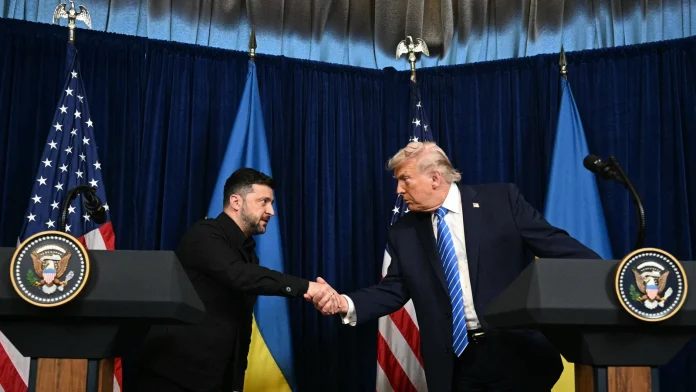
Volodymyr Zelensky and Donald Trump shake hands following talks at Mar-a-Lago in December

Between Two Fires: Ukraine’s Quiet Pivot as the Middle East Burns

There is an odd kind of hush that falls over Kyiv at dusk now: not silence, exactly, but the kind of concentrated noise that feels like a city holding its breath. Street vendors still sell hot dumplings on the main drag; a grandmother feeds pigeons in Maidan; a mural of a sunflower peels in the rain. Yet deeper in the city’s defence neighbourhoods, the conversation has shifted. The war that began on the eastern horizon four years ago has found a new, distant theatre to intersect with — and Kyiv’s diplomats and drone pilots have been quietly stepping onto it.

When reports emerged late last month of a dramatic strike on Tehran — the reported death of Iran’s supreme leader and the immediate US-Israeli military response that followed — the reverberations were felt far beyond the Gulf. They reached the crumbling façades of eastern Ukraine, the grain terminals of Odesa, the command rooms where men and women in camouflage calibrate interceptors against cheap, lethal drones.

Why a Gulf War Matters in Eastern Europe

At first glance the link is logistical: oil prices, shipping routes, and a sudden scramble for alternatives. But the entanglement runs deeper. Iran had supplied Russia with thousands of Shahed “kamikaze” drones over the past four years — weapons that have killed and maimed Ukrainian civilians and forced entire communities to live on edge. Those same weapons are now a key instrument in the new Gulf hostilities.

“For us, these devices are familiar. They are a language of war we have been forced to learn,” says Kateryna, a former engineer turned drone-defence specialist who now runs a small training unit outside Kyiv. “When Gulf states call for help, they are not asking about theory. They ask how to listen to the sky.”

Ukraine’s response has been swift and pragmatic. President Volodymyr Zelensky, negotiating on multiple fronts, has authorized the deployment of over 200 drone experts to the Gulf — teams sent to the UAE, Qatar, Saudi Arabia, Kuwait and Jordan, according to Ukraine’s defence minister. These are technicians with battlefield-tested experience in intercepting Shaheds and their Russian cousins; they know the jittery signature of a loitering munition and the art of turning a $20,000 drone into a problem you can solve.

From Hands-On Combat to Quiet Diplomacy

It’s a subtle diplomatic gambit: move from being a perpetual recipient of aid to being a provider of critical expertise. “Our people understood early on that to stay relevant, Ukraine must be useful in more ways than one,” Oleksandr Kraeiv, a Kyiv-based foreign policy analyst, told me. “We’re offering capabilities, not just asking for them.”

In the Gulf, where statecraft is often practical and transactional, that move has value. An Emirati security analyst I spoke with — a man who has spent three decades watching Tehran and Moscow jockey for influence across a chessboard of pipelines and ports — described Kyiv’s teams as “precise and humble. They teach, they leave, and we sleep easier.”

Silence from Moscow, Noise on the Market

Yet the calculus is complicated by bigger players and bigger money. While Russia expressed public sorrow over the Tehran strike, it has so far avoided a rupture with the United States. Part of the reason is tactical, part of it cynical: Vladimir Putin and his government are careful not to push Washington into tougher positions that might favour Kyiv at the negotiating table.

Meanwhile, market forces have become a war of their own. The Gulf strikes and infrastructure disruptions sent Brent crude climbing from roughly $65 a barrel before the crisis to near $100 at the height of panic; it has since settled around $90. Buyers, hungry for reliable supply, dialled Russia. The Centre for Research on Energy and Clean Air (CREA) estimates Russia enjoyed some €625 million in additional oil export revenues in the two weeks after the initial strikes on Iran.

“Money is oxygen in this conflict,” a European diplomat said, speaking on condition of anonymity. “Every dollar Russia gains from higher oil prices funds its battlefield operations. That’s the blunt arithmetic of war.”

These market shifts also influenced policy. On 10 March, Washington announced a temporary easing of sanctions on Russian oil exports for one month — a move intended to tame surging prices but one that, predictably, fed a narrative in Kyiv that the world’s priorities had shifted away from ending Russia’s war in Europe to stabilizing global fuel markets.

The Thin Thread of Negotiations

It bears repeating: diplomacy did not grind to a complete halt. Trilateral talks among Ukrainian, Russian and US representatives — a format revived with cautious optimism earlier this year — had been pencilled in for Abu Dhabi at the start of March. They didn’t happen. The last sitting took place in Geneva on 18 February. The Gulf strikes wrecked the timetable.

“These talks were already fragile,” a senior EU official told me. “They were in the danger zone. Pulling them back together will require space that right now does not exist.”

Small steps continue. Kyiv and Washington met in Florida recently for follow-up discussions that negotiators say will continue behind closed doors. But the consensus among analysts in Kyiv is bleakly pragmatic: until the horizon in the Middle East stabilizes, a formal resumption of the trilateral peace track for Ukraine looks unlikely.

Local Cost, Global Consequence

On the ground in Ukraine, people measure these geopolitical shifts in minutes and in prices. A farmer outside Mykolaiv told me that the shipping delays and higher fuel prices have pushed fertilizer costs through the roof. A nurse in Odesa worries about a new generation of patients with limb injuries from drone attacks. A young father in Lviv, who recently returned from helping fit anti-drone nets on a Gulf oil platform, says he sleeps better knowing the work he did might keep merchant vessels safer.

These are not abstract variables on a graph. They are livelihoods, classrooms, gardens, and funerals. And they underscore a damning question: when the world’s attention splinters between theatres of war, which conflicts become priorities, and which are consigned to slow attrition?

Where Do We Go From Here?

Ukraine is attempting something both old and new: to convert its trauma and expertise into diplomatic capital. By exporting knowledge instead of only pleading for materiel, it hopes to remain indispensable to a shifting coalition of partners. Yet there is no guarantee that relevance will translate into the arms and backing Kyiv needs for the long haul.

So here is what I find myself asking you, the reader: What responsibility does a global community have when its crises intersect? When an oil spike in the Gulf buys time for an aggressor in Europe, who pays the moral price? And how do small nations — those bearing the brunt of violence — ensure their stories and needs do not get swallowed by the chatter of great powers?

In the weeks ahead, listen for the quiet dispatches — the Ukrainian teams teaching Gulf technicians to patch a radar array; the diplomats in muted conference rooms trying to stitch a fragile ceasefire; the families recalibrating their budgets because fuel is no longer a background fact but a household decision. These are the human moves of geopolitics. They are granular. They are poignant. And they will shape the map of tomorrow.

Further reading and context

  • Shahed drones and their proliferation: an overview of shadowborne loitering munitions and their battlefield impact.
  • Oil markets 101: why disruptions in the Strait of Hormuz send global prices surging and who benefits.
  • Trilateral diplomacy: the fragile architecture of talks involving Ukraine, Russia and the United States.

Kent meningitis cases decline as vaccination campaign expands regionally

Kent meningitis cases drop as vaccine rollout continues
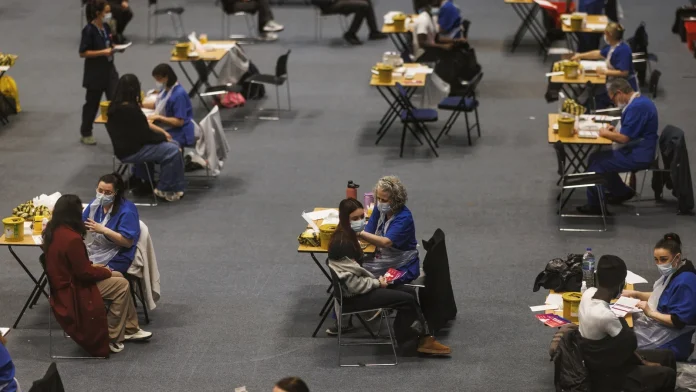
People receive the MenB vaccine in Canterbury

In the shadow of the cathedral: a county rallies against a sudden meningitis scare

For four days, the streets of a county best known for its hop fields, pastel-fronted cottages and the soaring silhouette of Canterbury Cathedral have taken on a different look: orderly queues of teenagers and twenty-somethings wrapped in hoodies and scarves, clutching NHS letters, answering questions from nurses at pop-up clinics, and trading anxious updates on WhatsApp.

What began as a handful of hospital admissions has been whittled down and clarified by laboratories — but the sense of urgency has not. Health officials now say the number of confirmed cases linked to the Kent cluster has dropped to 20 after further testing, with nine suspected cases still under investigation, bringing the total under consideration to 29. Nineteen of the confirmed infections are meningococcal B (MenB), the strain that typically circulates among young people living in close quarters.

“We’re seeing the story settle as the lab work comes in,” said a senior infectious-disease consultant working with the response team. “Some early-positive results are being reclassified, which is welcome news, but every single admission matters. Each case has a human face, and each one has prompted us to act quickly.”

From campus lawns to clinic tents: the public health response

Across NHS Kent and Medway, mobile vaccination hubs sprang up near universities, train stations and community centres. By Saturday evening, official figures recorded more than 8,000 MenB vaccine doses administered and 12,157 courses of antibiotics given to close contacts — numbers that tell two stories at once: the scale of the response, and how many people may have been exposed.

In a temporary marquee behind a community centre, 21-year-old student Yasmin adjusted her scarf and smiled tiredly. “I was nervous at first,” she said. “But when they explained how fast meningitis can hit — fever, headache, a rash — I didn’t hesitate. I thought of my flatmate, my mum, my coursemates. It’s about protecting the people around you.”

Clinicians offered immediate antibiotic prophylaxis to those identified as close contacts and the MenB vaccine to eligible groups. Public health teams conducted contact tracing with painstaking detail: roommate lists, lecture cohorts, nights out at local bars. “It felt a bit like detective work,” said a contact tracer who requested anonymity. “You ask small questions and they open up a map of where they were in the last few days. It’s about timing — catching people before the disease can spread.”

Numbers, and the nuance behind them

Statistics can be blunt instruments. The drop from 34 to 29 total cases underlines the iterative nature of outbreak investigation. As further laboratory tests refine which isolates truly link to the cluster, officials expect more adjustments. That doesn’t mean the threat was imagined. All 20 confirmed cases required hospital care — a sobering reminder that even if the public risk remains low, invasive meningococcal disease can progress rapidly.

“We would prefer zero cases,” said an NHS Kent public information officer. “But the success here is how quickly young people came forward, how effectively we deployed vaccines and antibiotics, and how teams across health and local government coordinated. That responsiveness may be what prevented more serious spread.”

Grief, memory and community resilience

Any public health bulletin carries the weight of lives lost. Two students have died in the outbreak, including 18-year-old Juliette, whose sudden death stunned family and friends. On campus, vigils were held beneath plane trees littered with postcards and messages: “We love you,” one read. “Too many goodbyes.”

“She loved music and the sea,” said a friend, voice breaking. “Juliette was fit, always smiling. You never think it’s going to be you or your friends. It makes you look at your life differently — at every conversation, every call you didn’t make.”

Those personal stories ripple outward. Local cafés have offered free coffees to clinic staff; student unions set up quiet rooms for those worried or bereaved. A lecturer at the university arranged for counseling sessions and postponed deadlines. What might have been a purely clinical operation has become a communal act of care.

What is meningococcal B — and why does it worry officials?

Meningococcal disease is caused by bacteria that can lead to meningitis (inflammation of the membranes around the brain and spinal cord) or septicaemia (blood poisoning). MenB is the strain most commonly found among adolescents and young adults in the UK, and while vaccination has reduced cases over time, pockets of transmission can still emerge — especially where people live and socialise in close proximity.

Symptoms to watch for include sudden fever, severe headache, stiff neck, nausea, sensitivity to light and a rash that does not fade under pressure. Rapid medical attention is crucial: outcomes improve dramatically with prompt antibiotics and supportive care.

Public health experts stress that while the case numbers are serious, the wider public risk remains low. “Meningococcal disease is frightening because it can progress quickly,” said a consultant in infectious disease epidemiology. “But our surveillance systems, laboratory networks and vaccination strategies exist precisely for this reason — to act swiftly when an incident occurs.”

Global echoes: what this outbreak tells us about health in shared spaces

Beyond Kent, this episode echoes a global pattern: dense living and social behaviors among young adults can seed outbreaks of otherwise manageable infections. Universities from Boston to Beijing have faced similar episodes, each reminding us of the delicate interplay between individual liberty and collective health.

It also raises questions about preparedness: are universities sufficiently resourced for vaccination drives? Are students informed about recognition of symptoms? And how do we balance antibiotic prophylaxis with long-term concerns about antimicrobial stewardship?

  • Public response: more than 8,000 MenB vaccine doses administered
  • Antibiotics given: 12,157 courses to close contacts
  • Confirmed cases: 20 (19 are MenB), all requiring hospital admission
  • Cases under investigation: 9 suspected
  • Deaths: 2 students

What can you do — and what should you watch for?

If you are a university student, a parent of one, or someone living in a shared household, the practical steps are straightforward: know the symptoms, seek medical attention urgently if they emerge, and come forward for vaccination if offered. For those offered antibiotics as a precaution, take the full course.

And beyond the immediate actions, reflect: how do communities look after one another in times of health scare? How do students balance social life with self-protection? What role do institutions play in setting up rapid, humane responses?

As the laboratories continue to refine their findings and the number of confirmed cases is expected to adjust further, there is reason for cautious optimism. But optimism must be married to vigilance. The sight of a queue of young people waiting quietly, sharing headphones and jokes, is itself a lesson in civic responsibility.

So ask yourself: in your own community, what would it take to galvanise that same sense of shared commitment? The Kent outbreak is a local story with universal echoes — a reminder that health is not only a medical matter but a civic one, shaped by relationships, places and the choices we make for each other.

Koofur Galbeed oo sheegtay in hubkii Masar ay siisay Soomaaliya lagu soo weeraray deegaanadooda

Mar 22(Jowhar)-Dr. Ali Faqi oo ah gudoomiyaha baarlamaanka Koonfur Galbeed ayaa sheegay in Saanad milateri oo ay hore u siisay dowladda Masar Soomaaliya looguna talagalay difaaca qaranka iyo la dagaallanka Argagixisada, hadda loo adeegsanayo khilaafka Koonfur Galbeed iyo duminta maamulka, iyadoo lagu hubeynayo ciidamo lays kugu geeyey Burhakaba, taas oo uu sheegay in ay halis tahay.

Madaxweyne Xasan oo safar deg deg ah ugu ambabaxay dalla Itoobiya

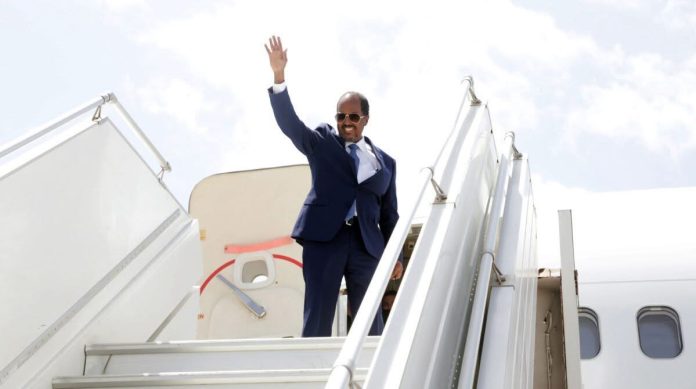
Mar 22(Jowhar)-Madaxweynaha Soomaaliya Xasan Sheekh Maxamuud ayaa maanta u safray magaalada Addis-ababa ee dalka Itoobiya.

Tech titans clash in first major AI conflict

'Tech bros are going to war' - first major AI conflict
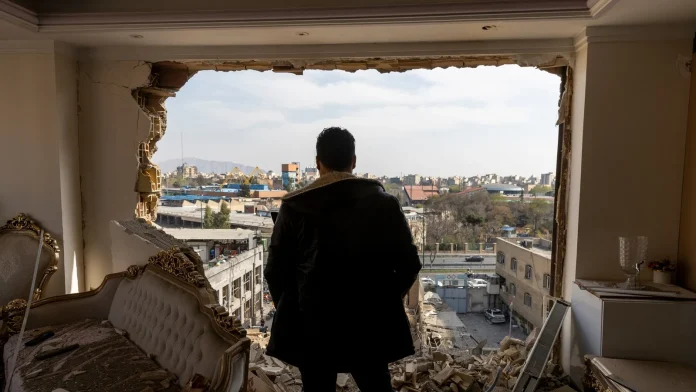
A man stands in a damaged residence in Tehran, Iran

When war learns to think faster than we do

Three weeks into a conflict that began like a thunderclap and has since sounded like an endless barrage, the numbers keep arriving like bodies at the gate: stark, immovable, impossible to ignore.

  • More than 2,000 people dead and roughly 10,000 wounded.
  • Over 4 million people uprooted across the region — about 1 million now sheltering in Lebanon.
  • Global oil hovering above $100 a barrel, markets jittery and governments scrambling.
  • Some 45 million people are teetering on the brink of acute hunger as food, fuel and shipping costs surge.
  • At least 56 cultural heritage sites in Iran have been reported damaged or destroyed; more are endangered in neighbouring countries.

Those figures are one way to measure a war. Another is the cadence of the strikes: the air, the ground, the systems behind the targeting. In the first 24 hours of the campaign, the U.S. military reportedly struck roughly 1,000 targets — a pace many analysts say is roughly twice the tempo of the “Shock and Awe” campaign against Iraq in 2003.

That difference isn’t merely about munitions or muscle. It’s about code.

The new engine of speed

Military planners like to speak in chains and loops: sense, decide, act. In plain English it’s how a target is found, vetted and hit. Today, that chain is being tightened by software — artificial intelligence that crunches satellite feeds, drone video, communications intercepts and mountains of open-source data and pushes recommended actions to human operators.

“We can wade through terabytes in a few heartbeats now,” said a U.S. defense analyst who asked not to be named. “A human used to take hours or days to corroborate, cross-reference and vet. AI compresses that into seconds. That compression is the decisive advantage.”

Admiral Brad Cooper, the commander of U.S. Central Command, framed it similarly in a recent video message: the tools help sift through “vast amounts of data” so leaders can “cut through the noise” and make decisions faster than adversaries. He emphasized that humans retain the final say on whether to fire.

Speed with consequences

Speed sounds like a virtue until it becomes a liability. The faster the system recommends a strike, the less time there is for context, for second-guessing, for noticing a school bus where a weapons convoy was expected.

In the opening hours of the campaign, a missile struck a girls’ school in Minab in southern Iran, killing more than 170 people, most of them children, independent analysts say. The munition has been identified in outside analysis as a Tomahawk — a cruise missile commonly used by the U.S. Navy — and the Pentagon has opened an inquiry into how the targeting error occurred, whether it relied on outdated intelligence, and whether machine recommendations played any part.

“If an algorithm mounts the scaffolding for a decision, who is accountable for an error?” asked Dr. Noah Sylvia, a scholar of emerging military technologies. “We can’t outsource moral responsibility to lines of code. Accountability must be explicit and enforceable.”

The tech behind the thunder

At the centre of this revolution are commercial tools married to military infrastructure. Palantir’s Maven Smart System — wired to Anthropic’s large language model, Claude — is among the suites reportedly used to analyze imagery, surface likely targets and manage the flow of information that reaches commanders.

That partnership did not happen in a vacuum. According to people familiar with the matter, there were intense negotiations between the Pentagon and Anthropic about guardrails: prohibitions against domestic mass surveillance and bans on autonomous lethal functions. Those conversations were interrupted, abruptly, by political intervention. The president directed federal agencies to remove ties with the company; the defense secretary labelled the firm a supply-chain risk and ordered a phaseout. Anthropic has vowed to challenge the decision in court.

Private tech firms, big and small, have been courted by the Pentagon for years — from the West Coast startups that once built wedding-image detectors to academic labs that model swarm behaviours. “Project Maven was an explicit attempt to drag the best commercial minds into national security,” said Katrina Manson, who has written about the Pentagon’s evolving ties to Silicon Valley. “The idea was to access innovation where it lives, not rely solely on legacy defence primes.”

The trade-off is not just technical. It’s cultural. “Tech bros are going to war,” one UK-based defence researcher told me with a half-smile and a twinge of alarm. “When the people who ship products for millions of users start thinking in terms of lethality metrics, things change fast.”

Moral fog and the question of blame

History offers precedents: Google employees protested Project Maven in 2018; the company declined to renew its contract. Yet the involvement of AI in war has only spread. OpenAI, Microsoft and cloud providers quietly or overtly supply infrastructure, models and hosting that can be repurposed for defence. CEOs have offered reassurances: technical safeguards, human oversight, lines in contracts that say “no to autonomous killing.”

But assurances are not substitutes for accountability. If a system recommends a strike using stale satellite data, or if biased training datasets repeatedly misclassify civilian infrastructure, who stands trial — the coder, the contractor, the officer who clicked “execute,” or the political leaders who set the policy?

“We need a juridical architecture that travels as fast as the algorithms,” said a former international humanitarian law officer. “Without it, accountability will be patchy, politicised and ultimately unsatisfying for victims and their families.”

Cultural heritage under a digital sky

Technology is changing how wars are fought, but it cannot shield what is fragile. In Tehran, photographs of the Golestan Palace showed blown-out windows, fractured mirrored ceilings and dust where chandeliers hung. In Isfahan, reports list damage to Chehel Sotoun Palace, the Masjed-e Jame mosque and the centuries-old Naqsh-e Jahan Square.

“You can repair concrete. You cannot easily repair a 1,000-year-old tile,” said Nader Tehrani, an Iranian-American architect who studies historic preservation. “The shock waves from a modern ordnance will devastate the very fabric of a 15th-century structure.” He summed it up with a phrase that might define the next war’s legacy: “We used to talk about the military-industrial complex. Now it’s the military-technology complex.”

What does the rest of the world see?

For citizens in capitals from Beirut to Berlin, the spectacle raises urgent questions. Do we accept a speed-obsessed warfare that claims fewer mistakes because there is more data, or do we demand slower, more deliberative processes that accept strategic risk to protect civilians?

For humanitarian agencies, the numbers — 45 million facing acute hunger, displaced families, damaged food-supply chains — translate into cold logistics and hot clinics. For markets, $100-per-barrel oil is not just a headline; it is a tax on the poor and a political pressure cooker for economies already near the boiling point.

And for technologists, ethicists and citizens alike the deeper inquiry lingers: how much of war do we want to delegate to systems that learn faster than we can grieve? If machines can find targets faster than humans can verify them, do we slow the machine or accelerate our institutions?

Questions to sit with tonight

Are we comfortable with warfare that prizes tempo over texture? Can legal systems be retooled to keep pace with silicon-enabled decisions? And finally, what safeguards must be non-negotiable — in code, law and policy — to protect civilians, cultural memory and the possibility of accountability?

These are not hypothetical. They are live moral debts being incurred now. As the dust settles over damaged palaces and displaced families, the debate will not be limited to war rooms. It will be argued in parliaments, in courtrooms and in the codebases of companies whose products now carry consequences that reach far beyond a user’s screen.

For readers across continents: ask yourself this — in a world where machines can point and commanders can press, what would you insist must never be automated?

Iran-launched missile barrage injures over 100 in southern Israel

Iran missile strikes injure over 100 in southern Israel
Israels air defence systems operated but did not intercept the missiles

A Night of Shattering Quiet: Missiles, Craters and the New Reality in Israel’s South

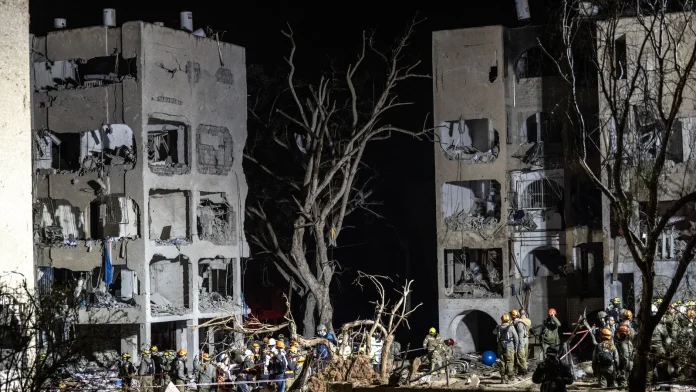
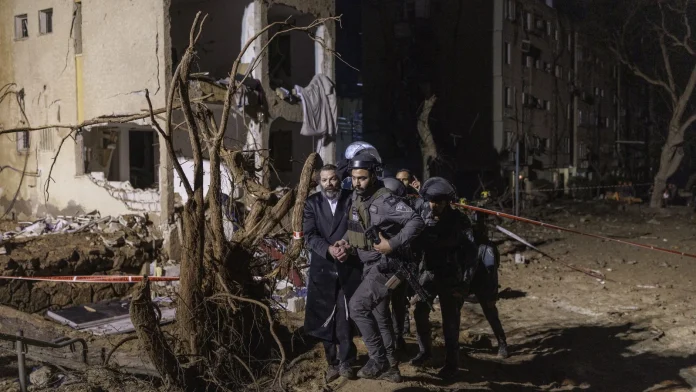
When dawn pulled back the desert night, it revealed a scene that felt ripped from a nightmare: two towns in Israel’s southern Negev woke to smoking craters, buildings with gaping wounds where facades had once been, and the slow, methodical work of medics and firefighters picking through rubble for life and story.

The casualty toll—more than 100 people hurt across Arad and Dimona—was a blunt measure of what had happened. Magen David Adom teams reported 84 wounded in Arad, ten of them in serious condition, and 33 people treated in Dimona, including a ten-year-old boy with shrapnel injuries who was awake but gravely hurt. For families, the numbers are not statistics; they are mothers calling frantically at makeshift triage centers, neighbors ferrying blankets and bottled water, and local schools told to move classes online as the town steadied itself.

The Strikes and the Morning After

First responders described “extensive destruction.” In Arad, three residential buildings were damaged and one caught fire. Firefighters said interceptors had been launched—but failed to stop the incoming projectiles. Two ballistic missiles, each carrying warheads weighing “hundreds of kilogrammes,” struck directly, carving deep holes into the earth and tearing open the fronts of homes.

“There was a lot of chaos at the scene,” said Riyad Abu Ajaj, a medic who spent the night sorting the wounded. “You could hear the calls, the sirens, mothers praying in different languages—it felt like the city had been thrown into a bad dream.”

In Dimona, the blast left twisted metal and a crater the size of a small house. Windows were blown out in several surrounding buildings. Footage from the scene showed emergency crews combing through debris while neighbors stood on sidewalks holding children and trying to make sense of a night that began like any other.

Quick Facts from the Ground

  • More than 100 people treated for injuries across two towns.
  • 84 wounded in Arad, including 10 in serious condition; 33 wounded in Dimona.
  • Schools in the affected area moved to remote learning by order of the Home Front Command.
  • Firefighters reported interceptor missiles had been fired but failed to neutralize the incoming threats.

Failures at the Heart of Defense

The most unnerving detail to emerge was not only that missiles had hit populated areas, but that Israel’s vaunted air-defence layers did not stop them. Brigadier General Effie Defrin, a military spokesman, told journalists the systems “operated but did not intercept the missile,” and promised an investigation. There will be technical post-mortems; there will be questions about doctrine and readiness. There will also be pressure to explain how a society built around a constant state of preparedness suddenly found itself vulnerably exposed.

For decades, Israel has invested heavily in a multi-tiered air-defence architecture: Iron Dome for short-range rockets, David’s Sling for medium-range threats, and the Arrow system for long-range ballistic missiles. These systems have a track record—Iron Dome’s operational success rates have often been reported above 80–90% in past conflicts—but they are not infallible. Analysts point to saturation tactics (overwhelming defenses with multiple simultaneous launches) and evolving missile technology as ways that can blunt even the best systems.

“No defense is perfect,” said Maya Rosen, a Tel Aviv-based security analyst. “The attack underscores a growing reality: missile arsenals are getting more sophisticated, and tactics are changing. It’s a reminder that technological edge can be eroded, and that civilian populations remain at grave risk.”

Dimona: Symbol and Target

Dimona is more than a dot on the map. Nestled in the Negev, it is the town that hosts a nuclear research facility long shrouded in ambiguity. Israel has maintained a policy of deliberate opacity about its nuclear capabilities, and the site is widely believed outside official circles to be linked to the country’s nuclear program. For residents, this has meant living in the shadow of a strategic symbol—visible in maps, whispered in international policy circles, and now, in a terrifying way, very much within reach of attackers.

“We never thought anything would hit here directly,” said Shlomo, a baker whose shop sits a few kilometers from one of the impact sites. “You hear the stories, you read the history, but to see a place you pass every day with a hole in the ground… it changes how you walk these streets.”

For a ten-year-old injured boy and his family, and for dozens of others treated for shrapnel and blast injuries, the strike is a personal rupture. Hospitals have expanded triage areas; family members pace corridors; volunteers bring sandwiches and tea. The local scene—once marked by bakery chimneys and tidy playgrounds—now carries the scent of dust and the metallic tang of broken glass.

Tehran’s Message and the Wider Context

Iranian state media quickly framed the strikes as a retaliatory act, citing earlier attacks on its Natanz nuclear site. For its part, Israel called the evening “very difficult,” with Prime Minister Benjamin Netanyahu vowing to continue operations against what he calls threats from Iran and its regional allies. The exchange is not isolated. Since February 28, according to officials and media reports, there have been repeated barrages exchanged across the region—a tit-for-tat pattern that raises the risk of uncontrolled escalation.

“This is a dangerous spiral,” said Nora al-Karim, a scholar of Middle Eastern geopolitics. “We’re seeing a blend of old-school state-to-state strikes and modern tactics—drones, proxy forces, cyberattacks—that make crises more unpredictable. When nuclear facilities, or sites tied to nuclear programs, become part of the kinetic battlefield, the stakes rise beyond the local to the global.”

People, Place, and the Question We’re Left With

Walk through Arad and Dimona today and you’ll see the habits of daily life reasserting themselves: an elderly woman sweeping the steps of her building, coffee shops reopening, prayer candles lit on stoops. But there is also an unmistakable tremor—people talking in low voices about what used to be ordinary and will not be the same again.

What does it mean to live under a sky where interceptors can miss, where a war can reach towns that felt safely tucked away? Is this an acceleration of a tension that has been quietly simmering for years—or a new chapter, harsher and more proximate, in a long-running conflict?

Policy answers are being drafted in command centers and parliamentary offices even as the first sorrows are buried. But the human answers—the ones that shape how communities heal, how families rebuild, how towns that once simply baked bread and sold produce become, overnight, symbols of vulnerability—are written in quieter moments: cups of tea shared under a sky still bearing faint smoke, parents checking backpacks for shattered glass, kids learning again that safety can be fragile.

There will be investigations, there will be official statements, and there will be strategic moves. There will also be the small acts that make the difference: emergency funds opened by municipalities, volunteer networks delivering supplies, neighbors insisting on staying for each other through nights that no one asked for.

As the region watches and as nations weigh responses, one question lingers for anyone reading this far from the desert: when the tools of war reach deeper into places once assumed safe, how do we choose to respond—with escalation, with restraint, or with a renewed push toward diplomacy that puts civilian lives at the center? The answer will shape lives here—and echo far beyond these craters in the sand.

Iraan oo sheegtay iney xalay duqeyn ku dishay 73 Israailiyiin ah

Mar 22(Jowhar)-Ilaalada Kacaanka Iiraan (IRGC) ayaa sheegtay in weerarro ay ka fuliyeen koonfurta Israa’iil ay ku dileen 73 ruux, isla markaana ay ku dhaawaceen ku dhowaad 200 qof. Iraan waxay sidoo kale sheegtay in weerarradaas ay curyaamiyeen qaar ka mid ah nidaamyada difaaca ee Israa’iil.

Over 100 wounded in southern Israel after Iranian missile strikes

Iran missile strikes injure over 100 in southern Israel
Israels air defence systems operated but did not intercept the missiles

Night of the Craters: When Two Southern Towns Felt the War

There is a particular sound that cuts through the desert night — a high, thin wail that makes people stop mid-sentence and listen. On the evening the missiles fell, that sound was followed by thunder not of weather but of metal meeting earth. Buildings shuddered. Windows became confetti. In Arad and Dimona, two towns that have long lived on the map between peace and conflict, more than a hundred people woke up to rubble at their doorsteps and sirens in their ears.

Medics from Magen David Adom counted casualties through the night: 84 wounded in Arad — 10 in serious condition — and 33 in Dimona. In total, officials said, the number topped one hundred. “There was a lot of chaos at the scene,” said medic Riyad Abu Ajaj, describing the scale of destruction where rescuers were still pulling people from dust and collapsed plaster.

Scenes of Rescue and Loss

Imagine, for a moment, walking past a row of low apartment blocks where laundry swings in the breeze. Then imagine the front of one of those buildings blown open as if a giant hand had torn off the facade. That is what rescuers found in Arad: apartments with their living rooms exposed to the afternoon light, a crater gouged into a street, and firefighters hauling hoses through a haze of dust.

“I saw the wall come apart and clothes hanging in the air like ghosts,” recalled Yael, a schoolteacher who lives two streets from one of the impacted buildings. “We ran out, barefoot; neighbors were shouting names. You never think it will be your home.”

Dimona, roughly 25 kilometres to the southwest, bore similar signs of violence: a large crater, bent metal, shattered glass. Emergency video showed rescue teams combing rubble under floodlights, searching for survivors, checking for secondary hazards. A ten‑year‑old boy was among the injured — treated for shrapnel wounds and reported in serious but conscious condition.

How Did Interceptors Fail?

Perhaps the most unsettling detail for Israelis was not only the number of wounded but the admission that interceptors fired by air-defence systems did not stop the incoming missiles. Firefighters in both towns reported that “interceptors were launched that failed to hit the threats,” and the incoming missiles delivered direct hits with warheads reportedly weighing hundreds of kilograms.

Brigadier General Effie Defrin, the military’s spokesman, wrote on social media that “the air defence systems operated but did not intercept the missile, we will investigate the incident and learn from it.” The army has pledged a probe into the technical and procedural failures — an inquiry that will be watched closely by civil defense experts and the public alike.

The Larger Backdrop: A Cycle of Strikes and Retaliation

Iranian state television claimed the strikes as retaliation for an earlier attack on its Natanz nuclear facility, saying the target in Dimona — a site widely believed to be at the center of Israel’s nuclear program — was hit in response. Iran has publicly framed its actions as reprisal following a series of incidents dating back to 28 February, when US‑Israeli strikes on Iranian facilities escalated tensions across the region.

Israel officially maintains a policy of nuclear ambiguity, neither confirming nor denying a weapons program, and the Dimona facility is formally described as a research plant. Yet the symbolism of a missile strike near a site like Dimona is impossible to ignore: it turns a shadowy geopolitical debate into a very real, physical danger for citizens.

Why Civilians Bear the Brunt

Beyond the immediate damage and injuries, the strikes reveal systemic vulnerabilities. Air-raid sirens, reinforced rooms, early-warning systems: these are the trappings of a society forced to live with the constant possibility of attack. Homes that were built for comfort now double as refuges. Schools in the area were told to shift classes online by the Home Front Command, a reminder that education, livelihoods and daily routines are being rewritten by geopolitics.

“You can strengthen walls, but you can’t bottle the fear,” said a paramedic who has worked in the Negev for years. “People here know how to run to shelters, but every time the alarm sounds there’s a kind of collective trembling.”

Voices from the Ground

Rescue workers spoke of a scene they have grown too familiar with — the tired eyes, the quick triage, the rationing of hope. A local firefighter, who asked not to be named, described carrying an elderly man out of a flat that had lost an entire front wall. “He kept asking about his cat,” the firefighter said. “I think it’s the small things that keep you human in moments like this.”

Across a coffee shop in a nearby town, patrons spoke in hushed tones. “We used to complain about the heat and the traffic,” a shop owner said, “now the small complaints feel meaningless. We’re counting our neighbors instead.”

What This Means for the Region — and the World

We must not see these two towns in isolation. What happened in Arad and Dimona is a microcosm of a larger pattern: regional rivalries that increasingly use precision weaponry, the erosion of clear deterrence, and a dangerous normalization of attacks on sites near civilian populations. When air-defence systems fail, civilians pay the price and the political room for calm shrinks.

Technological failures will be analyzed: which interceptor missed, whether the missile’s trajectory exploited a blind spot, and whether command-and-control protocols were followed. But these technical questions sit atop ethical ones: what happens to ordinary life when the instruments of war are allowed to operate in spaces where children go to school and families sleep?

Global Ripples

For the international community, this escalation poses hard questions about diplomacy, deterrence, and protection of civilians. Are current mechanisms for de‑escalation adequate? What role do outside powers play — intentionally or not — in fueling a contest that is increasingly fought with long-range missiles rather than diplomatic notes?

A security analyst who has followed the region for decades warned, “This is how wars creep forward: not with one decisive battle but with a series of strikes and counterstrikes that ratchet up fear and miscalculation.”

How We Move Forward — A Few Roads Ahead

  • Investigation and transparency: A clear, independent technical review of air-defence performance is vital to restore public confidence.
  • Civil protection: More shelters, better warning systems and rapid medical response will reduce casualties in future incidents.
  • Diplomacy: Quiet channels that prevent tit-for-tat escalation must be pursued even now, when rhetoric is hottest.

These are not easy prescriptions. They require money, political will and, most of all, imagination — an ability to picture a future where soldiers and civic leaders choose restraint over retaliation.

Questions to Sit With

What is an acceptable cost when deterrence fails? How do societies balance the need to defend themselves with the moral imperative to protect civilians? And, perhaps most poignantly: when the sirens fade and the rubble is cleared, how do communities recover the intimacy of ordinary life — the unremarkable small talk, the street vendors, the children laughing at play?

For the people of Arad and Dimona, recovery will be slow. For the rest of us, watching from afar, this is a reminder that geopolitical decisions manifest at kitchen tables and in hospital corridors. As the investigation unfolds and leaders choose their next moves, we owe it to those who were injured and to the neighbors who sheltered them to keep asking hard, human questions about how to make such nights less likely — or, one hopes, obsolete.

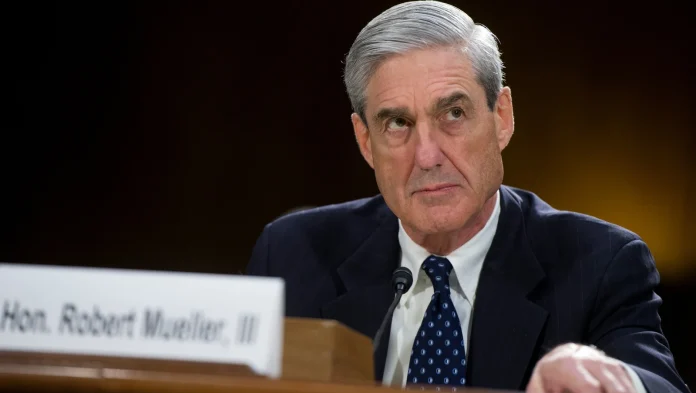
Former FBI Director Robert Mueller, Known for Trump Investigation, Dies

Ex-FBI chief Robert Mueller, who investigated Trump, dies
Robert Mueller led an inquiry into Russia's alleged interference into the 2016 US presidential election

Robert Mueller, 81: The Quiet Sentinel at the Center of an American Storm

When the news first flickered across my feed — terse lines, a family statement attributed, a flurry of confirmations from cable anchors — it felt almost impossible to reconcile the man on the screen with the one I had spent a decade watching in the margins of American political life.

Reports from MS NOW and a New York Times journalist say Robert Mueller, the former director of the Federal Bureau of Investigation whose stewardship shaped the bureau after 9/11 and whose name was forever linked to the investigation into Russia’s 2016 election interference, has died at the age of 81. No official cause of death was disclosed; the New York Times had reported last year that he was living with Parkinson’s disease.

If these early reports hold, this is the closing of a chapter that takes us from Saigon’s humid jungles to the echoing marble halls of Washington, from Bronze Star ribbon to the sealed evidence rooms where the fate of modern political narratives was argued in legal briefs and redacted passages. Mueller was a man of service in its old-fashioned sense: disciplined, reserved, implacable. He inspired loyalty and exasperation in equal measure.

A life cut across by duty

Born into a post-war America and hardened by a conflict that left few who served unchanged, Mueller’s career was threaded through institutions that shape national life. A decorated Vietnam veteran who returned to a country that was changing faster than any homecoming could soothe, he rose through the ranks of the Justice Department before becoming the nation’s third-longest serving FBI director, a role he held from 2001 to 2013.

Those years were the crucible: the bureau reimagined after 11 September 2001, intelligence and law enforcement retooled to counter new threats. “He was the man we turned to when the world went nonlinear,” said a former Justice Department official, speaking on background. “He understood institutions. He believed in them, and he believed that rules mattered.”

Mueller left the FBI in 2013 after a dozen years at the helm, a tenure that outlasted presidents and fashions in policy. But he would return to public life, called back into a political and legal maelstrom when the Department of Justice appointed him special counsel in 2017 to investigate Russian meddling in the 2016 election and contacts between the Kremlin and associates of then-president Donald Trump.

The investigation that would define him

The inquiry lasted 22 months and produced a 448‑page report that remains one of the most scrutinized documents in recent American history. Prosecutors under Mueller’s supervision brought indictments against 34 people — a mix of campaign aides, political operatives, and several Russian intelligence officers and companies — and the probe generated a series of guilty pleas and convictions.

“Mueller’s investigation was meticulous to a fault,” said Eleanor Grant, a professor of criminal law who has studied special counsels. “It was comprehensive and cautious in ways that made it both legally robust and politically volatile. The report set out a mosaic of actions and intentions but stopped short of charging the president criminally, leaving a vacuum that politics rushed to fill.”

U.S. intelligence agencies had already concluded that Russia ran a campaign of hacking, propaganda, and influence aimed at denigrating Hillary Clinton and boosting the candidacy of Donald Trump. The Mueller report corroborated much of that assessment, cataloging contacts, communications, and conspiratorial threads that painted a picture of interference on an industrial scale — even as Moscow consistently denied the accusations.

Reactions: A nation — and a president — divided

According to the initial reports, the White House response was immediate and raw. On social media, the U.S. president reportedly celebrated Mueller’s passing. “Good, I’m glad he’s dead,” a message on Truth Social was widely circulated as his reaction, followed by, “He can no longer hurt innocent people!” Those words, if accurate, underline the sharp edge of political division that has only deepened over the past decade.

In D.C., where statues and law offices keep a running history of public life, opinions about Mueller’s legacy were as various as the city’s morning coffee choices. On K Street, a lobbyist observed, “He didn’t seek headlines. He sought proof. That’s what made him so frustrating to people who needed a simpler story.” At a diner near Capitol Hill, a barista in a senate-logo apron paused before saying, “I grew up thinking the FBI was a force for order. That report changed how a lot of people think about the balance between law and politics.”

Others were more blunt. “He was the kind of quiet force that makes a democracy work,” said a retired federal prosecutor. “When you remove the mythology and the fog, you’re left with painstaking work: witness interviews, chain of custody, grand juries. That’s the backbone of rule of law.”

What his story tells us about the moment

Mueller’s arc — soldier, prosecutor, FBI director, special counsel — is more than a biography. It’s a mirror held up to a country wrestling with institutional trust, media spectacle, and the fragility of democratic norms. Consider these realities:

  • The Mueller Report spanned 448 pages and took 22 months to compile.
  • The special counsel’s office secured indictments against 34 individuals and several Russian entities, producing guilty pleas and convictions among those charged.
  • U.S. intelligence agencies concluded that foreign interference in the 2016 election was real, concerted, and aimed at American democratic processes.

Such numbers and findings are not mere historical footnotes. They are the scaffolding of contemporary debates about election security, foreign influence, and the role of independent investigators. They ask us to consider: what do we expect of our institutions in moments of strain? Whom do we trust when trust itself becomes a political weapon?

How we remember those who enforce the rules

To some, Mueller will be a figure of stoic rectitude: a man who let facts dictate his argument and law his cadence. To others, he will be a cautionary tale about the limits of process when the public demands clarity and the political theater refuses to wait. Either way, his life reminds us of the human labor behind public order — the long days in archives, the syntax of affidavits, the lonely ethics of tough choices.

“We do not memorialize people only for their victories,” said a historian of American institutions. “We remember them for the steadiness or the failures that teach us how to be better.”

If the early reports are borne out, the country will spend the coming days parsing the record, revisiting the redactions, replaying the hearings, and arguing once again about what justice looks like when it intersects with power. For those who lived through that era, each paragraph of Mueller’s life seems threaded with consequence. For younger readers who arrive late to the decades-long conversation about Russian interference, it might be an open invitation to study the machinery of democracy, its vulnerabilities, and the men and women who are tasked with guarding it.

So I leave you with a question: when institutions face their sternest tests, do we ask for heroes to step in, or for systems to stand strong enough that heroes aren’t needed? The answer will shape how we remember Robert Mueller — and how we steward what he left behind.

Nine dead as Russia and Ukraine exchange drone attacks

Nine killed as Russia, Ukraine trade deadly drone strikes

0
At the bus stop in Nikopol: the ordinary interrupted It was a late-spring morning in Nikopol—shopkeepers sweeping the crumbs from doorsteps, the air smelling faintly...
US limits rights settlements for transgender students

U.S. moves to curb settlement agreements safeguarding transgender students’ rights

0
The Quiet Undoing: What the Education Department’s Move Means for Transgender Students On a sunlit playground in Sacramento a few weeks ago, a small cluster...
Artemis crew flies further than humans have gone before

Artemis astronauts reach farthest distance ever traveled by humans

0
When Humankind Stretched a Little Further There are moments that feel like they belong to everyone at once: a sudden hush, a collective intake of...
Australia's most decorated soldier on war crimes charges

Australia’s most decorated veteran charged with alleged war crimes

0
A nation holds its breath: the arrest of Australia’s most decorated soldier The sharp, fluorescent glare of Sydney Airport’s arrivals hall softened into a different...
Israeli military tells people in Iran to avoid trains

Israel’s military warns Iranians to avoid using train services

0
When a Warning Crosses Borders: The Night Phones Told Iranians to Avoid Trains It was a warm evening in Tehran — the kind where the...