


Sep 11(Jowhar)-Charles Kirk waxa uu ahaa 31 jir Mareykan ahna taageere koox diimeedka Isra aad u taageera ee loo yaqaan ‘Kirishaanka Zahnuuniyiinta’ ee rumeysan in Yhdu tahay dad Alle ka doortay ummaddiisa kale.
Former EU ambassadors urge suspension of EU-Israel pact
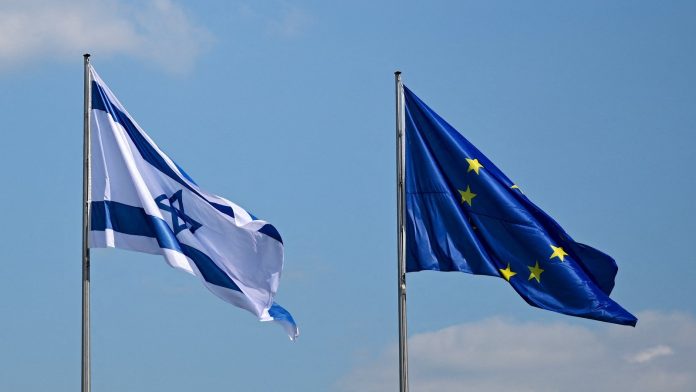
A Turning Point in Brussels: Former Diplomats Call for Sanctions as Europe Wrestles with Gaza
There are moments when the air in a city like Brussels thickens with politics—the sort of moments that smell faintly of espresso, paper, and something heavier: urgency. This week, more than 300 former European Union and national ambassadors, together with ex-EU officials, delivered one such jolt. In a joint letter addressed to EU institutions and the leaders of all 27 member states, they demanded immediate suspension of the EU-Israel Association Agreement and targeted sanctions on members of the Israeli government. They urged 13 holdout EU countries to join 147 United Nations members already recognising the State of Palestine. It was a rare, ringing plea from the diplomatic corps that raised the stakes of a debate otherwise confined to committee rooms and press briefings.
“We cannot stand idly by, watching Gaza reduced to rubble and its inhabitants to destitution and starvation,” said former EU Ambassador Sven Kühn von Burgsdorff on behalf of the co-signatories. “Action needs to be taken urgently to preserve life, end the military onslaught on Gaza, secure the return of all hostages and move to governance arrangements that allow for a swift return of the Palestinian Authority to Gaza.”
The letter and what it asks for
This is the fourth such intervention from a cohort of former diplomats who once wore their countries’ colors abroad. Their asks are blunt and specific: suspend the EU-Israel Association Agreement—which forms the legal backbone of trade, research and institutional cooperation between Brussels and Jerusalem—impose targeted sanctions on Israeli officials. They also call for emergency UN General Assembly and Security Council meetings to adopt measures addressing “multiple violations of international law” and encourage EU backing for a Global Alliance for the Implementation of the Two-State Solution.
The diplomats’ appeal is framed in legal and moral terms. But it’s also a practical call to action: in their view, halting parts of formal cooperation and applying financial pressure will not only be a moral statement but a tool to reopen space for diplomacy.
From Strasbourg’s hemicycle to the streets
Across the Rhine in Strasbourg, European Commission President Ursula von der Leyen used her State of the Union address to push Brussels toward some of these measures. “What is happening in Gaza has shaken the conscience of the world,” she told Members of the European Parliament, invoking images of mothers clutching lifeless children and people begging for food. “Man-made famine can never be a weapon of war.” She pledged to propose sanctions on extremist settlers in the West Bank and suggested suspending the trade element of the Association Agreement—echoing the diplomats’ demands.
In the corridors of the Parliament, the mood was a mix of anger and exhaustion. “People are asking how much worse things must get before there’s unity,” von der Leyen acknowledged. In a tone both urgent and defensive, she insisted Europe must lead: not only in humanitarian aid—”our support far outweighs that of any other partner”—but in defending the principles of the post-war order.
Money on pause, but not everything
Practical steps are already being sketched. The European Commission confirmed it will put some financial support to Israel on hold—without touching funds earmarked for Israeli civil society or Yad Vashem, the World Holocaust Remembrance Center. Brussels says the funding specifically intended to foster bilateral relations amounts to roughly €6 million per year across programmes and that this stream will continue through 2025–27 before suspension. Around €14 million in ongoing projects will be paused as the Commission evaluates institutional cooperation and regional programmes.
For diplomats who have watched the EU run on incrementalism, these are meaningful moves. “It’s a calibrated pressure,” one senior EU official told me on condition of anonymity. “Not a severing—yet. But enough to indicate real consequences.” Others worry the measures may still be too little, too late.
Voices from the ground and the wider world
Letters and speeches matter, but so do people. In a Gaza neighborhood reduced to skeletons of buildings, a teacher named Amal described a classroom that once held 30 children and now shelters a single family, displaced repeatedly. “We teach children to dream,” she said softly in a phone call, “but how do you teach hope when the classroom keeps disappearing?”
Across the West Bank, an Israeli farmer whose land abuts a growing settlement spoke of fear and frustration. “We were raised on the idea of security,” he told me. “But security for some shouldn’t mean denying a people a state. This spiral hurts everyone.”
Legal experts say the diplomats’ call leans on concrete arguments. “Targeted sanctions can be legally justified under international law when there is grave breach of humanitarian norms,” said Dr. Leila Haddad, a specialist in international humanitarian law. “But they must be carefully designed to avoid collective punishment and to protect humanitarian access.” Her warning underscores the thin line between pressure and punishment in sanctions policy.
Europe’s strategic moment?
Ms von der Leyen did more than critique the conflict; she tied the debate to a broader project. “This must be Europe’s independence moment,” she said—an insistence that the EU needs to assert autonomy in technology, energy, defence and diplomacy. The message is clear: Europe cannot be the world’s moral voice if it is divided and dependent. Her speech also referenced global pressures—from Russian drone incursions into Poland to the ongoing war in Ukraine—and highlighted EU aid to Kyiv, which she put at nearly €170 billion in military and financial support so far.
“Do we have the stomach to fight?” she asked MEPs—a rhetorical dare that nods to Europe’s recent history of coming together in crisis, from the Covid recovery package to support for Ukraine. But the Gaza debate also reveals how hard unity is to achieve when member states differ on legal recognition, strategic interests and domestic politics.
What happens next — and why you should care
Policymaking is an exercise in consequences. If Brussels suspends the trade element of the Association Agreement, the move will be symbolic and practical: trade ties, research collaborations and institutional exchanges could be affected. Sanctions targeted at settlers or Israeli officials would be a political earthquake, altering Brussels’ relationship with a long-time partner and stirring transatlantic tensions with Washington.
Is that a risk worth taking? For the diplomats who signed the letter, the calculation is moral and strategic: stronger pressure might open the door to renewed governance in Gaza under the Palestinian Authority, the return of hostages, and a revival of the two-state pathway. For sceptics, the worry is that punitive steps will harden positions and deepen suffering.
So let me ask you: when international institutions hesitate in the face of human suffering, what should give way—principle or pragmatism? When collective conscience collides with complex geopolitics, which do we choose? These aren’t theoretical questions. They will shape lives, borders, and the credibility of the rules-based order for years to come.
Europe appears to be at an inflection point. Whether it acts—and how it acts—will tell us much about its ability to translate values into leverage, and about the kind of world order we all want to inhabit: one where laws and human dignity matter, or one where power alone writes the rules.
Khikaaf diblomaasiyadeed oo ka dhex qarxay safiirada Soomaaliya ee Kenya iyo Tanzania
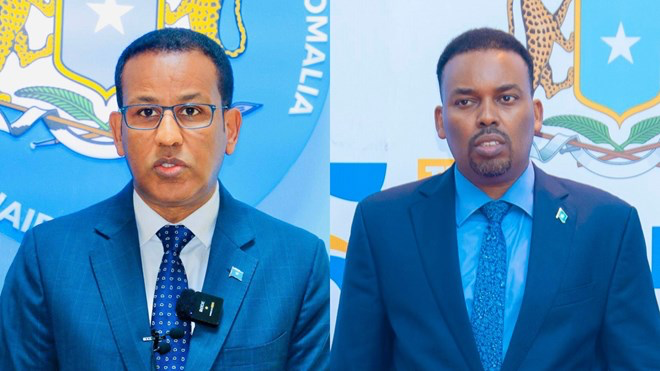
Sep 11(Jowhar)-Ismaandhaaf xoogan oo ku salaysan awoodaha shaqo ayaa ka dhex qarxay Safaaradaha Soomaaliya ee dalalka Kenya iyo Tansaaniya.
Shelter Afrique Development Bank (ShafDB) and Afreximbank Forge Strategic Partnership to Unlock US$1 billion in investments
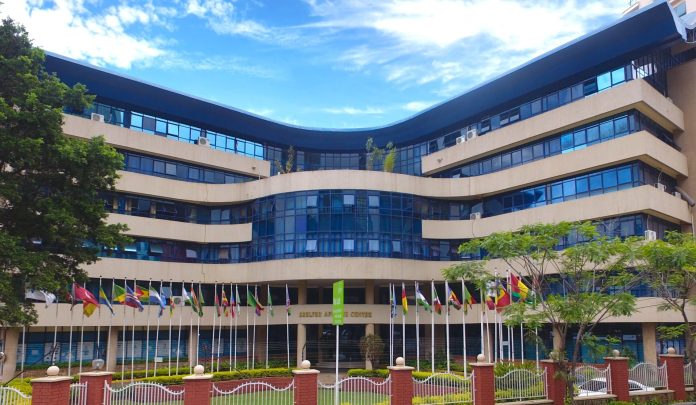
Sept 11 (Jowhar)-Algiers, Algeria, 11 September 2025: – Shelter Afrique Development Bank (ShafDB) and African Export-Import Bank (Afreximbank) have signed a groundbreaking Joint Project Preparation Facility (JPPF) Framework Agreement.
Queensland authorities launch probe into viral crocodile-wrestling videos

A Wild Stunt, A National Flashpoint
There is something about a man and a monster that captures the internet’s imagination — the same old recipe that once made Steve Irwin an international household name. But when an American influencer known online as “therealtarzann” dove into the murky waterways of Queensland and grappled live with saltwater and freshwater crocodiles, it didn’t feel like awe so much as a provocation. Tens of millions watched. Tens of millions were horrified.
In the grainy, sun-splashed clips he posted, the man strips to the waist, wades into tannin-stained water, and struggles with reptiles that have ruled these estuaries for millennia. In one breathless shot he emerges clutching a croc by the throat, blood glistening at his elbow. “He got a hold of me, but I got a hold of him,” he says to the camera. The tone is showmanlike; the consequences, for both human and animal, are anything but.
Why Australians See Red
Queensland’s reaction was swift and incandescent. The state’s environment department labelled the behaviour “extremely dangerous and illegal” and vowed to pursue “strong compliance action” against anyone who tries to replicate it. Fines for interfering with a saltwater crocodile can reach AUS $37,500 (around €21,200), a reminder that Australia treats its wildlife laws seriously.
Premier David Crisafulli, reflecting the blunt tenor of public sentiment, called the influencer a “goose” — blunt, colloquial and telling. For locals, the outrage runs deeper than a single foolhardy stunt. It is about disrespecting a landscape and species that are protected, iconic, and woven into the social fabric of far-north Queensland.
Data, Danger, and a Long Tail of Incidents
Saltwater crocodiles (Crocodylus porosus) are not only ancient apex predators; they are resilient. Government estimates put their numbers in Queensland at between 20,000 and 30,000 — a population that has rebounded since conservation measures began several decades ago. But numbers do not equal safety. Between December 1985 and April 2024 Queensland recorded 34 non-fatal and 14 fatal attacks by wild saltwater crocodiles. These are more than statistics; they are the ledger of grief for families, for communities.
“You don’t tango with a wild croc and walk away unmarked,” said Emma Ngata, a crocodile ecologist who has spent 12 years tracking estuary populations along the Gulf of Carpentaria. “They are part of the ecosystem. They are predictable in ways — they hunt, they nest, they defend — but they are not props in an influencer’s reel.”
Voices from Croc Country
Walk into any small township north of Cairns and the conversation will be textured with crocodile lore: the old timers pointing to mangrove roots and grinning at the memory of a boat trip where a “big’un” slipped by in the night; Indigenous elders tracing ancestral stories where crocs are both totem and teacher. There is pride in living alongside such a creature, but also a sober respect.
“We teach our kids to stay away from the water’s edge at dusk,” said Tony Marri, a fisherman from Cooktown, who remembered losing a friend to a croc attack years ago. “These aren’t Instagram likes — they’re people’s lives. The animals have rules. People should follow them.”
Rangers who patrol “Croc Country” take a different, quieter kind of pride. “Our job is to manage risk, not to star in videos,” said Lucy Marr, a wildlife officer who travels routinely in a pickup across marshy roads and stilted causeways. “When someone like this shows up and makes a spectacle, it undermines safety messaging and can trigger copycats.”
From Viral Clips to Policy Questions
The online platform is the amplifier here. A stunt that would once have been a cautionary anecdote in a pub now sits on a million feeds, edited for drama, scrubbed of context, and likely to inspire imitation. This is not an isolated trend. Earlier this year another influencer drew ire after a video showing a baby wombat being pestered circulated widely. The common denominator: wildlife treated as accessories, not living beings with ecological and legal status.
Experts warn that such content does more than offend sensibilities — it can endanger conservation gains. “When people interfere with protected species, it creates hazards that sometimes end in the animal being removed or euthanised,” said Dr. Marcus Yeo, a conservation policy specialist. “That outcome is tragic for everyone — the public, the wildlife, and the ecosystem.”
Legal and Ethical Lines
- Maximum fine for interfering with a saltwater crocodile in Queensland: AUS $37,500 (≈€21,200).
- Estimated saltwater crocodile population in Queensland: 20,000–30,000.
- Recorded croc attacks in Queensland (Dec 1985–Apr 2024): 34 non-fatal, 14 fatal.
Beyond fines, enforcement is a challenge. The waterways are vast, remote, and hard to police. The state says permits and licences exist for trained professionals to relocate dangerous animals — but those are legal, regulated actions performed by trained teams, not stunts for an audience.
What This Moment Reveals
There is a larger story nested inside this spectacle: the collision between social media’s hunger for the extraordinary and the realities of living in biodiverse places. The internet rewards risk-takers with followers and sponsorships; local communities pay the price in stress, misinformation, and sometimes real harm to animals and humans.
We should ask: what kind of culture are we cultivating when danger is currency? Are platforms complicit when they amplify content that glorifies reckless treatment of wildlife? And importantly, what responsibility do viewers have when a viral clip is just a click away?
Small Remedies, Big Responsibility
There are practical steps communities and platforms can take. Content moderation that flags dangerous wildlife interactions, clearer labelling that differentiates entertainment from legitimate conservation work, and education campaigns aimed at tourists and influencers could all help. Local rangers call for more visibility for licensed wildlife handlers and for a stronger narrative that elevates respect over spectacle.
“If you come here, learn the rules,” said Marr. “Talk to rangers. Read the signs. The crocodile is not a stunt prop. It’s a living being who has every right to exist without being harassed.”
A Final Thought
As you scroll past your next jaw-dropping clip, ask yourself: did that moment teach me something meaningful, or only give me a jolt? The answer matters. Because in places like Queensland, the creatures we marvel at are part of a larger story — a story that requires patience, law, and a bit of humility from the rest of us.
If nothing else, perhaps this episode will remind us that real courage in conservation isn’t wrestling an animal for views; it’s showing restraint, sharing knowledge, and protecting the wild spaces that sustain us all.
Charlie Kirk’s Key Role in Driving Trump’s Re-Election Campaign
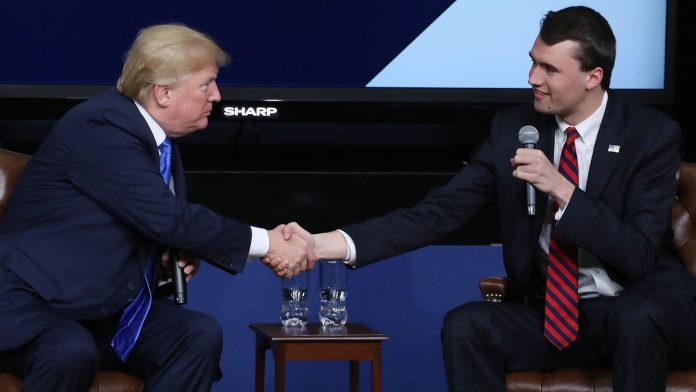
The Last Speech: A Campus Evening That Ended Too Soon
There are moments that feel like a weather front rolling in — sudden, loud, impossible to ignore. On a warm evening in Orem, Utah, at the broad lawn of Utah Valley University’s campus, one of those fronts arrived when Charlie Kirk, the brash young founder of Turning Point USA, took the stage surrounded by a sea of stretched necks and flashing phones.
He had just returned from an international speaking tour — Tokyo one day, South Korea the next — and the event was billed as a high-energy rally: bright lights, throbbing anthems, the sort of spectacle that has become the currency of 21st-century politics. Then, in a sequence that supporters and bystanders describe as chaotic and surreal, a shooting occurred and the 31-year-old organizer died.
Details remain under investigation and the community is reeling. For many who knew him only through a grainy livestream or a podcast episode, the news landed like a jolt: this was a figure who had been debated and demonized, lauded and loathed — now gone in an instant.
Who He Was: A Product and Producer of Polarized Politics
Charlie Kirk was, in many ways, the prototype of a modern political influencer. He founded Turning Point USA at 18 and, over the next decade, built it into a magnet for conservative youth, a national network of campus chapters, a media operation and a political machine.
Turning Point Action, launched in 2019 as a nonprofit arm to back candidates, helped channel that cultural energy into electoral power — an asset that, according to observers, played a role in mobilizing young conservative voters in the November 2024 election.
He wrote books (“Time for a Turning Point,” “The College Scam”), hosted The Charlie Kirk Show — podcasts that drew half a million monthly listeners — and amassed 5.3 million followers on X. For supporters, he was a truth-teller who made politics feel urgent and personal. For critics, he trafficked in inflammatory rhetoric about race, gender and immigration that stoked division.
“He didn’t just talk to young people — he gave them permission to think and fight differently,” said Maya Thompson, a former Turning Point volunteer who worked on campus outreach in 2022. “Whether you agreed with him or not, he made politics feel like something you could step into at 19.”
The Turning Point Machine
To understand Kirk’s influence, watch a Turning Point event. Fans describe them as parts revival meeting, parts rock concert: speakers arrive to ear-splitting anthems, pyrotechnic surges of light, and crowds that chant as if at a sports stadium.
“Imagine a political pep rally turned up to eleven,” a political science lecturer at BYU told me. “The aesthetics are engineered to hook you—the lighting, the jokes, the crowd dynamics. It’s about identity as much as ideology.”
Across Oceans: From Tokyo to Orem
In the week before his death, Kirk’s itinerary read like a map of a growing global conservative network: he was the headline speaker in Tokyo at an event organized by Sanseito, a political party that made notable gains in Japan’s July upper house election. He also spoke in South Korea, where conservative movements are increasingly looking to each other for strategy and morale.
“We are not isolated,” Kirk once told a packed hall abroad, according to a participant at the Tokyo event. “This is an international conversation about culture, identity and policy.” Whether lauded or criticized, his message traveled — not just across media, but across environments and borders.
Controversy: Line-Testing and Crossed Boundaries
Kirk’s rise did not occur in a vacuum. He frequently tested lines of decorum and decency, drawing sustained criticism for remarks about Muslim politicians and for invoking theories about demographic change in racially charged terms.
“He pushed buttons on purpose,” said Leila Farouk, a Minneapolis community organizer. “That’s how he stayed relevant. But the rhetoric had real-world consequences — it made people feel unsafe in classrooms and neighborhoods.”
Those who studied radicalization and online persuasion noted that Kirk’s methods mirrored a larger shift in political communication: short, viral bursts of outrage that amplify solidarity among followers while sharpening antagonism toward opponents.
“We need to look at the structure, not just the sound bites,” said Dr. Aaron Belmont, who researches digital political movements. “This was an influencer economy meeting hard politics. It turns attention into action, and action into votes.”
A Small, Ordinary Family Life
Behind the public persona was an ordinary, intimate domestic life. Kirk is survived by his wife, Erika — a former Miss Arizona USA — and their two children. Friends describe a man who could be warm and genial in private.
“He loved his kids fiercely,” a family friend told me. “When he wasn’t on stage, he was a dad who would play castles and dinosaurs for hours.” These portraits complicate the caricatures: a man who could be both a household presence and a national provocateur.
What This Moment Means
So what do we do with a death that feels both private and public? How should communities digest grief that is tangled up with politics? The questions extend beyond Orem. They ripple through college quads, legislative chambers, comment sections and kitchen tables around the world.
Some will use this moment to eulogize a strategist who reshaped youth politics; others will see it as a prompt for hard conversations about the rhetoric that frames civic life. Both are, in their ways, necessary. Grief and critique can coexist.
“We cannot pretend he’s a single-story figure,” said Professor Belmont. “He changed the game in how young people get recruited, and we should study that without sanctifying or vilifying him without nuance.”
Voices from the Crowd
“I came because I wanted to feel part of something,” said Jordan, a 20-year-old student who attended many Turning Point events. “Politics felt lonely before. He made it loud and visible.”
“We were protesting his visit,” added Asha, a community activist who countered events with signs and chants. “But seeing people who disagreed with me panic after the shooting — that was the moment I realized the toll of this culture of confrontation.”
Looking Forward
Whether Turning Point USA continues in the same form, or whether other leaders emerge to carry its mantle, is a question for the months ahead. Trump ordered flags at half-staff in Kirk’s honor — a symbolic gesture that underscores the political bonds that linked them.
Those who study political movements say the truly consequential work is quieter: rebuilding civic spaces where disagreement doesn’t have to be performative, and where young people can be trained in argumentation rather than just mobilized for spectacle.
So I ask you, reader: where do we draw the line between fervor and fury? Between mobilizing energy and stoking enmity? If politics is a kind of storytelling, what stories do we want to teach our children to tell about each other?
The loss in Orem is raw. It is a personal tragedy and a political inflection point. For communities that were once animated by his rallies — for those who loved him, those who loathed him, and those who simply want safer streets and saner conversations — the next chapters will test how we reckon with charisma, conflict, and consequence in an age when ideas travel faster than ever.
Mitchum apologises after customers report rashes and burning sensations
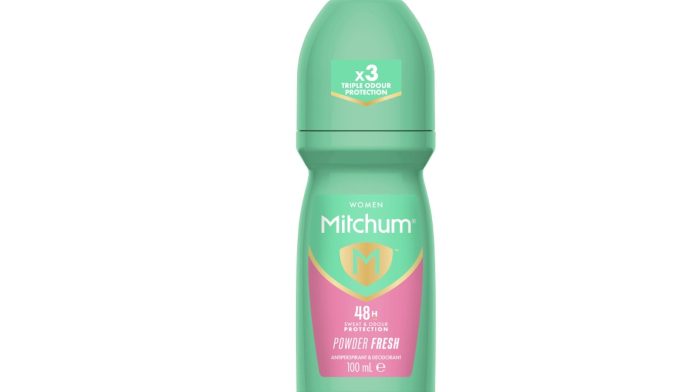
A Little Roll-On, A Lot of Trouble: Inside the Mitchum Deodorant Reaction Story
On a rainy Tuesday morning in late spring, commuters in London and Dublin shifted uneasily as a single TikTok clip looped itself across screens. The video showed red, angry bumps blooming beneath the arm of a young office worker who swore she’d only used her usual roll-on. Within hours, dozens more clips appeared — same product line, same story: stinging, heat, temporary rashes that ruined a day and, for some, left lingering nerves about what they put on their bodies every morning.
What unfolded
What began as social media grumbling quickly became something larger. Mitchum UK acknowledged that a small number of its 48-hour roll-on deodorants — a staple in many bathrooms — had caused skin irritation in the UK, Ireland and South Africa. The company apologized to customers and traced the problem not to a reformulation of the fragrance or active ingredient, but to a change in the way one raw material was handled during manufacturing.
“We are deeply sorry for the discomfort experienced by some customers,” a Mitchum UK representative told me in an emailed statement. “Customer wellbeing is our priority. We identified a process change affecting a raw material that altered how the roll-on behaved on some skin types. We have reverted to the prior method and are removing remaining stock from shelves.”
That short, careful explanation did calm some people — but not everyone. For those who saw their skin redden or feel as if their underarm had been brushed with nettles, an apology and a manufacturing fix were small comforts. “It burned like a sunburn in my armpit,” said Aisha, a 28-year-old nurse from Cape Town who posted one of the viral videos. “By lunchtime I had to strip it off and was worried it might scar.”
Voices from the ground
The reactions ran the gamut: annoyance, worry, anger. Retail workers at a corner pharmacy in Dublin described a spike in returns. “We had a friend bring back three bottles from different customers, all the same batch,” said Conor, who has worked the counter for seven years. “People are polite — mostly — but you can tell they’re shaken. It’s your skin. It’s intimate.”
Elsewhere, social media gave the rest of the story a human face. “I’m careful with what I put on my skin,” said Maria, a mother of two from Manchester. “My son has eczema and I read labels like they’re scripture. To see this happen with something I trusted — that stings, not just my armpit but a little bit of trust.”
Why this matters
On the surface it might sound trivial — a cosmetic hiccup easily fixed by a recall. But our daily hygiene products occupy a strange territory: intimate, habitual, and widely used. The global deodorant and antiperspirant market is a multi-billion dollar business that reaches billions of people every day. When a product people rely on causes physical harm, even to a minority, it raises questions about manufacturing oversight, supply-chain transparency, and the power of a social platform to fast-track consumer pressure.
Dermatologists say these episodes are not unheard of. Dr. Lena Morales, a consultant dermatologist, explained, “Topical reactions range from mild irritation to allergic contact dermatitis. Estimates vary, but a significant minority of people — perhaps one in ten to one in five depending on the population studied — can experience sensitivity to certain ingredients or impurities.”
She continued, “Even if the formula hasn’t changed, a change in the processing of an ingredient can alter its chemical profile or how it interacts with the skin. That’s why manufacturing controls are crucial.”
How companies and regulators respond
Mitchum says it has isolated the issue and reverted to the previous manufacturing procedure. The firm also affirmed that no other products in its portfolio are affected and urged anyone experiencing symptoms to contact its customer care team. Retailers, meanwhile, have been asked to remove the small number of batches still on shelves.
Industry watchers point out that today’s regulatory environment demands meticulous documentation and safety testing for cosmetic products. In the UK and EU, cosmetics are subject to specific safety assessments and companies are required to hold a product information file that documents composition, safety data and manufacturing processes. Still, the reality is that millions of items move through global supply chains daily, and an unforeseen process tweak can create a ripple.
Practical advice for consumers
If you’re one of the people affected, what can you do right now? Dermatologists and consumer advocates recommend a few sensible steps:
- Stop using the product immediately and remove any residue with plain water and gentle soap.
- If irritation is mild, apply a cool compress and avoid perfumed products on the area.
- Keep the product container and note the batch number or barcode — this helps manufacturers track affected lots.
- Contact the brand’s customer care to report the issue and seek guidance; many companies will offer refunds or replacements.
- See a healthcare professional if you experience severe swelling, blistering, or widespread symptoms.
“Don’t ignore worsening symptoms,” Dr. Morales advised. “If an allergic response is suspected, a doctor can prescribe topical steroids or refer for allergy testing.”
Beyond this bottle: the bigger picture
This episode invites a broader reflection on the relationship between consumers, corporations and the technologies that amplify complaints. A decade ago, a handful of letters to a company might have been the only notice of a problem. Now a dozen videos can translate into a consumer safety alert within hours — sometimes before regulators or companies are fully prepared to respond.
That quickness has a social cost and a social benefit. It empowers voice and accelerates accountability; it also creates pressure that can be disproportionate in a world where virality rewards emotion. The best path forward blends speed with rigor: fast acknowledgement, accountable investigation, and transparent reporting on what went wrong and how it has been fixed.
As consumers, this invites us to be both skeptical and compassionate. Skeptical of the products we accept as ordinary, and compassionate toward the workers and scientists who try to keep supply lines running. Manufacturing is messy and global; even small process changes can have outsize effects.
Final thoughts
For the people who felt their skin flare up after using a Mitchum roll-on, the incident was intimate and immediate. For the rest of us, it is a reminder of the fragile trust we place in everyday products. What we apply to our bodies should be safe, predictable, and made with care. When that trust frays, we are justified in asking hard questions: about standards, oversight, and what companies will do to make things right.
Have you ever had a routine product cause an unexpected reaction? How quickly did the company respond, and did you feel heard? Share your experience — these are the small, shared moments that help companies learn and help other consumers make better choices.
Irish premier condemns Russian drones over Polish airspace as ‘reckless’
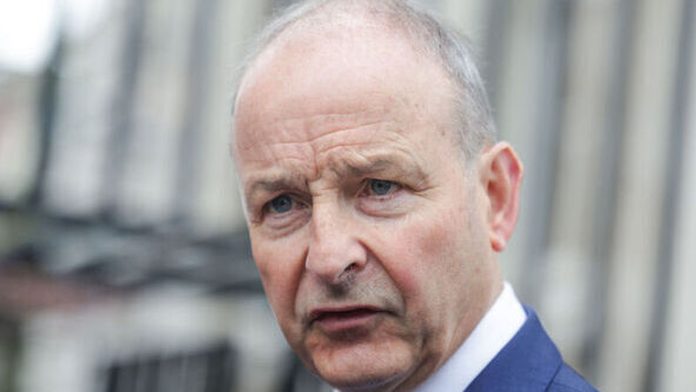
When the Sky Over Poland Became a Message
There are nights that begin, and then there are nights that mark a turning point. For some residents of eastern Poland, the ordinary rhythm of dusk — bakery lights, scooters zipping home, children finishing homework — was fractured by the sound of jets being scrambled. For politicians in Dublin, it became a new, urgent syllable in a sentence that has dominated Europe for years: war next door can have echoes here.
Taoiseach Micheál Martin put it bluntly on the morning after: “This was a reckless and unprecedented act — a stark reminder of the threat Russia poses to Europe’s security.” His words landed with the gravity of someone who knows his nation cannot be indifferent. Ireland, like many European countries, finds itself measuring distance not in miles but in the remoteness of certainty.
A night of alarms and uneasy firsts
Poland says it scrambled aircraft alongside allied jets to intercept and shoot down “hostile objects” that had violated its airspace during what Polish officials described as part of a broader Russian attack on Ukraine. Officials framed the episode as a first for a NATO country since Russia’s full-scale invasion of Ukraine began — an escalation that raises freighted questions about how easily a single plume of smoke in the sky can shift alliances and strategies.
“We had F-16s in the air within minutes,” a Polish defence official told a regional broadcaster, asking not to be named. “Pilots did what they’re trained to do: defend sovereign territory. This is not about politics in the cockpit — it’s about keeping our towns and people safe.”
On the streets of a small town near the border, Marta, a 62-year-old shopkeeper, wiped tea-stained hands on her apron and said: “We have lived under different flags for generations. The planes make us remember too much. We are tired. The children ask if the war will come for them tomorrow.” Her voice carried the weary accumulation of history and the stark reality of the present.
Why this matters beyond borders
Why should a skirmish in Polish airspace set hearts racing in Dublin, Rome, and beyond? Because this is not solely about missiles or drones. It is about the fragile lattice of rules and responses that currently support a relatively predictable European order. When a NATO member scrambles to shoot down objects in its skies, the calculus of deterrence and reassurance is tested.
Tánaiste Simon Harris called the incursion “a wake-up call for the West.” As he entered cabinet, he urged not only stern words but tougher consequences: “We know sanctions work. There are more robust measures that could be taken. If the United States stands shoulder-to-shoulder with European allies, those sanctions would bite harder and faster.”
His comments underscore a lingering dynamic: sanctions are political instruments, applied unevenly and often debated. They inflict economic pain that can change behaviour, but only if they are comprehensive and co-ordinated. “Thinking time is over,” Harris said, referring to public statements from US political leaders who have mulled tougher measures. “The clock is ticking.”
Voices from Dublin, Warsaw and the wider continent
In Dublin, the mood was one of solidarity mixed with anxiety. “Ireland stands in full solidarity with Poland and its right to take necessary steps to defend its sovereign territory,” Martin said, echoing a commitment that seems simple — but is complex in practice, given Ireland’s tradition of military neutrality and the contested nature of European intervention.
Across the continent, defence analysts warned that such incidents change risk calculations. “These are incidents that test the thresholds of deterrence,” one security analyst told me. “They force NATO and the EU to decide how far they will push back and how quickly, without inadvertently escalating into a broader conflict.”
Local color matters in moments like this. In Warsaw, a street vendor selling hot pierogi shrugged as if the morning’s alarms were another oddity in a long season of upheaval. “We tuck our kids in earlier these days,” she said wryly. “But life goes on — you have to keep making dumplings and paying the bills. Still, we feel the world drawing a line on our doorstep.”
Beyond the drones: politics, policy and principle
What complicates the picture further is the wider mosaic of European foreign policy. Taoiseach Martin also welcomed a development that has roiled diplomatic circles: European Commission President Ursula von der Leyen proposed suspending the EU’s trade agreement with Israel over actions in Gaza — a move Martin called “very significant” and one Ireland has long advocated for. “The situation in Gaza is absolutely catastrophic without any moral justification,” he said, connecting two theatres of crisis in a way that frames Europe’s choices as both strategic and moral.
These events — the incursion into Polish airspace and the debate over the EU-Israel trade relationship — are not isolated items on a news ticker. They are threads in a pattern: an emerging Europe drawn into multiple conflicts of law, conscience and security. How do democracies respond when their neighbors are under siege? When commerce and values collide? When the tools available — sanctions, trade suspensions, military postures — have limits and costs?
Numbers that anchor the story
The human stakes are not abstract. Since the large-scale invasion of Ukraine in February 2022, more than eight million Ukrainians have been registered as refugees across Europe, according to UNHCR figures, and millions more are internally displaced. Supply chains have been disrupted, energy markets shocked, and defence spending across many European states has risen to its highest levels in decades. Those aren’t distant statistics — they are dominoes falling in town squares and kitchen tables.
- Over 8 million Ukrainian refugees have been recorded in Europe since February 2022 (UNHCR).
- European defence budgets have increased significantly, reversing a post-Cold War trend of cuts.
- Sanctions remain one of the primary non-military tools used against Russia, though their effectiveness depends on scale and international coordination.
What now? The crossroads of action and restraint
Poland’s response — shooting down objects in the sky during a period of intense regional fighting — invites hard questions about deterrence. Does decisive action deter further incursions? Or does it sharpen the risk of miscalculation? The answers will not come easily.
Back in a small Polish town, a teacher named Lukasz paused during recess, watching children clamber on swings. “We teach them the alphabet, and we teach them caution,” he said simply. “We tell them to be brave, but not to be fools.” His words capture the emotional ledger Europe now keeps: a mixture of resolve, fear, and an abiding hope that the right decisions can prevent tragedy.
Inviting the reader to reflect
As you read this, ask yourself: how close does conflict feel when your country is not directly involved? Do we see distance as safety, or as a fragile illusion? And what responsibilities do nations have to one another when the night sky becomes a contested space?
Europe now stands at a crossroad: tighten the reins of collective defence and coordinated sanctions, or risk drifting into a world where the rules that once kept wars contained are ignored with impunity. The choice will define not just the next headline, but the next generation’s sense of security.
For now, people in Poland are going about their days, shops reopening, children returning to school, pilots waiting for the next call. Whatever happens next, the sky has already told us something: peace is not an entitlement; it is a fragile, earned state. And it will take attention, courage and solidarity to keep it.
Allied unity after Russian drone incursions into Polish airspace
When the Sky Flickered: A Polish Morning Interrupted by Drones
Just before dawn, the sky above eastern Poland lit up with the quiet menace of machines. Not the roar of jet engines, but the thin, almost insect-like hum of drones — the kind that make radars skip, phones buzz, and households reach for the radio. I was standing at my kitchen window when the first alert arrived: a brief, stark message sent to every mobile phone in the region advising people to report any suspected drone crash sites and, importantly, not to approach them.
It felt like an odd domestic alarm for a global problem. For millions of Poles, each little vibration in the morning can be a news alert, a grocery notification, or, now increasingly, a reminder of the wider war next door.
What Happened — A Timeline
According to Polish military statements, radar systems detected at least ten unmanned aerial vehicles crossing into Polish airspace in the early hours of the morning. The earliest incursion was recorded just before 4am local time, and by 8am the military said its operation in response had concluded.
- Before 4:00am — the first drone track appears on Polish radar.
- Early morning — air defences engage, shooting down multiple drones; one engagement occurred near Biała Podlaska.
- Shortly afterward — reports of damaged property emerge from Wyryki in the Lublin region, though local authorities say there are no injuries.
- For several hours — flights at airports serving Warsaw, Lublin and Rzeszów were temporarily suspended before normal services resumed just before 8am.
“There was a violation of the airspace by a large number of drones,” a government statement said. “Those drones that posed a direct threat were shot down.” Whatever the intent — reconnaissance, misdirected strikes, or provocation — the immediate effect was to create an anxious ripple across provinces that border Ukraine and lie on NATO’s eastern flank.
On the Ground: Voices from Eastern Poland
The towns affected are not anonymous coordinates; they are places where mornings are punctuated by church bells, bakery steam, and buses filling up with commuters. In Wyryki, a small village in the Lublin region, the roof of a house was visibly damaged — a blue tarp now flapping in the breeze where tiles once were. A neighbor, who asked to be called Marta, described the scene.
“We heard a sound like a heavy bird and then a boom,” she said. “My husband ran outside in slippers. There was smoke and pieces of something… We are all scared, but nobody was hurt. That’s the miracle today.”
In Biała Podlaska, near where some of the drones were engaged by air defences, commuters waited at bus stops as if rehearsing calm. “You get used to alerts, but you never get used to the fear,” said Tomasz, a delivery driver. “We talk about the war, but it’s different when it’s your sky.”
From the Capital — A City That Keeps Moving
Warsaw, several hours west, looked like a normal weekday morning: trams gliding, cafés filling with the scent of coffee, traffic moving in accustomed congestion. Yet the ripples were present — people checking their phones between sips, conversations sliding from weather to geopolitics.
“People here try not to panic,” said an emergency services officer in the capital, speaking on condition of anonymity. “But there’s also a quiet resolve. Poland has been preparing for this for a long time.”
Why This Matters — Bigger Threads in a Growing Tangle
There are concrete facts beneath the drama. Poland shares a border of roughly 535 kilometres with Ukraine and hosts critical NATO infrastructure. Since Russia’s full-scale invasion of Ukraine in February 2022, cross-border incidents — accidental or deliberate — have been one of the most dangerous flashpoints because they risk pulling NATO directly into the conflict.
At least ten drones crossing a NATO member’s airspace is not a trivial statistic. It is a test of air-defence readiness and alliance coordination. It also illustrates a broader trend: the democratization of aerial threats. Drones have proliferated everywhere from farmers’ fields to battlefields, and their anonymity makes attribution and escalation calculations thornier.
“This looks like a calibrated provocation,” said a security analyst at a Warsaw think-tank. “It’s meant to send a message without crossing a line that would trigger automatic military retaliation. But every ‘non-lethal’ incursion risks miscalculation.”
Responses, Routines and Resilience
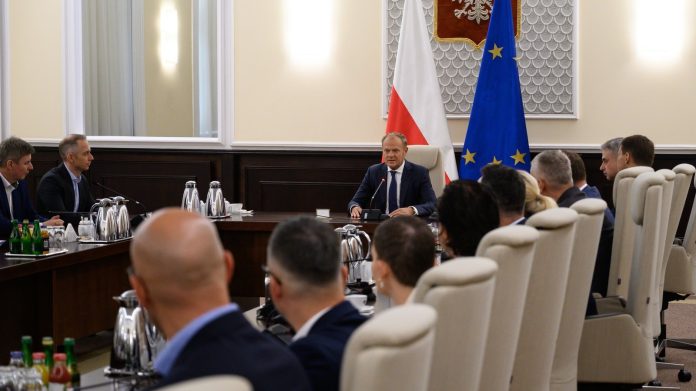
Polish political leaders — often bitter rivals on domestic policy — moved quickly to show unity on matters of national security. A special cabinet meeting was convened, and officials emphasized that they were in contact with NATO partners. Local authorities in the border provinces of Podlasie and Lublin, and the east-central Mazowieckie region where Warsaw lies, issued warnings to residents. Airports reopened a few hours later, and emergency services began searching for any drone debris.
There is an odd, human choreography to these moments: the military coordinates intercepts, air traffic controllers ground flights, civil-protection teams advise civilians, and ordinary people decide whether to finish their coffee or listen to the sirens. It’s a choreography that has become unnervingly routine across large swathes of Europe.
Questions to Ask — And What Comes Next
How will NATO respond to repeated airspace violations near its eastern edge? What safeguards exist to prevent a single misfired intercept from becoming a wider conflict? And perhaps more personally: how do communities living under this new normal carry on with grocery lines, kindergarten drop-offs and weekend markets while the larger tectonics of geopolitics shift overhead?
There are no easy answers. But certain measures matter: clear communication from authorities, robust air-defence capabilities, rapid incident investigation, and international diplomacy to manage escalation. In the short term, people will check their phones more often; in the long term, the episode adds another notch to the argument that deterrence and diplomatic pressure must go hand-in-hand.
A Human Morning, A Global Moment
By mid-morning the physical signs were small — a damaged roof, a couple of cratered fields where drones had fallen — but the psychological imprint was larger. Poland, a NATO member with a population of around 38 million, has watched war unfold on its doorstep for years. Today’s sky incursion will be catalogued, analyzed and debated in military briefings and foreign ministries. But for the family in Wyryki patching a roof and for the commuters in Biała Podlaska catching a cold coffee, the event was fundamentally personal.
As you read this from wherever you are, consider how close distant conflicts can become. The world is knitted together by minute threads — a message pinging a phone, a radar blip showing up on a screen, a roof tiled by a neighbour. What feels remote to some is devastatingly near to others. And when borders are breached, the politics becomes intimate, and the stakes, for a moment, belong to each of us.
“We have to be vigilant, but not beaten by fear,” Marta, the neighbor from Wyryki, told me, folding her hands over the tea she had been making. “We’ll fix the roof, we’ll help each other. That is how we live.”
NASA Detects Possible Ancient Life Evidence in Martian Rock Samples
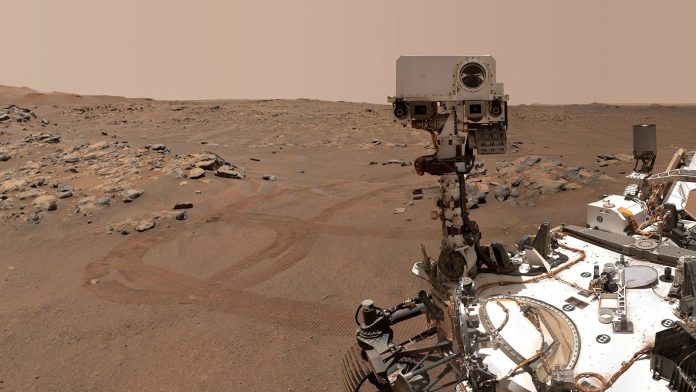
A Dusty Clue from an Ancient Lake: Could Mars Be Keeping Proof of Life?
There are moments in exploration when a single grain of rock feels like an entire library. On a sun-bleached plain inside Jezero Crater, a six-wheeled robot named Perseverance bored into a slab of mudstone and collected what scientists now call the Sapphire Canyon sample—an ordinary-sounding handful of ancient sediment that has the extraordinary potential to rewrite how we imagine our nearest planetary neighbor.
Perseverance has been trundling across Mars since its dramatic landing on February 18, 2021, hunting for traces of life in a place that once brimmed with water. Jezero, a crater roughly the size of a small lake basin on Earth (about 45 kilometers across), preserves an old river delta and shoreline. Its rocks were laid down more than 3.5 billion years ago, at a time when Mars was warmer, wetter, and more chemically hospitable than it is today.
What the Rock Revealed
When mission scientists examined the Sapphire Canyon sample—picked up from the Bright Angel formation, near the mouth of an ancient river called Neretva Vallis—they found a mineral pairing that made them sit up and take notice.
“We detected vivianite and greigite together in mudstone that was clearly deposited on a lake bottom billions of years ago,” said Joel Hurowitz, a planetary scientist at Stony Brook University who led the team behind the analysis. “On Earth, those minerals often form when microbes metabolize organic matter in low-oxygen sediments. That’s why we call it a potential biosignature.”
Vivianite is an iron phosphate; greigite is an iron sulfide. Both are chemically sensitive to redox conditions—essentially, whether an environment is oxygen-rich or oxygen-poor—and to the presence of reduced carbon and sulfur. In many of Earth’s lakes, the chemical interplay between organic matter and microbial metabolisms yields these minerals early in sediment burial. But there’s a caveat: chemistry can sometimes perform tricks. Abiotic (nonliving) reactions can also synthesize similar mineral patterns.
“This is tantalizing. It’s one of the most promising signatures we’ve seen from in situ rover analyses,” said Dr. Maya Singh, an astrobiologist at the University of Toronto. “But the rover data can’t yet exclude all the geochemical ways those minerals could appear without life.”
Why This Matters — And Why We Must Be Careful
It’s tempting to read this as the smoking gun. It isn’t—not yet. Science tends to be patient that way, and with good reason. Promising patterns can crumble under closer scrutiny. Consider the famous debates over possible microfossils in meteorites or ambiguous organic molecules: the history of astrobiology reads like a sequence of hopeful clues followed by methodological rigor.
“We are not claiming discovery of life,” Hurowitz cautioned. “We’re saying we found minerals that could be produced by biology and that provide a concrete, testable hypothesis for future study—especially if we can bring the sample home.”
And that brings us to the next crucial chapter in this story: sample return. Perseverance has been caching dozens of rock and regolith samples with the express intention that some will one day be lifted from Mars and flown back to laboratories on Earth, where instruments orders of magnitude more sensitive than those carried by the rover can run deeper tests.
NASA and the European Space Agency have sketched plans for a Mars Sample Return campaign, which would involve multiple spacecraft and a Mars ascent vehicle to deliver the cache to Earth orbit for retrieval. Current estimates place such a mission in the 2030s, though timelines can shift.
Voices from Mission Control and Beyond
Back in mission control, where the hum of computers and the low chatter of scientists mark the rhythm of discovery, reactions ranged from restrained excitement to outright wonder.
“I remember when the first instrument readings came in,” said Elena Morales, a systems engineer who worked on the rover’s sample-handling system. “There was a long silence, then a collective exhale. You don’t cheer until the data has been vetted, but you can feel the hair on the back of your neck stand up.”
Not everyone is comfortable with the leap from promising chemistry to biology. “We must resist the narrative gravity that projects Earth’s biosphere onto every intriguing mineral pattern,” warned Prof. Rafiq al-Sayed, a geochemist who studies analog environments on Earth. “Mars has its own geologic logic.”
Local Color: A Planet’s Memory in Stone
Imagine the Bright Angel formation not as alien rock, but as page after page of a long, stubborn diary. The mudstones record a seasonally calm lakebed where fine particles drifted down and gently settled. Other nearby conglomerates—pebbles and larger grains cemented together—tell of more dramatic floods, rivers spilling into the crater and dumping their load at its margins.
“When you stand in front of those outcrops on-screen, you can almost hear an ancient shoreline,” said Dr. Sofia Mensah, a sedimentologist who has studied ancient terrestrial deltas. “You see laminae, you see fine-grained beds—these are archives of chemistry, climate, and time.”
What Comes Next: Tests and Timeframes
The path forward is clear in outline, messy in detail.
- More in-situ analysis: Perseverance will continue to analyze rocks with its onboard suite—spectrometers, cameras, and the sample acquisition system—to build contextual geology around the Sapphire Canyon sample.
- Sample return: If the caches are retrieved and returned to Earth, laboratories will perform isotopic analyses, examine mineral microtextures at nanometer scales, and search for molecular fossils that would be hard to fake abiotically.
- Cross-disciplinary scrutiny: Geochemists, microbiologists, and planetary scientists will test hypotheses exhaustively, looking for signatures that are uniquely biological versus those that can be mimicked by inorganic chemistry.
“If these samples make it back to Earth, we’ll have at our disposal decades’ worth of instrumentation to interrogate whether biology played a role,” said Dr. Antoine Leclerc, who works on high-resolution imaging of sediments. “That could change textbooks.”
Bigger Questions: Why This Story Resonates
Why do we care so much about single minerals in a Martian rock? Because the discovery cuts to the heart of a question as old as humanity’s skyward gaze: are we alone?
But the search for life on other worlds is not merely cosmic curiosity. It is an exercise in humility, a reminder that planets evolve, climates shift, ecosystems arise and vanish. If life once existed on Mars, it would tell us that life is not an Earth-only miracle but possibly a recurring outcome in certain chemical landscapes. If life never arose there, that too would be an instructive boundary condition for models of habitability.
So I’ll ask you, reader: which would you prefer to learn—evidence that life briefly blossomed and then faded on a neighboring planet, or evidence that, even in hospitable conditions, life is rare? Both answers reshape how we understand our place in the cosmos.
Conclusion: Patience, and a Sense of Wonder
The Sapphire Canyon sample is a whisper from an ancient Martian lake. It carries within it chemical hints—vivianite and greigite—that make scientists imagine microbial metabolisms in shadowy, oxygen-poor sediments. It carries, too, the cautionary weight of science: chemistry can wear the mask of life.
For now, the discovery is both thrilling and tentative—a scientific comma, not yet the period. The true verdict awaits instruments in Earth labs, the triumphs of a complex sample-return architecture, and the patient, skeptical joy of cross-disciplinary inquiry.
Until then, we—that fractious, hopeful species on a small blue planet—watch a robot in the red dust do what humans have always done: collect evidence, puzzle it through, and keep asking questions that stretch our minds across space and deep time.

Maritime Shippers Seek Clear Guidance on Transit Through Strait of Hormuz
At the edge of the world’s oil highway: waiting for permission to breathe
The morning fog over the Strait of Hormuz smelled of diesel and...

Defendant Pleads Guilty in High-Profile Gilgo Beach Killings
When the Shore Holds Secrets: The Guilty Plea that Reopened Gilgo Beach
The wind off the Atlantic carries salt and the persistent hush of dunes,...
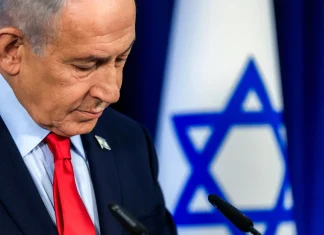
US-Iran ceasefire largely leaves Israel’s military objectives unmet
Ceasefire, Not Closure: What Two Weeks of Quiet Revealed About a Region Still on Edge
When the guns finally paused, the silence felt both fragile...
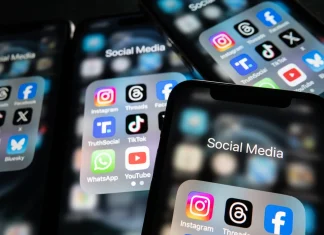
Greece to bar under-15s from social media starting in 2027
Greece’s bold move: a country tries to reclaim childhood from the screen
On a late spring afternoon in Athens, parents clustered outside a primary school...

Woman nicknamed ‘Ketamine Queen’ to face court over Matthew Perry death
The Quiet of a Hot Tub and the Loud Echo of a Celebrity's Death
It was a foggy October morning in Los Angeles when the...