

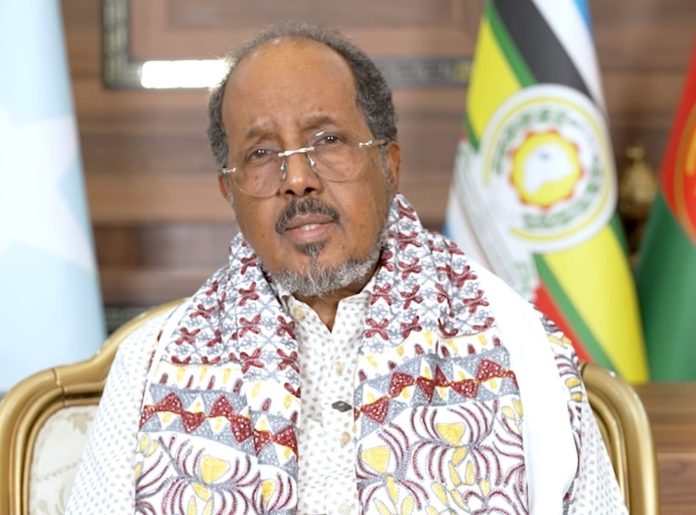
Mar 19(Jowhar)-Madaxweynaha Soomaaliya ayaa sheegay in uu diyaar u yahay in wada hadal laga galo qodobada waa weyn ee hortabinta leh ee dalka yaala waqtigam, wuxuu sheegay in uu sannad kusoo jiray wada hadal oo dhankooda ay ka go`an tahay.
Dagaal culus oo ka socda magaalada Baydhabo
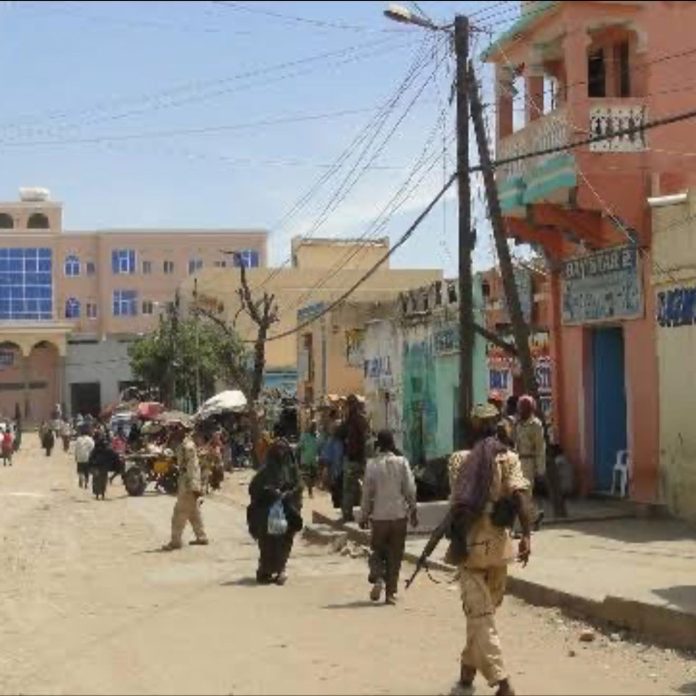
Mar 19(Jowhar)-Iska horimaad ayaa ka dhacay duleedka magaalada Baydhabo, kaas oo u dhaxeeya ciidamada maamulka KG iyo ciidanka Mucaaradka taabacsan DFS, kuwaas oo markii 3-aad isku dagaalamaya halka loo yaqaano Suuqa Xoolaha.
Russian diesel tanker due to dock in Cuba within days
When the lights went out in Havana: a shadowy tanker and a nation on the brink
It was late afternoon when the lamps died across Havana—one by one the light bulbs in apartment blocks winked out, neon signs stuttered and fell silent, and the hum of traffic receded into a muffled, anxious quiet. For many, the blackout felt less like an accident and more like a reveal: the brittle wiring of an island’s energy life, exposed.
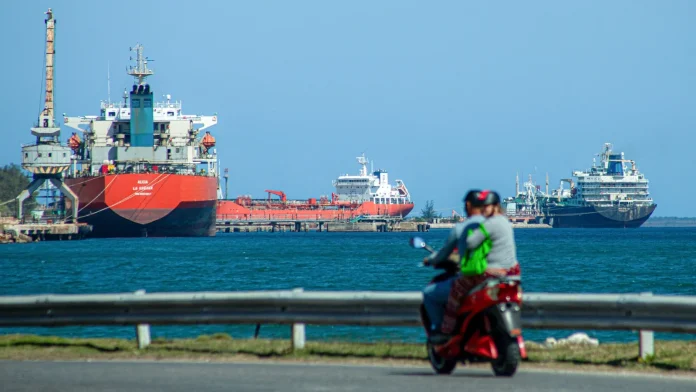
Now comes word that a Hong Kong‑flagged tanker, the Sea Horse, is steering toward Cuba after a voyage marked by evasive maneuvers. Maritime trackers say it is laden with roughly 190,000 barrels of gas oil. If it docks, experts say, it would be the first confirmed delivery of refined fuels to the island in months—an arrival watched closely from Washington to Moscow, from Havana’s Malecón to shipping desks in Gibraltar.
What the trackers saw
Maritime intelligence firms have been following the Sea Horse’s unusual path. Windward, a data firm that monitors ship movements, reports that the tanker took on diesel in a ship‑to‑ship transfer off Cyprus in early February, signaled Havana as a destination, then abruptly changed course to “Gibraltar for orders” as scrutiny on inbound cargoes intensified.
Instead of steaming straight into Cuban waters, the vessel stopped some 1,300 nautical miles out and began drifting slowly—so slowly that its log read “not under command.” The ship’s Automatic Identification System (AIS), the GPS‑like beacon commercial vessels broadcast to avoid collisions and for regulatory oversight, was switched off on multiple occasions. Windward also flagged the lack of Western insurance, a common trait among ships that seek to evade sanctions.
“These are textbook behaviors of the ‘dark fleet’—vessels that use ship‑to‑ship transfers, AIS interference, and alternative registries to obscure cargo origin and destination,” said Elena Rivas, a maritime security analyst who has tracked sanction‑circumvention for more than a decade. “They’re not breaking into a safe; they’re exploiting holes in an old system.”
The human cost of stalled fuel
Cubans feel the consequences of these geopolitical chess moves in the most immediate way. Hospitals burn fuel in generational succession when the grid trips. Food markets shutter when refrigeration fails. The old 1950s Chevrolets idling with anxious drivers sometimes rumble into long queues for gasoline that may or may not come.
“I work the night shift at the municipal hospital,” Maria Delgado, a nurse in Marianao, told me by phone as lights flickered back on. “We ran on a generator for 12 hours last week. The oxygen machines stayed on the whole time, but you always fear what happens if the backup fails.”
Reports suggest that around 10 million people were affected during the most recent national grid collapse—an enormous number on an island of roughly 11.3 million residents. For a society where state systems provide the backbone of daily life, extended outages have cascading effects: medicines that require refrigeration, small businesses that cannot operate, students unable to study after dark.
Where did Cuba’s fuel go?
Cuba’s energy system has long been propped up by external deliveries—most notably from Venezuela in recent decades. But those lifelines have frayed. In January, shipments from Venezuela were suddenly suspended, a blow that compounded an already fragile generation system weakened by long years of underinvestment and an intensifying financial squeeze.
At the same time, the United States has tightened restrictions on shipments to the island, targeting entities that supply or facilitate transfers of fuel, in an effort to pressure the Cuban government. Washington describes many of these measures as sanctions and export controls aimed at curbing revenues to state actors; Havana calls them a blockade and blames them for shortages that bite into everyday survival.
Into this vacuum step tankers like the Sea Horse—and, according to other maritime analytics, the Russian‑flagged Anatoly Kolodkin, carrying some 730,000 barrels of crude. Kpler, another industry tracker, listed the Anatoly Kolodkin as en route to Cuba, a massive cargo that, if delivered, would add crude to an island in urgent need of feedstock for its refineries.
How these deliveries work
To the untrained eye, a tanker is just a big ship. But in geopolitics, tankers are the instruments of policy. Ship‑to‑ship transfers—where one vessel meets another at sea to swap cargo—are a long‑standing practice for commercial reasons. In recent years, however, they’ve also become a tool for sanctions circumvention. By turning off AIS transponders, switching flags, or hiding behind third‑party registries and insurers that operate outside Western markets, some operators can mask who owns the cargo and where it’s actually headed.
“The maritime world is global but not always transparent,” Rivas said. “There are commercial reasons for opacity, but in conflicts or sanction regimes, the same opacity becomes a strategic advantage.”
Voices from the street
On the sidewalks of Old Havana, people spoke with a mixture of hope and skepticism. “If fuel comes, maybe things will calm,” said Jorge, a taxi driver whose English is rusty but whose worry is unmistakable. “But we’ve had promises before. We learned to save our last litres.”
Petra, a grocery stall owner near the capitol, was more blunt: “A tanker is a drop in a bucket. We need a system that works every week, not a shadow delivery every now and then.”
What this means beyond Cuba
These maritime maneuvers are not just about one island. They sit at the crossroads of several global trends: the weaponization of trade, the growth of a “shadow” shipping economy, and the increasing difficulty of enforcing economic pressure in an interconnected world. When a vessel decides, for days at a time, to go dark, it exposes how much of global governance relies on transparency by default.
For countries under pressure, new supply chains will be sought. For those enforcing restrictions, new technical tools and legal pressure must be developed. And for citizens caught between, the stakes are survival and dignity.
Questions that linger
Is a single tanker enough to steady an energy system that has been degrading for years? What happens when fuel arrives without the repairs and investment needed to make the grid resilient? And ethically: should human need be negotiated on the same chessboard as geopolitics?
“Sanctions are a blunt instrument,” said Ana Mestre, a public policy researcher. “They can alter government calculus, but they rarely spare everyday people. Energy is life—it runs hospitals and schools. Any policy that blocks it must be weighed with the human costs clearly in view.”
Afterward
As the Sea Horse plies the Atlantic toward Havana, its arrival is more than a shipping story. It is a moment that asks us to consider the ways in which global power plays translate into disruptions at kitchen tables and in hospital wards. It invites reflection on how the modern world—anchored by technology, legal frameworks, and an increasingly crowded maritime commons—can leave entire populations in the dark.
What would you do if your city went dark for days? How should the international community balance pressure with humanitarian need? These are the questions that will hum long after a tanker docks or turns away—and the answers will shape not just Cuba’s future, but how the world governs the flow of essentials in an age of contested seas.
Unusual outbreak could drive surge in UK meningitis cases
A Small City, a Big Shock: Meningitis Ripples Through Canterbury
Canterbury at midnight is a study in contrasts: cathedral spires bathed in orange light, narrow cobbled lanes smelling of fried fish and late-night coffee, and then the sudden hush after a night when music, heat and bodies pressed together made the air feel electric. It was in one of those nights that an invisible passenger hitched a ride—the bacterium that causes meningitis—turning a routine evening out into an unfolding public-health drama.
For residents and students in this ancient cathedral city, the news arrived like a cold wind. Two young people have died, more than a dozen others are seriously ill and the Health Security Agency has said the number of cases being investigated will almost certainly rise. What began as isolated hospital admissions has stretched into an outbreak centred on a nightclub and linked to two universities and several schools across Kent.
The Numbers: What We Know Right Now
Official figures are still moving. Health authorities have reported around 20 cases under investigation, with five new diagnoses announced in one update and more expected. So far, six cases have been confirmed as MenB—the strain of meningococcal bacteria responsible—and public-health teams have raced to protect those at risk.
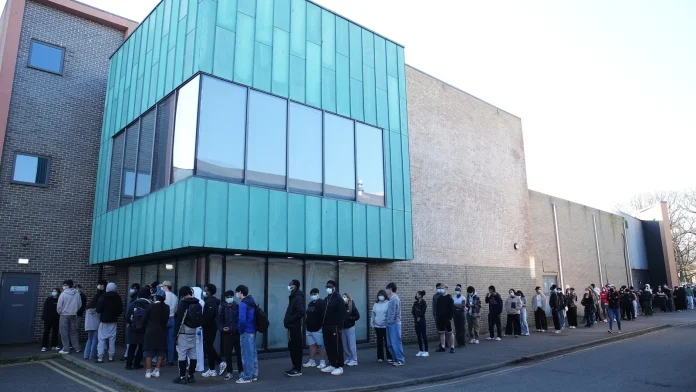
At the University of Kent’s Canterbury campus, a brisk, orderly line formed outside the sports centre as students waited to be vaccinated. The university reports that about 600 menB jabs were administered on site, while some 6,500 courses of antibiotics have been issued as a precautionary measure. In total, roughly 5,000 students on campus are eligible for the vaccine and are being urged to come forward—first for the short-term shield of antibiotics, then for the longer-term protection provided by the two-dose vaccine schedule (the second dose is given at least four weeks after the first).
“This is very unusual,” a senior public-health scientist told me. “We usually see sporadic cases across the country—perhaps one a day at most. To have this many cases linked to a single event or venue is out of the ordinary.”
Two Possibilities: Behaviour or Biology
Experts are weighing two broad explanations. One is behavioural: nightclubs are environments of prolonged, close contact—dancing, loud conversation that leads to shouting and close proximity, sharing of drinks, and the casual exchange of vaping devices or cigarettes. These are perfect conditions for a bacterium spread by saliva.
The other possibility is unsettling in a different way: the bacterium itself may have changed in a way that makes it easier to transmit. While that is a technical question requiring genomic analysis and time, scientists do not discount it.
“Either we’re seeing a convergence of risky interactions,” said Dr. Helen Carter, an infectious-diseases specialist, “or this particular strain has gained a transmission advantage. Both scenarios demand the same immediate response: rapid vaccination, targeted antibiotic prophylaxis and heightened clinical vigilance.”
How Meningococcal Disease Spreads—and What Makes This Outbreak Different
Meningococcal bacteria live in the back of the throat for many people without causing disease. Estimates suggest about 10% of adults carry the bacteria; carriage rates are higher among teenagers and young adults. Most carriers never get sick, but sometimes the bacteria invade the bloodstream or the meninges, causing severe, rapidly progressing illness.
The bacteria are spread by close contact—kissing, sharing cups or vapes, or prolonged face-to-face conversation in cramped spaces. It is not like COVID-19 or influenza in that it does not linger in the air over long distances and generally does not survive well on surfaces. That is why public-transport anxieties should be tempered; the real risk is sustained close contact.
“Think of it as an intimacy-driven infection,” a local public-health nurse explained. “It needs proximity. That’s why outbreaks often trace back to social gatherings where people are close for hours.”
On the Ground in Canterbury: Voices and Small Scenes
At the vaccination hub outside the university sports hall, there were nervous smiles and the polite, sometimes weary, banter of people who had been standing in line for an hour. “I was at the club last weekend,” said Maya, a second-year student, pressing a steaming paper cup of tea into one hand. “It’s scary to think it might be from there. We’re all really careful, but you don’t expect this.”
Down the street, the owner of a late-night kebab shop shook his head. “We’ve had students here every night for years,” he said. “They’re like family. Now people come in asking if it’s safe. We try to keep calm, but you can see the worry.”
Teachers and parents in affected schools described confusion and grief. A local headteacher, speaking quietly, said families rallied quickly: “Parents were phoning, wanting to know what to look for. We closed off some activities, issued letters, and encouraged everyone to get medical advice.”
Clinical Alert and NHS Response
The UK Health Security Agency has issued a national alert to the NHS, urging clinicians to have a “high index of suspicion” when treating young people aged 16 to 30 with compatible symptoms. The agency warns that the cases seen so far have been severe with rapid deterioration and advises protective measures—face masks and gloves—prior to antibiotic administration.
Students who have left Canterbury are being advised to visit their GP for vaccination, and health authorities insist there is adequate stock of menB vaccine in the NHS supply chain despite some reports of private pharmacies struggling to provide jabs.
Why This Matters Beyond Kent
This outbreak is more than a local emergency; it touches on broader themes in public health. It highlights the precarious balance between young people’s social lives and communicable-disease risk, the importance of rapid containment and the value of vaccines in halting spread. It also raises questions about surveillance: how quickly can scientists determine whether a microbe has changed, and how quickly can communities be mobilised in response?
There is also an international angle. French authorities reported a linked hospital admission in France; that patient is now in stable condition and no further linked cases have been found there. In our globally connected world, pathogens, like people, move quickly.
What to Watch For—and What You Can Do
If you or someone you know is in the affected age group and attended venues in Canterbury, health officials recommend prompt medical advice. Typical signs to watch for (as advised by clinicians) include:
- High fever and severe headache
- Neck stiffness
- Sensitivity to light and vomiting
- A rapidly spreading rash that does not fade under pressure
- Confusion or a decline in consciousness
Early antibiotic treatment can be lifesaving. Vaccination remains the best line of defence for those eligible.
Closing Thoughts: When the Night Meets Science
Canterbury’s lanes will again hum with music. Students will return to nights out, and the stalls on the market square will resume the easy commerce of a city that has long balanced tradition and modern life. But this episode should also leave us asking hard questions: how do we protect communal nightlife without stripping it of spontaneity? How quickly can public health marry scientific detective work with community-level action?
“We can’t live in fear,” said a community volunteer handing out information leaflets, “but we need to take sensible steps—vaccinate, watch for symptoms, and be kind to one another.”
So, what would you do if you were asked to queue for a jab tomorrow? Would you go immediately—or wait? The choice is a small one for an individual but a big step for the community. In moments like this, those small steps matter more than we often realise.
Trump pledges to stop Israeli strikes on Iran’s gas field
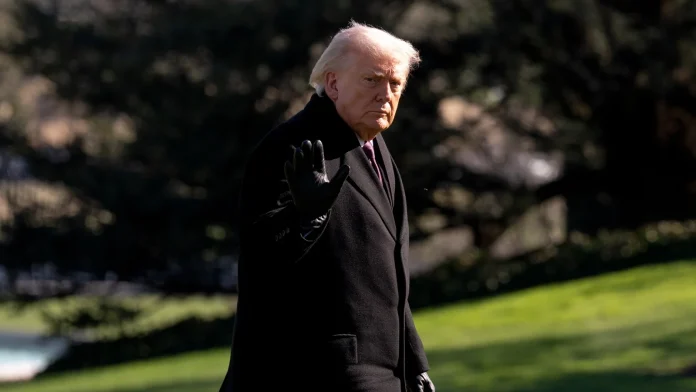
When the Gulf went quiet and then didn’t: a gas field, a cascade of fire
On a bright morning along the shallow, brackish seam where Iran meets the Persian Gulf, a plume of black smoke rose from a place the world rarely sees: a field of steel and flame where gas is coaxed from under the seabed and boiled into the liquid that powers refrigerators, factories and economies. Ras Laffan, Qatar’s sprawling LNG city, and Iran’s South Pars — two names that normally sit in industry reports and investors’ spreadsheets — were suddenly the center of a geopolitical storm.
The images that circulated within hours were jarring: orange tongues licking the night sky above liquefaction trains, water shimmering with reflected fire, highways clogged with workers trying to get to safety. The attack — reportedly an Israeli strike on Iran’s South Pars gas field followed by retaliatory missiles targeting Qatar and Saudi facilities — sent a sharp, immediate message: energy security and regional stability are no longer abstractions. They are front-line vulnerabilities.
Why one field matters to everyone
South Pars and Qatar’s adjacent North Field together form the largest natural gas deposit on Earth. For decades this undersea behemoth has fuelled kitchens in Asia, industries in Europe and electricity grids across the Middle East. Industry sources say that the installations in the Gulf region account for a significant slice of global liquefied natural gas throughput — roughly one in five cargoes of the world’s traded gas touches facilities clustered around this basin.
“When you hit South Pars, you’re not striking a silo in a backwater — you’re striking a pillar of the global gas trade,” said an energy analyst based in London. “The markets notice instantly, consumers pay later.”
Markets reacted: oil and gas prices and shipping risks
The strike pushed immediate volatility through energy markets. Oil and LNG futures ticked higher as traders priced in supply disruption and the risk premium of operating in one of the busiest and most militarily contested waterways on the planet: the Strait of Hormuz, through which around 20% of the world’s oil trade passes.
“Every missile that arcs over the Gulf is an added cost to insurance, to shipping time, to the decision-making of energy buyers,” said a veteran tanker broker speaking from Singapore. “This isn’t just about a single plant. It’s about confidence.”
From pier to frontline: the human cost
Beyond the pipes and pipelines are people. In the West Bank, shrapnel from Iranian-launched ordnance killed three women in a hair salon, according to the Palestine Red Crescent Society — a sobering reminder that strikes a thousand kilometres away ricochet into civilian lives. In central Israel, medics confirmed the death of a foreign agricultural worker. Across the border, ambulances and civil defence teams still trawled through rubble looking for survivors.
Humanitarian and rights groups say the toll has been heavy: more than 3,000 people killed in Iran since the campaign began in late February, an estimated 900 dead in Lebanon with nearly 800,000 displaced, and casualties reported across Iraq and the Gulf. At least 13 US service members have also died in the widening conflict, according to military sources.
“We are exhausted,” said a nurse at a field hospital near the Gaza envelope, her voice low. “We do what we can for the people who reach us — but the numbers have outpaced the resources.”
Diplomacy under fire
The attacks prompted urgent meetings in Riyadh, where foreign ministers from several Islamic states condemned strikes on Gulf neighbours and warned that targeting civilian infrastructure could not go unanswered. “This pressure from Iran will backfire politically and morally,” Saudi Foreign Minister Prince Faisal bin Farhan told reporters, reflecting a mood of alarm among regional capitals.
Interceptions and air-raid sirens added theatre to the diplomatic talks: missile interceptors were reportedly launched near the very hotel where ministers were meeting, while the UAE temporarily shut down a major gas plant after what it called a “terrorist attack.”
Washington’s calculus
In the United States, officials worried about protecting shipping lanes and civilian facilities. Plans to send additional troops to the region were being discussed, sources said — not just as a show of force but to safeguard the safe passage of tankers through Hormuz. One Pentagon adviser described the move as “necessary contingency planning in a deteriorating environment.”
Meanwhile, a statement posted to social media by the US president framed the sequence of strikes as an angry Israeli reaction to months of assaults and warned that further attacks on certain facilities would cross a red line. “No more attacks will be made… unless Iran unwisely decides to attack,” the post read, and included a stark promise of overwhelming force if Tehran escalated again.
Local color: the Gulf at a standstill
On the streets of Doha and the dusty outskirts of Bushehr, ordinary life fluctuated between denial and dread. A fisherman in Al Khor described the sea as he has known it all his life — a steady, shimmering livelihood now shadowed by tanker convoys and naval patrols. “We are used to seeing flares out at night,” he said, “but not like this. You can smell the chemicals, feel the anxiety.”
A Qatari LNG technician, speaking on condition of anonymity, told me how crews were rotated twice as fast as usual to inspect damage and cool hot spots at Ras Laffan. “You learn to listen to the metal,” he said. “The plant makes a sound when it is about to wake and another sound when it is dying.”
What comes next?
We are left with more questions than answers. Will the strikes be contained or will they become the new normal? Can diplomatic channels, international organisations and even neutral mediators stitch together a pause long enough to prevent a wider conflagration? Who bears the economic cost when a pipeline is as geopolitically exposed as a border town?
As you read this, consider the simple commodity whose absence or abundance shapes modern life: gas. It lights homes, powers factories, and heats hospitals. When a field like South Pars is threatened, it’s not only energy markets that stutter — it’s trust between nations, the stability of supply chains, and the fragile routines of millions of people.
In a world that often treats energy as a dry ledger item, this moment asks us to look again at the human and geopolitical threads tied to every cubic metre pumped from the seabed. What would you be willing to pay, or to risk, for uninterrupted power in your home? How should the international community protect the infrastructure we all depend on?
Final note
For now, the Gulf waits: repair crews, diplomats, analysts and anxious families all poised to respond to the next development. The pipeline of information is flowing fast; what matters now is whether the flow of gas — and of restraint — can be kept steady enough to cool a region that has burned for too long.
EU lawmakers endorse ban on AI ‘nudification’ photo apps

Brussels Draws a Line: European Parliament Moves to Outlaw “Nudification” Apps
On a crisp morning in Brussels, the corridors outside committee rooms hummed with an urgency that felt less like routine political wrangling and more like a public reckoning. Two powerful committees of the European Parliament — the Internal Market and Consumer Protection (IMCO) and Civil Liberties, Justice and Home Affairs (LIBE) — have put their weight behind a proposal that, if cemented into law, would ban a new and particularly vicious form of online harm: AI-powered “nudification” tools that fabricate sexual images without consent.
The votes were part of the Digital Omnibus package, the Parliament’s broad effort to stitch guardrails into an AI landscape that is changing in real time. The move responds to a wave of outrage earlier this year, when tweaks to the Grok AI tool linked to the platform X allowed users to generate and trade sexually explicit images of real people — adults and children alike — with alarming ease.
“AI must never be used to humiliate, exploit or endanger people,” said Independent MEP Michael McNamara after the committees’ decisions, a line that was meant to both comfort and warn: comfort to victims who have endured image-based abuse, warning to developers and platforms that the European Parliament intends to set boundaries. “These tools inflict real harm on real people,” he added, emphasising that the Parliament would, for the first time, call explicitly for a ban on nudifier applications.
What’s at Stake: More Than Pixels on a Screen
This is not merely a debate about software features. It is a debate about dignity, safety, and the ways technology can weaponize imagery. For many survivors, the harm is concrete and continuing — lost jobs, shattered relationships, and the psychological toll of being circulated online without permission.
Research going back several years has underlined the scale of the problem. Sensity (formerly Deeptrace) found that the overwhelming majority of deepfake content on the internet was pornographic; platforms have wrestled with non-consensual material for years. Experts warn that as generative models get better, creating convincing fakes becomes cheaper and faster, shifting these harms from a niche problem into a mass phenomenon.
“We’re not talking about a few prank images,” said Dr. Amara Singh, a digital rights researcher based in Amsterdam. “We’re talking about tools that can generate a realistic, degrading image of anyone with a handful of prompts. The psychological and societal costs are immense.”
Local reactions have been visceral. In a small café near the Parliament, a volunteer at an NGO supporting survivors of technology-enabled abuse, Lotte Janssen, summed up the fear: “People are terrified. They ask me, ‘Can they make a picture of my daughter? My partner?’ It’s not theoretical for them — it’s a living nightmare.”
Balancing Safety and Innovation: Deadlines, Watermarks, and Hard Choices
Alongside the ban on nudification apps, MEPs voted to delay parts of the AI rulebook that would apply to “high-risk” systems. The reason is pragmatic: standards that underpin those rules are not finalised yet, and lawmakers do not want to rush measures that could be legally or technically incoherent.
One of the most contested practical measures is watermarking — an obligation that content created by AI must be labelled so citizens can know what’s synthetic. The European Commission proposed a postponement to 2 February 2027, citing implementation challenges. Parliamentarians, wary of giving platforms and providers too much slack, suggested a shorter extension to 2 November 2026.
“We need robust rules, but we also need to be realistic about the technical timelines,” said Sofia Rinaldi, a policy analyst at a Brussels think tank. “A compromise has to ensure that protections are in place as soon as they can be meaningfully enforced, otherwise the loopholes will swallow the law.”
Behind these calendar arguments lie harder philosophical questions: How do you regulate an industry that prizes rapid iteration and open experimentation without stifling innovation? How do you give victims a meaningful remedy while avoiding sweeping bans that could criminalise legitimate research or artistic expression?
What the Numbers Tell Us
To put the debate in context:
- Europe’s AI Act — the most ambitious regulatory attempt to date anywhere in the world — takes a risk-based approach, prohibiting some uses outright and imposing strict requirements on “high-risk” applications.
- Surveys and reports over recent years indicate that the bulk of deepfake material discovered online has been sexually explicit and non-consensual, prompting urgent calls for regulatory action.
- Millions of Europeans use social platforms daily; even small failure rates in moderation or watermarking can translate into large numbers of harmed individuals.
Voices from the Ground and the Labs
Not everyone in the industry thinks an outright ban is the only answer. “We need a multi-layered approach,” said Elena Kovács, a lab director at a European AI startup. “Technical mitigations like robust detection tools, provenance standards, and watermarking are part of the solution. But so are clear legal deterrents and fast takedown procedures.”
Survivors and civil society groups, meanwhile, want clarity and speed. “Legal gestures won’t help someone if their face is being used in compromising images tomorrow,” said Marie-Claire Dupont, director of a Paris-based advocacy group. “We need enforcement, support services, and prevention — not a slow bureaucratic pause.”
Global Ripples: Why the World Is Watching
Europe’s moves have consequences beyond its borders. If the Parliament and Council lock in measures banning nudification apps and set firm watermarking requirements, platform policies and corporate risk calculations worldwide will shift. Tech companies operating across markets will likely adopt Europe’s standards as their baseline, meaning the EU could, once again, set the de facto rules of the global internet.
“Regulatory alignment often follows markets,” noted Dr. Michael Chen, a scholar of global tech governance. “When Europe acts decisively, companies tend to build systems that comply with the most stringent regimes, effectively exporting the regulatory standard.”
What Happens Next?
The parliamentary committees’ decisions now head to a plenary vote next week. If approved, formal negotiations with the EU Council — the institution representing member states — will begin. Those trilogue negotiations are where the text is often reshaped, tightened, or weakened.
For ordinary people watching from outside Brussels, it can feel abstract. But the stakes are personal: a law that prevents the corrosive spread of non-consensual sexual images could protect someone you know, or maybe you. It’s a reminder that policy is not the opposite of life — it is one of the ways we decide how to live together safely in a world reshaped by algorithms.
So ask yourself: what kind of internet do you want to inhabit? One where images can be manufactured without consequence, or one where dignity has legal teeth? The Parliament’s choice is only the beginning — but it may also be a compass.
Wararkii ugu dambeeyay duqeyn loo geystey Qadar iyo Sacudi Carabiya
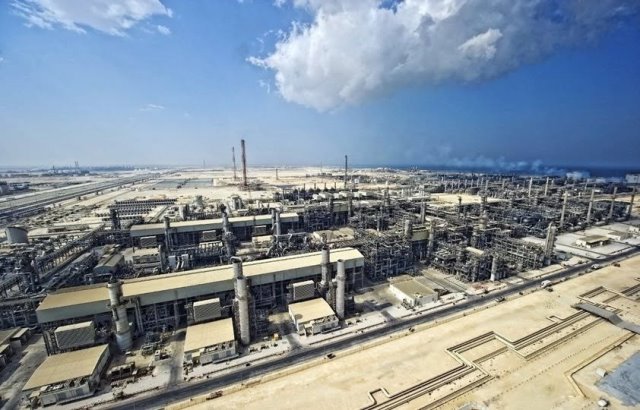
Mar 18(Jowhar)-Hoggaamiyaha cusub ee Iran Mojtaba Khamenei ayaa sheegay in Israa’iil ay ka shalaay doonto dilkii ay u geysatay saddex sarkaal oo sare oo ka tirsan ammaanka Iran laba maalmood gudahood, kaasoo uu ugu dambeeyay wasiirkii sirdoonka, Esmail Khatib.
Mapping Iran’s Exceptionally Complex Political and Power Hierarchy
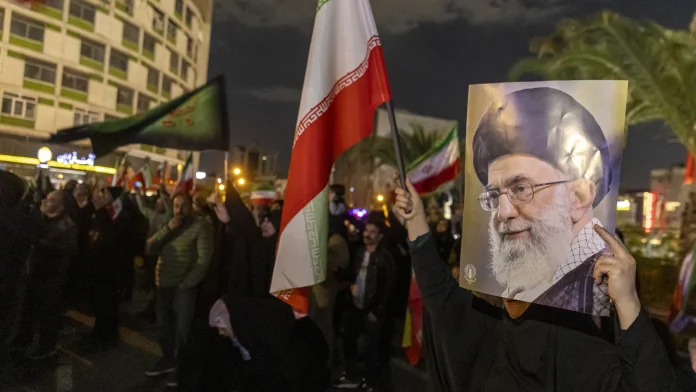
Note to readers: what follows is a speculative, imaginative dispatch — a reporter’s attempt to map the seams of power in Tehran and beyond, using known institutions, public data and a lifetime’s worth of observation. It asks: if a sudden strike had decapitated Iran’s highest echelons, how would the system respond? The scenes and quotes are illustrative, intended to illuminate how Iran’s constitutional architecture, social currents and security apparatus might absorb a shock. This is not a news bulletin; it is an informed exploration.
Lafta-gareen oo shir jaraa’id uu qabtay kaga hadlay dhowr qodob
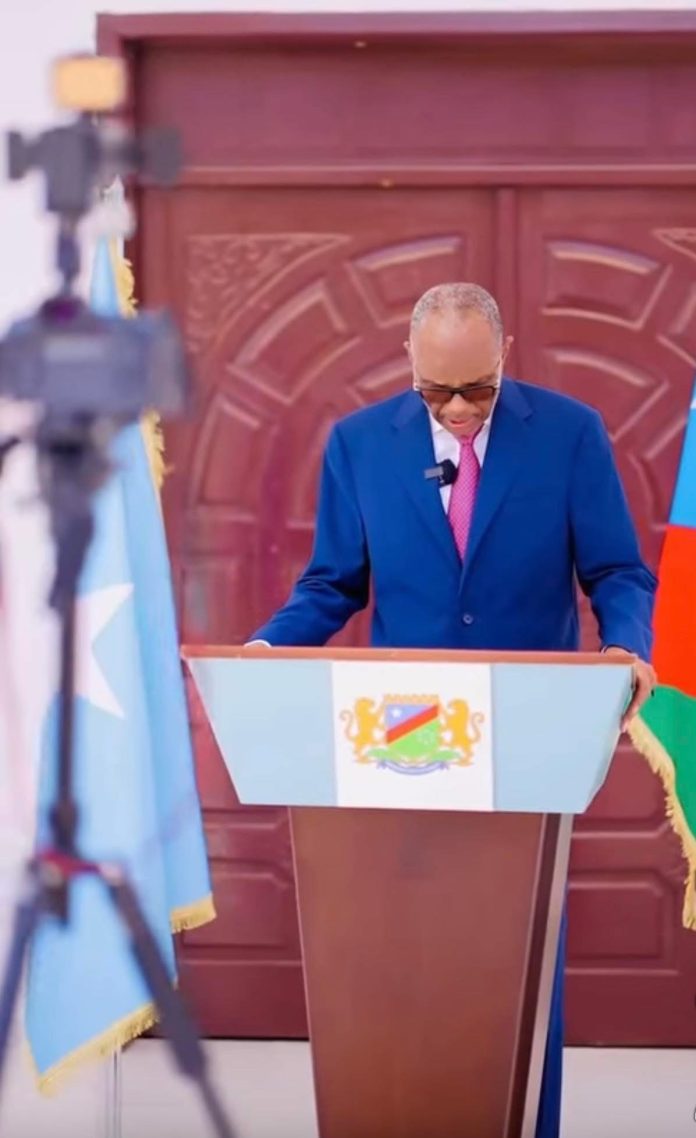
Mar 18(Jowhar)-Madaxweynaha Koonfur Galbeed Cabdicasiis Xasan Laftagareen ayaa shir jaraa’id qabtay, wuxuu si cad ugu dhawaaqay in ay xariirkii ay lalahaayeen dawladda Faderaalka ay jareen oo meesha ka saareen, ka dib markii ay DFS u dhaqantay si ka baxsan xadka dawladnimada, burburinta Nidaamka Faderaalka ee dalka ku dhisan yahay, halis amni-na ay buurtay.
Parts of Glasgow train station reopen after major fire
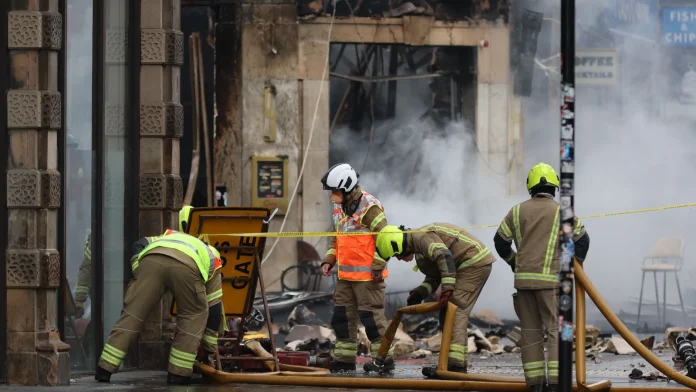
A City Breathes Again: Glasgow Central’s Partial Reopening After the Fire
Walk into Glasgow these days and you’ll notice the small, telling signs of a city coming back to its feet: a trolley rattling past scaffolding, the faint tang of smoke dust still clinging to winter coats, and a line of commuters hesitating at the gates of Glasgow Central as if testing the air. The station—an iron-and-glass cathedral that has ferried tens of millions of people through Scotland’s busiest transport hub each year—has finally begun to reopen after a devastating blaze ripped through a neighbouring Victorian block in early March.
For much of the past month the main concourse has been closed, trains rerouted, and the familiar rhythm of platform announcements replaced with the quieter choreography of buses and taxis absorbing the overflow. On 8 March everything changed: a fire started in a vape shop on Union Street and, in a terrifying instant, spread through the building and around the corner. The result was a landscape of collapsed floors, a lone facade clinging to Gordon Street, and more than a hundred years of architectural history rendered very unstable.
First Steps Back
Last week, as demolition teams carefully dismantled the worst of the damaged structure, the lower-level platforms at Glasgow Central began to hum with life again. Network Rail announced a partial reopening, but warned passengers that capacity would be limited. “The station will look different,” they said, and they were right: taped-off corridors, temporary signage, and staff stationed like guides through a changed terrain.
Transport Scotland chief executive Alison Irvine—who shared an update on social media—captured something the city felt in its bones: “I think it will be great to get the station partially reopened, to improve accessibility to areas where we’ve not been able to operate train services,” she said. “What we have seen through the response from Network Rail staff and from ScotRail staff, it’s been a phenomenal effort to bring people together to get the station into a position where it can be made available to passengers.”
ScotRail’s chief operating officer David Ross echoed that gratitude. “I am very pleased we will be able to welcome customers back to Glasgow Central,” he said. “We realise the closure is causing significant disruption for our customers, and we’re very sorry for the impact it is still having on journeys.”
On the Ground: Voices from the City
At a nearby café, owner Amina Khan wipes flour from her hands and watches the station entrance like a shopfront starer. “Business took a hit,” she says. “Lunch crowd was smaller—people who’d normally grab a sandwich between trains just weren’t coming. But when the platforms opened last week, there was a lift in spirits. People came in and said, ‘It feels like the city’s heartbeat again.’”
For commuters like Ian McFarlane, the return of services is practical salvation. “My commute from Paisley is simpler now,” he told me. “I used to have to take a long detour—extra time, extra cost. Seeing the lights on in the lower level platforms felt like progress. There’s still dust in the air, but at least the trains are back.”
But not everyone’s relief is untroubled. Professor Elspeth Grant, an architectural historian at the University of Glasgow, places a hand against the remaining stonework and reflects on what was lost. “Victorian façades like these are not merely decoration. They are narratives—stories of commerce, of civic pride. To see them eaten away by flames is profoundly sad. Still, public safety must come first. The demolition, while painful, may be necessary to prevent further harm.”
Safety, Demolition, and the Long Road Ahead
Glasgow City Council declared the remaining structure “very unstable,” prompting careful demolitions by specialist teams. These operations are painstaking: controlled takedowns, debris containment, continuous assessment for secondary collapse. “We are working with the utmost caution,” a demolition expert on site—who asked to be named Mark—told me, wiping his hard hat. “Every beam, every wall, we treat like it could tell us a secret about how it fell. And right now, the secret is safety.”
Emergency services and infrastructure teams have also been combing the site for hazards. ScotRail said stringent safety checks were completed before reopening parts of the station. Still, passengers are urged to check journey times and to expect reduced capacity. Staff are being deployed to direct travelers and provide advice; accessibility groups have been brought into the conversations to ensure temporary arrangements don’t exclude those with mobility needs.
Small Details, Big Impact
The impact ripples beyond platforms and timetables. Local businesses, many of which depend on the constant trickle of office workers and visitors, have had to adapt or suffer. Street vendors who once relied on the surge of morning footfall now empty their carts too early. Hotels report cancellations. But there are quieter threads of community response too: volunteers offering free hot drinks to displaced workers, musicians playing impromptu sets outside rerouted entrances, a mural appearing on a temporary hoarding that declares: “We rebuild together.”
These small acts are the civic glue of a city in recovery. They ask an important question: what does it mean to reconstruct not just stone, but the social fabric that binds people to a place?
What This Means in a Wider Context
Fires that begin in small, everyday businesses—like the vape shop that sparked this tragedy—touch on larger global dynamics: the proliferation of lithium-ion batteries in e-cigarettes and portable devices, the evolving safety standards in older urban fabric, and the tension between preserving heritage and ensuring modern resilience. Fire services have increasingly warned about battery-related fires, which can be sudden and intense.
There are also economic calculations. Glasgow Central is a pivotal node in Scotland’s transport network—moving commuters, tourists, and freight. Before the pandemic, the station handled tens of millions of journeys a year; its partial closure created knock-on effects that spilled into busier roads, longer travel times, and lost trade in the city center.
Rebuilding presents an opportunity, too. Cities around the world are wrestling with how to renew ageing infrastructure while honoring history and improving safety. Glasgow’s challenge is a familiar one: can we weave modern standards of fireproofing, accessibility, and climate resilience into the ornate skeleton of an earlier era? Can we do it in a way that feels like regeneration, not erasure?
Practical Notes for Travelers
- Check ScotRail and Network Rail websites or apps before you travel for the latest platform and timetable information.
- Allow extra time—reduced capacity means potential delays and longer queues.
- Look for staffed helppoints if you need assistance navigating temporary routes or if you have accessibility needs.
- Support local businesses—many are offering special deals to help recover footfall lost during the closure.
Hope on the Platforms
There is no neat ending yet. The scaffolding will come down long before new stone goes up. Investigations will continue. Insurance and restoration debates will unfold. But for now, the photographs of the deserted concourse are giving way to the sound of shoes on tiling, to the patient ritual of the ticket barrier, to the small human dramas that have always animated this place.
“It’s not just bricks,” Amina says as she locks up at the end of the day. “It’s where my customers meet their lovers before a trip, it’s where my aunt caught her first train to London—these places hold a lifetime of beginnings. That’s what we want back.”
When you next pass through a rebuilt or reforged station—whether here in Glasgow or somewhere else—consider the invisible labour that stitched it together: the emergency crews who rushed in, the demolition teams who worked under threat, the staff who guided bewildered passengers, and the citizens who refused to let a city’s story end in smoke. What would you miss most if your local station fell silent? How would your town come to its senses again?
Kanye West denied entry to the UK in travel ban
When a Headline Becomes the Headline: The Night Wireless Went Silent
On a wet London morning, the empty stage at Finsbury Park felt louder than...
Trump Agrees to Two-Week Pause in Strikes Against Iran
Two weeks of uneasy silence: a ceasefire born at the edge of a chokepoint
The dust in Tehran still hung low in the morning air,...
High-speed train crash in France kills driver, injures 13 people
A Shattered Dawn on the Pas‑de‑Calais Line: When a TGV Met a Truck
The sky was the same pale, Breton gray that blankets northern France...
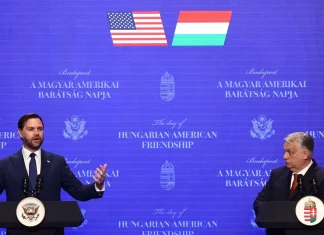
Could JD Vance’s Hungary Visit Save Viktor Orbán’s Political Future?
The Guest, the Incumbent and the Polls: A Morning in Budapest That Felt Like an Election in Miniature
Budapest woke up like it always does—tram...
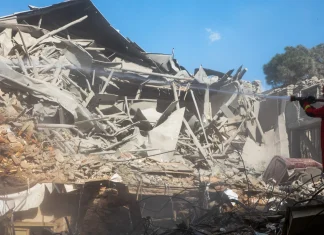
Trump warns entire civilization could perish without an Iran-US deal
Nightfall Over the Strait: A Region on the Edge
The sky over the Gulf turned from a bruised orange to a cold steel within hours,...