Home Blog Page 290

UN warns Israel’s Gaza strategy could lead to ‘another disaster’

Israel's Gaza plan risks 'another calamity', warns UN
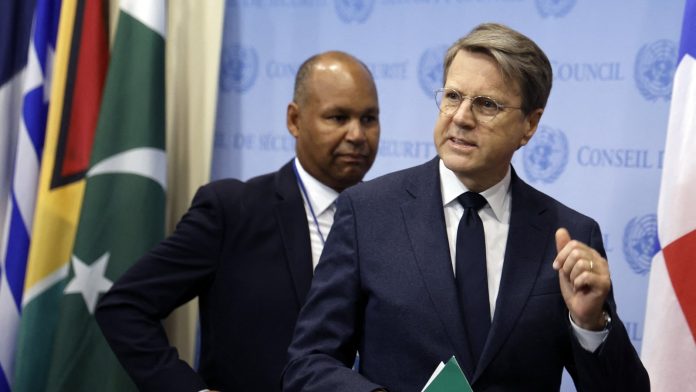
Slovenian ambassador to the UN Samuel Žbogar spoke on behalf of the five European members at the meeting

On the Brink in Gaza: A City’s Fate Hangs in Precarious Balance

There is a heavy weight stirring in the halls of the United Nations. This past weekend, a rarely convened emergency meeting of the UN Security Council illuminated the world stage with renewed urgency, focusing on a city etched in both history and heartbreak: Gaza City.

Israel’s declaration that its military would “take control” of Gaza City has sent tremors through diplomatic circles and beyond. The announcement, greenlit by Prime Minister Benjamin Netanyahu and his security cabinet, thrust the fragile Gaza Strip back into the spotlight, stirring fears of a looming humanitarian catastrophe.

The UN’s Stark Warning: A Brewing Calamity

Miroslav Jenca, a seasoned UN official and Assistant Secretary-General, did not mince words as he addressed the Security Council. “If these plans are implemented,” Jenca warned, “they will likely trigger another calamity in Gaza, reverberating across the region and causing further forced displacement, killings, and destruction.”

These are not idle fears. Gaza—a densely populated enclave home to nearly 2 million Palestinians, many of whom live in cramped conditions—has endured repeated cycles of warfare, blockades, and economic strangulation. The scars on this land run deep; its people, resilient yet exhausted, stand at the precipice of yet another chapter of suffering.

Jenca’s remarks echo the somber sentiments shared by many international actors. Slovenia’s ambassador to the UN, Samuel Žbogar, speaking on behalf of Europe’s five Security Council members, acknowledged the complexities of the hostage crisis but condemned Israel’s planned military move. “This decision by the Israeli government will do nothing to secure the return of the hostages and risk further endangering their lives,” he said.

Žbogar’s words articulated a haunting reality: the military strategy, while perhaps aimed at reclaiming control and crushing militant operations, could instead devastate innocent civilians already trapped in a spiraling humanitarian crisis. “It will also worsen the already catastrophic humanitarian situation in Gaza and risk further death and mass displacement of Palestinian civilians.”

Netanyahu’s Calculated Resolve: Ending the War, Not Occupying Gaza

Despite the international outcry, Israel’s Prime Minister Benjamin Netanyahu remains steadfast in his rhetoric, painting the military action as a measured but necessary step towards concluding the conflict. “We are talking in terms of a fairly short timetable because we want to bring the war to an end,” Netanyahu declared, emphasizing that Israel’s goal is not to occupy Gaza.

His assertion invites reflection. Can a city be “controlled” without falling into occupation? And what might a ‘short timetable’ entail for the people of Gaza, whose daily lives are already punctuated by uncertainty and fear? How will this “end to the war” look when children, families, and elderly residents face the swirl of violence?

To millions in Gaza, the distinctions of military strategy often translate into very tangible, immediate consequences: the loss of homes, the severing of water and electricity, scarce medical care, and the daily dread of bombs shredding the already fragile streets.

The Palestinian Perspective and Global Frictions

From the Palestinian side, voices like Riyad Mansour, the Palestinian ambassador to the UN, expressed stark opposition. “This escalation by the Israeli government is going in total contradiction to the will of the international community,” Mansour said on Friday, capturing the frustration simmering among Palestinian leaders and citizens alike.

The broader geopolitical play is impossible to overlook. The United States, wielding its veto at the UN Security Council, continues to stand firmly beside Israel, limiting the effectiveness of international rebuke. Such dynamics often leave the Palestinians marginalized in international forums, their suffering chronic and their pleas unanswered.

Israel’s own ambassador to the UN, Danny Danon, struck a resolute tone ahead of the session: “Israel will not stop fighting for the release of all the hostages—and ensuring the safety and security of our citizens is our duty.” His words reflect the unyielding focus on national security that dominates Israeli policy, yet, for many outside observers, this focus risks overshadowing the ethics and human cost of prolonged military action in crowded urban settings.

The Human Crisis Beneath the Headlines

Consider the lived realities behind these diplomatic statements. Gaza City is not just a strategic location—it is home to vibrant communities, bustling markets, mosques, schools, and a rich cultural tapestry woven over centuries.

Amina, a 38-year-old mother of three living in a densely packed neighborhood, shared a poignant reflection: “Every night, my children ask if they will see tomorrow. We hear explosions nearby. Water and electricity are unreliable. How do you live with constant fear? We are trapped between bombs and borders.”

Her story is echoed in countless accounts gathered by aid organizations monitoring the strip. According to recent UN data, over 70% of Gaza’s population relies on humanitarian assistance. Medical facilities run perilously low on supplies, infrastructure hangs by threads, and displacement is no longer an exception but an ongoing reality.

What Does This Mean for the World?

As you read these words, perhaps from the comfort of your home in some corner of the globe, it is worth pausing to ask: What responsibility do we share in stories like Gaza’s? How do we reconcile security concerns with human dignity in conflicts that seem never-ending?

We live in an era marked by rapid information, interconnected crises, and a global audience whose empathy is often challenged by distance and complexity. Gaza’s plight is a microcosm of larger themes—the struggle for sovereignty, the cost of war on civilians, the role of international governance, and the urgent necessity for peace.

Can the international community find a balance that respects Israel’s security concerns while championing the rights and lives of Palestinians? Will efforts to “take control” open the path toward resolution, or trap the city—and its people—further in cycles of despair?

Looking Ahead: A Call for Compassionate Diplomacy

The story unfolding in Gaza City is not just another headline. It is a living narrative of millions caught between political aspirations and harsh realities. As world leaders and diplomats debate behind closed doors, the people of Gaza continue to endure, hope, and pray.

As global citizens, what is our role? How can we elevate voices like Amina’s, push for more humane policies, and advocate for solutions that lift rather than crush? This crisis challenges us not only to witness but to engage—with empathy, with urgency, and with unwavering commitment to peace.

In a region where history and humanity intertwine in complex, often heartbreaking ways, the pages of Gaza’s next chapter remain unwritten. May we all hope it is one where the passions for justice and security find harmony, and where the children—Amina’s children, and all children in Gaza—can finally dream without fear.
Mount Vesuvius Shut Down to Visitors Due to Spreading Wildfire

Mount Vesuvius closed to tourists as wildfire rages
Firefighting efforts are under way in Italy

Fires of Fury: When Europe’s Summer Blaze Writes the Story of Mount Vesuvius and Southern France

In the shadow of one of history’s most famed volcanoes, Mount Vesuvius, smoke billowing and flames licking the hillside have recently rewritten the narrative of this iconic landmark. Just a stone’s throw from the ancient ruins of Pompeii, firefighters face not only the destructive power of wildfire but the challenge of safeguarding a place of both natural beauty and profound cultural significance.

The Fiery Flanks of Vesuvius

Mount Vesuvius, with its ominous silhouette against the Neapolitan sky, is a natural spectacle that draws hundreds of thousands annually. In 2024 alone, nearly 620,000 visitors ascended its slopes, eager to glimpse the crater that once obliterated Pompeii in 79 AD. But this summer, instead of visitors marking their boots on winding trails, silence has fallen. The national park authorities issued an unprecedented closure of all hiking routes, bowing to the urgency of combatting a wildfire that erupted on the volcano’s flanks.

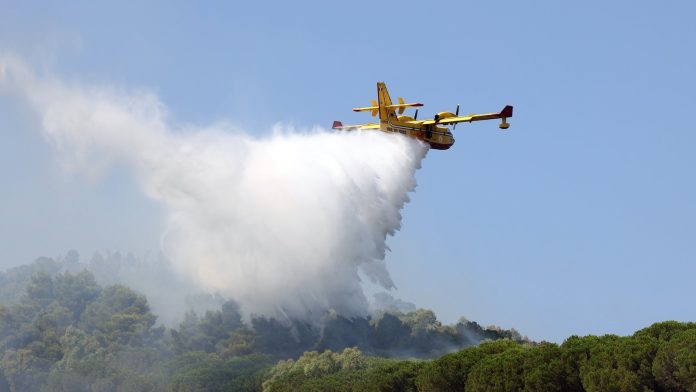
Italian firefighters have mobilized with profound determination. Images shared on official channels show 12 teams deployed across the burning terrain, paired with six Canadair aircraft — the iconic firefighting planes that scoop water from the sea and douse infernos from above. From a strategic vantage, drones circle overhead, providing critical intelligence about the fire’s spread through dense Mediterranean brush.

“Safety is our foremost priority, but this is also about protecting a sacred landscape,” said Marco Russo, a Vesuvius National Park ranger who has worked here for over two decades. “Our park is a living archive of nature and history. To see it engulfed by flames like this is heartbreaking.”

Meanwhile, the ancient city of Pompeii stands vigil. Smoke columns are visible from the site’s archaeological terraces, where tourists continue to walk amid history. Visitors like Anaïs, a student from Spain, express mixed feelings: “It’s surreal to see the smoke while standing in a place frozen in time. The connection between destruction now and in the past hits you deeply.”

Heatwave and Flames: The Mediterranean’s Fiery Pulse

Vesuvius is not alone in undergoing this fiery trial. Across the border, the south of France is gripped by a wildfire of monumental scale — one of the worst in the region in half a century. In Aude, a southern department famed for its vineyards and sun-drenched villages, flames have consumed over 16,000 hectares. It’s a strange twist of fate: while tourists flock to the Mediterranean sunshine, fierce fires rage just miles away.

Christian Pouget, prefect of Aude, paints a stark picture: “The heatwave hammering France — expected to reach 40°C in places — fuels both the earth and our worries. The tramontane winds are dry and relentless, fanning embers in unpredictable ways. The risk of flare-ups keeps us on red alert.”

The courage and physical toll on firefighters is palpable. Around 1,300 firefighting personnel have stood in the breach, battling not just the flames but exhaustion and relentless heat. Many bear scars — with nineteen injured and several seriously burnt, their sacrifices underscore the human cost behind the headlines.

Communities in the Cinders

In quieter moments away from emergency command centers, stories of loss emerge with gut-wrenching clarity. Emmanuelle Bernier, a local shepherd from Fontjoncouse, offers a window into the devastation unfurling beyond the fire lines. Her beloved goats, seventeen of them, perished in the flames. Many were pregnant, carrying the promise of life itself.

“When I came back, I just stood there, staring at the ruins of their pen,” she shares. Her voice trembles with both anger and grief. “This farm, this flock… it was my whole life. Now everything changes. I don’t know if I can do this anymore.”

Yet amidst the ruins, a faint thread of resilience glimmers. “I see new shoots in the charred ground. Life finds a way,” Emmanuelle says, looking toward the horizon as if seeking hope through the smoke.

Lessons and Reflections: Climate Crisis in Flames

These wildfires, while devastating on their own, are emblematic of a larger, increasingly urgent crisis that Europe and indeed the entire globe face: the worsening impact of climate change. Scientists warn that heatwaves are intensifying — hotter, longer, and more frequent — stripping the land of moisture and laying out a tinderbox across regions once thought immune to such extremes.

“We are witnessing a paradigm shift in what is ‘normal’ for summer climate in Europe,” asserts Dr. Lydia Müller, a climate scientist based in Geneva specializing in fire regimes. “Events like these will become more common unless we address root causes and bolster adaptive measures in wildfire management.”

Firefighters and environmentalists alike caution that these events are not isolated. The Mediterranean basin is warming faster than the global average, and ecosystems are straining to keep pace. The fires incinerate not just grass and trees, but centuries-old traditions, livelihoods, and fragile biodiversity.

What Can We Do? What Will We Do?

Perhaps the real question is: How do we live with a changing landscape that demands new respect and care? What responsibilities do we hold, not just as local nations, but as a global community witnessing these flames from afar?

The plight of a shepherd in rural France and the smoke darkening Vesuvius’ slopes serve as reminders that fire is not just a force of destruction but a clarion call. To rethink land stewardship, to invest in early warning systems, and to push for meaningful climate action — these are not abstract policies but lifelines for communities and nature.

Travelers visiting Pompeii or the vineyards of southern France now carry a story beyond sightseeing: How beauty and disaster coexist and compel us to reflect on our fragile place in the world’s shifting tapestry.

Next time you gaze upon a volcano, or smell the earthy scent after rain, ask yourself: How might these elements change in the decades ahead? What stories will the land tell? And how will we answer its urgent, blazing call?

Is Benjamin Netanyahu able to withstand the fallout from Gaza?

Can Benjamin Netanyahu weather the Gaza backlash?
Benjamin Netanyahu may discover that things can get worse in Israel

A City on the Edge: Gaza’s Unyielding Heart Amidst an Unprecedented Crisis

Imagine living day after day in a place stripped of its bones—its buildings shattered, its streets marred by rubble and fear, its people crushed not just by bombs, but by the unbearable weight of endless war.

This is Gaza City, a land of resilience born from the ashes of relentless conflict, now facing the harrowing prospect of complete Israeli control, a move that has sent shockwaves across the globe but stirred a complex cocktail of emotions—weariness, resignation, even quiet defiance—inside the besieged city.

The Human Toll of a War Without End

After nearly two years—22 months to be exact—of ceaseless warfare, Gaza City’s population clings to survival amid devastation. Around one million Palestinians are crammed into the western corners of this battered metropolis, where once-vibrant neighborhoods lie in ruin. Families sleep in tents or precariously standing structures, their homes shattered by bombs and time alike.

“The situation here is apocalyptic,” Caroline Willeman, a Médecins Sans Frontières project coordinator on the ground, told RTÉ News. “We’ve witnessed so much suffering. Every time we think it can’t get worse, somehow it does.” She described the latest Israeli plan to forcibly evacuate Gaza City by October 7 as unfathomable—an impossible logistics nightmare that threatens to turn an already dire humanitarian crisis into a catastrophe.

For many Gazans, these plans are yet another blow in a series of relentless hardships. “We’re tired. About everything,” murmured Samir, a father of three who now lives in a makeshift shelter, his hands roughened by labor and his eyes clouded by exhaustion. “We have nowhere to go. This is our home, even if it’s broken.”

A World Outraged, Yet a City Weathered

Globally, the announcement ignited a fierce backlash against Israel’s strategy. Humanitarian organizations cried foul. Yet within Gaza City, the response blends near-indifference with a bitterly pragmatic acceptance. These are people for whom sudden displacement is not tragedy but routine.

The desperate reality of aid distribution further compounds the anguish. People queue for hours under scorching sun or bitter chill, hoping for food and medicine distributed by a system stretched to breaking. The humiliation is acute, but the resolve remains unbroken.

  • More than 60% of Gazans face food insecurity.
  • Hospitals run on fumes, with critical medical supplies dwindling.
  • Power blackouts last up to 20 hours daily, complicating every aspect of survival.

Under these conditions, the prospect of another mass forced exodus is not just apocalyptic—it is almost incomprehensible for those trapped inside.

Inside Israel: Division, Doubt, and Desperation

Meanwhile, far from Gaza, the Israeli public grapples with its own storms. The decision to escalate military operations, pushing deeper into Gaza, has cracked open divisions rarely seen on this scale.

Families of hostages held by Hamas have spoken out in grief-drenched condemnation, calling the plan “a death sentence” for their loved ones. “We’re asking for mercy, not recklessness,” said Miriam Cohen, whose son was captured months ago. “Every step deeper into Gaza risks their lives.”

Even the Israeli Defence Forces (IDF), the bedrock of Netanyahu’s war effort, voiced skepticism. Lieutenant General Eyal Zamir warned that stretching military resources could imperil soldiers and hostages alike. For soldiers who have faced battles not just in Gaza, but across a volatile region—from Lebanon to Syria to the West Bank—the exhaustion is palpable.

“Our forces are wearing thin,” Zamir told reporters. “We must weigh every action carefully.”

A Nation at a Crossroads

Public protest has surged within Israel itself, a reflection of growing war-weariness and frustration. According to a recent poll, over 55% of Israelis favor an immediate ceasefire to safeguard the release of hostages and spare the country further bloodshed.

Professor Yossi Mekelberg, a Middle East expert at London’s Chatham House think tank, paints a concerning picture: “There is fatigue and disillusionment within both the military and society. Netanyahu’s strategies are increasingly seen as divisive, threatening to unravel Israeli democracy.”

The beleaguered Prime Minister faces not only the external pressures of war but internal political storms. His ongoing corruption trial, alongside allegations of undermining judicial independence, casts a long shadow. Coalition dynamics add another layer, as right-wing ministers press for expansionist policies, raising concerns that ideology may be driving decisions at the expense of peace.

“These are precarious times for Israel’s democracy,” Mekelberg laments. “The risk is that fragmentation and authoritarian tendencies will worsen unless there is a collective will to resist.”

Beyond Borders: What Does This Mean for Global Peace?

This fierce tug-of-war resonates far beyond the Middle East’s borders. Gaza stands as a grim emblem of urban conflict and humanitarian crisis in the 21st century. It raises urgent questions about how the world seeks justice, security, and human dignity amid unresolved conflicts that span generations.

As a global citizen, one might ask: what responsibility do we bear when entire populations are trapped in cycles of violence that stifle hope? How do we balance the imperatives of security with the sanctity of civilian life? And critically: in a world increasingly fractured by nationalism and partisan fervor, can empathy and dialogue find space?

Gazans, Israelis, and the international community all confront these dilemmas daily. While leaders calculate strategy, ordinary people—parents, shopkeepers, teachers—navigate the chaos, dreams deferred but not extinguished.

The Defiant Spirit of Gaza

Even amid despair, defiance simmers. In the rubble-strewn lanes of northern Gaza, voices rise in quiet courage. “We will stay,” says Fatima, a young teacher. “Our city is all we know. We are not just statistics or casualties. We are human.”

And in Israel, despite divisions, there are citizens and soldiers who call for peace, who see beyond headlines and fear the long-term costs of endless war—for both Palestinians and Israelis.

What Comes Next?

The road forward remains perilous. Gaza’s shattered cityscape and its people’s indomitable spirit testify to the devastating human cost of protracted conflict. Israel’s political machinations and military dilemmas underscore how fragile even a powerful democracy can be when torn by internal strife.

For those watching from afar, the situation should provoke more than sorrow; it should ignite urgent reflection and action. The spiraling crisis in Gaza is a mirror reflecting larger truths about war, power, justice, and the human capacity for both destruction and hope.

Will the world step up to support peace and humanitarian aid? Can Israelis and Palestinians find a path beyond cycles of violence? And what role will global voices play amid the tumult?

As Gaza’s children sleep in tents under shattered skies, as families on both sides hold loved ones hostage and hostage to fear, these questions demand not quietude but engagement.

In the end, the future of Gaza City is not only a story of a city or a region—it is a story of humanity itself, tested and yearning for a dawn beyond the long night.

Dowladda oo sheegtay in horjooge Shabaab ah lagu dilay howlgal ka dhacay Xudur

Aug 10 (Jowhar)Taliska Ciidanka Xoogga Dalka Soomaaliyeed ayaa shaaciyay in saaka abaare 7:00 subaxnimo howlgal qorsheysan oo ay ka fuliyeen deegaanka Warta Eey Duure, oo 30 km waqooyi kaga beegan magaalada Xudur, lagu dilay horjooge ka tirsan kooxda Al-Shabaab.

More than 365 detained at Palestine Action protest in London

Over 365 arrested at Palestine Action rally in London

The Arrest Wave in London: A City’s Protest Against a Controversial Ban on Palestine Action

London’s streets echoed with both chants and handcuffs on a recent Saturday, as at least 365 people were arrested during a large-scale protest supporting the activist group Palestine Action.

This event, now one of the most significant mass arrests at a single demonstration in the UK capital’s history, unfolded against the shadow of a government ban that has ignited fierce debate about free speech, activism, and the boundaries of protest in a democratic society.

Protest, Policing, and a Political Powder Keg

The Metropolitan Police announced that hundreds had been detained for “supporting a proscribed organisation” — a legal phrase loaded with weight since the government designated Palestine Action as such under anti-terror legislation earlier in July. The ban itself was triggered roughly days after the group claimed responsibility for a dramatic break-in at a southern England air force base, which reportedly caused around £7 million (about €8.08 million) in damage to two military aircraft.

But why does this matter? At its core, this moment reveals the intense scramble between state security measures and the liberties cherished by vibrant democratic societies. The government insists its actions are necessary to counteract “serious attacks” attributed to Palestine Action — acts involving violence and substantial criminal damage. Yet, internationally renowned watchdogs—Amnesty International, Greenpeace, and even voices within the United Nations—have condemned the ban, warning it dangerously blurs the line between security and suppression.

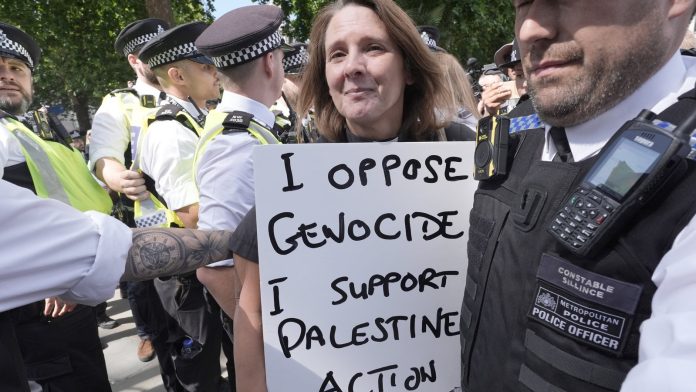
Craig Bell, a 39-year-old psychotherapist protesting in London, hit at this contradiction. Holding a placard that declared opposition to the ban, he said, “When you compare what Palestine Action does to the atrocities by real terrorist groups killing civilians, it’s absurd that this group is treated the same. It’s just a joke.”

Across the crowd, diverse faces carried the same urgent message: their activism is a desperate statement against what they see as Britain’s indirect complicity in the Gaza conflict, fueled by military support for Israel.

Voices on the Ground: “Let Them Arrest Us All”

Midday outside the Houses of Parliament, a mosaic of ordinary citizens gathered. Palestinian flags fluttered in the breeze. Signs bore slogans like “Oppose Genocide, Support Palestine Action.” These were not professional agitators, but people from all walks of life—teachers, wheelchair users, students, parents—drawn by conviction rather than conflict.

Richard Bull, 42, who attends protests from his wheelchair, voiced a defiant courage: “This government has gone too far. I have nothing to feel ashamed of. Let them arrest us all if they want to silence our voices.”

Such sentiments capture the emotional core of what many demonstrators see as an urgent moral crisis, demanding social response despite legal risks. However, police presence was overwhelming and swift.

The Metropolitan Police confirmed that besides those arrested for supporting the banned group, seven more were detained for offenses including assaults on officers, though no officers were seriously hurt. The event became a clash not just of politics but of competing interpretations of justice.

Legal Battles and the Crushing Weight of the Ban

Since the government’s proscription of Palestine Action on July 5, the repercussions have rippled across the UK. The ban criminalizes membership or even expressing support for the group, with penalties reaching up to 14 years in prison — a stark and severe consequence for activism.

Already, police forces countrywide have followed London’s example, making numerous arrests during protests. As of now, three people have officially been charged in England and Wales courts with crimes linked to the group, and seven have surfaced in Scotland’s separate legal jurisdiction.

Amidst this crackdown, human rights organizations are mobilizing. Amnesty International UK’s Chief Executive, Sacha Deshmukh, personally addressed the Met Police chief — Mark Rowley — urging the authorities to temper their approach, especially when dealing with peaceful demonstrators holding placards. Such actions, Amnesty insists, contravene international human rights commitments.

The controversy is far from settled. Later this year, a UK court will hear a legal challenge against the government’s decision to ban Palestine Action — a case that many hope will clarify the limits of state power over dissenting voices.

A Battle Over Rights and Realities

Reading this unfolding drama, one can’t help but ask: Where should society draw the line between protecting security and preserving freedom? In a world where social media amplifies voices but governments clamp down harder than ever, what space remains for activism that toes controversial lines?

It’s tempting to think of these protests and arrests as isolated skirmishes — distant from daily life in faraway places. But global audiences must recognize that what happens in London resonates worldwide. It reflects a broader struggle over civil liberties that similarly unfurl in cities from New York to Paris, and across digital platforms where countless activists rally for causes many governments find inconvenient.

As you read this, imagine the energy on the streets of London: the chants rising, the clatter of handcuffs, and the faces of defiance. What do you see? A fracture in democracy, or a healthy tension of debate? For those willing to stand under the flag of Palestine Action, risking incarceration, shame is a stranger.

Local Flavor, Global Context

London’s protest scene, traditionally a vibrant tapestry of cultures and causes, is a fitting backdrop for this chapter of modern activism. From the narrow old pubs in Soho where political thinkers have toasted freedom for centuries, to the contemporary streets outside Parliament teeming with demonstrators bearing banners soaked in symbolism, the city’s pulse runs deep with history and hope.

One protester shared an anecdote that resonated deeply: “My grandparents fled war-torn places, seeking safety here. Seeing the government clamp on voices like Palestine Action feels like history repeating itself—another moment where fear beats freedom, and we have to choose which side we stand on.”

For many, this protest is far from a fleeting headline: it’s a touchstone of identity, conviction, and the risk many throughout history have taken to secure a more just world.

What’s Next? The Ongoing Dance of Resistance and Control

The Met has already indicated their readiness for the next wave of actions planned for September. Organizers like Defend Our Juries vow to continue mobilizing, driven by what they call a defense of “this country’s ancient liberties.” Their determination suggests this controversy will flare anew, with political, legal, and human dramas continuing to unfold.

For readers across continents, this story is a stark reminder that activism is never truly “local.” It crosses borders, inspires allies, unsettles authorities, and challenges all of us to consider: in striving for security, what freedoms might we lose? In fighting injustice, what risks are we willing to bear?

In the fizz and fury of London’s streets, these questions are no longer abstract. They are lived, breathed, and fought for — one arrest, one placard, one chant at a time.

Halka ay kala taagan yihiin mucaaradka iyo madaxweyne Xasan ee wadahadalka socda

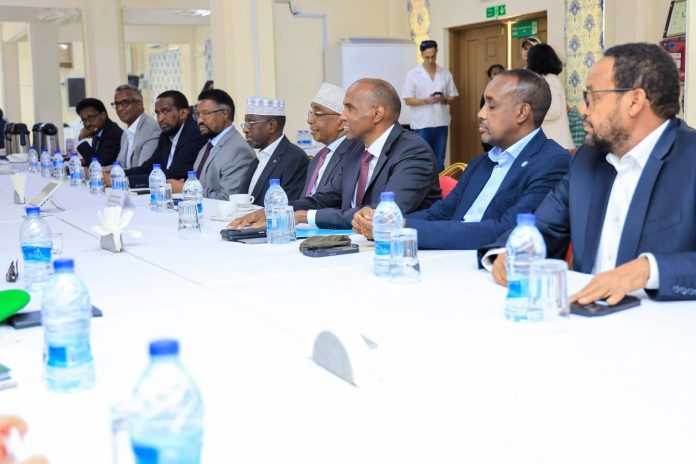
Aug 10 (Jowhar) Shirka Villa Somalia iyo Mucaaradka oo fadhigii afaraad maanta galay waxaa dooddu ka taagan tahay Dastuurka qodobkiisa Chapter 4 ee is bedelka lagu sameeyay.

Madaxweyne Xasan iyo mucaaradka oo shir uga furmay madaxtooyada

Aug 10 (Jowhar)Madaxweyne Xasan Shiikh iyo Siyaasiyiinta Mucaaridka ayaa goordhaweyd galay shirkii afraad, ka dib saddex shir oo hore oo natiijo la’aan ku soo idlaaday.

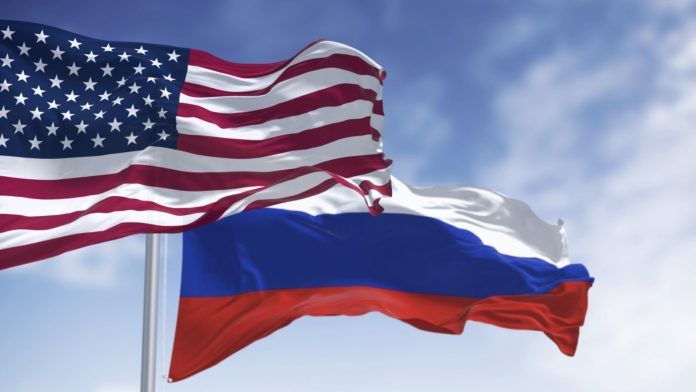
Trump iyo Putin oo todobaadkan kulan ka yeelanaya xalka dagaalka Ukraine

Aug 10 (Jowhar) Madaxweynayaasha Mareykanka iyo Ruushka ayaa Jimcaha kulan fool ka fool ah ku yeelanaya gobolka Alaska, waxeyna ka wada hadlayaan nabad laga gaaro dagaalka Ukraine ee socda tan iyo bishii February 2022.

US-Russia Summits: Peaks and Valleys

US-Russia summits: the highs and lows
Donald Trump is to meet his Russian counterpart in Alaska on 15 August

A Tale of Titans: Historic Summits Between US and Russian Leaders Through the Cold War and Beyond

As the world holds its breath, anticipating the upcoming meeting between US President Donald Trump and Russian President Vladimir Putin in Alaska, it’s worth reflecting on the remarkable—and often fraught—history of summits between these two nuclear superpowers. What began in the crucible of the Cold War has evolved in ways that still shape global geopolitics today.

Each meeting offers a window into the tense, sometimes surreal dance that the United States and Russia (or its Soviet predecessor) have engaged in for over six decades. From terse diplomatic standoffs to surprising moments of camaraderie, these encounters have shaped the course of history—and the shadow of nuclear threat—and remind us how leadership and personal chemistry can impact world events.

1959: The Dawn of Dialogue — Eisenhower Meets Khrushchev at Camp David

Imagine an autumn day in Maryland in 1959: Dwight D. Eisenhower, the US President and a World War II general, hosts a fiery Soviet Premier, Nikita Khrushchev, at the rustic retreat of Camp David. It was historic—the first time a Soviet leader ventured to American soil. The meeting symbolized cautious thawing amid Cold War frostiness, yet beneath cordial handshakes simmered the unyielding ideological divide.

One particularly surreal moment underscored the era’s cultural clash: Khrushchev, visiting Hollywood, famously launched into an impassioned tirade before an audience that included stars like Marilyn Monroe and Elizabeth Taylor. This spectacle illustrated the complexities not just of diplomacy but of cultural discord in an age when spectacle and propaganda walked hand-in-hand.

The meeting concluded with an agreement to pursue diplomacy on pressing issues such as nuclear disarmament and the status of Berlin, a city torn asunder by ideological walls—and later, literal ones. It was a fragile olive branch offered during a time when suspicion ran thick on both sides.

1961: Ice-Cold Vienna — Kennedy and Khrushchev’s Icy Summit

Fast forward two years: John F. Kennedy, young and idealistic, confronts Khrushchev in the ornate halls of Vienna’s Schoenbrunn Palace. The encounter was less a handshake and more a showdown. The West’s recent Bay of Pigs invasion fiasco loomed large, and tensions hung heavy in the air.

Berlin—still the epicenter of Cold War drama—dominated their talks. Mere weeks later, the infamous Berlin Wall, a chilling symbol of division, would slice the city in two, a physical manifestation of ideological strife. “The meeting was a cold reminder of how precarious peace really was,” recalls Dr. Elena Schmitt, a Cold War historian in Vienna. “You could almost feel the wall being built in the room.”

Within a year, the Cuban Missile Crisis would bring the world to the precipice of nuclear annihilation, a sobering testament to the stakes inherent in these dialogues.

1972: Detente on the Horizon — Nixon and Brezhnev in Moscow

The Vietnam War was raging, and the world was weary. But in May 1972, Richard Nixon and Leonid Brezhnev met in Moscow to chart a new course—one of cautious cooperation and arms control.

The summit marked the thaw known as détente, culminating in the Strategic Arms Limitation Talks (SALT) and Anti-Ballistic Missile (ABM) treaties. Nixon’s handshake with Brezhnev wasn’t just a photo opportunity—it was a pledge to pursue peaceful coexistence amid the nuclear menace. “It was a turning point,” notes Ambassador Carl Henderson, who attended the talks. “We realized that competition didn’t have to mean confrontation.”

Yet, history reminds us that détente was fragile. The Soviet invasion of Afghanistan in 1979 soon plunged relations back into deep chill.

1985–1987: Chemistry by Lake Geneva — Reagan and Gorbachev’s Four Summits

Perhaps the most transformative meetings of the late Cold War came during the era of Ronald Reagan and Mikhail Gorbachev. Their first summit in Geneva in 1985 is famed for Reagan’s invitation to “walk to get some fresh air” by the lake—a gesture hinting at a new openness.

Despite Reagan’s earlier branding of the USSR as the “evil empire,” the personal chemistry between the two men grew. Gorbachev’s reforms and Reagan’s pragmatism set the stage for landmark agreements: the 1987 Intermediate-Range Nuclear Forces Treaty eliminated an entire class of nuclear weapons, a first in history.

“There was real human connection,” says Marina Ivanov, a translator present at the meetings. “It was a reminder that even giants can find common ground.”

1992 & 1995: The New Post-Soviet Reality — Bush, Yeltsin, and Clinton

The collapse of the USSR in 1991 reset the global order, and with it, US-Russia relations. The 1992 summit in Camp David between George H.W. Bush and Boris Yeltsin was emblematic of this new era. Yeltsin arrived as a symbol of fledgling Russian democracy, greeted warmly by his American counterpart as “a friend.”

The summit was about cooperation—economic, nuclear, diplomatic—in a world cautiously moving beyond Cold War antagonism. “It was our chance to build a partnership,” says Igor Petrov, a Russian political analyst. “But the realities of post-Soviet Russia were complex and often chaotic.”

Later in the decade, Bill Clinton and Yeltsin held multiple summits, blending political negotiation with moments of personal levity. Their 1995 meeting in Hyde Park is remembered for an unexpected exchange that led to Clinton laughing uncontrollably after a quip by Yeltsin, a rare glimpse of lightness amid serious discussions.

2018 and Beyond: A New Chapter With Old Shadows — Trump, Putin, and Biden

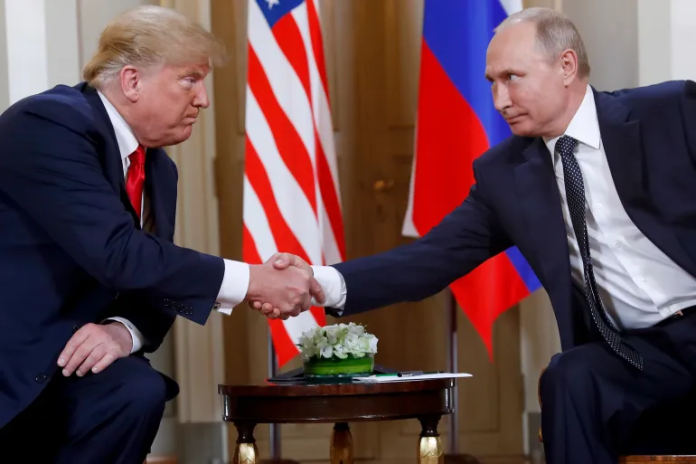
The 21st century has introduced new complexities. When Donald Trump and Vladimir Putin met in Helsinki in 2018, the encounter stirred controversy, especially as Trump appeared to echo Russian denials about election interference, sparking uproar in Washington.

Yet, amid the storm, they expressed an ambition for dialogue on global challenges including Syria, Ukraine, and nuclear arms. “It’s the classic tension of diplomacy—keep the channels open even when trust is elusive,” says Dana Meyers, a diplomat.

In 2021, Joe Biden and Vladimir Putin met in Geneva for a marathon three-and-a-half-hour summit. Though no joint press conference was held—a telling omission—they agreed to restore ambassadors, signaling at least a flicker of cautious civility after a period marked by sharp rhetoric and cyber conflict.

Putin observed that he sensed “no animosity” from Biden, who had previously labeled him “a killer.” Biden described the talks as “constructive,” underscoring the fragile, persistent thread of dialogue between giants.

What Do These Meetings Tell Us Today?

Looking back on these summits, the oscillation between confrontation and cooperation is striking. Each meeting reflects the urgency of its time—whether fueling hope or underscoring peril. The personal dynamics between leaders have often swayed policies with global consequences, reminding us that diplomacy is not just about nations but people.

As we approach the latest Trump-Putin meeting, we might ask: What will history remember about this moment? Will it be a turning point towards renewed engagement or another symbolic gesture dissolved in suspicion?

More profoundly, these summits invite us to ponder the enduring challenge: how do we manage our deepest divisions without falling into conflict? In an era marked by technological warfare, misinformation, and resurging nationalism, the stakes are higher than ever.

For global citizens watching from afar, these meetings are not just distant political theater—they are the frontlines of our collective future. The lessons of history ask us to demand wisdom, patience, and a recognition of our shared humanity from those who hold the fate of millions in their hands.

EU leaders call for increased ‘pressure’ on Russia before negotiations

EU leaders urge more 'pressure' on Russia ahead of talks
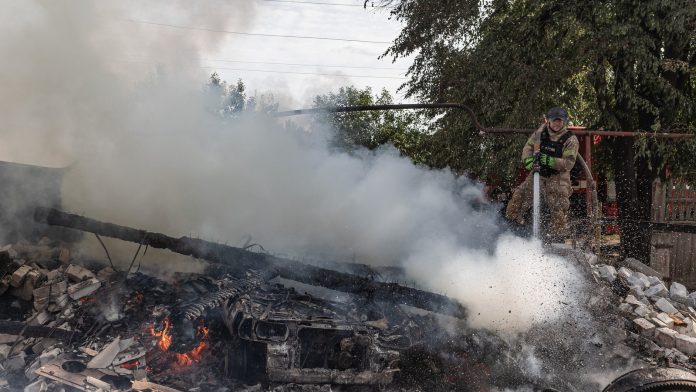
Ukrainian firefighters extinguish a fire in a house after Russian artillery shelling of the city of Kostiantynivka, Ukraine

On the Brink of Peace or Deeper Discord? The High-Stakes Drama Unfolding Over Ukraine’s Future

Imagine a room thick with tension and possibility: world leaders, diplomats, military strategists, and those bearing the scars of a brutal war, all gathered under one roof in the English countryside.

The air hums with cautious hope and steely resolve as they grapple with a question staining every conversation — can this long, devastating conflict ending echo through the corridors of power rather than the battlefields of Ukraine?

In early August 2024, an unexpected spark of diplomacy ignited when former U.S. President Donald Trump announced plans to meet Russian President Vladimir Putin in Alaska. Their intended summit, slated for August 15, promises to be the most consequential meeting between sitting (and former) American and Russian leaders since Joe Biden sat down with Putin in 2021.

The goal? To explore an elusive peace deal that might, just might, end the war in Ukraine — a conflict that has carved deep wounds across Europe and the world for over three and a half years.

Shifting Sands: A Terrifying Proposal Emerges

Trump’s proposed peace deal is shrouded in mystery, but key fragments have seeped through the diplomatic veil. His vision reportedly includes a “swapping of territories” — a phrase as loaded and contentious as it sounds. This implication, that Ukraine may have to cede parts of its sovereign land to Russia, triggers profound unease among Kyiv and its steadfast European allies. “Ceding territory amidst active combat is like surrendering your very soul while still holding a gun,” French President Emmanuel Macron insisted in a recent interview. “Ukraine’s future cannot be decided without Ukraine.”

In response, Ukraine’s President Volodymyr Zelensky has stood firm. “Ukrainians will not give their land to the occupier,” he declared in a somber evening address, his voice carrying the weight of a nation’s defiance. His words blend pain and pride, echoing through Kyiv’s streets where hundreds of small blue-and-yellow flags flutter in memory of those who paid the ultimate price.

Chevening House: Where East Meets West in Negotiation

Amid this high-stakes backdrop, Chevening House — a stately mansion nestled in the English countryside southeast of London — hosted a critical summit. U.S. Vice President JD Vance met with British Foreign Secretary David Lammy and representatives from Ukraine and various European nations. The room bristled with urgency, determination, and, above all, a shared hope to chart a diplomatic path forward.

In a joint statement, the leaders of France, Italy, Germany, Poland, the UK, Finland, and the president of the European Commission expressed cautious optimism about Trump’s initiative. They applauded the move but underscored the imperative to align any peace process with “Ukraine’s and Europe’s vital security interests” — notably, the inviolability of international borders and the necessity of credible guarantees for Ukraine’s sovereignty.

“The path to peace cannot be decided without Ukraine,” their statement insisted, pushing back with firm resolve against any proposal that would carve Ukraine up or normalize territorial conquest by force. A senior European official, speaking off the record, confirmed the presentation of a counterproposal that demands a ceasefire precede any territory swaps, and that any exchanges be reciprocal, backed by solid security guarantees.

The Human Landscape: Lives Etched in Conflict

Beyond grand treaties and geopolitical chess games, this conflict is lived daily by millions. In Kyiv’s central square, Olesia Petritska, a middle-aged woman mourning her fallen comrades, quietly gestures toward hundreds of flags fluttering in the breeze. “Not a single soldier will agree to pulling back or giving up land,” she says with solemn conviction. “This is their home. This is our home.”

The war rages relentlessly along a vast 1,000-kilometer front line cutting through eastern and southern Ukraine. Russian troops control roughly 20% of Ukraine’s territory, with fighting that ebbs and flows in intensity. Kremlin forces have advanced slowly but have yet to secure decisive victories — a testament to Ukrainian resilience and the brutal stalemate that grips the region.

“This is not just a struggle over land,” explains Tatiana Stanovaya, senior fellow at the Carnegie Russia Eurasia Center. “It’s a battle for the very idea of sovereignty, the right of a nation to decide its own destiny. The peace advances we see now are, perhaps, the most realistic yet — but they come with huge risks, especially for Ukraine.”

What’s at Stake? Beyond Borders and Bullets

To grasp the enormity of what’s unfolding, consider: Russia annexed Crimea in 2014, an act widely condemned as illegal and a blatant breach of international law. Since February 2022, Putin’s invasion jolted the world, rekindling fears of imperial aggression fueled by geopolitical ambitions. The four Ukrainian regions claimed by Russia — Luhansk, Donetsk, Zaporizhzhia, and Kherson — remain battlegrounds, with Kyiv controlling pockets deep within these contested territories.

For Europe, this conflict is no abstract dispute. It strikes at the heart of the post-World War II order — a fragile framework premised on respect for borders and the rule of law. French President Macron encapsulated this neatly: “Europeans are not mere spectators; our own security is at stake. Peace in Ukraine translates to peace in Europe.”

But peace built on shaky compromises could destabilize the region forever. What message would it send if warlords could redraw borders at will? This is not merely a Ukrainian tragedy; it’s a test of international resolve.

The Road Ahead: Hope or Hazard?

As Trump and Putin prepare to meet in Alaska, one must ask — will they broker the beginning of peace or risk deepening wounds? Will Ukraine’s voice echo within those summit rooms, or be drowned out by the titans of power making deals over a country’s sovereignty?

President Zelensky’s cautious outreach in recent days — engaging with allies across Europe and the U.S. — highlights the delicate balancing act ahead. Early reports suggest the possibility that Zelensky might be invited to join the Alaska talks, a sign that inclusion could be on the table.

Yet many remain skeptical. “Diplomacy in war is like walking on a knife’s edge,” notes political analyst Ivan Petrov. “One wrong step can ignite renewed conflict. But without dialogue, the war grinds on — devouring lives and futures.”

Reflecting on Lessons

For the global citizen watching from afar, it’s a moment to reflect on the cost of conflict and the arduous journey toward peace. How often have histories been rewritten at summits, only to be shattered by bullets and mistrust? What does sovereignty mean in a world marked by competing powers and shifting alliances?

Amid it all, the people of Ukraine hold a stubborn flame of hope and defiance, their daily lives a testament to resilience in the face of overwhelming odds.

So, as you ponder this complex, unfolding story, ask yourself — what does peace truly require? Is it simply an absence of war? Or is it the hard work of justice, security, and recognition? Can a durable peace in Ukraine—and, by extension, Europe—be stitched together by pragmatism, trust, and respect? The coming weeks may tell us much not just about a region’s fate, but about the future of global diplomacy itself.

Driver dies, 13 injured in French high-speed train crash

High-speed train crash in France kills driver, injures 13 people

0
A Shattered Dawn on the Pas‑de‑Calais Line: When a TGV Met a Truck The sky was the same pale, Breton gray that blankets northern France...
Can JD Vance's visit to Hungary save Viktor Orbán?

Could JD Vance’s Hungary Visit Save Viktor Orbán’s Political Future?

0
The Guest, the Incumbent and the Polls: A Morning in Budapest That Felt Like an Election in Miniature Budapest woke up like it always does—tram...
Trump: 'Whole civilization will die' if no Iran-US deal

Trump warns entire civilization could perish without an Iran-US deal

0
Nightfall Over the Strait: A Region on the Edge The sky over the Gulf turned from a bruised orange to a cold steel within hours,...
Nine dead as Russia and Ukraine exchange drone attacks

Nine killed as Russia, Ukraine trade deadly drone strikes

0
At the bus stop in Nikopol: the ordinary interrupted It was a late-spring morning in Nikopol—shopkeepers sweeping the crumbs from doorsteps, the air smelling faintly...
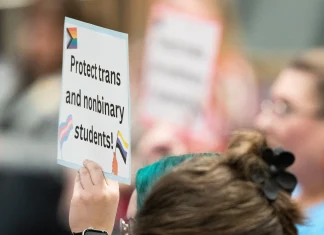
US limits rights settlements for transgender students

U.S. moves to curb settlement agreements safeguarding transgender students’ rights

0
The Quiet Undoing: What the Education Department’s Move Means for Transgender Students On a sunlit playground in Sacramento a few weeks ago, a small cluster...