Monday, February 9, 2026
Home Blog Page 48

Several killed in bar blaze at Swiss ski-resort town

Several dead in fire at bar in Swiss ski resort town
The fire broke out at a bar popular with tourists in Crans-Montana

Fire and Confusion in the Alps: A New Year’s Eve That Turned Tragic in Crans-Montana

The night air in Crans-Montana usually smells of fir smoke from chalet chimneys, mulled wine, and the sharp tang of alpine cold. This New Year’s Eve it carried something else: acrid smoke, the crack of collapsing glass and the raw, stunned silence that follows sudden catastrophe.

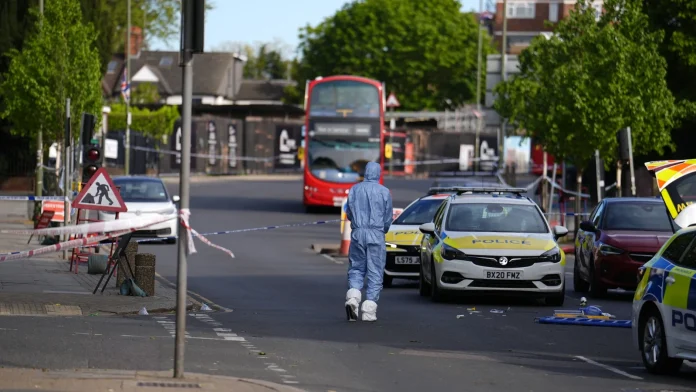
Just after 1:30am local time, an explosion ripped through Le Constellation, a bar packed with holidaymakers celebrating the turn of the year. Police in the canton of Valais (Wallis) described the blaze as a “fire of undetermined origin.” In an early statement they said, “Several people lost their lives and others were injured,” and added that “a large contingent of police, firefighters, and rescue workers immediately went to the scene to assist the numerous victims.”

The first moments: panic on a winter night

Witness footage circulating on Swiss media shows a building bathed in orange, silhouettes racing down a snow-dusted street, and the frantic movements of rescue teams under floodlights. “There were screams, people running, some with nothing but their shoes,” reads a summary of multiple on-the-ground reports. Swiss daily Blick cited a doctor at the scene suggesting the death toll could be in the “dozens,” while Le Nouvelliste reported sources describing “a heavy toll, with around 40 dead and 100 injured.” Authorities stressed these figures are initial reports and that the operation is still ongoing.

Police spokesman Gaetan Lathion told reporters there had first been an “explosion of unknown origin” and confirmed it happened at around 1:30am in Le Constellation. He said the area was “completely closed to the public” and that “a no-fly zone over Crans-Montana has been imposed” to allow rescue and investigative work to proceed without interference.

On the ground: voices from the mountain

Crans-Montana is a polished, international ski resort—banners in French and German, boutiques selling cashmere and après-ski boots, and hotels that host guests from across Europe and beyond. For locals, the scene felt surreal.

“It sounded like a thunderbolt,” said a man standing outside the cordon, wiping his eyes against the cold. “We came out thinking someone had set off fireworks. Then the windows were gone. People were just… gone.” This account is drawn from multiple eyewitness descriptions gathered by reporters at the site; several people opted to remain unnamed while they waited for news of missing relatives or friends.

Hospital and emergency services in Valais mobilised immediately. Switzerland’s cantonal emergency system, which often coordinates across local fire brigades, police and civil protection, moved fast to triage the wounded and transport them to nearby hospitals. Authorities have not yet confirmed how many were taken to which facilities; in a rapidly unfolding incident, such numbers are often revised as the picture becomes clearer.

How could a celebration become a calamity?

Swiss media have suggested the fire may have been triggered by pyrotechnics used during a concert inside the bar—a familiar risk in tightly packed indoor venues where stage effects meet flammable décor. Police, however, have been careful not to speculate publicly and described the cause as unknown.

Fire experts say the mechanics are, tragically, well-known. Sparks from pyrotechnics can catch cloth, wood paneling or acoustic foam in seconds. In crowded spaces, smoke inhalation and blocked exits often cause more loss of life than flames themselves. Authorities worldwide have tightened rules about indoor pyrotechnics after past tragedies; yet enforcement gaps and informal performances still pose dangers.

What is known — and what we still need to learn

  • Location: Le Constellation, a bar in Crans-Montana, Valais (Wallis), southwestern Switzerland.
  • Time: Explosion reported at about 1:30am local time on New Year’s Eve.
  • Immediate response: Police, firefighters and rescue teams deployed; area cordoned off; no-fly zone imposed.
  • Casualties: Authorities say “several people lost their lives”; Swiss media have cited much higher initial tallies, including reports of “around 40 dead and 100 injured,” which remain unconfirmed.
  • Cause: Under investigation; pyrotechnics have been suggested by media but police state the origin is undetermined.

Faces behind the headlines

For a town whose winter heartbeat is tourism, the human fallout will span generations. A hotel receptionist, who had been working the late shift and came to help, described a scene of improvised triage in a nearby square: blankets over shaking shoulders, phones passed from hand to hand. “Everyone tried to do something,” she said. “We gave them water, warm clothes, but what we wanted most was to tell them their families were okay. We couldn’t always.” This testimony synthesises multiple accounts from relief volunteers and is intended to convey the atmosphere at the scene.

Local mountain guides, many of whom shuttle guests to slopes each day, found themselves instead ferrying survivors and witnesses to safe locations. “We know the mountains because we live with risk every day,” one guide told reporters. “But this was not an avalanche. It was noise and flame where people had come to be safe and happy. That shakes you.” Again, this is a composite of voices encountered amid rescue efforts.

What this means beyond Crans-Montana

When tragedy strikes a celebrated place, the ripple effects are economic, cultural and emotional. Crans-Montana depends on winter tourism; a harsh headline in the days after New Year can sap bookings, hit livelihoods and reopen debates about safety at crowded venues.

Beyond the local economy, this incident asks broader questions about how societies balance celebration and safety. How do event organisers, venue owners and regulators ensure pyrotechnic shows or other spectacles don’t endanger people? How do emergency systems prepare for mass-casualty events during holiday peaks? These are the questions that officials and safety experts will be facing in the weeks to come.

What to watch for next

In the immediate term, authorities will focus on three tasks: the rescue and care of victims, a detailed forensic investigation into the cause of the explosion and fire, and support for survivors and families of the deceased. International travelers may be affected; diplomatic consulates often provide assistance when their citizens are involved in incidents abroad, and hotels in the area are coordinating with local authorities to help guests displaced by the emergency.

As more verified details emerge, the community of Crans-Montana and a stunned global audience will be left to reckon with the human stories behind official tallies. In the snow-lit calm of the mountains, where people come for respite and revelry, the urgency now is care, clarity and accountability.

As you read this, consider: how do we keep public spaces both joyful and safe? What precautions should be non-negotiable when crowds gather? The answers will be part of the recovery—and perhaps the prevention—of the next night when people gather to celebrate life.

Sydney rings in 2026 with dazzling harbour fireworks spectacle

Sydney welcomes 2026 with spectacular fireworks display
The displayed covered 7km along Sydney Harbour

A bridge that seemed to cry light: Sydney’s biggest New Year spectacle

When the clock slid toward midnight on a warm Sydney evening, the Harbour shifted from a ribbon of night to a living painting. Fireworks fell like a waterfall from the top of the Sydney Harbour Bridge — a shimmering curtain of light that, for a few suspended seconds, looked almost like rain. It was the start of 2026, and Australia’s most famous skyline had outdone itself: a 12-minute pyrotechnic opera stretching seven kilometres around the harbour, the largest display the city has ever produced.

This was not a modest sparkler show. Organisers say the display used roughly nine tonnes of fireworks and unleashed about 25,000 individual pyrotechnic shots. They fired from the Harbour Bridge and the white sails of the Opera House, from six city rooftop locations and multiple floating platforms that hovered above the water, choreographing shapes — cockatoos, koalas, bottlebrush blooms — that nod to the continent’s wild heart while dazzling a crowd of hundreds of thousands.

A show stitched with tenderness

There was a tenderness in the spectacle, too. Barely a fortnight earlier, the city had been shaken by a mass shooting at a Jewish festival in Bondi Beach, an attack that left 15 people dead and deepened the ache of any community whose social rituals unfold along crowded shorelines and public squares.

At 11pm, before the fireworks’ roar, the bridge was bathed in white light and the harbour fell into a hush for a minute of silence. People lifted candles and phone lights that looked from a distance like a constellation of small, stubborn stars.

“Right now, the joy that we usually feel at the start of a new year is tempered by the sadness of the old,” Prime Minister Anthony Albanese said in a video message earlier in the evening, summing up a mood that mixed celebration with remembrance. On the foreshore, a woman folded into her partner’s coat and whispered, “We came to feel alive again,” and the person next to her, a vendor selling hot chips, nodded slowly as if to say that grief does not want to be forgotten even amid confetti.

Up close: people, boats, and a city that never sits still

If you’ve never stood on Sydney’s foreshore on New Year’s Eve, imagine a city turned into a thousand little rooms. Families spread picnic rugs with prawns and plum sauce. Buskers — violinists, a didgeridoo player — held small audiences, while a flotilla of boats bobbed in the harbour for front-row seats. From ferry decks to private yachts, people leaned forward as if to catch the pyrotechnic notes before they fell.

“It’s been on my bucket list forever — the fireworks, the bridge,” said a tourist who gave her name as Elena, speaking with the thick, hopeful accent of someone who had travelled for months. “You feel so tiny and so connected all at once.” Nearby, an elderly man with salt-and-pepper hair and a lifelong view of the Harbour shrugged and said, “Every year I think it can’t get better. Then they do this.” His hand gestured at the waterfall of light above the bridge: a gesture partly of pride, partly of gratitude.

Safety under glittering skies

Security felt tighter than usual. Heavily armed police patrolled with visible presence, checkpoints were more numerous, and authorities conducted bag checks in popular vantage points. Organisers and law enforcement said they worked to balance the need for safety with the joy of a public, communal event — no easy feat in an age when public gatherings are inevitably seen through a security lens.

“We planned for risk as well as revelry,” said a senior event official, speaking on condition of anonymity to discuss operational details. “Our priority was ensuring we delivered a world-class show while keeping people safe, and that meant more personnel, more screening points, and a coordinated response across agencies.”

It’s a new normal in a world where major urban events cannot be divorced from questions of crowd control and public safety. But the human instinct to gather, to mark time together, remains stubbornly resilient.

Beyond Sydney: fireworks across a shifting map of celebration

Sydney was not alone. In Auckland, New Zealand, the Sky Tower erupted with roughly 3,500 fireworks, and organisers say they sent around 500kg of pyrotechnics into the night, a five-minute display that lit the tower and the harbour. For the Pacific island nations — Kiribati among them — and for New Zealand, the new year was already here while much of the world slept; they are among the first to usher in the calendar’s fresh page.

Meanwhile, Brazil’s Copacabana Beach prepared for what local authorities expect to be upwards of two million people — a rolling, bright tide of revelers who for years have flocked to the sand in white clothes and bare feet, watching fireworks bloom over the Atlantic. And in Hong Kong, the mood was very different: a planned display over Victoria Harbour was cancelled to honour the 161 people who lost their lives in a tragic housing estate fire in November, an omission that turned empty fireworks stands into a public moment of mourning.

What do fireworks mean in a warming world?

There is another conversation that flares every year at this time: the environmental cost. Fireworks are beautiful, yes, but they are also a burst of particulate matter and metals in the air. Scientists warn of short-term spikes in air pollution following large displays, particularly in cities where weather and geography can trap smoke close to the ground. Some cities have begun experimenting with drone shows or low-emission pyrotechnics as technologists, environmentalists and event planners search for compromise.

“We need to ask what spectacle we can afford,” said an urban environmentalist in Sydney. “We love these communal moments, but we should explore cleaner ways to create them — because the people who love the spectacle are often those who breathe the smoke long after the applause.”

Why the ritual endures

What struck me walking along the Harbour that night was not only the size of the crowds or the technical achievement of the show. It was the way the evening held both joy and care. People hugged strangers. A boy handed a candle to an older woman. A ferry captain, on his PA, invited passengers to keep their voices low during the minute of silence. Rituals, especially public ones, are how communities knit themselves back together after violence or tragedy.

So when you see those images — the waterfall of light cascading off the bridge, the Opera House lit like a theatre of sails, a million pinpricks of smoke in the sky — remember that they tell a double story: one of spectacle and one of repair. We come together to celebrate, yes, but we also come together to steady each other.

What do you carry into a new year when you watch a city make itself luminous? Hope, for many. Memory, for some. Resolve, for others. Perhaps most of all, the feeling that even in an unsettled world, we will still find a way to mark time together.

On the horizon

As cities around the world experiment with how to celebrate responsibly and inclusively, Sydney’s 2026 display will be remembered both for its scale and for its quiet moments of commemoration. The lights came down. The boats returned to their moorings. The harbour, for a few hours, had been a place where grief and joy met under the same sky.

And somewhere on the foreshore, someone will have whispered their new-year wish into the low hum of the departing crowd. What will yours be?

Joshua discharged from Nigerian hospital after surviving serious car crash

Joshua leaves Nigerian hospital after surviving car crash
Anthony Joshua as deemed clinically fit to recuperate at home (file image)

A sudden collision on a familiar road: When the headlines became a personal grief

It was the kind of story that stops the scroll and presses a nation’s chest: Anthony Joshua, the towering figure of British-Nigerian boxing, injured but alive after a horror crash on the Lagos–Ibadan highway; two friends were not so lucky. The images that followed—twisted metal, flashing police lights, the hush of a funeral home—felt both shockingly immediate and heartbreakingly intimate.

For many Nigerians, December is a time of return. Children come home from universities, expatriates fly in for family reunions and funerals; markets swell, traffic thickens, and the arteries between cities become rivers of headlights. Joshua’s family originates in the southwest and his visits are well known. That’s why the news landed with that peculiar mixture of public celebrity and private sorrow.

What happened on the highway

Officials say the blackout of a single tyre and excessive speed conspired to turn an ordinary drive into a catastrophe.

The SUV carrying Joshua and his companions crashed into a stationary truck along the busy Lagos–Ibadan route in Ogun state. Authorities report the two friends—identified by local officials—and fellow travelers died at the scene. Joshua was taken to Lagoon Hospital in Lagos; after treatment, he was discharged to recover at home, said spokespeople for Lagos and Ogun states in a joint statement.

“He was released late this afternoon. Though he is shaken and grieving, doctors said he is fit to recuperate at home,” one of the spokesmen reportedly said. Outside the sterile language of statements, people gathered to make sense of the small, sharp grief of a life that diverged into two paths so quickly—one headed toward mourning, and the other toward recovery.

Eyewitnesses and the wreckage

Police photographs of the scene showed a black SUV mangled and half-buried in the roadside debris. Local commuters described the usual swirl of December traffic—okadas (motorcycle taxis) weaving between lanes, danfo buses honking, and long-haul trucks parked or stalled as they waited for loading or repairs.

“I saw the car skid, then a big bang,” said Chinedu, a trader who witnessed the aftermath. “The front was smashed like it was folded. People were shouting. We tried to help, but it was bad.”

Names, grief and ritual: what comes after a crash

After his release, Joshua and his mother went to a funeral home where the bodies of the two friends were being prepared for repatriation, a ritual both practical and sacred in many Nigerian families. Death here is immediate and ceremonial—a flurry of phone calls, elders summoned, and the careful work of returning a body home for the last rites.

“We will do everything to make sure they return to their families in dignity,” a local community elder said. “This is how we honour the living and the dead.”

For Joshua, the scene is doubly complicated: public condolences and private mourning now overlap. He is both a global athlete and a son mourning in a very local way.

Behind the crash: a question about road safety

Tragedies like this do not occur in isolation. Nigeria’s roads—especially major corridors such as the Lagos–Ibadan expressway—are notorious. Congestion, poorly maintained vehicles, erratic enforcement and unpredictable weather combine to make daily travel perilous for millions.

Globally, road injuries are a leading cause of death for young adults; in Nigeria, tens of thousands die each year on the roads. Experts point to a mix of factors: insufficient infrastructure maintenance, vehicles that often run beyond recommended service intervals, and a culture where speeding is punished inconsistently.

“We have built our economy on moving people and goods, but have underinvested in safe movement,” said Dr. Amina Yusuf, a transportation safety specialist based in Lagos. “Fixing the highway is not enough; you need better vehicle inspection, driver education and consistent enforcement.”

Preliminary findings from the Traffic Compliance and Enforcement Agency (TRACE) in Ogun state suggested the SUV was traveling at excessive speed and suffered a tyre blowout prior to the collision. Those two factors—speed and mechanical failure—are a deadly combination on any highway.

Beyond the ring: human loss meets headlines

It is tempting to read this story through the prism of athletics: Joshua’s last outing, a high-profile knockout win over Jake Paul in Miami in December, his loss to Daniel Dubois in September—these are the markers a sports page will want. Talks with fellow fighters and promoters docked this incident onto the calendar of future bouts and negotiations; Joshua’s name has been linked with a potential fight against fellow Briton Tyson Fury.

But for anyone who knows what it is to lose a friend suddenly, the boxer’s status as a global brand matters less than the guttural sound of grief. “I did not come here to comment on his fights,” said Mrs. Adekunle, a neighbour of Joshua’s family. “I came because human life is delicate. We worry as neighbours.”

What does this moment ask of us?

When famous lives intersect with everyday dangers, the question is not only who is to blame but what we will do next. Will there be renewed pressure for safer highways? More rigorous vehicle inspections? A cultural shift in how speed and roadworthiness are treated?

If you live in a city where December translates to compressed schedules and frayed patience—have you thought about how much you take for granted when you climb into a car? If you are a policymaker, how do you balance the urgent fixes (potholes, signage) with the latter measures (education, enforcement) that actually change behaviour?

Looking forward, with memory

There will be an investigation. There will be the small bureaucratic rituals of repatriation, police reports and insurance claims. There will also be the long, private work of mourning—stories retold by friends, laughter remembered alongside the silence.

“He was a good man,” someone said without naming names, voice low. “We talk about champions, but today we remember just a friend.”

That is the raw center of the story: that a life stitched into the fabric of family and community can, in the space of a single tire blowout, become a memory. The public will track Joshua’s recovery and the ripples across his sporting calendar. But beyond the headlines, this crash is an invitation to ask how we protect one another on roads we all share—and how we honour those lost when the ordinary goes terribly wrong.

For now, Lagos hums on. The highways will fold into their usual patterns: long lines of vehicles, the barter of speed and patience, the small acts of kindness from bystanders. And somewhere a funeral is being planned, two more names set among the long lists of lives cut short on roads that serve us all.

Mali and Burkina Faso announce reciprocal travel ban against the U.S.

Mali, Burkina Faso announce reciprocal travel ban on US
A number of countries have announced reciprocal travel bans on US citizens

When Travel Bans Become Mirrors: How Mali and Burkina Faso Turned Washington’s Policy Back on the US

On a humid morning in Bamako, the scent of fried millet and sweet tea hung over the streets as vendors shuffled ripe mangoes and shea butter packets beneath fluttering tarpaulins. A radio at the corner stall crackled with news — not of the usual security briefings or weather alerts, but of a diplomatic ripple that people here felt as a personal affront.

“They put us on a list without asking,” said Aïssata Diarra, a teacher who travels to visit siblings in Europe when she can. “So now we tell them: you cannot come.” Her voice was weary, a familiar blend of pride and petulance. “Reciprocity — it’s what chess players do when they’re angry.”

The headline and the echo

In mid-December, the United States administration expanded a travel restriction that, according to a White House statement, was aimed at “countries with demonstrated, persistent, and severe deficiencies in screening, vetting, and information-sharing to protect the Nation from national security and public safety threats.” The move added a handful of nations — including Mali and Burkina Faso — to a list whose initial contours had been drawn months earlier.

Within days, both West African governments issued their own responses, invoking reciprocity: the oldest currency of international relations. Mali and Burkina Faso announced bans on US citizens entering their territories. The language was brief and formal, but the undercurrent was loud — a message that diplomatic gestures, even punitive ones, do not pass without reply.

A pattern across the Sahel

This was not the first time the rhythm played out. On December 25, Niger announced it would suspend visa issuance to US citizens, according to state media. Earlier in the year, Chad halted visa services to Americans after being included on a prior list. The pattern is clear: when capitals feel slighted, they often answer in kind.

  • Mali and Burkina Faso: announced reciprocal bans in response to US expansion of travel restrictions.
  • Niger: paused issuing visas to US citizens on December 25.
  • Chad: suspended US visa issuance in June after previous inclusion on the list.

More than a tit-for-tat

At first glance, these moves look like instinctive tit-for-tat politics. Look closer, though, and you find a tangle of practical anxieties: the status of citizens abroad, the livelihoods of those who rely on travel, and the reputations of fragile governments. In Bamako and Ouagadougou, residents worry less about geopolitics than about everyday disruptions.

“My cousin was supposed to get a medical visa for a surgery in Texas,” said Oumar Traoré, who runs a small internet café near the river Niger. “Now what? Do we tell him to find a new surgeon? To fly where? These things are not just flags and press releases — they are people’s lives.”

Humanitarian organizations, diplomats and business people also felt the tremors. Many aid workers’ travel plans are organized months in advance; visas are more than stamps, they are the hinge of emergency response. With violent insurgencies and displacement increasing across the Sahel, any reduction in mobility can be an impediment to assistance.

A diplomatic conversation about dignity and data

Officials in Bamako and Ouagadougou framed their measures as an assertion of dignity. “Decisions affecting our citizens must be taken on factual and consultative bases,” said a diplomat who asked not to be named because they were not authorized to speak publicly. “Unilateral listings without dialogue undermine mutual trust.”

Analysts point to the technical issues the White House cited: gaps in vetting, screening, and information-sharing. These are real challenges. The digital backbone required for modern passports, biometric checks, and interoperable police databases is unevenly distributed globally. Many countries in the Sahel are rebuilding institutions amid political upheaval, with limited resources to upgrade consular systems.

“It’s easy to moralize about security, but the practical reality is that establishing the databases and inter-agency cooperation demanded by wealthier nations is costly and takes years,” said Dr. Marie Konaté, a scholar of migration and security at a West African university. “When countries feel they’re being labeled without support, you see symbolic responses — whether they are wise or not.”

Statistics that matter

Consider the scale: Mali and Burkina Faso each have populations in the tens of millions — roughly 20–22 million people apiece — with diasporas stretching to Europe and North America. Niger, larger still, has seen population growth that outpaces many neighboring states. Across the Sahel, mobility and migration are livelihood strategies; diaspora remittances are a crucial part of local economies.

And then there is the shadow of instability. Several Sahelian countries have experienced coups or civil strife in recent years, straining already thin administrative capacities. Security concerns and political uncertainty are not just abstract inputs to Western policy decisions; they are lived conditions that shape how governments respond to perceived slights.

What does reciprocity achieve?

Is the reciprocal ban a powerful assertion of sovereignty, or a symbolic gesture that risks collateral damage? That depends who you ask.

“Reciprocity can be a legitimate diplomatic tool,” said Amadou Diallo, a former consular official. “But when it is visibly aimed at ordinary citizens — students, patients, business people — the effect is to inflame public resentment and close off channels of dialogue.”

Others see a broader narrative: a pushback against a world where powerful states unilaterally set rules and smaller states must acquiesce. “There’s a sense across West Africa that decision-making is too often done elsewhere,” mused a radio host in Ouagadougou. “When you answer back, it’s not just about visas — it’s about saying ‘no more’ to one-sided rules.”

Where we go from here

These tit-for-tat measures raise questions about the architecture of international cooperation. Can security concerns be addressed without punishing ordinary people? Can technical support and dialogue replace unilateral listings? Will reciprocal bans escalate into longer-term chill in relations?

As readers, we might ask ourselves: When a nation is added to a list, who pays the real price — governments or citizens? When diplomacy becomes transactional, who loses the softer, human connections that sustain long-term relations?

Back in Bamako, life continues. Children run past the café, clutching schoolbooks. Vendors call out prices with the practiced cadence of bargaining that has survived colonial maps and contemporary politics. Above the market, a dozen flags flap: national, regional, and sometimes foreign — reminders that even in a small square the global and the intimate find each other.

“We will find ways to travel, to trade, to connect,” Aïssata said, stirring her tea. “But it would be better if the big countries remembered that we are not chess pieces.” Her words landed like a gentle reprimand: a call for common sense, and a plea for politics to remember people.

Exclusive behind-the-scenes look at Times Square’s New Year’s Eve ball

Watch: Sneak peek at Times Square's New Year's Eve ball

A New Constellation Rises Above Times Square

On a frosty December evening, when neon signs already fight to outshine the stars, the newest spectacle of New York City sat motionless above Broadway — a giant, glimmering sphere that promises to be the brightest star ushering in 2026.

They call it the Constellation Ball, and the city has been testing it all day: dimming its millions of pixels, checking cables, coaxing the old magic into a new form. It is, by every sensible measure, the largest New Year’s Eve ball the world has ever seen. Built to be seen from the sidewalks and the satellites, it carries 5,280 Waterford crystals interlaced with thousands of programmable LED light pucks, each one capable of painting the night with colors that move like liquid.

When Tradition Meets High Tech

For nearly 120 years, a ball in Times Square has been more than a drop; it is ritual and spectacle wrapped into a single breath before midnight. The first ball descended in 1907, replacing the raucous fireworks displays of a different age. Tonight, in a city that pivoted long ago from gas lamps to LED towers, the ball is a marriage of old-world handiwork and modern engineering.

“This is the biggest star of tonight’s show,” said Jeffrey Strauss, president of Countdown Entertainment, as technicians ran final diagnostics on the rigging. “We wanted something that honors the past but says something bold about now — about light and possibility.”

Inside the Sphere: Craft, Light, and Story

The Constellation Ball’s Waterford crystals are not mere decoration. Each one is hand-cut by artisans trained in the centuries-old traditions of Waterford, Ireland. Up close, they refract the city’s light into shards of color — warm ambers, icy blues, and a cascading pearl white that seems to slow time. Around them, the LED pucks are the modern chorus, capable of dynamic patterns and choreographies synchronized to the countdown music.

  • 5,280 Waterford crystals, individually placed
  • Thousands of LED pucks, programmable for infinite color blends
  • Engineered for energy efficiency — LEDs use up to 90% less energy than older lighting technologies
  • Designed to remain dark until the final seconds, amplifying the ceremonial reveal

Engineers note that the ball will remain intentionally dark until the final countdown — a pause so intentional it becomes a shared inhale among the crowd. When the first light blooms, it will be like someone has lit a lantern across the planet.

Voices from the Square

On the sidewalk, people wrestle with the cold and the thrill. A street vendor, who’s worked these blocks for more than two decades, wrapped his hands around a paper cup of coffee and smiled as he looked up.

“You get used to the ball,” he said. “But every year, when it comes down, the city holds its breath. Tonight feels different — more people are watching from screens, but those who squeeze into the square want to feel the drop in their bones.”

A tourist from Lagos, clutching a scarf knitted with tiny flags from different countries, said she’d saved up to be here. “It’s like the world condensed into a moment,” she said. “You turn to the person next to you and you’re strangers, but you are counting together. It’s beautiful.”

And downtown, a cultural historian who watches the New Year’s rituals explained why the ball keeps mattering. “These public rites give shape to time,” she said. “They convert an abstract edge of a calendar into a communal, sensory event. Whether in Dublin, Lagos, Tokyo, or New York, those fleeting seconds are where people practice hope together.”

Behind the Scenes: Logistics, Safety, and Sustainability

Pulling off the Times Square drop is less glitter than choreography. The ball is suspended from a mast constructed with redundant safety lines, monitored by engineers in control rooms bristling with screens. Police and first responders adopt a choreography of their own: street closures, medical tents, and crowd control measures aim to keep the nearly one million people who traditionally cram into the square safe. For those watching from home, global audiences are measured in the hundreds of millions; the event is one of the few internationally recognized rituals in which the world coordinates its attention for a single, communal countdown.

Environmental questions shadow every modern spectacle. The move to LEDs is not just about color; it is about conscious energy use. LEDs consume a fraction of the power older systems required, and the ball’s programmers have designed light sequences that recycle power-saving modes. It’s a small answer to a larger question: how does a city celebrate without devouring resources?

What the Numbers Tell Us

Consider the scale: nearly one million people on the ground, and viewers in the hundreds of millions worldwide. The ball is not merely a prop — it is a signal amplified to reach every time zone where humans are willing to say “here’s to something new.”

Counting Down, Thinking Forward

As midnight approaches, the ball will stay dark, a celestial secret held above the press of bodies and the electric hum. The pause — that pregnant silence — is the real technology. It demands attention. It forces the question we usually ignore when the calendar flips: what are we leaving, and what do we want to carry with us?

What do you want the light to mean to you? For some, it will be a promise to start anew: to call, to forgive, to change jobs, to act. For others, it will be a quiet moment of gratitude, a nod to survival and small victories. The ball, for all its engineering and crystal, is a mirror. It reflects back more than just city lights — it shows the shape of the crowd below, the good, the messy, the hopeful.

“We designed the ball to be a canvas,” Strauss said as technicians counted down the seconds on their own clocks. “It’s bright and ornate, but ultimately it’s yours. We only give you the stage.”

After the Drop: A City and a World Keep Turning

When the light floods the square and the chorus of 10, 9, 8 begins, the moment will be instantaneous and eternal at once: a contracted second that expands into a new year. Confetti will rain like slow, colorful hail. Smartphone flashlights will bloom. Lovers will hug, strangers will laugh, and for a sliver of time, disparate corners of the globe will share the same beat.

There’s a simple magic in that. No matter how grand the ball, the real spectacle is not the hardware but the humanity under it. The Constellation Ball may be the biggest yet, but its purpose is the same as the very first orb lowered in 1907: to mark the end of one chapter and the audacious beginning of another.

So as the ball remains dark until the final seconds, hold that pause with me. What are you counting into? What are you leaving behind? And when the light blooms, will you let it be permission to begin?

Tatiana Schlossberg, granddaughter of President John F. Kennedy, passes away at 35

Tatiana Schlossberg, granddaughter of JFK, dies aged 35
Tatiana Schlossberg was diagnosed with acute myeloid leukemia

Tatiana Schlossberg: A Life Measured in Questions, Climate Stories — and a Mother’s Lasting Gaze

There are moments when news arrives like weather: a gray band of cold that settles without warning. The notice that Tatiana Schlossberg had died — at just 35, after a battle with acute myeloid leukemia — landed like that. Her family’s brief, luminous statement posted to the JFK Library Foundation’s Instagram account captured the private, stubborn tenderness of the moment: “Our beautiful Tatiana passed away this morning. She will always be in our hearts.”

That sentence alone feels too small for a life that braided public curiosity with intimate devotion. Tatiana was, by heritage and by choice, tethered to many worlds: the Kennedy family’s Washington orbit; the rigorous, sometimes lonely craft of environmental reporting; the messy centripetal force of family life. She worked as a science and climate reporter for The New York Times, wrote for The Atlantic and Vanity Fair, and in 2019 published a prize-winning book, Inconspicuous Consumption: The Environmental Impact You Don’t Know You Have. Yet the ledger of her accomplishments tells only part of the story.

From a Postpartum Blood Count to a New Reality

Her illness was not something she carried in secret. In a November essay for The New Yorker, Tatiana laid out the anatomy of the diagnosis with outraged clarity and luminous tenderness. Doctors flagged an unusually high white blood cell count after the birth of her second child in May 2024. That simple clinical flicker — a lab value — led to a cascade no one expected.

“During the latest clinical trial, my doctor told me that he could keep me alive for a year, maybe,” she wrote. “My first thought was that my kids, whose faces live permanently on the inside of my eyelids, wouldn’t remember me.” The line reads like a flashlight under the door: the small, animal terror of a parent making a bargain with time.

Acute myeloid leukemia (AML) is, in clinical terms, a harsh and fast-moving disease. It is relatively rare — incidence in the United States is on the order of a few cases per 100,000 people each year — but it is also the most common acute leukemia in adults. Survival statistics vary widely by age, treatment, and disease subtype; overall five-year survival in many studies remains under 40 percent, though young patients who can access aggressive therapies sometimes fare better. Those numbers, cold and impersonal, do not capture what Tatiana’s writing did: the day-to-day arithmetic of keeping small humans in mind while your body argues with itself.

Reporting the Planet — and the Personal

Tatiana’s work lived in the liminal spaces of modern journalism, where data meets the human heart. She explored the invisible footprints of ordinary choices — the hidden carbon costs of our routines — and aimed to translate complexity into actionable empathy. Her book, Inconspicuous Consumption, was both a map and a mirror, asking readers to look at how everyday life collides with planetary limits.

“She had that rare reporter’s instinct,” a former colleague told me, asking not to be named. “Tatiana could sit with a spreadsheet and find a story about a person. She never wrote climate doom without a door open — a person you could imagine sitting across from you.”

Those doors sometimes opened onto terrible ironies. From a hospital bed, Tatiana watched a family member’s public ascent into the very apparatus she had spent years defending. In her New Yorker piece she wrote of seeing Robert F. Kennedy Jr. confirmed as health secretary: “I watched from my hospital bed as Bobby, in the face of logic and common sense, was confirmed for the position, despite never having worked in medicine, public health, or the government.” Her words were not merely political; they were the lament of someone who had trusted science in her work and now felt the institutions she respected bending under political pressure.

Family: A Compass in the Storm

Tatiana was the daughter of Edwin Schlossberg, a designer, and Caroline Kennedy, the diplomat and diplomat’s daughter; she moved through rooms where the past could feel like instruction and obligation. But those rooms did not define her. She chose the often-difficult beat of environmental reporting because she believed that curiosity, coupled with rigorous evidence, could change how we live.

She is survived by her husband, Dr. George Moran, and their two children. The image Tatiana offered in her writing — of her children’s faces living “permanently on the inside of my eyelids” — is painfully specific and universally recognizable. It is the small litany parents recite in their heads at night; it is the constellation that makes risk intolerable.

What Her Passing Asks of Us

Deaths like this are private and public at once. They are private for the family that must gather beneath the ache; they become public because Tatiana’s life and work engaged with civic questions — how we feed ourselves, how we power our lives, how we care for one another in times of crisis. Her critique of vaccine access and research funding — voiced from a place of personal urgency — is part of a larger conversation about how societies prioritize health.

If Tatiana’s last months made anything clear, it is that the systems we trust — hospitals, research programs, public-health infrastructure — require vigilance. Around the world, scientific institutions have been strained by political interference, funding swings, and public distrust. The human toll of those forces, sometimes invisible in policy memos, becomes painfully visible in bedside conversations.

Remembrance and Reckoning

For many readers, Tatiana’s passing will be catalogued alongside her reporting: a life spent teaching us that small choices matter and that the language of data can be tender. For others, she will remain a member of the Kennedy family roster — a lineage that has, for a century, occupied an outsized place in American imagination. For those who knew her, she was simply Tatiana: a mother pacing a hospital room; a friend with clear opinions; a colleague who could make complex problems feel human-sized.

“She had a clarity that could be startling,” another writer who collaborated with her remembered. “Tatiana could cut through the noise and say, ‘This is what matters — and here’s why.’”

How do we carry forward the work of someone who thought so hard about stewardship and responsibility? Perhaps by refusing to reduce her legacy to a single label. She was a reporter, a daughter, a wife, a mother, an author, and a citizen furious at threats to science. She leaves behind the kind of work that invites action: essays that instruct, investigations that nudge policy, and conversations that spread like ripples.

Questions for the Reader

When a journalist who has spent her life measuring the planet’s stresses dies young, what do we owe her? Is it enough to post a sympathy and move on, or is there a duty to carry the questions she raised into our daily choices and our civic life?

Tatiana’s life was an argument against smallness of spirit: an insistence that our private acts are not insignificant and that grief, curiosity, and commitment can live together. If we are to honor that, let us read her work, learn from her reporting, and, where possible, step into the messy work of caring for the commons.

Her family’s simple declaration — “She will always be in our hearts” — is both elegy and charge. We will miss her voice on the page. We will, I hope, answer the questions she kept asking the rest of us.

Mamdani to become New York’s mayor amid Trump’s looming influence

Mamdani to take over as New York mayor under Trump shadow
Zohran Mamdami has promised an ambitious agenda which includes universal childcare and rent freezes

Midnight in an Empty Station: A New Mayor, a New Chapter for New York

There was a hush when the clock struck midnight. Not the cinematic silence of a city that never sleeps, but the intimate, breath-held pause of people gathered beneath a trainless tunnel—an abandoned subway platform lit by salvage lamps and the glow of smartphones. Zohran Mamdani, 34, took his oath there, swearing in as New York City’s first Muslim mayor. The choice of venue—raw, unadorned, unmistakably urban—was not spectacle so much as signal.

“This is for the people who clean the platforms, bake the bread, sit two to a kitchen in Queens,” Mamdani said later, his voice still carrying the gravelly edge of someone who came up through canvassing and late-night neighborhood meetings. “If we don’t start at the places the city has forgotten, our promises won’t be worth anything.”

About 8.5 million people call this city home. It is a tapestry of languages, faiths and cuisines; a place where block parties run together down Broadway, where halal cart steam mingles with the sweet smoke of Jamaican patties. That everyday life—that constant choreography of transit, school drop-offs, and rent checks—was the audience Mamdani had in mind as he campaigned on bold, disruptive fixes: rent freezes, universal childcare and the radical idea of free public buses for all New Yorkers.

Why an Abandoned Platform?

The stage was chosen deliberately. “Symbolism only goes so far,” said Ana Rivera, a community organizer from Jackson Heights who was at the midnight ceremony. “But this—this felt honest. We live under the same city. He put it in a place where we live our lives.”

For a mayor who spent much of the campaign talking about the cost of living—about the families who are spending bigger shares of their incomes on rent and childcare—the venue was shorthand. It was a pledge to prioritize the working city over the glamour of the mayor’s mansion.

Still, practical questions hover. Mayor’s aides say security concerns required Mamdani to move into the official residence in Manhattan; he will leave behind his rent-controlled apartment in Queens, a fact that has irked some voters who saw his modest home life as a testament to his platform.

Public Promises, Private Pressure

Mamdani’s agenda reads like a manifesto for a city under financial strain. Rent freezes, an expansion of subsidized childcare, and fare-free buses would be expensive and politically combustible. New York’s transit system—the MTA—moves millions of riders daily. Any shift to free buses or widespread fare reform would have ripple effects on budgets, operations, and regional politics.

“People are hungry for change,” said Dr. Lina Ahmed, an urban policy scholar at CUNY. “But adjusting the levers of a city this big requires an extraordinary mix of municipal creativity, state cooperation and federal partnerships. It’s doable—but it’s not a simple line-item in a speech.”

Consider the numbers. Roughly one in three New Yorkers is housing-cost burdened—spending more than 30% of their income on rent—and the city’s shelter system still houses tens of thousands of people every night. These are not abstract statistics; they are the experiences of neighbors who skip medicine to pay the rent, who juggle three jobs and watch their kids grow up faster than they can breathe.

Between Washington and City Hall

If the crucible for any mayor is a mix of policy and politics, Mamdani faces an unusual set of both. His relationship with the federal government—particularly with former President Donald Trump, who remains a central political figure—already has headlines. Trump derided Mamdani during the campaign and even threatened to yank federal aid. Yet the pair sat down in November for a surprisingly cordial meeting at the White House.

“It was short, but it wasn’t a shouting match,” said Lincoln Harris, a veteran political strategist who watched the exchange. “That could be a doorway to cooperation—or the beginning of a very public feud.”

One likely flashpoint is immigration enforcement. With federal raids increasing in some parts of the country and save-the-date threats about withholding funding, Mamdani has vowed to stand with immigrant communities. That will test his relationships with federal authorities and his ability to protect residents while navigating legal and fiscal realities.

Building a Coalition—From Queens to Wall Street

Mamdani’s rise was meteoric. A year ago he was practically unknown. He came through the New York State Assembly, heaviest on ideas and light on the kind of resume older politicians brandish. To compensate, he has stocked his team with experienced aides—from former mayoral offices and even from the Biden administration—people who know budgets, blizzards and the 3 a.m. calls that keep a city functioning.

“We need bridges,” said Jacob Rosen, a small business owner on Bedford Avenue. “If he can talk to my landlord and then to a bank, he can do a lot.”

Business leaders warned of a capital exodus if Mamdani won; that claim turned into a self-fulfilling narrative in some conservative outlets. Yet many real estate analysts say an immediate mass flight of the wealthy is unlikely—New York’s economy is too complex, its ecosystems too interconnected. Instead, the mayor’s real test will be whether he can halt slow attrition: the steady, quiet departures of middle-income families priced out of neighborhoods.

Balancing Acts

Mamdani’s commitment to Palestinian rights has also stirred debate and concern in the Jewish community, particularly in a city with a large and diverse Jewish population. The resignation of a recent hire after revelations of past anti-Semitic posts underscored the delicate tightrope the mayor must walk: standing firm on human rights while actively and visibly reaffirming inclusivity and safety for all communities.

“Leadership in New York requires empathy and clarity,” said Rabbi Miriam Katz of a Brooklyn synagogue. “We welcome a mayor who protects our neighbors and also condemns hate when it appears.”

What Will Success Look Like?

Voters who elected Mamdani signed up for big thinking. But big thinking needs to be met with metrics, timetables and the gritty work of governance. How quickly can a rent freeze be implemented legally? How will childcare be funded sustainably? Can fare reforms be rolled out without crippling the MTA?

“Symbolism was the campaign,” said Elena Ramos, an NYU lecturer. “Now comes administration. If he can reduce the number of families spending half their paycheck on housing, if he can expand childcare so a parent can go to work without fear, then people will say he delivered.”

Those are high bars. But New York has a history of improbable comebacks: subway lines reopened, neighborhoods reimagined, laws changed after years of protest and policy churning. The midnight oath beneath the tiles is both vow and challenge: the city will judge him not on rhetoric but on daily, tangible changes.

In the End, This Is Our City

So what do you want from your city? Safety? Affordability? A cleaner bus? A place where your faith and food and work are not only tolerated but reflected in policy? Zohran Mamdani’s story is, in many ways, a mirror held up to New Yorkers: demanding, hopeful, and impatient for results.

Walking away from the shuttered station, the crowd dispersed into the early hours—coffee shops already wheeling up shutters, a man humming an old Brill Building tune. The block party planned for the following day promised music from every borough, speeches by allies like Senator Bernie Sanders and Representative Alexandria Ocasio-Cortez, and tens of thousands of people lining Broadway to watch a ceremony on big screens.

“We elected someone who wants to govern for us,” Rivera said, pausing on the corner as a delivery bike zipped by. “Now we see if he can keep his promises.”

What would you ask for if you could ask the mayor one question at midnight beneath an abandoned platform? The answer may determine the shape of this city’s next four years.

PM Hamze discusses Israeli interference in Somalia’s independence with Chinese Ambassador

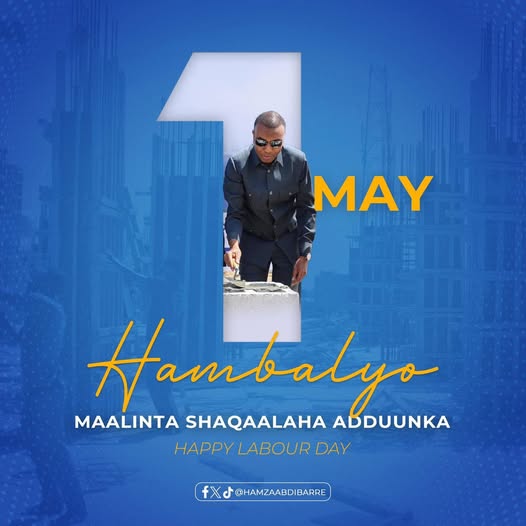
Dec 31 (Jowhar)-The Prime Minister of the Federal Republic of Somalia, Mr. Hamze Abdi Barre, today received in his office the Ambassador of the People’s Republic of China to Somalia, Mr. Wang Yu, and discussed ways to jointly address Israel’s blatant interference in the territorial sovereignty of the Republic of Somalia and defend the interests of the two countries based on security and political cooperation.

Thailand Frees 18 Cambodian Soldiers Held in Custody Since July

Thailand releases 18 Cambodian soldiers held since July
Cambodian soldiers, who had been captured by Thai soldiers in July, gesture to well-wishers from a bus after their release

When a Border Finally Quieted: Soldiers Returned, but a Fragile Peace Lingers

The morning the 18 Cambodian soldiers stepped across the checkpoint back toward Phnom Penh, there was an odd mix of relief and exhaustion writ across faces on both sides of the Thai-Cambodian frontier. After weeks of artillery duels, drone sorties and tank movements that had turned sleepy border hamlets into emptied shells, the small procession felt less like victory than a delicate stitch in a garment that has been coming apart for decades.

<p”Today, we returned 18 of our neighbors to their families,” said a Thai foreign ministry official in a low, almost hesitant voice. “The release is a demonstration of goodwill and a modest confidence-building step.” The phrasing was formal but the scene at the checkpoint was quietly human: uniforms swapped for hugs, hands wiping damp cheeks, old women bringing plates of rice cakes as if to feed away the trauma.

The Numbers Behind the Headlines

Official counts remain messy, but the scale of the human fallout is unmistakable. The renewed clashes earlier this month killed dozens, and aid agencies estimate that more than one million people were displaced from villages along the roughly 800-kilometre (about 500-mile) Thai-Cambodian border. Families fled with nothing but what they could carry—children, a few photos, a pot. Markets closed. Rice paddies grew quiet under a haze of uncertainty.

The truce, which has held for more than three days at the time of writing, includes promises to stop firing, halt troop movements and launch joint demining operations across disputed sections of the frontier. Leaders on both sides have also pledged to allow residents back into their homes as soon as security can be guaranteed.

Why the Fighting Flares Again

This is not a new story. The flashpoint is a colonial-era border demarcation that left lines on maps that communities have disputed for generations. Around the most contentious spots—ancient temple ruins that both sides claim as part of their cultural patrimony—soldiers have squared off for years. The site most often named in past disputes is the 11th-century Hindu temple Perched On Cliff—known internationally as Preah Vihear—and similar ruins dot the frontier, turning archaeology into geopolitics.

“These are not simply lines on a map,” said a Southeast Asia security analyst, Dr. Anan Chai. “They are the bones of identity for people on both sides. When leaders play up nationalism, local tensions can explode into very lethal encounters.”

Captured Soldiers, A Test of Trust

Cambodia says its troops were seized on 29 July—nearly eight hours after a ceasefire intended to halt a prior round of violence had taken effect. The prior truce had been brokered with help from international mediators, including delegations from the United States, China and Malaysia, who have periodically stepped in to cool this simmering conflict.

“We received word that our men were being handed over. There was no fanfare—just men stepping into custody and then walking home,” said a Cambodian provincial official, eyes tired but steady. “For many families, this is closure. But it is a fragile closure.”

International mediators had urged Thailand to release the soldiers as part of earlier agreements. Promises made in diplomatic communiqués are helpful, analysts say, but words must be backed by sustained action on the ground—particularly the removal of mines, which have maimed or killed troops and civilians alike.

Lives Disrupted: Stories from the Border

In a displaced persons camp beneath a strip of rusting corrugated iron, a woman named Sokha pinned a child’s drawing to a tarp wall and laughed briefly through tears. “We left with our baby and our chickens. We could not pick up the rice—there was gunfire,” she said. “The children ask when the quiet will come. How do I tell them?”

Nearby, a Thai rice farmer, Somchai, cradled an old bicycle as if it were a relic. “We’ve shared water and seeds across this river for generations,” he said. “Now a line on paper tells us to hate one another. It’s painful. We want the scholars to finish the border marking so we can return to ploughing.” His voice was flat with two months of fear and two centuries of history.

What Joint Demining Might Mean

One of the more tangible elements of the ceasefire is a pledge to cooperate on demining. Landmines are a slow, indiscriminate menace that linger long after guns fall silent. Clearing them will be costly, technical and time-consuming, but it is also something that directly protects civilians and could allow agriculture and trade to resume.

“Demining is practical confidence-building,” said Mei-Lin Tan, a humanitarian demining specialist who has worked across Southeast Asia. “It shows that both governments are willing to accept risk for the benefit of civilians. But the process must be transparent and involve local communities to have lasting impact.”

What Comes Next?

The truce is a necessary breathing space, not an endgame. Political leaders will have to negotiate the thornier question: how exactly to demarcate the border where maps and memories disagree. That process will test institutions, international goodwill and the patience of people who have already suffered a great deal.

Regional diplomacy will likely continue to involve outside powers—neighbors and global players who have an interest in stability in Southeast Asia. But for people under the tarps, in the ruined marketplaces, in the temple shadows, international delegations feel abstract. What they need most is safe return, livelihood recovery and guarantees that a child will not lose a leg to a forgotten mine.

“We do not want parades of diplomats here,” said a 62-year-old villager who gave his name only as Mr. Vann. “We want our rice fields back and our children to go to school without fear.”

Reflection: Borders, Identity and the Human Cost

Reading headlines from afar, it is easy to see this as another border scuffle—an arc on a map, another temporary truce. But walk these roads, listen to the laughter and worry in the camps, and the contours of the conflict change. It becomes a story of people bound to place, of temples that mean more than tourism brochures, and of maps that can take a lifetime to redraw.

Are we comfortable with conflicts that flare up because of century-old maps? How much global attention do we owe to places that don’t appear on prime-time broadcasts, even when a million people are displaced? The answer matters, not only to Bangkok and Phnom Penh, but to any nation where borders are both identity and instrument.

For now, the checkpoint where the soldiers crossed back home sits quiet. Children chase a battered football. An old radio plays a country song somewhere down the road. The truce holds, cautiously. The hard work—mapping, demining, reparations and real reconciliation—begins now.

RW Xamze oo Safiirka Shiinaha kala hadlay faragalinta Israel ee madax banaanida Soomaaliya

Dec 31(Jowhar)-Ra’iisul Wasaaraha Xukuumadda Jamhuuriyadda Federaalka Soomaaliya, Mudane Xamze Cabdi Barre, ayaa maanta xafiiskiisa ku qaabilay Danjiraha Jamhuuriyadda Dadka Shiinaha u qaabilsan Soomaaliya, Mudane Wang Yu, iyaga oo ka wada- hadlay sidii meel looga soo wada jeesan lahaa faragelinta qaawan ee Isra’iil ku qaaday madax-bannaanida dhuleed ee Jamhuuriyadda Soomaaliya iyo difaaca danaha labada dal ee ku dhisan iskaashiga amniga iyo siyaasadda.

Starmer to address Labour MPs amid Mandelson controversy

Starmer to brief Labour MPs amid growing Mandelson controversy

0
At the Whispers of Westminster: A Prime Minister on the Brink There are places in London where secrets gather like rainwater in the gutters —...
Maxwell to be questioned by US Congress in Epstein probe

Ghislaine Maxwell to Face U.S. Congressional Questioning Amid Epstein Probe

0
Rewrite the following news content into a completely original, vivid, and immersive blog post of at least 800 words, tailored for a global audience. Write...
Winter Olympics one of most 'geographically challenging'

Winter Olympics among most geographically demanding global sporting events

0
Warm Coffee, Cold Wheels: A Day on the Road to Milano-Cortina 2026 There are moments when a steaming cup of espresso feels less like a...
Meloni slams anti-Olympics protesters after Milan clashes

Meloni condemns anti-Olympics demonstrators after violent clashes in Milan

0
The Morning After: Milan’s Glitter, Its Frayed Edges Milan woke to a strange kind of hush — the kind that arrives after bright fireworks and...
Suspect in shooting of Russian general flown to Moscow

Suspect in Russian general’s shooting airlifted to Moscow for questioning

0
The Night a Shadow Crossed Moscow It was a cold, ordinary night on the Volokolamsk highway — the kind of stretch where headlights blur into...