

Feb 23(Jowhar)-Hogaamiyihii kooxda laga cabsado ee Jalisco New Generation (CJNG) ee ka ganacsata daroogada Nemesio Oseguera Cervantes ee dalka Mexico ayaa la dilay intii uu socday howlgal ay ciidamada amaanka ku doonayeen in lagu soo qabto.
Pakistan Launches Deadly Cross-Border Strikes Targeting Militants in Afghanistan
When the Dawn Became a Rubble: Airstrikes, Children and a Border That Won’t Stay Quiet
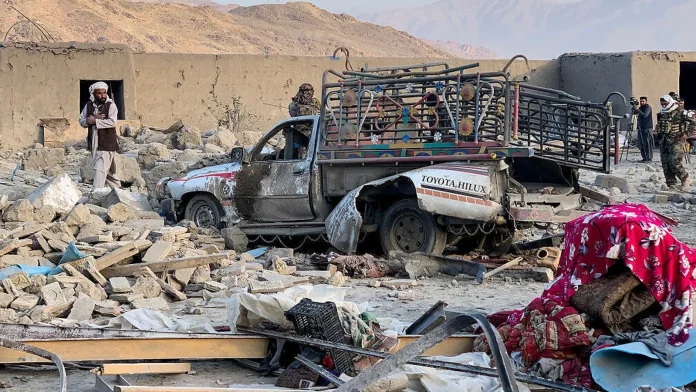
The sun rose on a scene that is becoming tragically familiar along the Afghanistan–Pakistan frontier: dust clouds, broken beams, and families who had only minutes earlier been getting ready for the day. In Bihsud district of Nangarhar province, a bulldozer clawed through the wreckage of a house while neighbours called names into the concrete, hoping against hope to hear an answer.
“We were inside. One minute the children were laughing, the next the whole house collapsed,” said a woman who gave her name as Mariam, her shawl still flecked with dust. “They are not soldiers. They are my sons and daughters.” Her voice broke as the machine heaved another slab of concrete aside.
What Happened — The Official Lines
Pakistan announced it had launched multiple overnight air strikes that it says targeted militant hideouts in Afghanistan. Islamabad’s Ministry of Information and Broadcasting said seven sites along the border were hit, aimed at the Pakistani Taliban and associated groups, including an affiliate of the so‑called Islamic State.
Afghan officials reported strikes in Nangarhar and Paktika provinces. Local sources in Bihsud told reporters that a house had been hit, killing 17 people, among them 12 children and teenagers. An AFP journalist at the scene described frantic rescue efforts and neighbours using heavy machinery to search for survivors under the rubble.
On social media, Zabihullah Mujahid, a spokesperson for the Afghan authorities, condemned the operation: “Pakistani generals try to compensate for their country’s security weaknesses through such crimes,” he wrote on X. The tone was bitter, an echo of the deeper diplomatic rupture between Kabul and Islamabad since 2021.
Casualties, Context and Competing Claims
The strikes were framed by Pakistan as retaliation for a string of suicide bombings on Pakistani soil, including a devastating attack at a Shia mosque in Islamabad that killed at least 40 people and wounded more than 160 — the deadliest assault on the capital since 2008. The Islamic State’s regional affiliate claimed responsibility for that mosque bombing.
Islamabad has also pointed to other recent attacks in northwest Pakistan as part of the justification for cross‑border strikes. Pakistani officials say they have repeatedly urged Afghanistan’s new authorities to act against groups using Afghan territory as a base, and now, they say, they have taken matters into their own hands.
For Kabul, the narrative is different: these strikes violate Afghan sovereignty and primarily harm civilians. “Our people suffer when tensions turn into explosions,” said Dr. Noorullah, a physician at a clinic in Jalalabad. “Children die, schools close, and families disappear.”
Numbers that Tell a Story
- Reported deaths in this incident: at least 17, including 12 children and teenagers (local Afghan security source).
- Previous border clashes in October left more than 70 people dead on both sides and wounded hundreds.
- Mosque suicide bombing in Islamabad: at least 40 killed, over 160 wounded — claimed by Islamic State affiliate.
- Pakistan says it struck seven sites across Nangarhar and Paktika provinces.
On the Ground: Grief, Anger, and Quiet Resolve
Travel through these frontier districts and certain things mark themselves on your senses: the smell of strong tea at roadside stalls, the small iron coffee‑pots, men who measure distance in minutes rather than kilometres, and a resilience so practical it can seem almost stoic. Yet after the strikes, that stoicism split into raw grief.
“We are used to hearing gunfire. We are not used to seeing our children under the stones,” said Haji Khan, a schoolteacher who had come to help pull bodies from the wreckage. Beside him, a teacher’s satchel lay abandoned, a small chalkboard dusted with fine grey grit.
Local elders convened under a poplar tree to decide how to bury the dead, to make space for a funeral in a town where funerals have become too frequent. “When will this end?” one elder asked, looking at the horizon where border ridges meet the sky. “Do the people on the other side not have children?”
Diplomacy on the Brink: Failed Talks and Fragile Ceasefires
The latest strikes come after months of uneasy relations. The bloodiest confrontation in recent memory was last October when border fighting killed more than 70 people overall. That episode ended with a ceasefire brokered by Qatar and Turkey, but subsequent talks in Doha and Istanbul failed to yield a durable solution.
Analysts say the problem is structural. “You cannot resolve a border security problem by airstrikes alone,” explained Miriam Habib, an independent conflict analyst focusing on South Asia. “There are layers here: cross‑border militant networks, local grievances, competition between regional powers, and an Afghan state (however it is structured) that itself is still consolidating authority.”
What’s Really at Stake?
- Sovereignty vs. security: Pakistan frames action as self‑defence; Afghanistan says it’s an infringement on its territorial integrity.
- Civilian protection: When strikes happen in populated border areas, the fallout is often non‑combatant deaths, displacement, and long-term trauma.
- Regional stability: Escalation risks dragging in mediators and neighbors, complicating already tense relations between Islamabad, Kabul, and Tehran, with Turkey and Qatar playing diplomatic roles.
Beyond the Headlines: What This Means for Ordinary People
Numbers and press releases fail to capture the slow unravelling of normal life. Children who survive such strikes carry invisible wounds; schools close or shift hours; markets shrink because people are too afraid to travel. Aid agencies warn that repeated cross‑border violence will worsen an already dire humanitarian picture in eastern Afghanistan, where infrastructure is thin and winter months are unforgiving.
“Two things keep me up — the sound of explosions and the thought that there may be no one left to inherit this valley,” said a farmer named Qader, watching his goats pick over flattened wheat stubble. “Is not peace cheaper than a hundred funerals?”
Questions to Carry With You
As you read this from wherever you are — a city apartment, a university dorm, a seaside town — ask yourself: what responsibility do distant states have when their security measures spill over borders? How should the international community balance a country’s right to defend itself with the imperative to protect civilians? And perhaps most urgently: what mechanisms exist for credible investigation and accountability when children lie dead beneath rubble?
Closing Scene: The Long Haul
Negotiations will likely resume in diplomatic durbars and hotel conference rooms. There will be statements, condemnations, and perhaps another fragile ceasefire. Meanwhile, in Bihsud, people will bury their dead, fix a roof where a missile fell, and attempt to coax seedlings into the cracked earth. That is the stubborn, sometimes heroic, work of ordinary life under extraordinary strain.
For now, the border remains a bruise on the map — red, swollen, and tender. How we respond to those kinds of wounds is a measure of our shared humanity.
Danish minister insists Greenland does not need U.S. hospital ship
Hospital ships, hot takes and Arctic politics: Greenland in the eye of a media storm
There is a funny, almost cinematic contrast at the heart of this story: a sparsely populated island of ice and moss, dotted with small towns where everyone knows one another, and the high-decibel politics of superpowers trading grand gestures across the Atlantic. On one side, Nuuk — compact, bracing, and stubbornly rooted in its Inuit traditions. On the other, a social-media proclamation that a foreign power is dispatching a “great hospital boat” to care for a population that, locals and their government insist, already has comprehensive healthcare.
The statement — breathless, public, dramatic — landed with the subtlety of a foghorn. It prompted raised eyebrows in Copenhagen, polite bemusement in Nuuk, and an inevitable flurry of commentary across NATO briefing rooms. But beneath the spectacle lie real questions about sovereignty, dignity, and who gets to decide what a remote community needs.
“We do not need showboats” — the official line from Copenhagen
Denmark’s Defence Minister offered a crisp rebuttal that felt like a hand on Greenland’s shoulder. “Greenlanders receive the healthcare they need,” Troels Lund Poulsen told Danish broadcasters. “When something cannot be treated here, it is treated in Denmark. There is no vacuum to be filled by a foreign hospital ship.”
That statement reflects a practical truth. Greenland, an autonomous territory within the Kingdom of Denmark, provides free healthcare through its public system. The island has five regional hospitals — with the National Hospital in Nuuk serving as the primary referral center for complex cases — and agreements are in place for patients to be flown to Denmark when specialised medical services are required.
“People in Nuuk might laugh at the idea of a foreign flotilla arriving with bandages and fanfare,” said Aaja, a nurse at the Nuuk hospital who has worked there for a decade. “What we need is steady funding, proper equipment, and respect for the way our communities live. Not a photo op.”
Scenes from Nuuk: everyday life and quieter urgencies
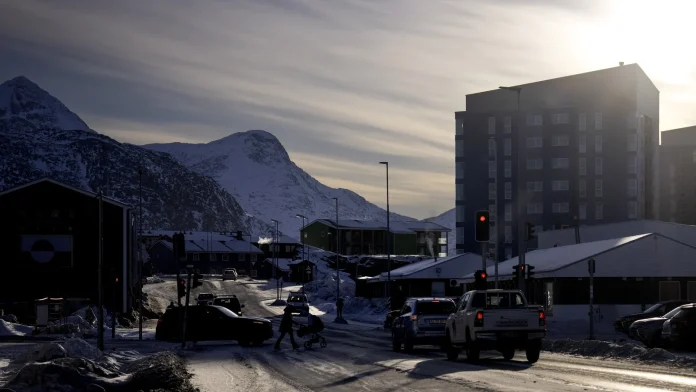
Walk the harbor in the late afternoon and you hear a different rhythm: the slap of boat ropes on wood, elders speaking Kalaallisut, teenagers on bikes, and the soft engine hum of supply launches heading out to fjord settlements. Healthcare here is intimate in a way metropolitan systems rarely are. A general practitioner might know the family history of half their caseload; long winters and remote settlements shape expectations and the delivery of care.
“We send people south when needed,” said Henrik, a hunter and community elder from Sisimiut, as he peeled a fish on his porch. “Denmark has specialists. We have our own doctors. We do not need governors from afar arriving with cameras.”
Still, challenges remain. Greenland’s population — roughly 56,000 souls spread across an area twice the size of Texas (about 2.16 million square kilometers) — faces logistical hurdles: bad weather, long transfer times, and the expense of medevacs. These are real pressures that require pragmatic solutions rather than headline-driven interventions.
From a Tweet to diplomatic ripples
The announcement of a hospital ship came with a particular crescendo — a post on social media asserting the vessel was “on the way.” It was neither the first nor the strangest time Greenland has been cast into the center of geopolitical talk: in 2019, voices floated the idea that the US should acquire Greenland — a suggestion met with bemusement and strong rebuffs.
“Statements like this are part of an evolving normal,” a Danish foreign policy analyst observed. “They reflect a merging of showmanship and strategy. But for Greenlanders the most pressing issues are local: health services, housing, employment, and the effects of climate change.”
Within days, the story took a quieter turn. Denmark’s Arctic Command reported the evacuation of a crew member from a US submarine off Nuuk’s coast after the sailor requested urgent medical attention — a reminder that military activity in Greenland’s waters is an ongoing reality, with real people and real emergencies.
What Greenlanders actually want
Across the towns, a common refrain emerges: respect for local institutions and a say in decisions that affect daily life. In early February, Greenland’s government and Copenhagen signed an agreement intended to smooth the path for patients who need treatment in Danish hospitals — a modest, technical piece of cooperation that matters practically for families awaiting surgery or specialist diagnostics.
“We want partnerships, not paternalism,” said Dr. Ingrid Olsen, an Arctic health policy researcher. “Capacity-building, telemedicine investments, reliable medevac protocols — these are the kinds of interventions that improve lives. The optics of a foreign hospital ship won’t touch the structural gaps.”
Facts to keep in mind
- Population: roughly 56,000 people, concentrated in coastal towns.
- Area: about 2.16 million square kilometers, making Greenland the world’s largest island.
- Healthcare infrastructure: five regional hospitals; Nuuk houses the main referral center.
- Political status: autonomous territory within the Kingdom of Denmark, with expanded self-rule granted in 2009.
- Strategic presence: the US has long-standing military interests in Greenland, exemplified by Thule Air Base in the north and ongoing Arctic security concerns.
Why the fuss about Greenland keeps resurfacing
It is too easy to dismiss these flare-ups as mere headline bait. The Arctic is warming faster than the global average, revealing new sea lanes, potential resource deposits, and renewed military interest from major powers. Those are broad, structural trends that will keep Greenland relevant on the global stage.
But the lens through which Greenland is viewed matters. Is it a pawn in geopolitical maneuvering, or a community with its own voice, priorities, and rights? The answer should be obvious, yet the temptation to treat this vast land as a stage for grand gestures persists.
Lessons for a connected world
There is a lesson here beyond Greenland’s icy shores. In an era where announcements can fly across platforms faster than ships can sail, good policy requires patience, local consultation, and technical competence. It also demands humility: the conviction that dramatic public relations cannot substitute for sustained investment and respect.
Ask yourself: when a faraway leader offers aid, how do we tell the difference between genuine help and self-serving theater? How can nations balance strategic interests with the autonomy and dignity of remote communities? These are not rhetorical questions. They are the questions that will shape the Arctic’s future.
Closing—listening more than showboats
For now, Greenlanders will keep living their layered lives: hunting and studying, raising children, maintaining hospitals and schoolrooms, and negotiating relationships with larger powers. They will take hand-me-down medical equipment where needed, send a neighbor to Denmark for a specialist appointment, and attend the ceremonial visits from Copenhagen with a knowing smile.
“We welcome help when it’s asked for,” Aaja the nurse said, folding a bandage with practiced fingers. “But don’t confuse noise for assistance. Real care is quiet and steady. It shows up on time, with the right tools, and leaves the people it serves a little stronger.”
In the end, perhaps the most pressing imperative is simple: listen. Let policy be shaped by the people who live on the land, not by the people who merely announce their plans from afar.
Iran Readies Counterproposal as U.S. Weighs Possible Military Strikes
At the Brink: A City Waiting and the World Holding Its Breath
Tehran wakes to the same rhythms it always has — the shrill vendor calls in the bazaar, the hiss of tea poured into tiny glass cups, the soft thud of shoes on carpeted stairways — but there is an undercurrent of waiting now, a tautness that hums under everyday life.
“We are teaching our children to be quiet at night,” said Leyla, a carpet seller in the Grand Bazaar, pausing between customers to fold a faded rug. “Not because the world has changed what it sells, but because people listen differently when guns and talk of strikes are in the air.”
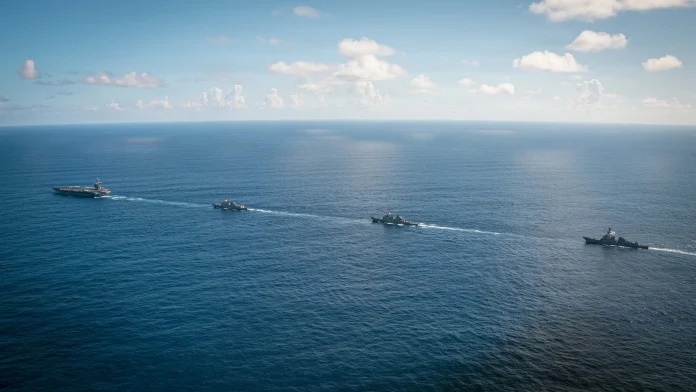
Across continents, officials and soldiers have been moving pieces on maps as if summoning the future into being. Diplomatic exchanges in Geneva left both sides claiming modest progress — and a fragile, precarious pause. At the same time, public rhetoric hardened in Washington: deadlines, threats of limited strikes, and talk — reported by several Western outlets — that U.S. military planning had reached an advanced stage, including options that would strike individuals or even aim to unsettle Tehran’s leadership if a political decision were made.
Diplomacy in the Shadow of Force
In neutral meeting rooms in Geneva this week, Iran and American envoys did not sit across the table directly; they moved proposals through intermediaries, technical papers and a shared desire to avoid total collapse. Tehran’s foreign ministry — speaking through a senior official — said a draft counterproposal could be ready within days. That paper, it was explained, would outline ways to assure the world that Iran’s nuclear program would remain peaceful, while seeking relief from crippling sanctions.
“We have been very clear about our aim,” the Iranian official said. “This is about coexistence: the right to a civilian nuclear programme, and guarantees that it will never become a weapon. That’s what a reasonable people expect from their government and what the world should expect from us.”
But the same week, President Donald Trump publicly offered Tehran a short window — “ten to fifteen days,” as he put it in an Oval Office briefing — to clinch a deal or face “really bad things.” Later, pressed about the option of a limited strike, he said he was considering it. That kind of brinkmanship, analysts warn, complicates negotiations by raising the stakes on both sides.
“You cannot simultaneously wave the olive branch and the sword,” said Dr. Miriam Alvarez, a former diplomat turned senior fellow at an international security think-tank in London. “Armed pressure can bring a partner to the table, yes, but it also hardens resolve, creates fear, and makes any diplomatic gains brittle. Trust — not just written text — is the currency of agreements.”
What Was Said — and What Wasn’t
Those Geneva conversations, according to participants, did land on a set of “guiding principles” — broad strokes outlining mutual aims — but did not produce a final agreement. On technical matters, both sides reportedly left the more contentious issues, such as enrichment levels and verification regimes, open for further negotiation. U.N. officials, echoing growing alarm across capitals, urged restraint and a return to sustained diplomacy.
“The world cannot afford another military escalation in the Middle East,” said a U.N. spokesperson at a daily briefing. “We encourage both parties to continue engagement, reduce rhetoric, and avoid steps that could lead to miscalculation.”
The Human Toll: Numbers, Stories, and Disputes
Talking of geopolitics without talking about people flattens the story. In Tehran and beyond, the human cost of recent unrest remains bitterly contested. Iran’s government has published a list it says includes 3,117 people killed during waves of protest and unrest. Independent monitors — including HRANA, a U.S.-based rights group — say their verified count stands substantially higher: 7,114 deaths, with another 11,700 cases under review.
“Numbers are a form of evidence; they are also a claim on our conscience,” said Soraya Rahmani, a human rights researcher who has tracked the unrest from abroad. “The discrepancy is not just academic. It shapes who is believed, who is held accountable, and how the international community judges the situation.”
For families here, the numbers translate into empty rooms and altered futures. “My brother used to sit at the kitchen table and joke about the national football team,” said Reza, a bus driver in northern Tehran whose sibling was killed during clashes. “Now my mother keeps his scarf in a drawer. She says it smells like him.”
Local Rhythms: Life Between Anxiety and Normalcy
In the neighborhoods surrounding the university, students argue over politics and poetry in cafés clouded by the scent of cardamom coffee. Mothers in the markets swap recipes and, in softer tones, swap worries about curfews and the economy. The city’s ancient fabric — its mosaics, its saffron-sweetened pastries, the stooped tea vendors who refill cups as if refilling spirits — continues to hold daily life together.
“You can see how people get used to fear,” said Leila Hosseini, a schoolteacher of twenty years. “They speak in parentheses, they put their sadness in small boxes. But they still make Nowruz sweets; they still dream about the sea. That is how a people survive.”
Choices Ahead and the Global Stakes
The coming days will be decisive, not only for Iran and the United States but for regional stability and the architecture of non-proliferation. If Tehran presents a counterproposal and the U.S. responds in kind, there is a narrow corridor for a diplomatic breakthrough that could ease sanctions and curb nuclear risks. If military options are pursued, even limited strikes risk igniting broader confrontations — not only military but also economic, cyber, and proxy-driven.
“We are in an international moment where miscalculation scales,” said Colonel James Anders, a retired military planner now advising a civilian security institute in Washington. “Options on paper look neat; in reality, they generate ripples. Those ripples affect tanker routes, stock markets, refugee flows, and the lives of people who have nothing to do with the decisions made in command centers.”
So what should the global observer ask of these actors? Can states reconcile sovereign security concerns with the human imperative to prevent war? How can accountability for alleged abuses be pursued without weaponizing those claims into pretexts for attack?
How This Might Unfold
- A fast diplomatic track: Tehran submits a written counterproposal, mediators shuttle between capitals, and sanctions-relief confidence-building measures are negotiated. This route would require political will, verification mechanisms, and careful sequencing.
- A hardened standoff: Rhetoric escalates, military posturing continues, and diplomatic trust frays — increasing the risk of miscalculation or limited strikes that could widen into broader conflict.
- A messy middle: Intermittent talks and periodic skirmishes in cyberspace or with proxy groups keep tensions simmering, affecting markets and civilians without ever resolving the core dispute.
A Final Thought
Walking back through the bazaar at dusk, a young shopkeeper named Navid summed up what many I spoke to shared: “We are tired of being headlines,” he said, lighting a cigarette and watching the city’s street lamps glow like scattered stars. “We want to make carpets, to teach our children, to open the doors of our shops in peace. If the powerful make a deal, let it be not for show but to let us live our small lives without fear.”
How will the urgent chess match between words, drafts, and war plans end? The answer will be written not only in diplomatic communiqués but in the quieter ledger of lives: markets reopened, families at tables, numbers reconciled — or not. The next days may decide which ledger the world will inherit.
Heightened security during march supporting French far-right activist
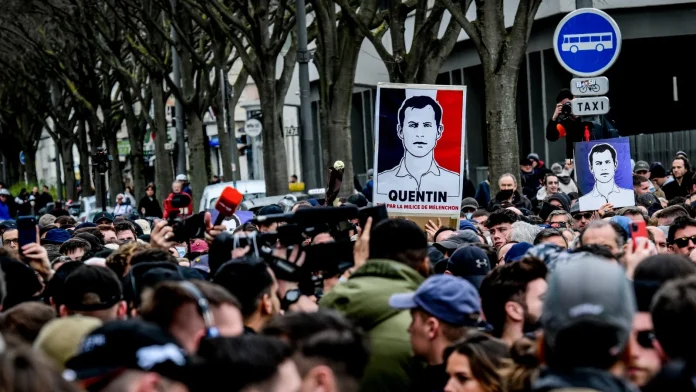
A City in Black and White: Lyon’s March That Felt Like a Pressure Test for France
The morning air in Lyon had a cool, metallic hush to it — the kind that makes every footstep sound louder than it should. Along the boulevard where the march began, people gathered in small knots: some clasping bouquets, others holding placards with grainy portraits taped to thick card. Many were dressed in black; a few pulled scarves up over their mouths against the chill and the glare of cameras. Above them, whirring discreetly, drones traced patient circles like surveillance birds.
What unfolded that day was part memorial, part demonstration, and part combustible public theatre. Thousands moved slowly through the city — not a festive parade but a procession heavy with grievance and warning. The faces in the crowd were varied: teenage boys with cropped hair, men and women in their fifties with church rosaries dangling from their fingers, a cluster of university students with austere, homemade banners. Their chants were measured and mournful rather than triumphant. “For Quentin,” someone cried. “Justice,” answered another voice, thinner and more desperate.
The Body Count of a Political Moment
The gathering was organized in the wake of the death of Quentin Deranque, a 23-year-old activist whose fatal injuries were sustained during violent clashes between radical left and far-right groups at a political rally. Authorities say six people have been charged in relation to the assault; a parliamentary aide to a far-left MP also faces charges of complicity. Those facts alone would make the case headline-grabbing. But the death has tapped a deeper nerve.
“This isn’t just about one person,” said Marianne Leclerc, a sociologist who studies political movements in France. “It is a symptom of how low the threshold has fallen for political violence. We’re seeing a normalization of confrontation that used to be confined to the margins.”
And with a presidential election on the horizon — France will head to the polls in 2027, with Emmanuel Macron unable to run again after two terms — the anger and the optics are being read as a harbinger: a test of how the state manages the collision of organized extremes and how public space can be kept safe for democratic expression.
Security, Drones and a State Trying to Walk a Tightrope
By most measures, the state prepared for the worst. Gendarmes and riot police ringed the route. Drones hovered above in a buzzing fog, streaming images back to command vans parked at the edges of the crowd. Street cameras were switched on. Government officials stressed that the priority was preventing further violence and preserving public order.
“We are here to safeguard peaceful mourning and to prevent any drift into vigilantism,” an interior ministry spokesperson told me, glancing at the line of officers like someone checking a fragile seam. “But we also have to respect the right of people to gather. That balance is not easy.”
President Macron urged calm in a televised message hours earlier, warning against vigilantism and pledging a government review of violent extremist groups. “In the Republic, violence must not be a way to resolve politics,” his office said, echoing a familiar refrain about the rule of law. Yet the words landed differently depending on where you stood in Lyon: reassuring to some; insufficient to others.
Religion, Ritual and Radical Memory
Before the march began, mourners moved through the old stone nave of the church Quentin was said to have frequented. Candles flickered on the windowsill. A portrait of him was draped from the façade of the regional administrative building — a small, defiant insistence that his life be seen.
“He found himself in that community,” said Laurent, a friend who stood near the altar and spoke quietly. “That’s where he felt most at peace — religion, tradition. We’re not here to inflame, we’re here to remember.”
Yet memory in public spaces is a fragile thing. A local organiser, a former campaigner known for her anti-abortion activism, implored the crowd to keep the tribute peaceful while also taking a swipe at political figures she felt had abdicated leadership by refusing to attend: “If you stand with us only in words, you stand with nothing,” she said.
Neighbors Board Up Windows and Whisper Warnings
On streets a few blocks from the route, the city’s quieter rhythms looked decidedly defensive. Apartment ground-floor windows were boarded. Cafés that usually spill tables onto the pavement had folded up and pulled in their chairs. An 82-year-old woman named Madame Moreau sat on the stoop of her building with a muffled expression and a thermos of coffee. She had lived through periods of unrest before, she said, but something about this felt different — more organized, and therefore more dangerous.
“I don’t want to be in the way of two sides who no longer speak to each other,” she said. “They shout and someone gets hurt.”
Voices from the Crowd: Angry, Sad, Resolute
Not everyone at the march shared the same political calculus. Some spoke of loss and the need for accountability. Others arrived with a broader agenda: a pushback against what they saw as left-wing violence, a rehearsal for a more muscular vision of politics.
“We aren’t here to start fights,” said Jérôme, a 30-year-old tradesman, gripping a bouquet of white lilies. “But we can’t pretend that there aren’t groups out there who think they can do as they please because they wear ideology like armor.”
Across the way, a university student named Léa — who had taped a printed quote about democracy to her sleeve — lamented the spectacle’s effect on public life. “When every disagreement turns into a battle, we lose spaces for conversation. Where do we learn to listen?” she asked.
Ripples Beyond Lyon
France is not alone in these struggles. Across Europe and beyond, democratic nations have grappled with the rise of hardline movements on both ends of the political spectrum, the amplification of grievance-by-viral-post, and the permeable boundary between protest and physical confrontation. Analysts point to social media’s role in quickly mobilizing groups and broadcasting spectacles that can radicalize audiences far from the original flashpoint.
“We are watching how online networks act as incubators,” Leclerc said. “They take local stories and turn them into transnational calls to action.”
What Comes Next?
For the Deranque family, the political grammar is secondary to personal grief. Their lawyer has asked mourners and media to respect their privacy; they declined to attend the march, seeking a quieter path through sorrow. For the state, the challenge is to investigate the killing, prosecute where appropriate, and — crucially — head off reprisals.
And for the rest of us, Lyon’s procession raises uncomfortable questions: How do democracies defend themselves against internal violence without curtailing civil liberties? How do communities rebuild trust when the air itself feels divided?
Next week, the government has promised a meeting to discuss “violent action groups.” It will be one technical response; but technical solutions alone rarely change the social weather that produces violence. That requires conversation, education, and spaces where disagreement can remain verbal and not physical.
As the sun slid behind Lyon’s rooftops and the crowds dispersed, a stray candle from the church guttered and went out, then was relit by someone passing by. It was a small gesture — private, stubborn — and perhaps the most apt image of a city trying to hold brightness in a hard, uncertain time.
What would you do if you lived here, in a city divided between mourners and militants, memory and mobilization? How should societies balance freedom and safety when both feel fragile? Think about it — and then, if you can, speak to someone whose view is not your own. It’s a start.
Nin doonayay inuu weeraro guri uu leeyahay Trump oo la diley
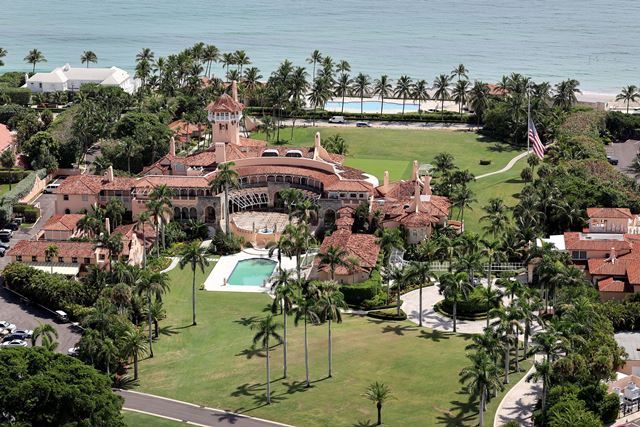
Feb 22(Jowhar)-Waaxda sirdoonka Maraykanka ayaa sheegtay in ay ciidamadooda dileen nin doonayay inuu gudaha u soo galo guriga uu ku leeyahay madaxweynaha Maraykanka goobta loo dalxiis tago ee Mar-a-Lago ee Florida.
Israeli Airstrikes Kill Eight Hezbollah Operatives, Government Official Confirms
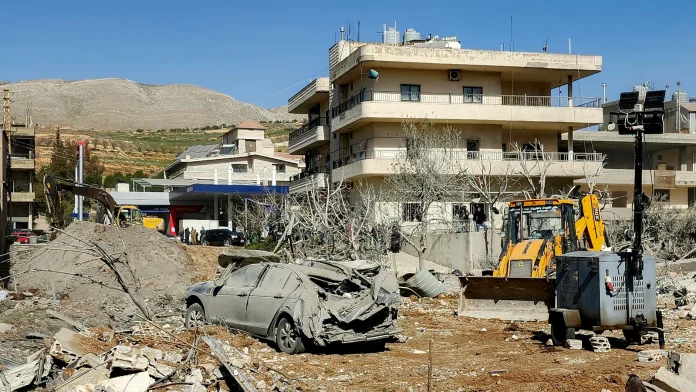
Smoke Over the Bekaa: A Valley of Olive Trees, Meetings, and Missiles
There is a peculiar hush that follows the boom of an airstrike in eastern Lebanon — a silence that is at once heavy with dust and thick with questions. In the early hours after an Israeli strike flattened part of a building between Riyak and Ali al-Nahri, villagers in the Bekaa Valley stepped out into a smeared dawn and found their ordinary lives interrupted by the extraordinary: charred concrete, the smell of diesel, and men who used to be counted among the region’s shadows now reduced to statistics.
Hezbollah spokespeople say eight members of the group were killed during a meeting in the eastern Bekaa. Lebanon’s health ministry tallied a broader human toll: ten people killed in the east and two in the south — numbers that include both fighters and, as neighbors insist, civilians. The Israeli military said its strikes hit “several terrorists of Hezbollah’s missile array in three different command centres in the Baalbek area,” a terse formulation that did little to quiet the neighbors’ grief.
On the Ground: What People Saw
A bulldozer operated slowly, like a reluctant hand trying to erase a bruise. An AFP correspondent who later walked the site described debris-strewn streets and a heavily damaged four-story building — once home to families, now a jagged reminder of how quickly ordinary places can become strategic targets.
“I was in the shop when the wall fell. My wife is still inside,” said Karim, a shopkeeper from nearby Bednayel, his voice breaking between cigarette puffs. “They tell us these men were fighters. How are we supposed to know? We bury whoever is here. All we know are families and names.”
The strike also came hours after an attack on Lebanon’s largest Palestinian refugee camp in the south, where the health ministry reported two deaths. Hamas, the group Israel said it had targeted there, condemned the strike and said the building hit belonged to forces tasked with maintaining security inside the camp.
Politics in a Valleyscape: Disarmament, Diplomacy, and Distrust
The strike did not occur in a vacuum. Lebanon’s government has publicly committed to a plan to disarm Hezbollah in the country’s south; the army says it completed the first phase near the border and is preparing to launch a second. The deeper question running through the region’s conversations is whether a sovereign state can reassert control over armed groups that have both political and social roots in their communities.
“We will not accept authorities acting as mere political analysts while our people are being targeted,” said Rami Abu Hamdan, a Hezbollah lawmaker. “Suspend committee meetings until the enemy ceases its attacks.”
Lebanon’s President Joseph Aoun called the raids “a blatant act of aggression aimed at thwarting diplomatic efforts,” speaking specifically of ongoing multinational attempts — including the United States on a five-member committee — to solidify a ceasefire signed in November 2024. Those efforts will be tested anew when the committee reconvenes next week.
Regional Ripples and Global Stakes
This is not just a local quarrel. The strikes took place against the backdrop of escalating tensions between the United States and Iran, with the US warning of possible military options over Tehran’s nuclear ambitions. Iran’s network of regional partners — from Hezbollah in Lebanon to Hamas in Gaza — gives any skirmish here the capacity to ignite wider conflagrations.
“Proxy dynamics have turned towns and valleys into chessboards,” said Dr. Lena Markari, a Beirut-based conflict analyst. “What makes this dangerous is that decisions in Tehran, Jerusalem, and Washington cascade down into villages where farmers plant grapes in spring and harvest olives in autumn.”
Consider the numbers that remind us the clash has everyday consequences: the November 2024 ceasefire ended more than a year of open fighting between Hezbollah and Israel, yet strikes continue. The health ministry’s tally of the dead yesterday — a dozen in two regions — is a small but vivid punctuation mark in a longer sentence about displacement, trauma, and a fraying state authority.
Lives Caught Between Orders and Allegiances
In the Bekaa, identity is a tapestry of loyalties: family, sect, political movements, survival. The valley itself sits like a natural amphitheater, its wheat fields and vineyards hearing more politics than harvest songs in recent years.
Astha, a schoolteacher in Bednayel, described the quiet panic before dawn. “Children asked if the sound was thunder. They are seven and eight and can no longer tell the difference between thunder and fear. We teach them math and history, but what they learn when buildings fall is something else entirely.”
She added, “The talk is not only about Hezbollah or Israel. The talk is about whether the state can protect us, whether the economy can sustain us, whether the ceasefire is a paper promise.”
Why This Matters to the World
Ask yourself: why should a strike in a valley far from Western capitals command headlines? Because this geography is a lived nexus of broader global issues — the limits of nation-state control, the role of non-state armed groups anchored in local communities, and the way great power politics trickle down into everyday suffering.
Nearly two decades into an era defined by regional proxies and asymmetric warfare, the Bekaa Valley incident highlights how local grievances and international rivalries are braided together. The outcome of Lebanon’s internal disarmament plan has implications not only for its sovereignty but for broader regional stability: if armed groups are allowed safe harbor within state borders, the risk of proxy escalation rises; if the state pushes too aggressively, it risks alienating portions of its population and inciting new cycles of violence.
What Comes Next?
On the immediate calendar: the multinational ceasefire committee meets in days. Diplomats and military planners will parse whether yesterday’s strikes are tactical operations against missile infrastructure or strategic moves meant to pressure Lebanon—and by extension Iran—politically.
On the longer horizon: Lebanon faces a painful choice about disarmament and national unity, while regional actors weigh the costs of further escalation. The human calculus — the families who mourn in Bednayel and the children who watch classrooms empty — will continue to be the most consequential metric.
“We want peace, but not at the price of forgetting who we are,” said an older woman who lost a neighbor in the strike. “We have graves to tend and bread to bake. The rest is noise.”
Final Thought
So where do you stand, reader? On what edge of the valley does your compass point — toward sovereignty, toward security, toward a ceasefire that sticks? Every conflict asks us this, and the answer matters beyond any single headline. In the dust after the strikes, the question remains: can a society rebuild both its houses and its trust?
Shirkii Golaha Mustaqbalka iyo Dowladda oo kusoo dhamaaday natiijo la’aan
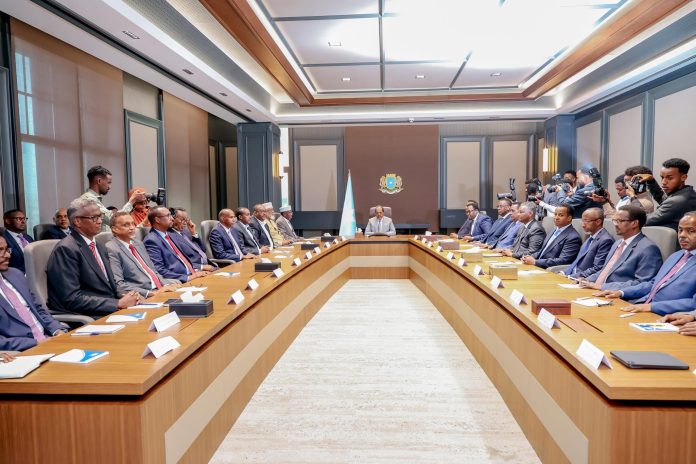
Feb 22(Jowhar)-Shirkii ka socday Villa Soomaaliya ayaa goordhow la soo gaba-gabeeyay iyadoo aan wax heshiis ah laga gaarin qodobadii laga doodayay.
Trump raises U.S. import tariff to 15% for all trading partners
A Jar of Pickles, a Port, and a Courtroom: How One Ruling Ripples Across Kitchens and Capital
On a humid morning in suburban Chicago, Maria Alvarez hesitated in front of a row of pickles. She’d come for a simple jar to top her son’s sandwich, but the price tag made her blink. “It used to be $3.29,” she muttered, tucking an invoice from last month into her purse. “Now I’m paying more for things I’ve always taken for granted.”
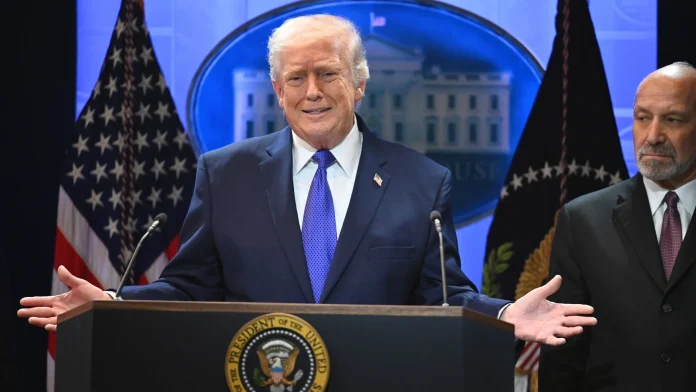
By midafternoon the conversation had migrated – from grocery aisles to press rooms, from chattering kitchen tables to the marble steps of the Supreme Court. In a 6–3 decision, the justices concluded the president had overstepped his authority when he used emergency powers to impose a sweeping slate of tariffs. Less than a day after the ruling, President Donald Trump announced a 10% global levy as a stopgap. Then, in a sudden escalation, he raised that temporary tariff to 15% — the maximum permitted under a little-used legal tool called Section 122.
What Section 122 Is — and Why It Matters
Section 122 is obscure in the annals of trade law. It allows the president to impose import duties of up to 15% for national security or other specified reasons, but it comes with a catch: after 150 days those tariffs need congressional sign-off to remain in place. No president has previously invoked this precise mechanism at scale, which is why lawyers, trade experts and lawmakers describe the move as legally novel — and potentially litigated again.
“It’s a legal Hail Mary,” said one trade analyst in Washington who asked not to be named. “The administration is cleaving to a statutory lane that hasn’t been driven down before. Expect courtrooms and Capitol Hill to remain very busy.”
Money, Politics, and the People Who Pay
The arithmetic here matters — and it is not abstract. The tariffs announced last year have already pulled in more than $130 billion, according to White House figures released when the duties were first rolled out. That money doesn’t disappear quietly: retailers, importers and freight companies say much of the cost is passed downstream to consumers.
How much did households pay? Estimates vary. A Yale-affiliated study cited by Illinois Governor JB Pritzker suggested an average hit of about $1,700 per household last year; the Penn-Wharton Budget Model has estimated potential refund liabilities as high as $175 billion if the government were required to repay collected duties. These are heavy numbers in an era when many families are still licking pandemic-era financial scars.
“We are talking about real pressure on budgets,” said Dr. Renee Cho, an economist who studies household consumption. “Even small percentage increases on imports can amplify in grocery bills, building materials and the cost of manufactured goods.”
Governors, Refunds, and a Furious Chorus
Angry governors didn’t wait for slow-moving machinery in Washington. Governor JB Pritzker of Illinois sent an invoice to the White House demanding nearly $9 billion in refunds — roughly $1,700 per household in his state — calling it a necessary antidote to what he described as tariff-driven pain for families and farmers.
California Governor Gavin Newsom, whose state has some of the nation’s most complex supply chains, also demanded “every dollar” be refunded. In a fiery public statement he called the duties “an illegal cash grab” that had driven up the cost of living for ordinary Californians.
“We have constituents who had to choose between prescriptions and groceries,” said a community organizer in Fresno. “That’s not politics for the privileged — that’s survival for our neighbors.”
From Pharmacies to Ports: Exemptions and Uncertainties
The White House said some exemptions remain in place — notably for pharmaceutical goods and items entering under the US-Mexico-Canada Agreement (USMCA). Yet those carve-outs add another layer of administrative complexity at ports and distribution centers, where importers now face shifting customs rules and the possibility of retroactive refunds.
“Logistics teams hate volatility,” observed a port manager at the Port of Los Angeles. “When the rules flip overnight, you see a domino effect: scheduling headaches, demurrage charges, delayed shipments. Small businesses get squeezed the hardest.”
The Political Chessboard: Congress, Courts and the Ballot Box
Even with Section 122 invoked, the tariffs have a 150-day shelf life unless Congress votes to extend them. Many trade experts and congressional aides are skeptical that a Republican-led Congress will rush to extend a policy increasingly unpopular with Americans who blame tariffs for rising prices. Polling — both public and private — has pointed to rising frustration among voters who feel the pinch at the marketplace.
“This is where law, politics and economics collide,” said an aide to a senior senator. “Leaders must weigh the rhetoric of ‘protecting American jobs’ against the immediate suffering of constituents paying higher prices.”
At the same time, the president struck a defiant tone on Truth Social. “This decision is ridiculous, poorly written, and extraordinarily anti-American,” he wrote, then moved quickly to set the tariff at the full 15% permitted — saying it would take effect immediately while the administration “determines and issues the new and legally permissible Tariffs.”
A Larger Story: Power, Trade and the Everyday
Beyond legal briefs and balance sheets, there’s a human story unfolding: shopkeepers, farmers, truck drivers, small manufacturers — all trying to plan around policies that can flip with a court ruling or an executive tweet. The episode shines a light on several larger currents: the fragility of globalized supply chains, the resurgence of tariffs as a political tool, and the perennial question of who pays when governments use trade policy to wield leverage.
Ask yourself: when governments use tariffs as instruments of diplomacy or domestic politics, who should shoulder the cost — the government, multinational firms, foreign exporters, or the everyday consumer? And what does it do to faith in institutions when the court declares one policy unlawful and the executive branch reaches for another uncertain path?
Where This Might Head
- Legal challenges: Expect renewed litigation as stakeholders test Section 122’s scope.
- Congressional debate: A 150-day clock forces politicians to choose on a national stage — and the choice will have electoral consequences.
- Economic fallout: If refunds are mandated, the Treasury could face high repayment bills spread over years; if not, consumers may bear lasting costs.
Final Thought
Policy is often spoken of in abstractions; in trade disputes, the abstractions hit home. A court’s opinion, an executive’s declaration, a governor’s invoice — they become supermarket receipts, lunchroom budgets and loan applications. As this legal and political drama unfolds, the real question is lived every day by people like Maria Alvarez: will the institutions meant to protect civic life also protect pocketbooks? The answer will tell us a lot about the balance of power in an era when trade policy is both weapon and lifeline.
Missile strikes batter Kyiv as Russia’s invasion anniversary nears
Night of Fire Across the Grid: Kyiv and Odesa Face Another Winter Assault
It was the sort of winter night that presses the breath from your lungs and makes the city sound thinner, more fragile. Temperatures had fallen toward -10°C, and in neighborhoods across Kyiv people wrapped themselves in blankets and coats, listening for the faintest, most dangerous sound: the wail of an air-raid siren.
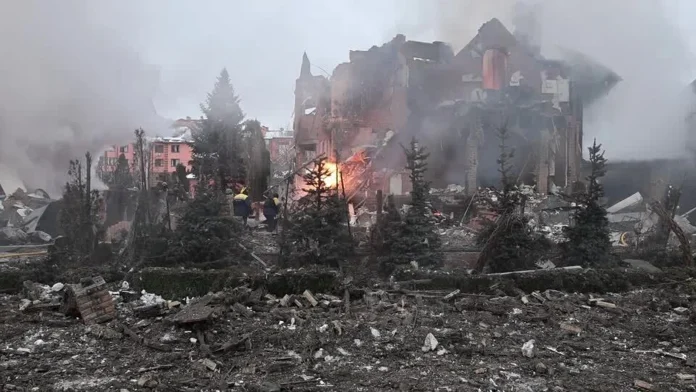
Shortly after 4 a.m., those sirens answered. A constellation of explosions followed: ballistic and cruise missiles streaking in from afar, dozens of strike drones cutting low over towns, and in the port city of Odesa, fires lighting up an otherwise black shoreline. Officials in Kyiv, Odesa and central Ukraine said the strikes targeted energy infrastructure—power plants, substations, the arteries of a country at war—as well as military sites and administrative buildings.
“They are trying to freeze us out,” said Halyna, a schoolteacher who spent the night at a neighbor’s basement, her voice still hoarse from stress. “But the kitchen stove, the electric kettle—things you take for granted—are the things they aim for. When the lights go, the fear grows.”
Damage, Disruption, and a City Forced to Adapt
Regional authorities reported damage in several Kyiv districts: more than a dozen houses were hit, roofs scorched, and at least one person injured. In Odesa, Governor Oleh Kiper wrote that a drone strike on regional energy facilities sparked fires that firefighters have since extinguished. Kyiv’s mayor, Vitali Klitschko, said two wounded people—a woman and a child—were hospitalized after strikes in the suburbs.
“The enemy is attacking the capital with ballistic weapons,” Tymur Tkachenko, head of Kyiv’s military administration, warned on Telegram. “Please stay in shelters.”
For days now, strikes on Ukraine’s grid have become almost routine. Russia’s campaign to degrade energy infrastructure—a strategy that targets thermal power plants, substations and the gas sector—has been a central element of the invasion since February 24, 2022. Experts say the aim is blunt: undermine the population’s will to resist and constrain Ukraine’s military capacity by cutting heat and electricity during a cruel winter.
People, Heat, and the Night’s Small Rituals
Outside a makeshift cluster of apartment blocks, a handful of residents gathered around an open barrel fire, hands extended to its small, merciless warmth. A young man named Dmytro tossed a warped plank into the flames and laughed, not from humor but from the brittle, fierce joy of surviving another night.
“We have to share what little we have,” he said. “There is a rhythm now: sirens, sleep, alarms, waiting, then this—talking, tending the fire. The city remembers how to come together.”
On a frozen street not far from the Dnipro River, an elderly woman shuffled out to check on the community generator. “If the lights go, we have stories,” she joked, though her knitted shawl tugged tightly around her shoulders betrayed the chill. “Stories of how we keep going.”
Human Costs Behind the Statistics
The numbers tell parts of the story: Moscow occupies close to a fifth of Ukraine’s territory, according to most assessments, and the conflict has forced millions from their homes, shattered towns and left heavy civilian casualties. President Volodymyr Zelensky said Ukrainian forces have recovered roughly 300 square kilometers during recent counterattacks—an assertion that, if confirmed, would mark the largest advances since 2023.
But numbers can obscure the grinding daily reality: bouts of blackout, the logistics of getting wood or diesel, children shivering in classrooms lit by emergency lamps. “We do not just lose electricity,” a nurse in central Ukraine told me. “We lose warmth for our patients, heat for incubators, light for operations.”
Unfolding Frontlines and the Geometry of War
The strikes came amid a broader escalation. Explosions were heard across the capital and beyond, triggering nationwide air-raid alerts as Ukraine’s air force widened warnings to reflect the missile threat. Poland’s Operational Command said it scrambled jets after detecting long-range Russian aircraft operating over Ukrainian territory, a reminder that the conflict reverberates through neighboring skies.
Hours earlier, Lviv—ever a symbol of Western Ukraine’s proximity to Europe—was rocked by blasts in a part of the country that has been comparatively safe. In Odesa, where the Black Sea roils with geopolitical significance, attacks on port infrastructure and energy sites threaten both civilian life and the country’s economic lifelines.
On the Ground: Voices from Odesa and Kyiv
“We’re used to the sirens, but not to the feeling of being deliberately targeted where we heat and cook,” said Oksana, a café owner who closed shop early after the attacks. “People ask, ‘What will they hit next?’ That uncertainty is a weapon in itself.”
Elsewhere, a local volunteer who asked to be named only as Serhiy described the logistical ballet that follows a strike. “Within an hour there are teams checking lines, volunteers running meals to shelters, and electricians trying to reroute power. It’s chaotic, but precise in its urgency.”
Technology, Aid, and the International Chessboard
This latest round of strikes also intersected with international dynamics. Ukrainian officials have made use of commercial satellite internet terminals, notably SpaceX’s Starlink, to keep communications across the frontlines. President Zelensky said that temporary outages of such terminals earlier this month—attributed to actions by their operators—had affected the pace of some counteroffensive moves, underscoring how private technology can suddenly become strategic infrastructure.
Diplomats have been busy, too. The United States and European nations continue to push for a diplomatic end to the war, even as arms and logistical support for Kyiv persists. Zelensky has signaled willingness to consult with European and Middle Eastern partners in search of deeper engagement; he is also under pressure from Western capitals to contemplate concessions to hasten an end to bloodshed.
Why It Matters to the World
Beyond the immediate tragedy and heroism, this is a story about systems—power grids, supply chains, international law—and how fragile they can be under sustained attack. It is about how a single winter missile strike can cascade into broader human suffering, and how the choices of distant leaders and corporate executives can shape the lives of families huddled by barrel fires.
Ask yourself: if key energy infrastructure in your city were suddenly gone for days, how would your routines fracture? How would communities adapt? The answers tell us not just about resilience, but about priorities—whose lives are protected, and whose are made precarious.
Looking Forward: Resilience, Reckoning, and Memory
As Ukraine marks four years since the full-scale invasion, the landscape is both familiar and unsteady. Towns bristle with fortifications; underground shelters hum with life; volunteer soup kitchens and neighborhood watch groups have become institutions in their own right.
“We measure victory not only by territory,” Zelensky said in recent remarks, “but by the endurance of our people.” Whether that endurance will be sustained through another cruel winter of attacks depends on many variables: the will of Ukrainians, the flow of international support, and the strategic calculations in Moscow.
In the end, the images linger: a child clutching a thermos by a barrel fire, an electrician unspooling cable into the cold, a mayor counting damaged rooftops in the pale light of morning. Those images are the real ledger of this conflict—messy, human, and persistent. They ask us, as distant readers, to keep seeing, to keep bearing witness, and to remember that in a war fought over maps, the small acts of keeping each other warm can be the quietest front lines of all.
US fighter jet downed by Iran; pilot reportedly rescued
Smoke over the desert: an American warplane falls, and a region holds its breath
There are moments when the desert seems to inhale, as if...
Family Warns Detained Man in Iran Could Face Execution
They Called Him a Criminal on TV. His Family Calls Him a Son, a Friend, a Believer.
On a chilly Dublin morning, Sama Sabet sits...
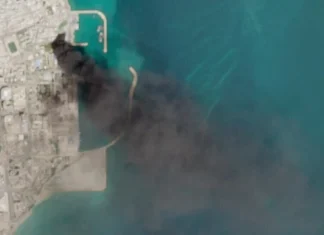
United States Vows Broader Targeting of Iran’s Key Infrastructure
Smoke Over the Strait: How a Narrow Waterway Became the World's Pressure Point
There are places on the map that, for most people, exist as...
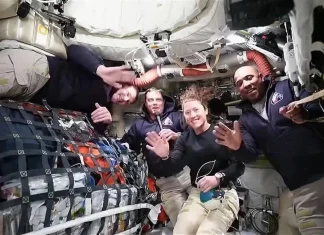
Artemis Crew Breaks Free of Earth Orbit, Sets Course for Moon
They lit the sky: Artemis II’s bold shove toward the Moon
When the Orion capsule’s engine roared to life, it felt less like a technical...
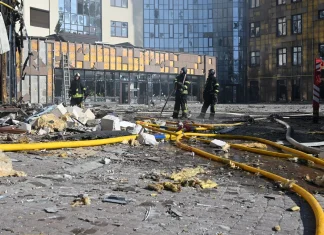
Officials Report Russia Launches Widespread Aerial Attacks Across Ukraine
Night of a Thousand Shadows: When the Sky Became a Frontline
There are nights when a city hears only the ordinary sounds—distant traffic, a dog...