Home Blog Page 80

US-Iran ceasefire largely leaves Israel’s military objectives unmet

US-Iran ceasefire leaves Israeli war objectives unmet
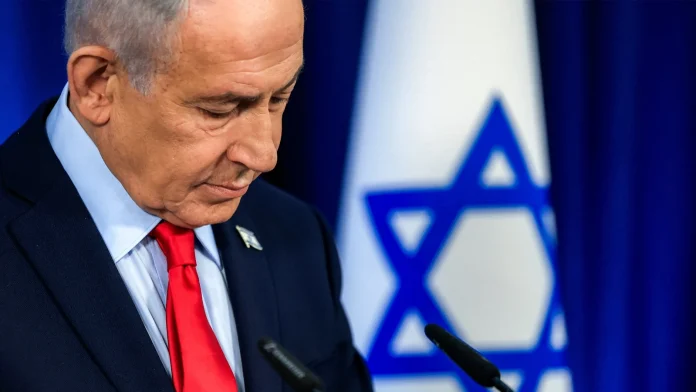
Israeli Prime Minister Benjamin Netanyahu had set the elimination or at least severe degradation of Iran's nuclear programme as a central goal

Ceasefire, Not Closure: What Two Weeks of Quiet Revealed About a Region Still on Edge

When the guns finally paused, the silence felt both fragile and enormous. Streets that had been humming with the mechanical rhythm of conflict—air defenses, convoy sirens, the low thud of distant explosions—fell into a stunned hush. For many, that pause was relief; for others, a taste of comeuppance deferred.

What began as a swift, sweeping campaign by US and Israeli forces on 28 February has now been placed under a tentative, two-week truce. By the time diplomats sat down in Islamabad to begin talks, the headlines had already begun to split along familiar fault lines: strategic victory versus strategic failure. But beneath the slogans and soundbites lies a different story—one of limits, trade-offs, and the stubborn resilience of state power.

Assessing the damage—and the gaps

“We achieved blows,” a retired military planner told me over coffee in Tel Aviv, stirring sugar into his espresso as if stirring away the past month. “But targets that matter for a regime’s survival? Those are still standing.”

His sentiment is echoed by several analysts who warn that Israel’s most ambitious aims—crippling Iran’s nuclear program, dismantling an extensive ballistic missile umbrella, and precipitating political collapse in Tehran—remain largely unrealized.

Diplomats and analysts point to hard data. Iran still holds roughly 440 kilograms of uranium enriched to about 60% purity—far higher than the levels normally permitted for civilian reactors, and a sobering reminder of how close material can be to weapons-grade (usually around 90% enrichment). Ballistic missile inventories have been damaged, officials concede, but not eliminated. And while airstrikes and targeted operations have killed figures within Iran’s security apparatus, Tehran’s political structure endures.

“The infrastructure is bruised, but the body remains,” said an expert on regional security who asked not to be named. “In short campaigns, regimes often reveal fragility. In this one, Iran showed durability.”

Voices from the cities

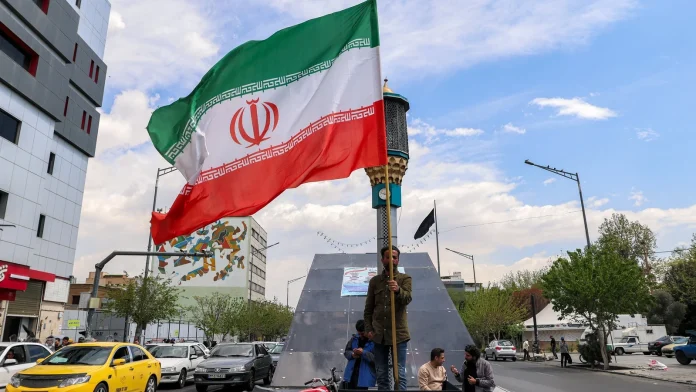
In Tehran’s Valiasr Square, pride and apprehension sat side by side. A street vendor wrapped his fingers around a steaming samovar and shrugged. “We tasted danger and then tasted calm,” he said, smiling with a weary bravado. “You do what you must—close your shop for a day, light a candle for those lost, then open again.”

Across the sea in Beirut, a woman who had lived through multiple rounds of conflict pointed to a scorched apartment block and spoke in measured tones: “We know what war takes from us. Streets, shops, sleep. This pause—let it teach us something. But will it change the choices of those far from our balconies?”

Back in Israel, responses were predictably polarized. One young nurse in Haifa described an “immediate, immense relief” among patients and families. Yet a coalition of opposition politicians insisted the ceasefire amounted to surrender. “There has never been a political disaster like this in our entire history,” wrote one opposition leader on social media, capturing the fury of a faction convinced that military pressure was the only currency of deterrence.

Diplomatic choreography: Islamabad’s fragile script

Under the brokered truce, Iran and the United States agreed to open talks in Pakistan. The Strait of Hormuz—through which roughly a fifth of the world’s oil transited in recent years—was temporarily reopened, yet Tehran’s demands over control of the waterway, the terms of uranium enrichment, and the lifting of sanctions remain sharply at odds with Washington’s red lines.

“These are not procedural talks,” said a former diplomat who has worked on Iran policy. “They’re existential negotiating sessions for both sides. The risk is that the conversation in Islamabad creates interim calm without resolving the drivers of cycle—nuclear thresholds, regional proxies, economic sanctions. Then, in short order, the cycle repeats.”

And there’s another wrinkle: Israel insists the ceasefire does not cover Lebanon, where it has been locked in a renewed duel with Hezbollah. That separation of fronts complicates the truce’s coherence. Can a two-week pause in one theater hold while another erupts? The answer, as analysts caution, is far from certain.

Hezbollah, Lebanon, and the second front

In the hours after the truce, Israeli forces launched what officials described as their “largest coordinated” strikes against Hezbollah since the wider conflict began. From a Lebanese rooftop, a teacher watching the smoke rise said simply: “We are still collecting the fragments of lives that fall from the sky.”

For Israeli strategists, separating the Iranian file from the Lebanese front is attractive: it allows them to claim targeted successes while arguing for broader strategic flexibility. For many diplomats and observers, however, compartmentalization is wishful thinking. Regional conflict is rarely neat.

Wider ripples: Gulf recalibration and the fate of alliances

One of the quieter stories emerging from this episode is how Gulf states—once assuming that distance and diplomacy would buffer them from escalation—are being forced to reckon with new vulnerabilities. The attacks that reached into the Gulf showed that geography alone no longer guarantees security.

“For the Gulf, the arithmetic changes,” said a security analyst based in Abu Dhabi. “A state that was willing to do business with Tehran now has to weigh the risk of being collateral or coerced. That recalculation touches everything—from energy markets to open-air diplomacy, even the future of accords like the Abraham Accords.”

Whether the truce will produce durable changes in regional posture, or simply a brief window for governments to catch their breath, remains an open question.

So what now? Choices, ballots, and the politics of memory

Israel heads toward parliamentary elections by the end of October, and Prime Minister Benjamin Netanyahu has already begun to frame the campaign in the language of partnership and deterrence. For critics, the calculus is different: military engagement produced limited gains at great political cost.

As one veteran political strategist observed: “Leaders will sell narratives—victory, necessity, partnership—but voters remember the cost of living with sirens and checkpoints. They remember who kept calm and who promised results.”

And what about the larger lessons for the international community? The truce underscores a recurring truth: stopping the guns is easier than solving the grievances that make them sing. Whether policymakers seize this pause to narrow the gaps—on nuclear constraints, conventional forces, and regional security architecture—or simply chalk it up to luck will decide whether October’s ballots will return stability or another round of escalation.

Questions for the reader

  • Can a temporary pause become the seed of a lasting settlement, or will it merely reset the conditions for the next confrontation?
  • How should external powers balance punitive strikes with long-term diplomatic engagement?
  • At what point do civilians—those who open shops and tend tea and teach—get a stronger say in shaping the security choices that define their lives?

When the ceasefire came, people on all sides took stock. Some counted broken things; others counted the living. The rest—politicians, generals, diplomats—counted strategic gains. In the weeks ahead, what we all have to do is count the conversations too: the hard, honest ones about deterrence, dignity, and the true cost of “victory.”


Greece to bar under-15s from social media starting in 2027

TikTok to comply with 'upsetting' Australian under-16 ban
Australia's world-first legislation comes into effect on 10 December, curbing the world's most popular social media platforms and websites, including TikTok, Instagram and YouTube (Stock image)

Greece’s bold move: a country tries to reclaim childhood from the screen

On a late spring afternoon in Athens, parents clustered outside a primary school laughed nervously as teenagers drifted by, faces lit by the blue glow of their phones. “They’re always there,” said Eleni, a mother of two, folding the corner of a paper coffee cup between her fingers. “At dinner, at the park, even when they should be doing homework.” Her tone was equal parts worry and weary acceptance. In a country that still prizes unhurried family meals and seaside summers, the ubiquity of social media feels like a new and relentless tide.

Against that background, Prime Minister Kyriakos Mitsotakis announced a measure that will reshape the daily lives of families: from 1 January next year, children under 15 will be banned from accessing social media platforms in Greece. He delivered the news on TikTok himself, in an unusual and pointed move — choosing the very medium at the center of the debate to speak directly to young people.

“Our aim is not to keep you away from technology but to combat addiction,” the prime minister said in the short video, reflecting a sentiment that has gained momentum around the world: the idea that unfettered social-media use in early adolescence can erode sleep, concentration, and emotional well-being. His office framed the law as a protective measure, a way to give children room to grow without constant curation and comparison.

Faces in the crowd: voices for and against

Reactions in Athens were immediate and split. “Finally,” said Sofia Papadopoulou, a primary school teacher in Piraeus. “I’ve seen pupils who can’t focus for more than twenty minutes without checking their phones. This could help bring back attention and presence.” She spoke with the quiet certainty of someone who has watched whole classes drift toward distraction.

But not everyone shared her enthusiasm. “It feels like a ban on friendships,” protested Nikos, a 15-year-old from Thessaloniki who relies on social apps to keep ties with classmates and relatives abroad. “We use these platforms to make plans, to learn, to find communities. Just blocking us feels unfair.” On the same afternoon, a group of teenagers posted a hashtag that trended locally: #LetUsChoose.

Outside the political stage, experts caution that the choice is not simple. “Screen time is a complex public-health issue; it intersects with sleep, bullying, and mental health,” said Dr. Maria Kostopoulou, a child psychologist in Athens. “The research shows correlations between heavy social-media use and higher rates of anxiety and depression among adolescents, but causation is trickier. A blanket age restriction is one approach—but alone, it won’t address underlying problems like family dynamics, school stress, or the content children encounter.”

Technology, trust, and the law

Implementing such a ban raises practical and ethical questions. How do platforms verify age without invading privacy? What mechanisms will ensure compliance? And who decides which apps fall under the restriction?

Officials in Thessaloniki and Athens acknowledge the hurdles. “We’re working with regulators and technology experts to develop age-verification tools that are effective yet protect user privacy,” said Yannis Iliopoulos, who serves as a spokesperson for Greece’s Ministry of Digital Governance. “We also want this to be part of a broader strategy: school education, parental support, and clearer rules for platforms.”

That last bit is crucial. Platforms can be notoriously difficult to police, and age rules have long been circumnavigated by teenagers who enter false birthdates. Enforcing a ban will demand a mix of technology, legislation, and cultural change.

Greece is not alone: a global ripple

The country’s decision arrives amid a growing international conversation about the appropriate digital age of consent and what role governments should play in guarding young minds.

  • Australia — Last December Canberra pushed hard on tech companies, requiring platforms to remove accounts of under-16s or face hefty fines, framing the rule as a child-safety measure.
  • Indonesia — Earlier this year Jakarta enforced a ban on social-media use by those under 16 and began challenging Google and Meta over compliance.
  • Austria — Vienna has signalled plans to ban social-media use for under-14s and was preparing draft legislation to be presented soon.
  • Spain and Denmark — Both have announced intentions to create a digital age of majority for social networks.
  • Ireland — Dublin prefers an EU-wide decision but is prepared to act domestically if needed.

Whether these moves will converge into a unified European approach remains an open question. Mitsotakis has said he will press the European Union to follow Greece’s lead, framing the policy as a step toward harmonized child-protection standards across the bloc.

What the science says (and what it does not)

There is mounting evidence that excessive screen use during youth is linked with sleep disruption, diminished attention, and higher reports of mood disorders. Surveys from research centers like Pew have long shown that a significant share of teenagers are online almost constantly; other studies have tied high social-media engagement to lower self-esteem in some adolescents, especially young girls navigating body-image issues.

Yet many researchers urge nuance. “We can’t reduce childhood to screen time alone,” said Dr. Elena Rossi, a sociologist who studies youth culture. “Platforms are spaces for sociality, learning, and even activism. For some marginalized young people, online communities are lifelines. Policies must be careful not to deprive those children of vital connections.”

Local flavor: how Greek life frames the debate

In Greece, where extended family networks often blur the line between private and communal upbringing, debates about children’s upbringing have a particular resonance. Summer holidays spent with cousins on an island, loud family dinners, and community life are all cultural anchors that advocates for the ban argue are threatened by the encroachment of screens.

“When I was a child, we played until sunset, and screens were for the cinema on Saturdays,” reflected Dimitris, a fisherman in the Peloponnese. “I worry that today’s kids miss those simple pleasures.” That nostalgia shapes some of the political momentum: the desire to protect a certain kind of unstructured time that fosters imagination, social skills, and sleep.

Questions for us all

As Greece prepares to flip this legal switch, there are questions that reach beyond national borders: How do we balance protection with autonomy for young people coming of age online? Who gets to decide what is best for a generation whose social life is digitally mediated? And can technology companies be incentivized to design products that are less addictive and more age-appropriate?

These are not questions with easy answers. They ask us to consider what childhood should look like in the 21st century, and how public policy, parental guidance, schools, and tech companies must work—together—to nurture it.

One thing is clear in the cafes and sidewalks of Athens: the debate will be lived in the small, everyday moments—bedtimes, the first crush, the thwarted scroll through a feed. “I don’t want my child to feel watched by an algorithm all the time,” said Eleni, the mother we met at the start. “But I also know that simply turning phones off won’t teach them how to be resilient online. We need conversation, education, and rules that make sense.”

As Greece moves toward January, the world will be watching. Will the ban offer a blueprint for other nations, or will it reveal unforeseen consequences? Either way, it forces a conversation that most societies have been avoiding: what are we willing to do, and to change, in order to keep childhood intact?

Xasan Sheekh, Xamze iyo Qoor qoor oo shir uga socdo Madaxtooyada Soomaaliya

Apr 08(Jowhar)-Waxaa goordhow shir  uga furmay xarunta Madaxtooyada Soomaaliya, Madaxweynaha Jamhuuriyadda Federaalka Soomaaliya Xasan Sheekh Maxamuud, Ra’iisul Wasaaraha Xukuumadda Federaalka Soomaaliya Xamze Cabdi Barre, iyo Madaxweynaha Dowlad Goboleedka Galmudug Axmed Cabdi Kaariye (Qoorqoor).

Shariifka, Khayre, Rooble iyo CCW oo ku shiraya Nairobi

Apr 08(Jowhar)-Warar soo baxaya ayaa tilmaamaya in maalinta berri ah uu shir muhiim ah uga furmi doono magaalada Nairobi ee dalka Kenya siyaasiyiin caan ah oo Soomaaliyeed.

Woman nicknamed ‘Ketamine Queen’ to face court over Matthew Perry death

'Ketamine Queen' due in court over Matthew Perry's death
A post-mortem examination concluded Matthew Perry died from the acute effects of ketamine.

The Quiet of a Hot Tub and the Loud Echo of a Celebrity’s Death

It was a foggy October morning in Los Angeles when the world learned that Matthew Perry—the actor whose timing and sarcasm made a fictional living room feel like home for millions—had died. He was 54. He was found in the hot tub of his Los Angeles home. And the toxicology report marked an ending that would rip open private grief and public fascination: high levels of ketamine in his blood.

That single detail—an anesthetic used in emergency rooms and, in recent years, repurposed in controlled settings to treat depression—became a thread. Pull it, and you start to unravel a network of people, pills, and the messy intersection of medicine, addiction, and commerce.

The Woman at the Center: “Ketamine Queen”

In federal court this week, Jasveen Sangha, 42, will learn her fate. Sangha, a dual U.S.-British citizen long described in filings as a central supplier of ketamine to a chain of intermediaries, pleaded guilty last year to five federal counts, including distributing a controlled substance that resulted in death or serious bodily injury.

Prosecutors have asked for a 15-year sentence; under federal statutes she faces a theoretical maximum of 65 years behind bars. Sangha has been in custody since August 2024. Court documents and investigators point to her as the supplier whose product ultimately reached the hand of Perry’s personal assistant, who administered the drug in the hours before the actor’s death.

“No good outcome comes from this kind of supply chain,” said a federal prosecutor in an affidavit. “At the end of the line is a real person, a life that mattered.”

What the records say

According to court filings, Sangha worked with a middleman, identified as Erik Fleming, to move ketamine to Kenneth Iwamasa, Perry’s live-in assistant. Prosecutors allege that on October 28, 2023, Iwamasa injected Perry with at least three doses of ketamine, some of which originated with Sangha.

When news of Perry’s death broke, investigators say Sangha directed Fleming to delete messages. A later search of Sangha’s North Hollywood residence yielded a troubling cache: ketamine alongside methamphetamine, cocaine, ecstasy and counterfeit Xanax; scales, a money-counting machine, and other signs consistent with distribution.

“We found enough to tell a story,” one law enforcement official said. “Not just of a single transaction, but of a small business built around a drug that has real therapeutic uses—and real potential for harm when sold outside medical oversight.”

More than one tragedy

The Perry case is not the only death tied to Sangha’s alleged sales. She has admitted to selling ketamine in 2019 to Cody McLaury, who died hours later of an overdose. The pattern—supplier, middleman, user, tragedy—echoes through many overdoses across the U.S., where fatal drug events regularly connect to informal supply chains.

Drug-related deaths in the United States have been alarmingly high in recent years. According to the Centers for Disease Control and Prevention, annual overdose deaths have exceeded 100,000 in recent reporting years, driven largely by synthetic opioids like fentanyl but increasingly complicated by polysubstance use—when stimulants, sedatives, and other substances mix unpredictably.

“We are seeing more complex intoxications,” said Dr. Elena Ruiz, an emergency physician who treats overdoses in Los Angeles. “Patients come in with mixtures—stimulants, benzodiazepines, opioids, sometimes dissociatives like ketamine. The interactions can be deadly and are difficult to predict.”

Doctors, assistants, and the thin line of medical use

The Perry investigation widened to include medical professionals. Two doctors who admitted to providing ketamine in the weeks before Perry’s death faced consequences: Dr. Salvador Plasencia received a 30-month federal prison sentence last year; Dr. Mark Chavez was sentenced to home confinement and community service. Iwamasa and Fleming are scheduled for sentencing later this month.

Ketamine occupies a strange middle ground in contemporary medicine. It’s long been a staple anesthetic, remarkably safe for many surgical procedures and emergency treatment. In 2019 the U.S. Food and Drug Administration approved a related compound—esketamine, administered as a nasal spray—for treatment-resistant depression. That medical renaissance, however, has been shadowed by rising nonmedical use.

“The same properties that make ketamine useful—rapid dissociation, mood alteration—also make it attractive for recreational users,” said Dr. Naomi Beckett, a psychiatrist specializing in substance use. “When it’s diverted from regulated channels, or administered by untrained hands in uncontrolled environments, the risk skyrockets.”

Public grief, private responsibility

Perry had been unusually candid about his struggles. His 2022 memoir—a raw, sometimes wrenching account—traces a long battle with addiction. He wrote that he had been “mostly sober since 2001,” admitting, with painful honesty, to “sixty or seventy little mishaps” that eroded that sobriety over the years.

For fans who grew up with Chandler Bing’s deadpan as the soundtrack to dinner tables and dorm rooms, the juxtaposition of public joy and private pain lands heavy. On walkways near the Sunset Strip, near cafés where tourists crowd in winter and summer, fans leave handwritten notes and flowers—small, intimate memorials in a city that often treats mourning as a headline.

“He made us laugh when we needed it,” said Maria Gomez, 37, an Angeleno who left a candle at a makeshift shrine. “Learning the truth of his pain makes it scarier, but also somehow more honest.”

What does justice look like?

Beyond sentencing, the Perry case forces broader questions. How do we hold suppliers accountable without ignoring demand? How do we regulate emerging medical therapies to prevent diversion? What kind of support and oversight could have helped a beloved public figure who openly sought recovery?

“Criminal accountability matters,” said a legal scholar at UCLA. “But we must also look upstream—to healthcare access, to stigma, to the social networks that enable addiction. Punishment alone won’t stop these spirals.”

The law will soon pronounce Sangha’s punishment. But sentences cannot restore a life. They can, perhaps, send a message about commercializing a drug outside of clinical care. They can also ignite conversations about policy: expanded access to evidence-based treatment, harm reduction measures like drug-checking services and wider distribution of naloxone, and stricter oversight of medical providers who may enable diversion.

What to carry forward

As readers, there’s a temptation to treat this story as another celebrity tragedy—brief headlines, swift outrage, then forgetfulness. But beneath the celebrity sheen are ordinary human dynamics: suppliers, middlemen, caregivers, and individuals fighting private wars with substances that can both heal and harm.

Ask yourself: when we hear of an overdose, do we think of the person or the product? Do we see a supply chain or a medical crisis? The answers shape policy, empathy, and ultimately prevention.

“We owe the truth to families and the public,” said a community outreach worker who helps people emerging from addiction. “But we also owe compassion. Addictive illness is messy. It needs our attention, not our scorn.”

Lasting impressions

When Sangha’s sentence is handed down, it will close one chapter in a saga that has already expanded beyond a single person’s fate. It will not, however, close the larger conversation about how modern societies treat pain, pleasure, and the poisons we brew to cope.

Matthew Perry’s death is a spotlight on many shadows: the misuse of medical substances, the vulnerabilities that follow fame, and the marketplaces—both legal and illicit—that profit from human frailty. If anything meaningful emerges from this sorrow, it will be a more honest reckoning with addiction and a collective commitment to prevent another family from sitting in the cold after a hot tub has cooled.

US and Iran Agree Truce: Essential Details You Should Know

US-Iran truce: What we know
Iran proposed a 10-point plan for securing an end to the war, which Donald Trump said was 'workable'

Two Weeks to Breathe: A Fragile Truce, a Crowded Strait, and the World Holding Its Breath

Late into the night, a fragile agreement flickered to life — two weeks of silence where the world had been braced for the worst. In a move that surprised diplomats and unsettled capitals, Washington and Tehran agreed to pause open hostilities. For a global economy that still remembers the shock of shuttered oil lanes and disrupted supply chains, the most urgent promise was simple: the Strait of Hormuz would reopen, at least for the next 14 days.

For many, the image of the strait — a narrow, strategic artery where ferries, tankers and fishing boats weave in close quarters — will admit no easy calm. “When the tankers disappear, the lights go dim in Karachi, in Athens, in Marseille,” an old Hormuz fisherman told me over the phone, his voice creased with days without income. “Two weeks is a small window. But today, for our children, it is a respite.”

What the Truce Says — and What It Quietly Leaves Unsaid

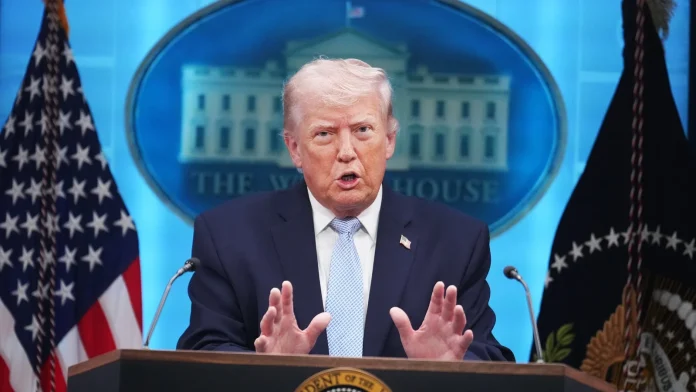
From Washington’s podium, President Donald Trump framed the deal as an unequivocal win. “A total and complete victory,” he told AFP, and he claimed the United States would suspend strikes on Iran while Tehran would allow the safe reopening of the strait. Trump added that Iran’s enriched uranium — a central flashpoint in the crisis — would be “perfectly taken care of” during the ceasefire.

In Tehran, Foreign Minister Abbas Araghchi confirmed the practical side of the arrangement: a two-week corridor of safe passage through Hormuz. Yet his statement came with a heavier document at its side — a 10-point plan Tehran says could anchor peace. It included measures that go far beyond a temporary lull: continued Iranian control of the strait, acceptance of enrichment activities, lifting of primary and secondary sanctions, withdrawal of US forces from the region, release of frozen Iranian assets and a binding UN Security Council resolution.

Put plainly, the pieces don’t yet fit snugly. The United States had previously asked Tehran to stop further enrichment, limit missile programs, and cease supporting regional militias — terms Tehran has long rejected. Neither side has conceded much beyond the immediate, pragmatic opening of the waterway. Negotiations are to begin in Islamabad in the coming days, but it is hard to forget that in recent weeks rhetoric swung from diplomatic bargaining to talk of “unconditional surrender” and “full victory.”

Points of Friction

  • Control of the Strait: Tehran insists on retaining a role; Washington seeks assurances it will not be used as leverage.
  • Nuclear enrichment: Iran’s right to enrich is a red line for Tehran; Washington and some allies regard enrichment as a proliferation risk.
  • Sanctions and assets: Tehran wants frozen funds released — a lifeline for a battered economy — while Washington has historically used sanctions as leverage over behavior.
  • Proxy conflicts: Withdrawal or limits on US forces and the halting of attacks on Iran-linked groups across the region are both demanded and rejected at various times.

The Players in the Room — and Those Watching from the Sidelines

Pakistan quietly stepped into the breach as mediator, hosting talks and leveraging its regional relationships. “We will do our part to keep talks alive,” Prime Minister Shehbaz Sharif said, portraying Islamabad as a convening power that could shepherd the two sides toward a more durable settlement. Pakistan’s role matters: it sits between powers, shares cultural ties with both Tehran and Washington, and, until recently, has been a place where backchannels could quietly operate.

Israel — long an adversary of Tehran and a close strategic partner to Washington — gave conditional support to the pause in US strikes, but drew a line around Lebanon. Israeli officials insisted the ceasefire did not extend to Israeli operations against Hezbollah. Yet Pakistan’s statement had said the deal covered “everywhere including Lebanon,” exposing the yawning differences that remain even among allies.

On the ground in southern Lebanon, where months of conflict have claimed more than 1,500 lives according to local authorities, this ambiguity is lethal. “We are still burying people,” a nurse in Tyre told me. “Two weeks of calm are a promise, but promises must be turned into protection.”

Economics, Energy, and the Choreography of a Choked Waterway

The practical stakes are large. Roughly one-fifth of the world’s seaborne petroleum moves through the Strait of Hormuz. When that chokepoint is closed or threatened, oil and gas markets react within minutes, and economies feel it within weeks. Since Tehran had effectively restricted passage, energy markets tightened; tankers were rerouted, insurers demanded higher premiums, and the cost of moving crude rose. The announcement of the truce saw oil and gas prices decline — a technical signal of relief — but the drop was cautious, a reflection of markets’ distrust in temporary fixes.

“This is respite, not resolution,” said Dr. Laila Haddad, an energy analyst who has followed Persian Gulf flows for two decades. “Two weeks of corridor access will ease immediate bottlenecks, but it doesn’t change the structural dynamics: disputed control, sanctions, and regional proxies. Traders know two-week deals can evaporate.”

Human Cost and Global Ripples

Beneath headline geopolitics lie human stories that complicate tidy narratives of victory or defeat. Fishermen whose nets have been empty for weeks, truck drivers stuck at ports waiting for product transfers, and families in Lebanon and Gaza counting the dead — these are the metrics that don’t fit neatly into diplomatic spreadsheets. The humanitarian tally of the conflict is both acute and diffuse, the sort of damage that shapes politics for generations.

And globally, the crisis asks a larger question: how do states govern shared global commons under stress? The Strait of Hormuz is a narrow test of multilateral systems. When a major waterway becomes a bargaining chip, smaller nations that depend on energy imports and export markets become collateral in decisions they had no part in making.

What Comes Next — Negotiations, Nagging Doubts, and the Real Work

Negotiations are scheduled to begin in Islamabad this week, with both sides allotting two weeks for talks. What happens after that window will determine whether this is a genuine stepping-stone to a more durable settlement or simply a pause between storms.

Several paths could follow: a framework agreement that eases sanctions in exchange for concrete, verifiable nuclear limits; a tit-for-tat reduction of proxy activities across Lebanon, Syria and Iraq; or a collapse of talks and a plunge back into wider hostilities. Each path carries consequences far beyond the Gulf.

So ask yourself: would you place your bets on two weeks of talks producing a durable peace? Or do you view this as the world buying a little time, no more than that? The answer shapes how governments, markets and ordinary people respond in the coming days.

Closing Thought

For now, the Strait of Hormuz is open. For now, tankers are moving again. For now, families see a brief pause from the sirens. But two weeks is an instant in the long arc of history. If this respite is to become something more, it must be used not to posture but to build trust: verified agreements, mechanisms for enforcement, and a commitment to human life over geopolitical theatre. Without those, the next headline will be a reminder that tempers might cool, but the forces that brought the region to the brink remain very much alive.

UN Says Peacekeepers Likely Killed in Strikes by Israel, Hezbollah

Peacekeepers likely killed by Israel and Hezbollah - UN
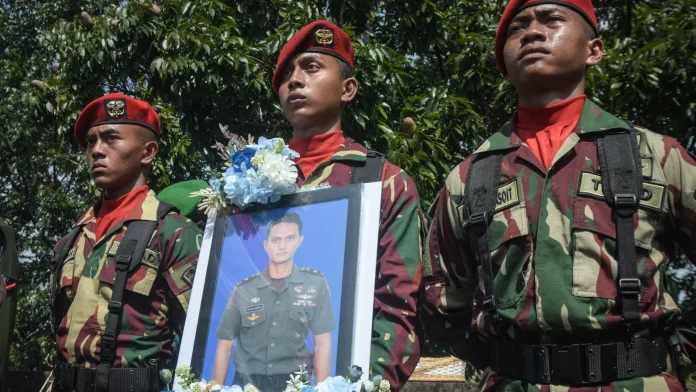
Indonesian soldiers with a portrait of Zulmi Aditya Iskandar at the UN peacekeeper's funeral

Under the Olive Trees: When Peacekeepers Become Targets

The sun sinks slow over southern Lebanon, gilding the knobby trunks of centuries-old olive trees and casting long shadows across a landscape that has known more ceasefires than peace. In the dusk, a UNIFIL patrol hums by — the blue of their helmets catching the last light — a tiny human buffer between two powers that have been trading blows for decades.

And then, in a soft, ordinary valley where goats graze and women hang laundry to dry, the sudden sound that no one wants: an explosion, the metallic scream of an artillery round, the dull concussion of a roadside blast. In the space of a heartbeat, three lives that were tasked with keeping peace are snuffed out. Routines and maps and negotiation briefs cannot bring them back.

What Happened

At the end of March, UN investigators concluded that the deaths of three UN peacekeepers in Lebanon likely stemmed from two separate strikes: one from an Israeli tank-fired 120 mm round that struck near a UN post, and another from an improvised explosive device that destroyed a vehicle — an IED the probe says was most plausibly planted by Hezbollah. The incidents, which took place on 29 and 30 March, also injured several other peacekeepers.

These findings are preliminary, the UN cautioned, and the organization has asked national authorities to investigate and prosecute. “We are seeking clarity and accountability,” said a UN spokesperson. “Those serving under the UN flag are civilians in uniform — their safety is paramount.”

Numbers and Context

UNIFIL — the UN Interim Force in Lebanon — has been stationed along this border strip since 1978, tasked with monitoring ceasefires and supporting the Lebanese Armed Forces. It is among the UN’s largest and oldest missions, numbering roughly ten thousand troops over the years, drawn from dozens of countries. Yet size and history have not insulated it from the volatility that has accompanied the recent surge in hostilities between Israel and Hezbollah-backed forces.

Since the 2006 war and in subsequent years, the south has repeatedly flared. The recent episodes are a grim reminder that peacekeeping forces, meant to be neutral arbiters, often find themselves perilously close to the flashpoints they are there to prevent.

Voices from the Ground

“We mark our coordinates. Twice we shared our positions,” said Lieutenant Karim Haddad, a Lebanese Army liaison who has coordinated with UN patrols for years. “When someone who carries a rifle aims at a UN vehicle, it breaks a very thin rulebook we all try to live by.”

On the coast, where UNIFIL’s headquarters sits in the town of Naqoura, shopkeepers spoke of the blue helmets with the weary affection one reserves for a neighbor who has been through too much. “They bring water sometimes, and they keep children away from checkpoints,” said Rima Awad, who runs a bakery by the harbor. “We are all tired — of rockets, of the waiting.”

Families in Indonesia, whose nationals serve in UNIFIL detachments, have been thrown into grief and indignation. “My son was peaceful, he believed in helping people,” said Mariam Siregar, the mother of one of the fallen. “If a nation wants to fight, let them fight — do not throw our boys into the middle.”

Accountability in a Crossfire

The probe’s blunt conclusions — a tank round and an IED — foreground a difficult question: when UN personnel are killed in multinational conflicts, who holds the culprits to account?

“The mechanisms are weak,” explained Dr. Laila Hassan, a Beirut-based scholar of international humanitarian law. “The UN can investigate and call for prosecutions, but it lacks coercive power. These are politically charged incidents; national authorities often have limited will, especially when their allies are implicated.”

The UN has invoked international norms and treaties — including obligations under the 1994 Convention on the Safety of United Nations and Associated Personnel — but translating a report into prosecutions is a fraught path that depends on states’ cooperation. The UN has formally requested that the relevant national authorities investigate and, where appropriate, hold perpetrators criminally accountable.

Diplomacy and Danger

Indonesia, which contributed troops to the UNIFIL contingent, has publicly urged investigations and warned that ongoing military operations in southern Lebanon continue to endanger peacekeeping personnel. “All actions that endanger peacekeeping personnel constitute a serious violation of international law and must not continue,” said an Indonesian foreign ministry official. Yet officials in Jakarta told reporters any decision about withdrawing troops would be considered with “very, very careful” deliberation.

For many troop-contributing countries, the calculus is agonizing. Sending forces abroad is a matter of national pride and global responsibility — and also of risk. Smaller nations in Asia and Africa have supplied a disproportionate share of UN peacekeepers over the past two decades, and their choices reverberate at home.

Human Costs and Global Resonance

Across the UN’s seven-decade history, thousands of peacekeepers have died in service — a stark testament to the hazards inherent in trying to hold fragile accords together in fractured places. These are more than numbers; they are sons, daughters, neighbors. The loss ripples outwards: families, villages, the local bakeries where patrols once bought bread.

What does the death of a peacekeeper mean in a world where conflicts are increasingly asymmetrical — fought not just between armies but with rockets, drones, and masked militias embedded in civilian life? How do we protect those who serve to protect others?

Local Color, Global Questions

Walk through the villages of southern Lebanon and you’ll find a tapestry of ancient culture: men sipping dark, cardamom-scented coffee on low stools; olive harvests that sustain families; children kicking tattered soccer balls in alleys where murals of martyrs meet patched laundry lines. The presence of UN blue is woven into this daily life — a reminder that even the mundane carries geopolitical weight.

“We want our children to know peace,” said Fatima, a schoolteacher in a village near the border. “If the soldiers are killed, what lesson do we teach them? That being neutral is not enough?”

Where Do We Go From Here?

There are no easy answers. Strengthening accountability mechanisms, bolstering rules of engagement, improving situational awareness and communication with local forces — all these are necessary but not sufficient. Ultimately, peacekeeping is a symptom, not a cure: it operates in places where politics has failed.

Perhaps the most uncomfortable question for international audiences is this: how much responsibility do distant countries bear for maintaining the fragile stabilizers they helped create? If a peacekeeping mission cannot be kept safe, should it be reimagined, withdrawn, or reinforced? And who pays the moral and political cost for each choice?

In southern Lebanon, the olives will still be harvested, bread will still be baked, and children will still play. But each time a blue helmet falls, the fragile hope that people can live between the lines becomes that bit harder to sustain. We owe it to the fallen — and to the communities that sent them — to ask the hard questions and to insist that peacekeepers are not treated as collateral in other people’s wars.

Sida daqiiqadihii ugu dambeeyay ay Trump iyo Iiraan uga baaqsadeen dagaal baaxad leh

Apr 08(Jowhar)-Iyadoo Madaxweyne Trump uu fagaaraha uga hanjabayay inuu “tirtirayo ilbaxnimada Iran” ciidamada Mareykanka iyo xulafadiisa Bariga Dhexe waxay heegan buuxa ugu jireen bilowga duqeymo culus oo lagu qaado Iiraan, Isla markaana, shacabka Iiraan qaarkood ayaa bilaabay inay guryahooda ka qaxaan.

Trump backs down at the eleventh hour, easing national tensions

Relief as Trump pulls back at eleventh hour
While there is relief that the danger has subsided, at least for two weeks, there's also a sense that the world has changed

A Day the World Held Its Breath: How a Single Post Rewrote Normal

It began like a thunderclap in an otherwise ordinary morning: a short, brutal message on a platform that reaches hundreds of millions, laced with profanity and a promise of annihilation. By the time coffee cooled in offices from Manhattan to Mumbai, the tone of global conversation had hardened into shock, anger and—crucially—fear.

“A whole civilisation will die tonight,” the message read in plain, unforgiving language. For people who study history, for those who live with the memory of 20th-century wars, that sentence landed like a stone thrown into a quiet pond. Ripples widened fast.

Voices, Blunt and Furious

In Washington the response was immediate and raw. Stadium-sized eruptions of condemnation came from across the political spectrum. “This rhetoric crosses every line we thought barred by decency and law,” said a senior senator, his voice a mix of horror and calculation. “Nobody in a position of power should be tweeting about erasing a population.”

Some on the other side counseled calm. “Don’t play into the panic,” urged a Republican strategist in a late-night briefing, insisting that not every incendiary post should be treated as a literal order. Still, voices of dissent even among former allies grew louder. “We cannot normalize threats against civilians,” said a freshman representative from Texas. “That is not who we are.”

Far beyond Capitol Hill, religious leaders and diplomats—people who spend lifetimes building coalitions and trust—described the post in starker terms. “Truly unacceptable,” a well-known cleric said. António Guterres, Secretary-General of the United Nations, a spokesman later said, had been “deeply troubled” and was seeking clarifications through established channels.

The Countdown—and an Unexpected U-Turn

The drama was not merely verbal. A timer, a deadline, a concrete window of escalation—these things change how the world reacts. Airlines rerouted flights around the Persian Gulf. Shipping firms reviewed contingency plans. Markets moved in anxious increments: benchmark crude prices rose on the first shock, then fell and gyrated as traders tried to parse the risk.

At 90 minutes before the posted deadline, another message arrived. A ceasefire—conditional, time-limited—was announced. For two weeks, the strikes would not happen if certain maritime passages were opened. Asian indices surged on open. Oil futures slid as traders exhaled. Relief spread like a temporary balm over cities that had been braced for disruption.

Was This Classical Brinkmanship, or Something Else?

Presidents have long used the language of threat as leverage: tariffs waved like sabers, territorial boasts aired for effect, sharp tweets that evaporate into policy-footnotes. But many foreign-policy veterans said this episode felt different, visceral in a way transactional threats rarely are.

“Threatening to ‘destroy a civilisation’ isn’t just tough talk—it’s a provocation that targets identity and history, not merely policy,” said Dr. Laila Haddad, a Middle East historian at a European university. “It breaks norms. Once leaders weaponize social media to speak in genocidal imagery, it changes expectations of what leadership can say and what rivals must fear.”

On the Ground: Stories from the Strait, the Streets, the Trading Floor

In Bandar Abbas, a port city that watches tankers thread the Strait of Hormuz like pearls on a string, fishermen and dockworkers told different stories. “We all woke up and checked the sea more than the news,” said Reza, a tugboat captain whose beard had caught salt from a hundred crossings. “The next day we went out anyway. Fish don’t know about politics.”

Across the water, a Tehran café hummed with quieter, more personal fears. “My father remembers the 1980s,” said Miriam, a schoolteacher, her voice steady but small. “He lost friends then. We were children being told to hide under tables. To have those words bother us again—it’s like opening an old wound.”

On the trading floors of Tokyo and London the response was brisk and monetary. Analysts described a nervous scramble to rebalance portfolios, to price in the new unpredictability of policy delivered via social platforms. “Risk models are built on probabilities and precedent,” said an equity strategist on condition of anonymity. “Social-media-led foreign policy is a variable our models weren’t designed for.”

The Law, and the Erosion of Norms

Experts in international law were blunt. The deliberate targeting of civilian infrastructure—power plants, bridges, water systems—is prohibited under international humanitarian law unless such targets have become legitimate military objectives and their destruction offers a clear, measurable military advantage.

“There is little precedent for a leader publicly threatening to ‘erase a civilisation’ and then framing attacks on bridges and power stations as lawful,” said Professor Johan Kvale, an authority on armed conflict law. “Even in conflict, legal and moral constraints exist to minimize civilian suffering. Rhetoric like this chips away at those constraints.”

Ripples Beyond the Strait: Alliances, Realignment, and the Commodification of Fear

What happens when a traditional security guarantor begins to speak—or threaten—in ways that feel capricious? The instinct among many states will be to hedge, to diversify, to seek partners less prone to public temper tantrums and more to predictable, rule-based interactions.

Look at the bigger chessboard, and the outlines are clear: an erosion of trust can push countries toward new alignments. For some, that means deeper ties with China, whose offers of investment and infrastructure come packaged with strategic certainty—and an authoritarian flavor of stability. For others, it means hurriedly reinforcing regional coalitions, stockpiling diplomatic capital and defensive hardware.

  • Greater regional militarization, as neighbors build contingencies.
  • Commercial rerouting, as companies seek supply-chain resilience.
  • Diplomatic fatigue, as allies grapple with unpredictability from the top.

Where Do We Go from Here?

There is relief in the temporary halt—two weeks, an eye-blink in geopolitical time—but it’s brittle. The episode laid bare a new reality: in an era of instant broadcast and personal-brand governance, a single post can destabilize markets, stress alliances, and threaten human lives.

So what questions should we carry forward? How do democratic societies hold leaders accountable when their loudest megaphone is a private platform? How should international law adapt when threats are public performances rather than formal declarations? And perhaps most importantly, how do ordinary people rebuild trust in institutions that once mediated between politicians and war?

“We survived the day,” Reza the tugboat captain said, watching a tanker slip like a great grey beetle through the Hormuz. “But survival isn’t enough. We want predictability. We want leaders who speak like custodians of peace, not arsonists with phones.”

In the weeks ahead, expect debates about norms, about the limits of presidential speech, about the role of social media in statecraft. Expect markets, too, to remember this day as a moment when political theater became economic reality. And expect ordinary people—fishermen, teachers, traders—to keep asking the simplest, hardest question of all: who keeps us safe when the people entrusted with that safety speak as if they can erase whole histories with a single sentence?

Trump Agrees to Pause Military Strikes on Iran for Two Weeks

Trump agrees to suspend attacks on Iran for two weeks
US President Donald Trump made the announcement little more than an hour before his deadline

A Suspended Inferno: Two Weeks to Reopen the Strait

The clock had been running down like a hairline fuse, and then — in a gesture that felt half reprieve, half bargaining chip — the explosion was put on pause.

Late one night, hours before a deadline President Donald Trump had set for devastating strikes against Iran, Washington announced a two‑week suspension of bombing. The condition was stark: Tehran must reopen the Strait of Hormuz — the narrow waterway through which a significant share of the world’s seaborne oil flows — and do so completely, immediately and safely.

It read like a scene from an old Cold War thriller: a global choke point used as both bargaining leverage and the fulcrum for a fragile ceasefire. But this was not fiction. It was another chapter in a conflict that, until now, had seen weeks of US and Israeli strikes that shattered infrastructure, rattled regional capitals, and sent oil markets into spasms.

On the streets of Tehran

A woman picks her way through the rubble of a once-busy neighborhood where a rail bridge and other structures lie crumbled. A shopkeeper wipes dust from his hands and says, quietly, “We were not ready for this — for bridges collapsing like toothpicks. We are not the commanders, we are the people.”

There is a peculiar hush in parts of the city now: the call to prayer still threads through the air, vendors still hawk flatbreads at dawn, but the steady hum of daily commerce has frayed. “People are exhausted,” a young father who asked not to be named told me. “We are bargaining for time, but what matters is safety for our children.” Iran, home to roughly 90 million people, has been prodded and punished in equal measure over the last five weeks.

Diplomacy through Islamabad

It was Pakistan, unexpectedly, that slid into the role of mediator. Islamabad put forward the proposal that led to the temporary halt — a two‑week window for talks that Tehran accepted. Pakistani Prime Minister Shehbaz Sharif framed the move as a diplomatic lifeline: “These efforts for a peaceful settlement are progressing steadily,” he said, announcing a ceasefire “effective immediately” across multiple fronts.

Iran’s leadership responded by outlining a ten‑point plan that, according to Iranian state media, touched on sanctions relief, secure transit through the Strait of Hormuz, and the withdrawal of US combat forces from regional bases. Foreign Minister Abbas Araghchi said Iran would stop its retaliatory strikes if attacks against it ceased, and that safe passage through the Hormuz could be arranged for two weeks in coordination with Iran’s armed forces.

Pakistani officials told journalists in Islamabad that talks were set to begin on 10 April and could last up to 15 days, extendable by mutual consent. Behind the scenes, diplomats framed the window not as a ceasefire that would end the war but as a breathing space to negotiate the outlines of a more durable arrangement.

What’s on the table?

The contours of Tehran’s proposal, as described in public statements and diplomatic briefings, were focused on three broad aims:

  • Ensuring safe transit through the Strait of Hormuz and reopening it to international shipping;
  • Securing sanctions relief that would ease economic pressure on Iran’s civilians;
  • Agreeing on the withdrawal of foreign combat forces from regional bases to reduce forward military presence.

These are not small asks. The Strait of Hormuz is one of the planet’s most consequential maritime choke points: roughly one‑fifth of seaborne crude oil has historically flowed through that narrows, making its status critical to energy markets and to governments from Tokyo to Rome. When the strait is threatened, prices spike and supply chains shudder.

Markets reacted immediately. Oil prices, which had climbed since the beginning of the war, took a sharp dive on news of the two‑week pause — a reminder of how fragile global energy stability remains when geopolitics turns hot.

Voices from across the region

Not everyone saw the pause as a triumph. “Two weeks is not peace; it’s a breath before the next storm,” said Laleh, an Iranian teacher in Tehran. “We need guarantees, not just headlines.”

A Pakistani diplomat in Islamabad, speaking on the condition of anonymity, framed the mediation differently: “This is about giving diplomacy a chance. The world was teetering towards something catastrophic. Islamabad offered a way to step back from the edge.”

In Jerusalem, Prime Minister Benjamin Netanyahu publicly welcomed the US decision but made clear one caveat: Israel’s operations, he said, would not necessarily be curtailed in all theaters — notably Lebanon. “We support de‑escalation where it suits Israeli security,” said an Israeli official. “Our calculus must protect our citizens from rocket fire and cross‑border threats.”

And in the ports along the Persian Gulf, sailors and dockworkers watched tankers come and go with renewed anxiety. “Every time a ship comes in, we are grateful and afraid at the same time,” said Reza, a longshoreman at the port of Bandar Abbas. “This is our livelihood. If the strait is closed, families suffer quickly.”

Wider consequences and the hard questions

What happens in a fortnight will tell us whether this pause is the start of a negotiated de‑escalation or simply a tactical lull. The diplomatic choreography — Pakistan mediating, Iran tabling a ten‑point plan, the US setting public deadlines — raises uncomfortable questions about the rules of engagement in the 21st century: Who legitimizes force? How far can economic pressure and military threats be used before civilian harm becomes intolerable?

These incidents are not isolated. Since the conflict expanded, infrastructure across Iran has been struck — bridges, rail links and, according to Iranian sources, facilities on Kharg Island, a vital hub for its oil exports. Iran, in turn, has launched strikes against Gulf Arab states hosting US troops, and Israel has escalated operations in Lebanon in response to rocket fire from Hezbollah. The region is a lattice of tit‑for‑tat reprisals, each one reverberating further than the last.

At the United Nations, attempts to produce a unified response have been stymied by divisions among major powers. Russia and China vetoed a text aimed at reopening the Strait of Hormuz, underscoring how this is as much about geopolitics as it is about regional stability.

So what should readers be watching for in the coming days? Look for three signals: whether the Strait is in fact reopened and kept open; whether the talks in Islamabad produce a credible, verifiable timetable for sanctions relief and troop withdrawals; and whether hostilities — including strikes on civilian infrastructure — cease in practice, not just on paper.

Two weeks is a long time in wartime politics. It is also a fragile window for diplomacy to prove it can save lives and livelihoods. Will leaders choose negotiation over annihilation? Will ordinary people on both sides get the space to breathe again? The answer will say as much about our shared fate as it does about any single leader’s calculation.

For now, the world watches. The ships keep threading the Hormuz like beads on an anxious string, and in marketplaces and mosques and government halls, people whisper the same question: can peace be sewn in two weeks, or will the unstitched fabric of the region unravel further?

US World Cup chief defends visa ban for Somali referee

U.S. World Cup official backs visa ban blocking Somali referee

0
A visa denial that stopped a decorated Somali referee at a US airport has drawn fresh attention to how the White House says it...
Iran targets US base in Jordan after Trump orders strikes

Iran Strikes U.S. Base in Jordan Following Trump-Ordered Attacks

0
Missiles and drones streaked across the Gulf after Iran’s Revolutionary Guards said they struck a US base in Jordan and hit 21 other targets...
Hegseth to visit Guantanamo as US puts pressure on Cuba

Hegseth to tour Guantanamo as US ramps up pressure on Cuba

0
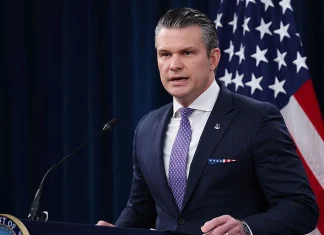
Defense Secretary Pete Hegseth is heading to the US naval base at Guantanamo Bay, Cuba, with the Pentagon saying he will make the trip...
US has "completed" strikes in response to Iranian attack


                    Middle East


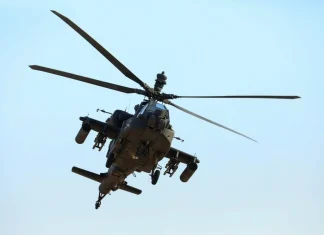
            The US military has said that it "completed" its retaliatory strikes against Iran over the downing of an attack helicopter.

US Military Says Retaliatory Strikes on Iran Are Now Completed

0
US forces have wrapped up a new round of strikes on Iran, a response Washington says was triggered by the downing of an American...
Treatment of Ulm5 a 'violation of EU law', says defence

Ulm5 treatment breaches EU law, defense argues amid growing scrutiny

0
Five activists accused of causing extensive damage at a defence contractor’s German offices are being brought into court behind glass and in handcuffs —...