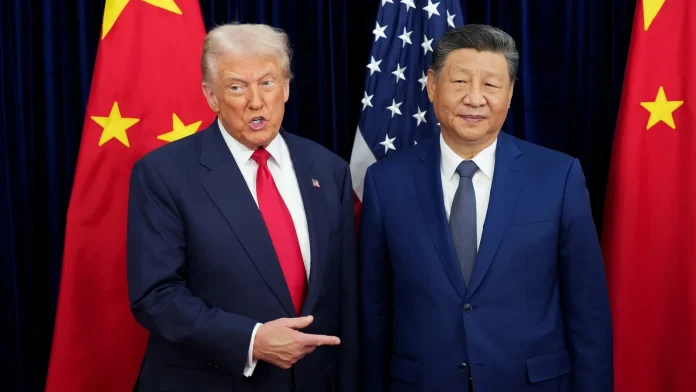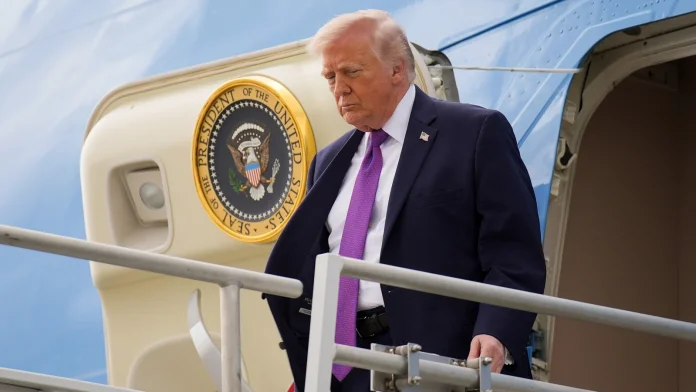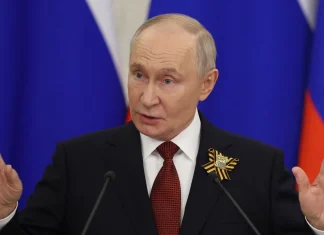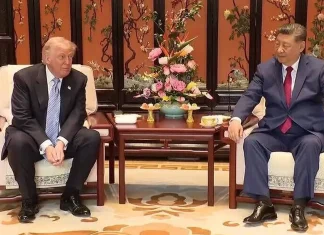
Nov 16(Jowhar)-Madaxweynaha Mareykanka Donald Trump iyo Madaxweynaha Ruushka Vladimir Putin ayaa lagu wadaa inay wadahadal ku yeeshaan Budapest ka dib markii ay wadahadleen labada hoggaamiye.
Trump, Putin to hold talks in Budapest after phone call
A River Between Two Leaders: Budapest as the Unlikely Stage for a High-Stakes Weekend
There is a cool, river-scented hush along the Danube this week, and Budapest—its bridges lit like punctuation marks—has taken on the improbable role of global mediator. In a diplomatic choreography that would have seemed surreal a few years ago, U.S. President Donald Trump and Russian President Vladimir Putin have agreed to meet here after what the White House described as a “good and productive” phone call.
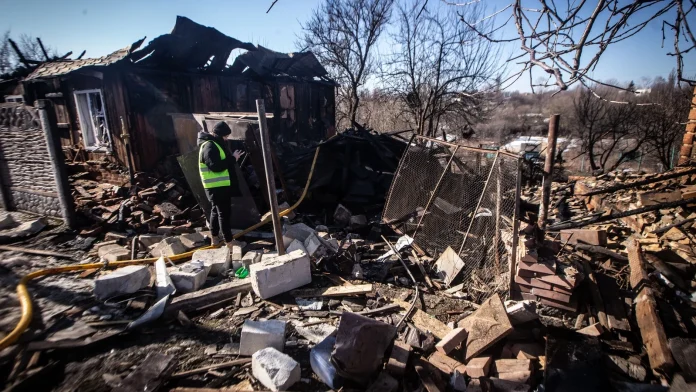
The announcement landed amid a whirlwind of other moves: Ukrainian President Volodymyr Zelensky is preparing for a visit to the White House, keen to press for more military aid, while Kyiv reels from another night of strikes that Ukraine says involved more than 300 drones and 37 missiles aimed at energy and critical infrastructure.
What Was Said—and What Was Left Unsigned
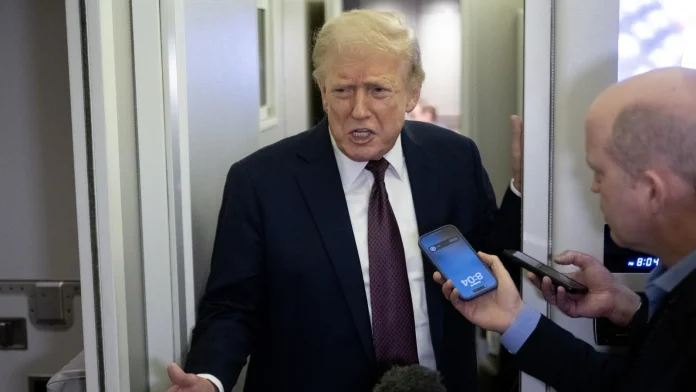
The contours of the Trump–Putin exchange were sketched publicly in short, guarded lines: the two men spoke at length and instructed their teams to meet next week at a high level, the White House said. Mr. Trump also broke into his social media account mid-conversation to notify followers. “The conversation is ongoing, a lengthy one,” he posted on Truth Social. “I will report the contents, as will President Putin, at its conclusion.”
There was the unmistakable political calculus: Mr. Trump suggested he could offer Ukraine long-range Tomahawk missiles—but only if Mr. Putin fails to come to the negotiating table. The implication is stark. Range equals leverage, and those missiles would put major Russian cities within reach of Ukrainian forces for the first time.
On the Ground in Kyiv and Budapest: Voices and Vantage Points
In Kyiv, the atmosphere is a peculiar mix of fatigue and fierce hope. “Every time the winter clouds gather, we brace for nights without heat,” said Olena Moroz, a schoolteacher turned volunteer who answered my call from a shelter in central Kyiv. “We hear about meetings and phone calls, but we measure safety in whether the lights stay on tonight.”
In contrast, Budapest feels like a diplomatic crossroads—historic, slightly theatrical, and humid with expectation. A taxi driver who gave only his first name, Tamás, pointed at the Parliament building as we drove by. “We are a small city, but we are convenient,” he said with a wry smile. “It is what our forefathers called Hungary’s geographical luck—and sometimes, our geopolitical trouble.”
Security is obvious but unobtrusive: extra uniformed officers at tram stops, and a heightened presence near hotels where delegations are known to stay. Cafés near the river continue to serve strong coffee and goulash—reminders that while world leaders bargain, everyday life persists.
Experts Weigh In: Negotiation, Deterrence, and the Price of Delay
Strategists and diplomats say the meeting is as much about optics as outcome. “This is a signaling event,” explained Dr. Amrita Dasgupta, a senior fellow in European security at an international policy think tank. “Both leaders can use the conference to show constituencies back home that they are seeking a path forward. But the real test will be whether the staff-level talks next week translate into verifiable steps on arms, ceasefires, or humanitarian corridors.”
There are risks. Supplying Tomahawk cruise missiles—if that remains on the table—would be a dramatic escalation that Moscow has repeatedly warned against. “The transfer of long-range strike capabilities changes the calculus dramatically,” said Lieutenant Colonel Mark Harrelson (ret.), a former NATO planner. “It either coerces negotiators to the table or amplifies the incentives for retaliation. It’s a double-edged sword.”
Energy as Weapon and Target
Analysts are also watching the pattern of Russian strikes: this winter, as in earlier ones, Russian forces have concentrated on energy and gas infrastructure—striking the places that light homes and heat hospitals. The result is not only immediate human hardship but a longer-term erosion of civic confidence. “Cutting winter heat is a strategy, not an accident,” Dr. Dasgupta told me. “It’s aimed at turning civilians into political pressure.”
Behind the Headlines: People, Pain, and Politics
Ukrainian requests for expanded weaponry have a human face: municipal officials, aid workers, and families who have endured rolling blackouts and frozen pipes. “If your choice is sheltering your child by candlelight or giving him up to evacuation, it’s not a policy debate,” said Natalia, an aid coordinator in Kharkiv, her voice steady despite the tremor of recent power cuts. “It’s survival.”
At the same time, political realities in Washington and Moscow will shape what is feasible. Mr. Trump’s promises to “end the war” resonate with parts of his base tired of distant conflicts. In Moscow, Kremlin spokespeople will read any concessions through a domestic lens, framing outcomes in service of national pride and strategic interest.
Global Ripples: Why This Meeting Matters Beyond Europe
This rendezvous in Budapest reverberates far beyond the Danube. Energy markets watch, because damage to pipelines or power grids can rattle global prices. NATO watches, because airspace incursions and strikes near alliance borders raise collective defense questions. Humanitarian organizations watch, because civilian suffering does not obey ceasefire lines.
For the rest of the world, there is a broader lesson in real time: how crises that begin locally become global through supply chains, migration flows, and geopolitical alignments. “We are reminded that no conflict today is contained,” said Dr. Harrelson. “Weapons, rhetoric, and refugees cross borders; so do economic shocks.”
Questions to Sit With
So where does this leave us, the global public who watch, comment, and sometimes fear? Are high-profile meetings a path to peace or simply another stage for brinkmanship? Can the conditional promise of long-range weapons be a bargaining chip toward a negotiated halt to attacks, or will it harden the opponent’s stance? And perhaps most urgently: whose voices are center stage when decisions are made—the leaders in gilded halls or the families huddling in basements?
As the sun sets over Budapest and the two leaders prepare to face each other, the answers will not arrive in a single communique. They will be worked out in staff rooms and field reports, in the hum of power stations and the cries of displaced people. For now, the world watches—hopeful, wary, and painfully aware that the next move could warm the hearths of millions or plunge them further into darkness.
Will the meet in Budapest be remembered as a breakthrough, a blip, or the opening of a new and dangerous chapter? Only the coming days will tell. Till then, the Danube keeps flowing, indifferent and patient—an ancient witness to another moment when the world tried to negotiate the future.
Atmospheric CO2 rose by the largest amount on record last year

The Sky Did Not Lie: A Year When the Atmosphere Won
On a hazy afternoon in late 2024, children in a riverside town in the Amazon learned what the word “airlock” meant without ever opening a textbook: windows shut, stoves turned off, and the smell of smoke threaded into every breath. Across the globe, coastal fishermen in Mozambique remarked that the sunsets looked different—thicker, almost syrupy with particulates carried on winds from fires half a world away.
These are the small, human moments that give texture to a cold line of data: 423.9 parts per million of carbon dioxide floating in our atmosphere in 2024, the highest annual average ever recorded. That number is not neutral. It is a ledger of choices, of seasons gone dry and forests turned to ash, of oceans that once gulped carbon in to steady the planet now breathing a little less deeply back.
Numbers That Haunt the Globe
The World Meteorological Organization’s recent bulletin reads like a wake-up call. CO2 concentrations leapt by 3.5 ppm between 2023 and 2024—the steepest year-on-year rise since systematic measurements began in 1957. To put the march into perspective: when the WMO’s monitoring network first began reporting annually in 2004, the global mean stood at 377.1 ppm. Before industrialization, the atmosphere held roughly 280 ppm. We have not just nudged those boundaries—we have run past them.
Even more alarming than the absolute number is the pace. Average annual growth rates of CO2 have tripled since the 1960s, from roughly 0.8 ppm per year back then to about 2.4 ppm per year during 2011–2020. Methane and nitrous oxide—potent greenhouse gases in their own right—also rose to record levels in 2024, adding to the warming torque on Earth’s climate.
Why 2024 Was Different
Scientists point to a toxic trio: continued fossil fuel emissions, an upsurge in wildfire outputs, and a weakening of the natural sinks—forests and oceans—that have long absorbed a sizable fraction of humanity’s carbon emissions.
“What we’ve seen is the amplifying effect of several stressors arriving at once,” said a senior atmospheric scientist who asked to be identified as Dr. M. Alvarez. “A strong El Niño heated the planet, drying soils and vegetation, priming landscapes for fire. When forests burn, they not only stop pulling carbon out of the air—they put more of it back in.”
Indeed, 2024 was the warmest year on record, and El Niño years are notorious for exposing the vulnerabilities of terrestrial sinks. Droughts and mega-fires in the Amazon and southern Africa were not mere background events; they pushed carbon fluxes into unfamiliar territory.
Voices From the Frontlines
In a village on the edge of the Amazon floodplain, 48-year-old river guide Maria Santos describes mornings that begin with smoke as if it were fog. “You wake up and decide the day by whether you can smell it,” she says. “The children cough. We worry about the gardens. The river looks tired.”
On the other side of the planet, a volunteer fire captain in Mozambique, Thabo Ndlovu, remembers the 2024 fire season as relentless. “We were running on borrowed time and thinner tanks,” he told me. “There’s a point when you stop counting hectares and start counting people you managed to move out.”
These testimonies underscore a simple truth: climate statistics are migration stories, health charts, and lost livelihoods in human clothing.
What the Scientists Worry About
Researchers are increasingly concerned that the natural buffers which have masked some effects of rising emissions are weakening. “If terrestrial and oceanic sinks continue to decline in efficiency, a larger fraction of our emissions will remain in the atmosphere,” explained an oceanographer, Dr. Leila Hassan. “That accelerates warming and reduces the time we have to adjust our systems.”
Warming oceans are less efficient at taking up CO2, and stressed forests—hit by drought, pests, or fire—flip from being carbon sinks to carbon sources. The result is a feedback loop familiar to climate modelers, and increasingly visible in real-world observations: more heat, more fires, less uptake, more heat.
Why It Matters Beyond the Numbers
Rising greenhouse gas concentrations are not an abstract calculation. They turbocharge heatwaves, deepen droughts, swell storms, and exacerbate food and water insecurity. Economies that are already fragile are pushed further to the brink. Insurance sectors reprice risk almost by the season. Health systems see more respiratory and heat-related illness. Inequity, in short, is climate-accelerated.
- Food security: Crop yields are sensitive to heat and water stress; 2024’s heat spikes reduced yields in vulnerable regions.
- Health: Global estimates link increased wildfire smoke exposure to higher respiratory and cardiovascular hospitalizations.
- Economies: Damage to infrastructure and disruptions in global supply chains raise costs and widen inequity.
Choices, Costs, and the Road Ahead
So where do we go from here? The blunt answer is mitigation—dramatically cutting fossil fuel emissions—and adaptation: reinforcing communities, protecting and restoring ecosystems, and investing in resilient infrastructure. But policy choices are political choices, and people vote, lobby, and vote with their wallets.
“Monitoring is our eyes on the problem,” said an environmental policy analyst in Geneva. “Sustained observation tells us where feedbacks are beginning to bite. But data alone is not action. We have to translate these readings into policy—rapidly.”
There are glimmers of innovation. Renewable energy costs continue to fall, reforestation projects are scaling, and early warning systems for fire and drought are improving. Yet solutions must reckon with inequity: those who did the least to cause the problem often shoulder the heaviest burdens.
A Question for Every Reader
When you look up at the sky tonight, what do you see? A blanket of stars or a hazy echo of a fire halfway across the world? Will you treat this moment as an emergency—an invitation to lobby, vote, invest, and change—or as another headline to scroll past?
How we answer is not merely a moral choice; it is an investment in the architecture of our shared future. The atmosphere does not negotiate. It computes. And at 423.9 ppm, the math is increasingly unforgiving.
Closing—A Call, Not a Conclusion
Data will keep arriving. So will stories of communities adapting, of scientists watching sinks falter, and of policymakers testing the limits of courage. We will need both the rigor of measurements and the stubbornness of citizens to mount a meaningful response.
If you feel overwhelmed, remember that action lives in many forms: demanding stronger policy, supporting local restoration projects, reducing wasteful energy use, and lifting the voices of those on the front lines. The atmosphere is a commons; preserving it will require common cause.
Where will you stand when the next bulletin arrives?
Engineering Failures Cited in Devastating Titanic Submersible Tragedy

When Curiosity Met Structural Faults: The Quiet Implosion That Shook the Deep
On a June morning in 2023, five people vanished into the Atlantic’s ink-black throat, chasing history to the rusting ribs of the Titanic. They boarded a private submersible called Titan, an SUV-sized craft promising intimacy with the ocean’s most famous wreck nearly 3,800 meters below the surface. They were explorers, businessmen, a legendary deep-sea captain, and a CEO who staked his reputation on pushing limits. Two years on, the official investigators have pulled back the curtain, and what they describe is less the inevitable fury of the sea than a slow slide of human error, hubris, and engineering shortcuts.
What the Investigators Found
The U.S. National Transportation Safety Board (NTSB) bluntly concluded that flawed engineering and inadequate testing played central roles in the catastrophic implosion of the Titan. The report, issued after earlier findings from a U.S. Coast Guard probe, paints a picture of a pressure vessel made from carbon-fiber composite that contained “multiple anomalies” and did not meet required strength and durability standards.
“It wasn’t a single bad bolt or an unlucky current,” said an NTSB official summarizing the report. “The construction and validation processes themselves were not sufficient for an environment that permits no margin for error.”
Investigators found that OceanGate, the company that operated Titan, failed to validate the true strength of the pressure sphere through adequate testing. Real-time monitoring systems, which might have signaled damage after an earlier dive, were misinterpreted or not analyzed properly. The cumulative result: the company did not recognize that the vessel was compromised and should no longer have been in service.
Technical Failures, Human Costs
In plain language, the Titan imploded. Debris later located on the seabed—about 500 meters from the Titanic’s bow—confirmed the worst. Recovery crews raised fragments and human remains, and families were left with a stark ledger: five lives lost. The victims included OceanGate CEO Stockton Rush, British explorer Hamish Harding, French deep-sea veteran Paul-Henri Nargeolet, and Pakistan-British businessman Shahzada Dawood and his son Suleman. Seats on that dive reportedly cost $250,000 apiece.
“Watching the footage of the wreckage, you get the sense that the sea was not the villain,” said a retired submersible engineer who read the NTSB report. “It was a cascade of design choices and missing tests. Carbon fiber is a fantastic material when used properly—but here, the way it was tested and joined was insufficient for 4,000 meters down.”
From Innovation to Industry: The Perilous Business of Deep-Sea Tourism
The Titan saga is not just about one company or one flawed vessel. It’s also a cautionary tale about a broader trend: the commercialization of extreme environments. The wreck of the Titanic, sitting roughly 644 kilometers off Newfoundland on the edge of the continental margin, has been a magnet for specialists and adventurous tourists since its discovery in 1985. As deep-sea technology has evolved, so has appetite for experiential voyages—an industry that blends science, spectacle, and commerce.
“People want to go places that used to be for scientists and navies only,” said a maritime ethicist at a North American university. “That hunger creates incentives to innovate quickly. But innovation without rigorous validation—especially where human lives are at stake—becomes dangerous.”
Local Echoes and Global Ripples
In Newfoundland, where remnants of the Titanic’s story are woven into local memory, the implosion reverberated beyond the headlines. At a fish market in St. John’s, a deckhand named Ryan looked up from gutting cod and shook his head.
“You grow up with those stories. My grandfather told us about the bodies brought ashore in 1912,” he said. “Now you’ve got people going back for a look with private companies. It’s complicated—part wonder, part sorrow.”
Local museums and memorials already contend with the tension between preserving the wreck and the lure of tourism dollars. After the Titan tragedy, there are renewed calls for stronger oversight of expeditions that brave sites of historical trauma—and of environments where human error leaves no margin.
Accountability, Law, and the Limits of Regulation
Shortly after the implosion, OceanGate halted operations. Lawsuits followed: the family of Paul-Henri Nargeolet filed a $50 million claim alleging gross negligence. Regulators, meanwhile, have been asked to examine whether existing rules are fit for the era of private deep-sea ventures.
“Regulation tends to lag behind technology,” said a legal scholar who has studied maritime safety law. “We now have private actors doing what once required state backing. That changes the calculus for certification, inspection, and liability.”
The NTSB’s technical critique focuses on the engineering choices and testing protocols, but the broader questions are social and ethical. How much risk is acceptable in exchange for exclusive access? Who enforces safety in places beyond easy reach? And when tragedy occurs, how do we balance innovation’s promise against the consequences of its failures?
Remembering the Lost, Reexamining the Future
The human faces of this story are unavoidable: the loved ones who will mark anniversaries without their husbands, fathers, sons, mentors. The NTSB’s report is partly an attempt to answer “why?”—and to supply concrete lessons that might prevent another avoidable disaster.
“If you ask me what to change, it starts with testing and independent review,” said the retired engineer. “Second, move from marketing-led timelines to engineering-led milestones. And third, whoever sends people into the deep has to accept that their processes will be scrutinized by independent experts.”
These are not merely technical prescriptions. They are ethical principles about how we treat risk, who gets to expose themselves to it, and how companies and regulators guard human life when the stakes are extreme.
Questions That Remain
As you read this, consider where you stand on the boundaries of exploration. Should private companies be allowed to open the last frontiers of Earth to paying customers? How do we honor curiosity while ensuring it does not become recklessness?
The Titan implosion is a tragic chapter in the long story of the Titanic—a story that has always mixed human aspiration with catastrophic hubris. We can study the engineering reports, debate regulatory reforms, and litigate in courtrooms. But perhaps the enduring lesson is quieter: that every journey into the unknown must be built on an uncompromising respect for the laws of physics and for the lives of those who dare to venture beyond our everyday horizons.
Madaxweyne Xasan oo gudoomiyay shirkii maanta ee Golaha Wasiirada Soomaaliya
Nov 16(Jowhar)-Madaxweynaha Jamhuuriyadda Federaalka Soomaaliya Mudane Xasan Sheekh Maxamuud ayaa maanta guddoomiyay kulanka toddobaadlaha ah ee Golaha Wasiirrada, kaas oo diiradda lagu saaray dardargelinta qorshayaasha dowlad-dhiska iyo horumarinta adeegyada dadweynaha.
Madaxweyne Trump oo Israa’iil ka diiday qorshe milatari oo lala damacsanaa Xamaas
Nov 16(Jowhar)-Wasiirka Gaashaandhigga Israa’iil, Yisrael Katz, ayaa ku amray militariga inay diyaariyaan qorshe dhammaystiran oo lagu jabiyo kooxda Xamaas ee Gaza haddii dagaalku dib u bilaabmo, iyadoo ay jirto caro ay Israa’iil ka muujisay dib u dhac ku yimid soo celinta maxaabiista la dilay.
No Other Option: The Future Role of Peacekeepers in Gaza
After the Rubble: Can the World Build Lasting Security in Gaza?
“Genuine peace must be the product of many nations, the sum of many acts. It must be dynamic, not static, changing to meet the challenge of each new generation. For peace is a process.”
John F. Kennedy’s words—spoken more than six decades ago—feel less like history and more like a map when you stand at the edge of Gaza City and look over a landscape of broken concrete and impatient bulldozers. The city exhales dust and the scent of cardamom coffee from a nearby stall. Children dart between piles of rebar and sandbags. Somewhere, a radio plays the call to prayer and a vendor sells warm flatbreads with za’atar. Life insists itself into the cracks.
Talk of a new International Stabilisation Force to secure Gaza has resurfaced in diplomatic circles, part of a wider 20-point proposal circulated by international actors last year. The proposal sketches a role for multinational troops to create a secure environment for humanitarian relief, dismantle militant infrastructure and help train local police forces. It reads straightforwardly on paper; on the ground, it would be anything but.
Why nations even consider joining
For many countries—small and large—the impulse is moral and practical. Gaza is a densely packed strip of land of roughly 365 square kilometers where over two million people live. According to UN estimates from mid-2024, the enclave suffered infrastructure losses and displacement on a scale that will require decades of reconstruction. International actors say they cannot leave the vacuum. Someone must help create the conditions for hospitals, courts and schools to function again. Someone must ensure aid actually reaches people who need it.
“Security is the skeleton upon which everything else hangs,” says Dr. Leila Haddad, a political analyst who has worked with reconstruction projects across the Levant. “Without credible, neutral protection, you can pour millions into rebuilding walls and hospitals and still see them fail because the social and institutional foundations are missing.”
Ireland’s balancing act
Among the countries quietly weighing their options is Ireland—a nation whose identity is intertwined with blue-helmeted peacekeeping. For decades Irish troops have been a familiar presence with the UN’s Interim Force in Lebanon, where a small contingent has operated alongside thousands of other personnel. Irish defence officials note that the Lebanon mission has been a training ground in diplomacy, local engagement and hard-won restraint.
That engagement may be changing. UNIFIL and other regional footprints are evolving, and the Irish Defence Forces face a coming shift: their large overseas posting—now numbering in the low hundreds of personnel—is due for reassessment over the next few years. Officials stress that any future deployment would be considered “case by case,” but the conversation is alive.
“We bring credibility because we’ve been in the field long enough to know how to listen,” says Captain Aisling O’Connor, a retired officer who spent time in UN missions. “It’s not about flags and headlines. It’s about building relationships—quietly, day in and day out.”
What a mission would need
Concepts and courage are not enough. Former and current military planners are candid about what a stabilisation force in Gaza would require—and why the job is perilous.
- Clear mandate: A UN Security Council mandate, experts argue, is crucial for legitimacy. Without it, a multinational force risks being labelled an occupier rather than a protector.
- Capabilities: Modern surveillance, armed protection, armored vehicles, engineering corps to clear rubble safely, and logistical capacity to move aid quickly—all would be essential.
- Local partners: Trained police, judiciary support, and civil administrators must be in place to hand over authority and build trust.
- Longevity: Reconstruction is not a sprint. Analysts estimate that comprehensive rebuilding—restoring housing, water, electricity and institutions—could take decades.
“A stabilisation mission without clear, sustainable police and judicial structures is like building a house on sand,” says Professor Martin Keller, who teaches conflict resolution at Dublin University. “Military presence can create breathing space. But only institutions can hold the peace.”
The ghost of past interventions
Many remember Afghanistan and the frustration that followed: military boots provided security for a time; institutions struggled to take root; the political settlement collapsed. Those lessons sit uneasily in the minds of policy-makers. “We must not rush in with good intentions and little planning,” says Eoin Byrne, who coordinates humanitarian projects in the region. “Afghanistan teaches that security can be temporary if not married to political settlement.”
There are practical hurdles too. Reports and observers have highlighted the continued presence of armed groups within Gaza’s crowded neighbourhoods. Some of these actors have moved to reassert control even as external powers talk of stabilisation. The result: any foreign force could encounter persistent resistance—intended or unintended—if local actors feel marginalized.
Politics, legitimacy and the UN
Paris and Berlin have pushed for a United Nations-led approach to bring legitimacy to any stabilisation effort. A UN umbrella would reduce the perception of unilateral intervention and ideally foster burden-sharing among nations. But not every influential actor has unequivocally backed a UN-led model—raising questions about funding, command structure and who ultimately decides on the rules of engagement.
“Legitimacy is not a luxury. It is a necessity,” says Dr. Haddad. “Without broad international legitimacy, a force risks becoming a target in the eyes of many people it aims to protect.”
In the corridors of Irish politics, statements have been cautious. Senior ministers have said it is too soon to commit, preferring to keep an “open mind” while the diplomatic shape of any mission remains uncertain. Opposition voices in Dublin have argued that Ireland’s historic peacekeeping pedigree makes it well placed to contribute—but only with the right legal mandate and capabilities.
Human stories, long shadows
Back in Gaza, Amira—who asked to be identified only by her first name—bends over a tray of dates and waits for the afternoon lull to sell to passersby. “You hear the talk of forces and plans,” she says, eyes steady. “But I think of my children. I want the school to open. I want the clinic to have medicine. Will that happen next week? Next year? I do not know.”
Her uncertainty is the story’s heartbeat. Nations can debate strategy and capabilities, but the people living amid rubble will measure success in small, intimate terms: a drum of clean water, a safe route to school, the confident stride of a police officer who protects rather than intimidates.
So what does the world owe Gaza? Is it enough to send boots and bricks, or must the international community commit to a longer, humbler form of presence—one that invests in courts and teachers as much as in armored vehicles?
These are questions every reader should wrestle with, because the task ahead is not the job of a single state or a quiet battalion. It is, in the old sense of the word, our common work. And if peace is truly a process, it will be judged not by a single diplomatic summit but by the patient, often invisible acts that let a city inhale again.
US Says Plans Advancing for International Security Force in Gaza

Into the rubble: the uneasy birth of an international force in Gaza
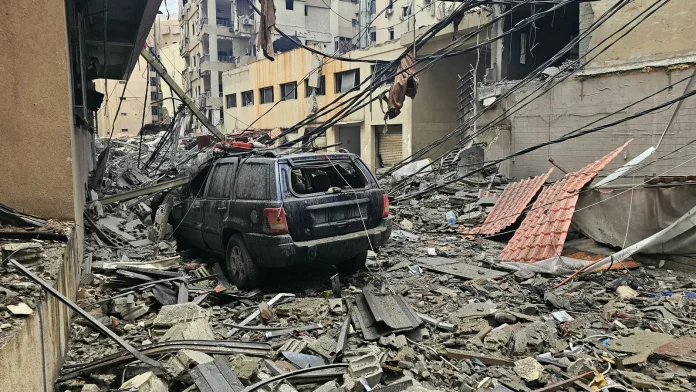
There is a curious kind of quiet in Gaza these days — not the ordinary soft hush of a city at dawn, but the brittle silence of a place still listening for the next blast.
Amid that silence, Washington has begun to sketch out a new and highly sensitive idea: an international stabilization force to help secure Gaza after months of war and devastation. The plan — part of a broader 20-point reconstruction and security framework championed by the U.S. president — is not a full-scale occupation. Rather, American officials say the United States would provide a support role: up to 200 troops to backstop the multinational effort, and a handful of liaison teams on the ground to help build the operation.
“What we’re trying to do first is simply stabilize,” one senior U.S. adviser told reporters, speaking on condition of anonymity. “We’re constructing the international stabilization force — carefully, deliberately, in concert with regional partners.”
Who might join, and why it matters
The list of potential contributors reads like an improbable diplomatic hall of mirrors: Indonesia, the United Arab Emirates, Egypt, Qatar and Azerbaijan have been named in conversations, according to advisers involved. Each offers a different kind of legitimacy and leverage — Islamic-majority Indonesia with moral weight in the Muslim world; Egypt with its border and long history in Gaza affairs; Qatar as an interlocutor with Hamas; and the UAE and Azerbaijan as emerging players in Middle East peace diplomacy.
There are practical reasons for an international force: Gaza is roughly 365 square kilometres and home to about 2.3 million people packed into one of the most densely populated strips on Earth. After months of fighting that shattered neighbourhoods, hospitals and infrastructure, the territory is a knot of humanitarian, security and political hazards — unexploded ordnance, collapsed buildings, fractured local governance and the persistent presence of armed groups.
“This isn’t an abstract mission,” said Dr. Leila Mansour, a scholar of conflict stabilization. “Stabilization in urban warfare means demining, restoring safe corridors, ensuring aid delivery, and creating credible local security structures. That takes a mix of police, engineers and logistics specialists — and it takes time.”
Who’s already there
- Up to two dozen U.S. personnel are reported to be in the region now in coordination and oversight roles.
- The United States has indicated willingness to provide up to 200 troops in support roles (not for front-line deployment inside Gaza).
- Discussions are ongoing with several regional states about troop and civilian contributions.
On the streets: fear, hope and the hard geometry of safe zones
In Shujaiya, the eastern neighbourhood of Gaza City where entire blocks are pockmarked with outlines of collapsed apartments, people speak in short, cautious bursts.
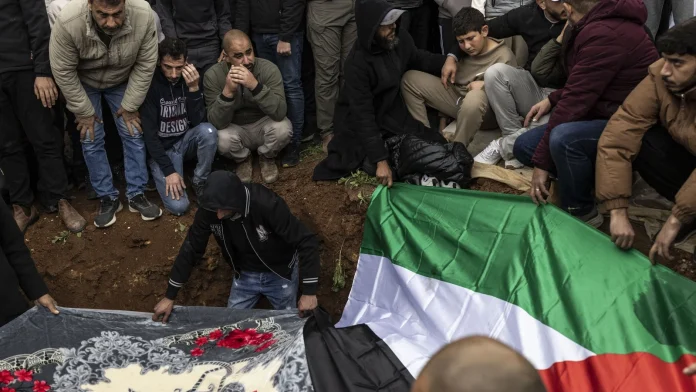
“We sleep in shifts,” said Samira, 36, who lost her home and now lives with extended family in a half-cleared courtyard. “When rockets sound we don’t run to the streets. We run to the darkest corner of the house and pray. If there is a safe area, I will go there — but is it really safe?”
U.S. advisers and others have floated the idea of safe zones — protected pockets where civilians could shelter and basic services be restored. The thought is straightforward; the reality is fiendishly complex. Where do you set such zones without shaping new frontlines? Who administers them? And how do you prevent them from being penetrated by militants or weapon caches?
Officials insist that any stabilization will not involve forced displacement. “No one will be made to leave Gaza,” an adviser said. “We’re looking at restoring and rebuilding in areas where Hamas militants are no longer present — step by step.”
The hostage gambit and the thin line of the truce
Any stabilization plan is tethered to the delicate, painful work of accounting for hostages and the dead. Under the ceasefire arrangement that saw the return of some prisoners and hostages, the maths have been brutal: nearly 2,000 Palestinian prisoners were released in exchange for the return of roughly 20 living Israeli hostages since the deal began, while the issue of deceased hostages remains unresolved.
Hamas has handed over several bodies — amid claims it cannot retrieve more without heavy equipment and in the face of hazardous conditions beneath mountains of rubble. Israel’s defence officialdom has warned that if the deal is not honoured, military action could resume.
“If Hamas refuses to comply with the agreement, we will act,” said a statement from an Israeli defence office in combative terms that underscore how fragile the lull is.
Meanwhile families on both sides await news with a steady, awful patience.
“My son’s room is still the same,” said Miriam, a woman in southern Israel whose son was taken on October 7. “We open his closet and for a moment we are still home. But the days are stretching into something else — a test of whether words mean anything.”
Humanitarian alarms: crossings, supplies and a looming reconstruction mountain
Humanitarian officials have pressed for the reopening of crossings, especially Rafah, the door between Gaza and Egypt that bypasses Israel’s territory. The UN has repeatedly warned that Gaza’s civilian population faces catastrophe: hospitals lacking anaesthetics, families without shelter, and the spectre of famine that UN agencies have invoked.
“The test is that we have children fed, that we have anaesthetics in the hospitals for people getting treatment, that we have tents over people’s heads,” a senior UN humanitarian official said after urging immediate opening of border points.
Rebuilding will demand not only construction crews but hundreds of millions — perhaps billions — of dollars, alongside political guarantees. President Trump and other international partners have spoken of investments, but even eager financiers will want security guarantees and a clear governance picture. At the heart of that picture is a non-starter for Israel and the U.S.: Hamas disarmament. Hamas, for its part, refuses to give up its weapons or role altogether, insisting it will remain part of Gaza’s political equation.
Why the world should care — and what you can ask
This is not only a local story. It is a test of whether international cooperation can be marshalled in a way that protects civilians, holds combatants to account, and prevents chronic cycles of violence. It raises questions about the responsibilities of regional powers, the limits of military solutions, and the ethics of rebuilding societies that remain politically contested.
What, then, would you demand if the world asked you to vote on rebuilding Gaza? Accountability? Guarantees of human rights? A plan to dismantle militias? Or an insistence that aid remain unconditional and driven by needs?
These are not rhetorical niceties. They are the knots that diplomats will have to untie while families in Gaza count days by the sound of generators and the length of queues for water. The stabilization force, however modest in its early U.S. contribution, may be the first thread in untangling a future that feels, for now, painfully uncertain.
“We need a horizon,” said Dr. Mansour. “It might be small and cautious, but people need to see that there is a plan beyond rubble and rhetoric — otherwise, the silence will only grow heavier.”