A year stitched together by storms, sorrow and stubborn hope
As the calendar slips its last page, I find myself carrying fragments: a foam-wrapped high-rise burning in the dark, a palm-sized island swallowed by the sea, a lone survivor stepping from the wreckage of an airliner and a crowd outside St Peter’s that felt like a small continent mourning. 2025 did not offer a single narrative. It handed us a dozen, all of them loud, messy and insistently human.
Think of this as a walk through that year — not an inventory of headlines, but a street-level tour of how the world looked, smelled and felt. How did a year that began with politics and ended with a water-splashed ceremony in Cameroon teach us to see the fragile threads that bind us?
Where the sea took what was once home
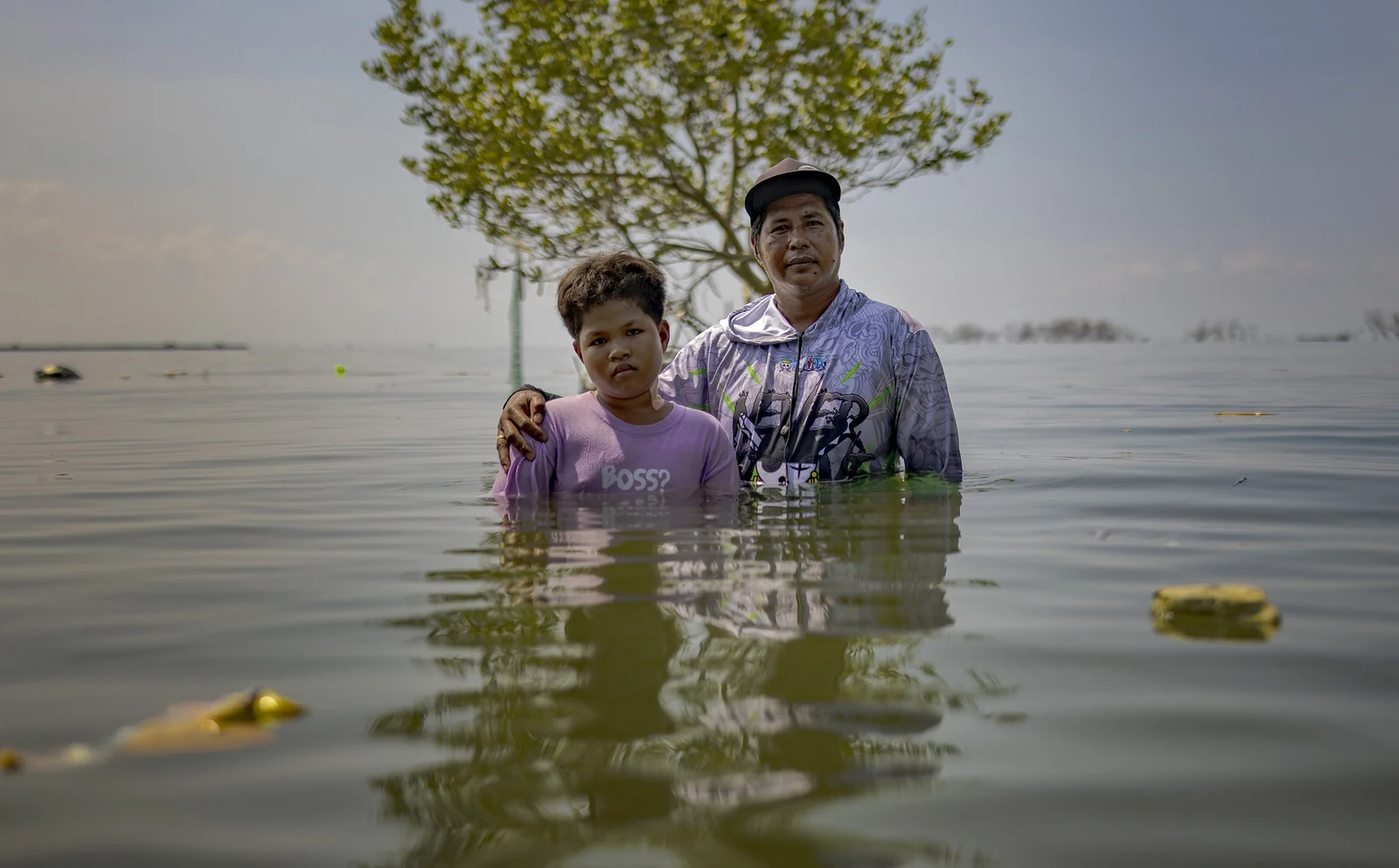
On Pugad Island in Hagonoy, Philippines, the sea has a memory now. It remembers the rows of nipa huts and the laughter of children running to the rice paddies; it remembers being kept at bay. Today it keeps what used to be a village.
“There used to be a coconut grove here,” William Gregorio told me, standing at the muddy edge of what is now a tidal inlet. “My father taught me the rhythm of the tides. Now the rhythm is different — faster, hungrier.” Behind him, his son Yamry squinted at the horizon where a lone roofline bobbed like an island’s last vertebra.
The drivers are familiar: melting ice in Antarctica, the warming ocean, land subsidence from decades of pumping groundwater. But locals point an accusing finger at something closer to home — large-scale reclamation and coastal engineering that altered currents and pulled the tide inland. The result is zenithal: even a gentle high tide can now transform streets into rivers within minutes.
Is this climate change in the abstract or a hand on your shoulder? Ask the rice farmer whose second harvest has vanished into salt. Ask the child who has never known a dry shoreline.
Fire and the questions it leaves behind
On a grim November night in Hong Kong, seven of eight 32-storey residential blocks at Wang Fuk Court became an apocalyptic skyline of orange and ash. At least 160 people perished. The towers had been shrouded in bamboo scaffolding and green mesh as workers installed foam insulation — a combination that turned renovation into a furnace.
“It was like standing on a cooking pot,” recalled a neighbor who lost a sister inside. “We heard shouting, then a wall of heat. There was no time.”
Authorities arrested several people as they probed the use of substandard materials and possible corruption in contracting. For a city that once prided itself on meticulous regulation, the blaze raised a ferocious question: how many safety margins can we shrink before tragedy finds the seam?
Famine, hostage deals and a wounded land
War textures this year’s memory in the grainy grayscale of displacement, hunger and bargaining. In Gaza, the UN’s Integrated Food Security Phase Classification confirmed a famine affecting some 500,000 people in the governorate — a fifth of the territory. Aid convoys, choked at times, became the locus of geopolitics and human suffering.
“You ration hope as you ration rice,” said Rania, an aid coordinator, as she ladled a modest portion of cooked food to a line of people in Gaza City. “We can bring food. We cannot bring back what the blockade took.”
By October 10, a US-mediated ceasefire negotiated the release of almost all hostages, with Israel returning the bodies of many Palestinians and freeing nearly 2,000 prisoners. It was an uneasy, transactional peace. It was also a reminder that between political calculus and human life there is always a cost; sometimes it is measured in liberty, sometimes in lives lost.
Meanwhile, the longer war in Ukraine continued to cast its massive shadow. Front-line strikes, nightly missile and drone assaults and a grim count from the US Special Envoy for Ukraine that together the combatants had suffered more than two million dead and wounded underscored a terrible arithmetic: prolonged conflict exacts exponential human tolls.
When machines fail and one man lives
One story cut through the numbness: the crash of an Air India Boeing 787-8 near Ahmedabad. Two hundred and forty-two souls were aboard. One man, Vishwash Kumar Ramesh, survived. He had been near an emergency exit and — witnesses and the preliminary investigative report say — jumped from the burning fuselage.
“I wake up and the first thing I remember is blue sky,” Mr Ramesh told reporters later, his voice still ragged. “I wake up every day and I remember my brother.”
The Aircraft Accident Investigation Bureau’s early findings suggested fuel switches had moved to “cut-off” immediately after takeoff, extinguishing the engines. Whether by human error or mechanical anomaly, the crash became a corridor into anxieties about aging fleets, oversight and the thin thread between routine and catastrophe.
Storms that rearranged landscapes — and lives
January’s Storm Éowyn shaved the west coast of Ireland with gusts up to 183 km/h, leaving 790,000 homes and businesses without power. In Conamara, a 120-year-old roof gave way; in Altadena, California, Santa Ana winds gusting as high as 160 km/h drove a wildfire that razed hundreds of properties and sent more than 100,000 people fleeing.
“We have been waiting for the next big one,” said a volunteer firefighter in Los Angeles County. “But waiting doesn’t make it easier when the wind becomes a weapon.”
In Switzerland, a landslide buried 90% of the village of Blatten after thawing permafrost loosened its hold on the mountain’s gravel and ice. One life was lost. Three hundred residents had been evacuated days earlier. The Alpine retreat of frozen ground is no longer an abstraction — it is a reshaping of how alpine communities perceive their future.
Small salvations — spacewalks, moonlight and music
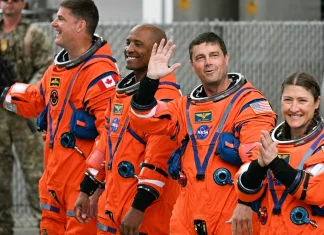
Not all of 2025 was rupture. NASA astronauts Butch Wilmore and Suni Williams, after a nine-month odyssey prompted by a failed Boeing Starliner mission, returned to Earth in a gentle SpaceX splashdown — a technical hiccup woven into the longer story of human spaceflight’s messy, iterative progress.
There were also softer scenes: a “flower moon” rising behind the Temple of Poseidon in Greece, surfers riding behemoth waves in Nazaré, an Australian farmer directing his dogs among a sea of sheep outside Gunnedah. These images were small shelters against the storm.
Politics, protest and the precariousness of public life
America kept serving dramatic headlines: raids by ICE in Democratic-run cities provoked protests and debate; the assassination of conservative commentator Charlie Kirk in Utah transfixed a polarized nation; Elon Musk’s every move — from White House advisory roles to a potential trillion-dollar shareholder payoff — remained a Rorschach test of modern capitalism and celebrity.
In Jakarta, women confronting parliament about lavish allowances chanted and waved flags, a reminder that discontent marches in many tongues. In Dublin, Citywest became shorthand for how allegations of crime can ignite unrest and erupt into violence.
What to carry forward?
So what stitches these events into a pattern? Perhaps this: that our world is simultaneously more connected and more fragile than we often admit. A coastal heap of sand in the Philippines, a faulty fuel switch in India, an insulation foam in Hong Kong — all are local tragedies that nevertheless tell a global story. They are fault lines of governance, climate, safety standards and political will.
As readers, what should we do with this catalog? Turn it into pity that fades with the holidays, or let it be a call to curiosity and action?
“We cannot legislate away grief,” a humanitarian I spoke to in Beirut told me, “but we can make grief less predictable. We can build systems that keep people safer.”
In the end, the year’s images linger because they are not only about endings. They are about people — farmers, sailors, firefighters, mothers — who keep finding ways to begin again. If 2025 taught us anything, it is that resilience is not a slogan. It is a daily practice, often feeble, sometimes heroic, and always profoundly human.