A courtroom, a king’s son, and a decades-long shadow over Britain’s tabloids
The morning air outside London’s High Court carried that peculiar mix of damp fog and cigarette smoke that clings to the Strand — a milieu where gossip and gravitas have collided for generations. Black cabs threaded past with patient precision; a few tourists craned their necks to read the gilded letters above the entrance. Inside, beneath the vaulted ceilings, the hum of the city seemed to shrink to the hush of legalese and the soft scratch of pens.
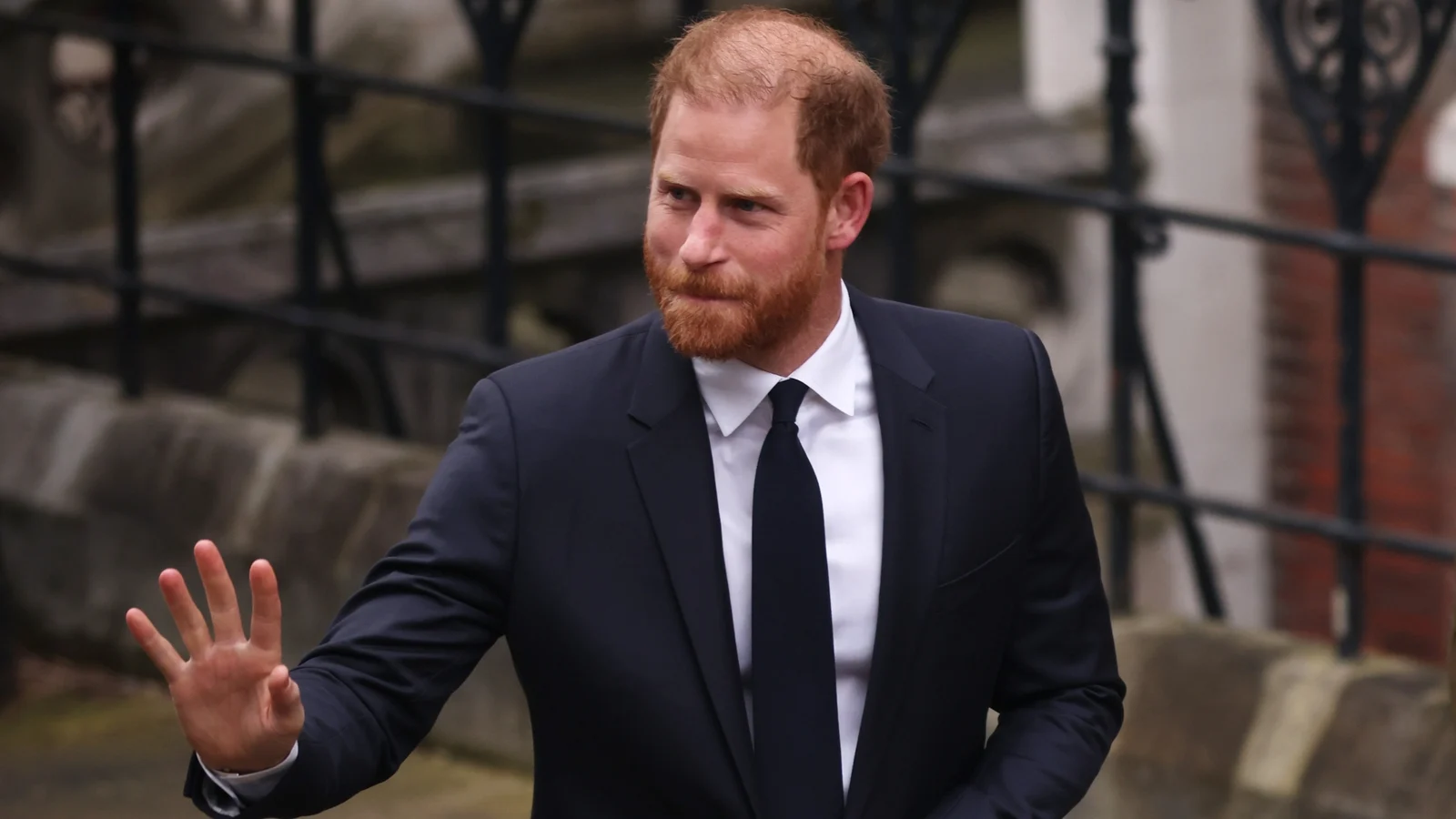
Among those watching the proceedings was Prince Harry. He sat, or followed on a screen, on a case that reads like the modern British establishment’s trial by media: a group of public figures — from Elton John and his husband David Furnish to campaigner Doreen Lawrence, politician Simon Hughes and actresses Sadie Frost and Elizabeth Hurley — accusing Associated Newspapers Limited, publisher of the Daily Mail and the Mail on Sunday, of what they call “systematic and sustained” unlawful information-gathering.
Scenes from the court
The atmosphere in the courtroom was taut but oddly intimate. Reporters swapped notes in the pews, a legal clerk adjusted his robe, and a small knot of supporters murmured as lawyers paced the dock. A framed portrait of a stern-faced judge presided over it all, removed somehow from the nervous human drama unfolding below.
“You could feel the weight in the room,” said one court attendant, a retired paralegal who asked not to be named. “There was a kind of slow burn of recognition — people remembering that this isn’t just celebrity squabbling. It’s about whether your private life can be turned into a product.”
What they say went wrong
The claimants accuse ANL of deploying a catalogue of invasive tactics over nearly three decades: hiring private investigators to plant listening devices in cars, “blagging” — which means misrepresenting identities to extract private information — accessing medical records, intercepting voicemail messages and even listening to live landline calls.
In Prince Harry’s case, his barrister laid out that 14 articles, published between 2001 and 2013, grew from unlawfully obtained information. He described the experience as profoundly destabilising: paranoia, distrust within family ties, and the chilling sense that “every move, thought or feeling was being tracked” for commercial gain.
“It’s not just curiosity — it’s industry,” another observer inside the court said. “When you hear the word ‘sources’ being used almost as a cloak, you realise the scale: not random breaches, but a routine.”
The arguments: denials, denials and denials
ANL has fired back forcefully. In written submissions, their lawyers argued that many of these stories were fed by a “leaky” social circle — friends, aides or even palace spokespeople — and that some claimants had discussed their private lives publicly. They also say the lawsuits are too late in many instances, seeking to strike them out on the basis of statutory time limits.
“The defendant’s stance is clear: editorial teams are capable of sourcing stories lawfully and have witnesses who can explain how articles were produced,” one of ANL’s counsel told the court. “They say the inferential case of phone hacking and phone tapping is disproved.”
But the claimants’ legal team describes a different picture: internal documents they say show editorial sign-off and commissioning of unlawfully obtained material — a pattern rather than a few rogue investigators. Their case survived a 2023 attempt by ANL to have claims dismissed as “time-barred,” and it now proceeds to a trial expected to last nine weeks.
Faces and voices behind the headlines
This is not only a row between lawyers. Outside the courtroom, locals lined up to watch the spectacle and offer their two pennies’ worth.
“If newspapers turn your life into a monthly column without your say-so, that’s a problem,” said Maria Fernandes, a café owner across the street, stirring her tea. “We all expect privacy when it matters — at funerals, at doctors’ offices. Why should anyone be exempt?”
A privacy campaigner who works with victims of press intrusion summed up the human toll. “People tell us they feel hunted. One client described the sound of a voicemail being accessed like a second betrayal — once by the person who called, and once by the industry that sold the call for a headline.”
Even for those who didn’t grow up under tabloid headlines, the story taps into a global unease: what happens when the machinery of media monetisation meets private life in the digital age? In a world where our phones, emails and medical records are all potentially valuable currency, a news scoop can be worth tens of thousands of pounds; the question the court faces is whether some of those coins were gained by theft.
Statistical and legal context
- The allegations span roughly from 1993 to 2018, according to court filings.
- Prince Harry’s complaint references 14 specific articles between 2001 and 2013.
- Previous litigation by Harry led to damages of £140,600 awarded against Mirror Group Newspapers in 2023; he also settled with News Group Newspapers earlier.
- The current trial is expected to last nine weeks and names dozens of journalists and editors in the pleadings.
Why this matters beyond the celebrities
At stake is more than the reputation of a newspaper. This trial touches on the balance between press freedom and personal privacy, the ethics of investigative journalism, and the systems that allow — or restrain — commercial appetites for scoops. Around the world, courts are wrestling with the same questions: what constitutes legitimate public interest? When does the public’s right to know slide into voyeurism? And how should the law evolve in a landscape where the value of information can be immediate and vast?
“We’re not against journalism,” a privacy-law academic told me. “We’re against journalism built on deception. Scrutinising power is essential. But the tools used for that purpose should not be the tools used to exploit vulnerability.”
There’s also a cultural angle. British tabloids long cultivated the idea that they gave voice to ‘ordinary’ people’s interest in royalty and celebrities. But that same shorthand — of sensationalism, front-page scoops and anonymised “sources” — has been criticised for eroding norms and for commodifying personal pain. The trial forces a public reckoning: do we want our media to be fierce watchdogs of power, or market-driven predators that pit profit against privacy?
Questions for the reader
As you read this, ask yourself: where do you draw the line between legitimate journalism and intrusion? Would you accept a news outlet paying for personal details about someone you love? And finally, how should democratic societies regulate press behaviour without muzzling legitimate reporting?
Whatever the legal outcome, the trial is already a mirror. It shows a country — and a media ecosystem — wrestling with its own reflection, wondering which parts it wants to keep and which it must change. For the claimants, it has been decades of bruising. For the press, it is a test of how it will balance audacity with accountability. And for the rest of us, it’s a reminder that privacy, once felt to be a given, may need guarding anew.
The case continues. The gavel will fall, and the headlines will follow. But the conversations it stirs might last far longer than the nine weeks of the trial — in parlours, in law schools, in newsroom meetings, and in the quiet of our own phones.