Smoke over Zaporizhzhia: the nightly arithmetic of a war that will not let people sleep
They stood in the dust like survivors of a stubborn ghost story — curled coats, trembling hands, faces smudged with grey as if soot had tried to draw their lives in charcoal. In one collapsed stairwell a neighbour passed a blanket. On the street, a young woman cupped a child and counted breaths. Twenty-six people were reported wounded in the latest glide-bomb strikes on Zaporizhzhia, officials said — another number on a list that has become too long for anyone to memorize with calm.
“We thought this was the last day of the world,” said a pensioner who introduced herself as Valentyna, her voice thin but stubborn. “The walls shook, my neighbour’s window blew in. We are used to sirens, but not to this. Not to our kitchen being on the news.”
Zaporizhzhia, a city whose sunflower fields and shipyards once hummed with the ordinary business of life, now lives with the drumbeat of the front line less than 25km to the south. Apartment blocks — the squat, Soviet-era rectangles that have housed generations — have been struck before, and again. Rescue crews pull rubble away; neighbours hand out water; a volunteer pulls at a soaked blanket and tries to warm a baby. The scene repeats across towns and villages of Ukraine: a daily ledger of damage, fear, resolve.
Rhetoric, numbers, and the geometry of land
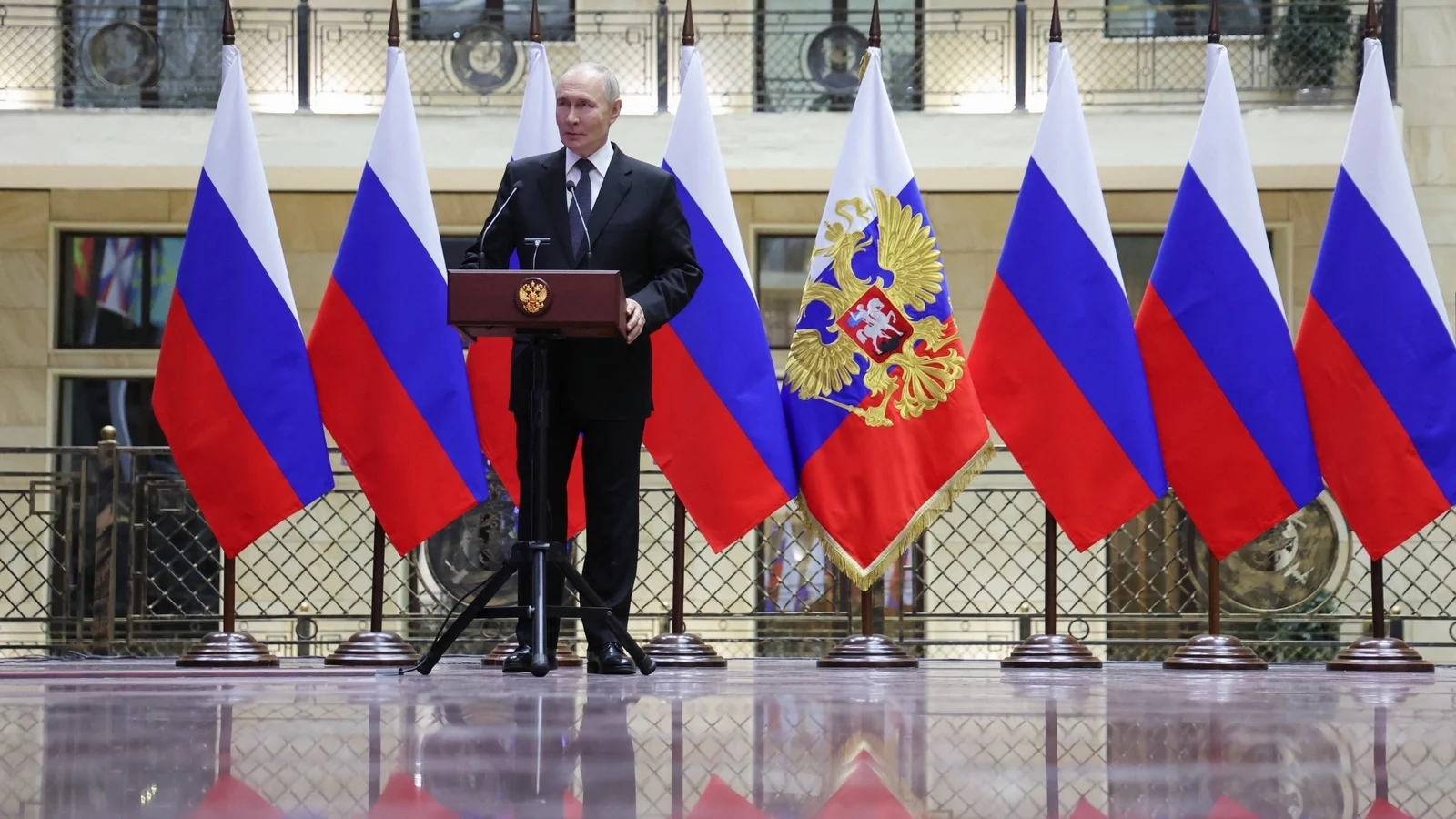
From Moscow came a different kind of sound: formal, televised, and full of threats. At an annual Defence Ministry meeting this week, President Vladimir Putin made it plain that Moscow’s appetite for territorial control is not conditional on diplomacy alone. Officials said Russia would press gains “by military means” if negotiations stalled — a blunt alternative to talks.
Russia claims it now controls roughly 19% of Ukrainian territory, including Crimea — annexed in 2014 — large swathes of Donbas, much of Kherson and Zaporizhzhia regions, and fragments of neighboring oblasts. Kyiv and almost every country in the world reject that claim; Ukraine insists those lands remain Ukrainian soil and vows to fight for their return.
On the meeting floor, Russia’s Defence Ministry displayed a slide that jolted observers: Moscow plans to spend the equivalent of 5.1% of its gross domestic product on the war in 2025. That’s a war budget that dwarfs many peacetime defence allocations and speaks to the scale of Moscow’s commitment to keeping and expanding control, whether through negotiation or conquest.
Deputy Defence Minister Andrei Belousov reportedly set 2026 as a year to accelerate offensives. “If diplomacy does not deliver what we regard as a settlement,” he said in the meeting, “the army will.” Whether such rhetoric is a negotiating posture, a domestic signal, or a genuine military timetable — that is the question officials in Kyiv and capitals across Europe are trying to answer.
What officials and experts are saying
Ukrainian President Volodymyr Zelensky appealed to allies to make the coming EU summit decisive, urging Europe to make it clear that continuing the war would be “pointless” if Kyiv is properly supported. “The outcome for Europe must be such that Russia understands the futility of further killing,” he said in an evening address, calling for reinforced aid and security guarantees.
European leaders, for their part, insist they will not reward territorial conquest. But that principle collides with legal and political complexity: how to take frozen Russian assets and channel them into Ukraine? How to avoid opening legal loopholes or setting a precedent that governments will be reluctant to repeat?
“We are balancing moral clarity with legal care,” said one EU official involved in the talks. “None of us wants to build a bridge that collapses under the weight of the next case.”
Money on ice—and a ticking clock
The question of frozen assets looms large. The UK has given oligarch Roman Abramovich a final deadline to release roughly £2.5 billion tied to the rushed 2022 sale of Chelsea Football Club — funds that Britain says should be used to help Ukrainians. British ministers have warned they will pursue legal action if the money does not move. This is not merely about one cheque; it is a litmus test of whether the post-2022 sanctions architecture can translate frozen wealth into war relief and reconstruction.
European Commission President Ursula von der Leyen has framed the upcoming summit as a moment of European defence: to find a practical, legal pathway to fund Ukraine’s defence without exposing states to open-ended liabilities. Italian Prime Minister Giorgia Meloni echoed the difficulty: the impulse to make Russia pay is strong, but any mechanism must rest on robust legal foundations.
Why the legal route matters
- Frozen assets are often held by banks and subject to complex claims by creditors and legal orders;
- Converting them to reconstruction funds risks legal challenges from owners or guarantors;
- Yet leaving them frozen carries moral and political costs for governments whose citizens watch the destruction and expect action.
Lives under bombardment: texture and small resistances
Walk through a neighbourhood in Zaporizhzhia and you will see the same contours of civilian life that wartime reportage often hints at but seldom lays out with full sensory detail: a kettle blackened at the bottom from many fires on an iron cooktop; a babushka who refuses to sell the family orchard; a tram that still clanks along a shortened route because some things refuse to stop. There are small rituals of normality: bread shared across fences, a priest blessing a corner of an apartment, volunteers keeping lists of who needs medications.
“We repair what we can, we plant what we can, and we remember,” said a young volunteer medic, wiping dust from his hands. “People ask me why we stay. Because this is ours. Because someone must light the lamps.”
Lines on a map — and the questions they force on the rest of us
What does it mean for the international order when a state openly declares it will add land by force if diplomacy fails? How do democracies weigh immediate legal caution against the moral urgency of giving support to a nation under attack? And what does resilience look like on the ground — is it the fortitude of a city that rebuilds, or the policy that ensures it never has to?
These are not rhetorical exercises. They will shape budgets, alliances, and lives. If Europe chooses to convert frozen assets into aid, it will set legal precedents. If it does not, it risks eroding public faith in collective defence writ large. If Moscow follows through on its threats, the geometry of the map will change again, and so will the human count of ruin and resistance.
As night falls over Zaporizhzhia, blankets are handed out, a child sleeps fitfully, and somewhere a meeting in Brussels will decide whether the next chapter will be written in courtrooms, on spreadsheets, or in trenches. Which of those would you prefer to read about tomorrow?