Report Warns World Near Irreversible Climate Warming Overshoot
 Caalamka
The world is speeding toward an “irrecoverable overshoot” of dangerous warming unless governments turn away from fossil fuels and deliver rapid emissions cuts, a new report has cautioned.
The latest assessment from the Climate Action Tracker (CAT) initiative, published as nations gather for COP31, the United Nations climate talks in Turkey, says momentum on climate action has flatlined for a fifth straight year.
The report points to several bright spots: clean electricity is set to cover all additional global power demand in 2025; China and India are rolling out renewables at record speed; electric vehicle deployment has reached new highs; and deforestation in the Amazon has fallen sharply.
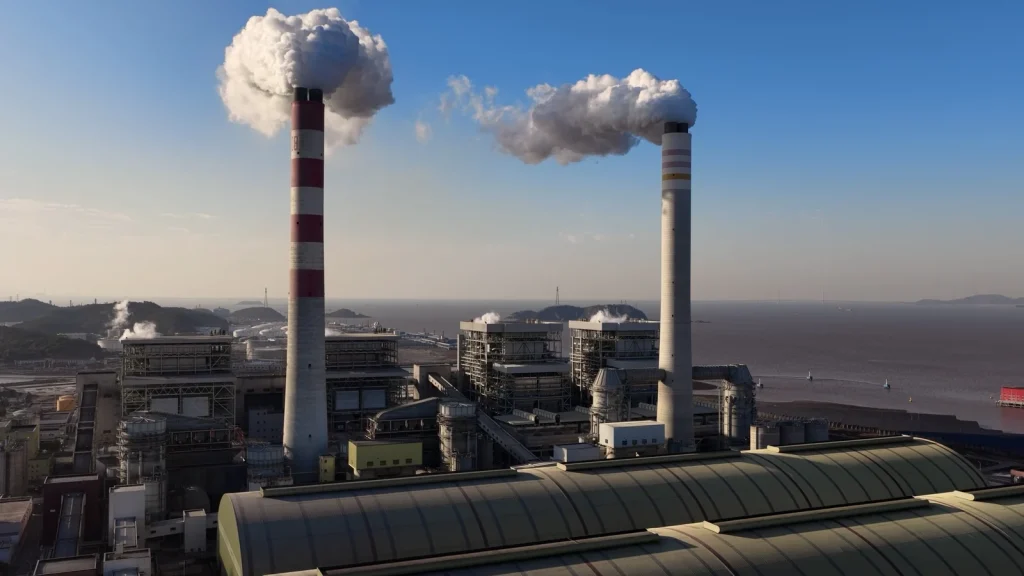
Even with those gains, CAT warns that the shift away from fossil fuels is not happening quickly enough. Coal, oil and gas remain the dominant sources of the greenhouse gas emissions that heat the planet when burned for transport, heating, electricity and industry.
Rising energy demand, combined with new fossil fuel infrastructure still being built, is keeping global emissions on an upward trajectory, the report says.
Based on the climate and clean-energy policies governments currently have in place, CAT finds the world is now headed for 2.7C of warming by 2100. That is slightly higher than the 2.6C estimate in last year’s update, and matches the projections made from 2021 to 2024.
Even if countries fully achieved their 2030 and 2035 emissions-cutting targets under the Paris Agreement — the global pact designed to limit warming to 1.5C and avoid the most dangerous impacts of climate change — warming would still reach 2.6C, unchanged from last year, according to CAT.
In a more optimistic case in which nations deliver on every pledge and long-term target to bring emissions down to net zero overall, CAT says temperatures would rise by 1.9C by the end of the century.
Researchers also stress the Paris benchmark of 1.5C is likely to be breached within the next few years, making it crucial to curb both the scale and the duration of the overshoot — and to reduce temperatures to below 1.5C above pre-industrial levels by 2100.
A fall sharp in deforestation in the Amazon is a positive, the report says
Bill Hare, chief executive of CAT partner organisation Climate Analytics, said: “The stark choice for governments is to either continue to support the fossil fuel industry, which would consign humanity to insurmountable economic damages, rising mortality from heat and climate-driven diseases, and disasters that they are unable to adapt to, or pivot to the solutions which are available and cheaper than ever.
“The imminence of breaching 1.5C cannot be an excuse to open the door to defeatism – the focus has to be on accelerating action to limit the magnitude and duration of overshoot.
“Every increment of warming above 1.5C means even more significant consequences across climate, nature and human systems.”
Scientists say crossing 1.5C of global warming would intensify extreme weather, including deadly heatwaves, floods, storms and drought. It would also accelerate sea-level rise and increase the risk of catastrophic and irreversible damage to natural systems such as coral reefs and rainforests.
Separate analysis released earlier this week by the Global Carbon Budget initiative indicated a modest 0.4% decline in carbon emissions from fossil fuels this year, attributing the drop to expanding solar and wind capacity and the Iran conflict.
Dr Niklas Hohne of CAT partner organisation NewClimate Institute said: “With the closure of the Strait of Hormuz exposing our vulnerability to geopolitical shocks, the case for renewables and electrification has never been stronger.
“It does appear that global emissions could be on the verge of a peak and a much faster decline than we had previously thought.”
Latest climate change stories
Still, Sarah Heck, a policy analyst at Climate Analytics and lead author of the report, said the overall pace of change remains dangerously slow.
Governments are “simply not moving fast enough to adopt the policies that would enable us to escape from the emerging overshoot trap,” she said.
“Worse, several are taking their foot off the accelerator and slowing their climate action – or in cases such as the USA, Canada and New Zealand – rolling it back at a staggering level,” she added.
As a result, CAT expects long-term warming to push beyond the 1.5C limit around 2030.
To keep the overshoot as small as possible, the report says emissions cuts must accelerate sharply — from about 4% a year through 2030 to 7% a year in the first half of the 2030s, then to 9% a year from 2035 to 2050.
For comparison, carbon emissions from fossil fuels fell 7% in 2020, driven by Covid-19 lockdowns worldwide.