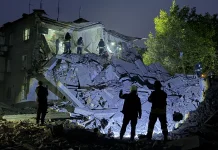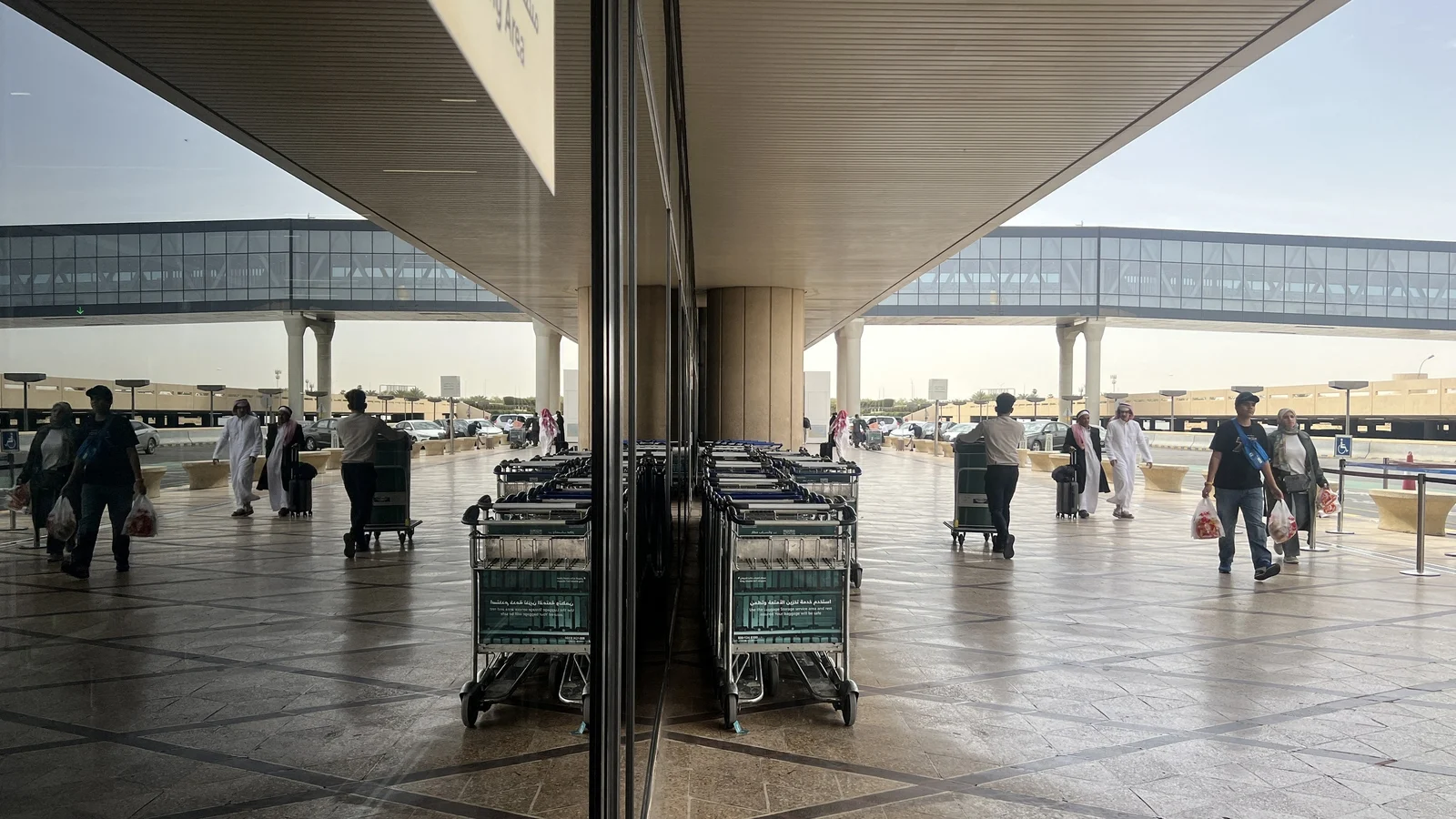
A deadly strike on Riyadh’s main international airport has thrown Saudi Arabia’s security concerns back into sharp relief, killing at least 12 people and injuring 309 others, according to the kingdom’s civil aviation officials, as the Saudi-led coalition promised a decisive response against Yemen’s Houthis.
The coalition blamed the Iran-backed group for the attack on King Khalid International Airport, calling it a “full-fledged war crime,” while a diplomatic source said the incident was caused by a missile.
The assault unfolded amid an unprecedented surge in Houthi strikes on Saudi Arabia since a truce in the group’s long-running war with Yemen’s Riyadh-backed government collapsed in July.
Saudi aviation authorities said four Saudi citizens were among those killed, along with two people from Bangladesh and one person each from the US, Jordan, Palestine, Syria, Sudan and Egypt.
Officials said some of the injured were in critical condition.
It is unusual for Saudi authorities to acknowledge strikes that hit civilian targets, and civil aviation officials did not name the Houthis directly.
Damage seen in aftermath of attack on Riyadh airport
The Saudi civil aviation authority said operations at the sprawling King Khalid International Airport were suspended after the attack.
Authorities said they were still evaluating the extent of the damage.
In the wake of the strike, the Houthis renewed a warning to airlines, airport employees and travellers against using Saudi airports, insisting the warning should be taken seriously and saying the kingdom “bore responsibility for failed interceptions”.
The Irish Embassy in Riyadh urged Irish citizens to avoid the airport, monitor airline updates, follow local media and adhere to official safety guidance.
The embassy said anyone affected should contact it in an emergency.
Health officials activated a rare mass call-up of doctors to manage what a medical source described as a “serious emergency situation”.
Foreign embassies also cautioned their nationals to stay away from the airport.
One passenger said they saw the impact inside the airport’s domestic terminal.
“I was on gate 403,” the witness said. “I saw 401 hit, I saw injuries in front of my eyes. Everyone was running.”
Hours later, a spokesman for the Saudi-led international coalition fighting Yemen’s Houthis wrote on X that a “projectile” had landed near King Fahd International Airport in Dammam.
Early this morning, the coalition said it intercepted a missile southeast of the capital.
The Houthis have not claimed responsibility for the Riyadh airport attack, but the Saudi-led coalition said it would respond.
The Houthis did, however, claim responsibility for a series of attacks targeting the airport on Thursday that killed three people and damaged a plane.
US ‘may’ join Saudi strikes
Yemen’s civil war reignited in July when a four-year, UN-brokered truce fell apart, unfolding as a broader Middle East war has shaken the region and disrupted energy supplies and markets.
Saudi Arabia has led an international coalition backing Yemen’s government militarily since 2015, and the renewed escalation is pulling the kingdom deeper into the conflict on its southern border.
Asked yesterday if he had reconsidered joining Saudi strikes against the group, US President Donald Trump replied: “We may.”
“We’re going to look at it,” Mr Trump told reporters at the White House. “We just found out about the recent attack, so we’ll make a decision.”
Mr Trump said he “will be speaking” with Saudi Arabia’s de facto leader, Crown Prince Mohammed bin Salman, after the attack.
“What happened in Saudi Arabia is not acceptable,” Mr Trump added.
Video shows smoke rising at Riyadh airport after previous attack on Thursday
US media outlets have reported that earlier Saudi requests for American military assistance against the Houthis were turned down.
The US, Canadian, German and Spanish embassies in Saudi Arabia advised their citizens to avoid the airport.
A senior Western diplomat said several embassies had told staff they were barred from using the airport “over the next week”.
Outside the airport area, passengers with luggage were seen waiting on the footpath at a metro station.
The strike comes just ahead of Saudi Arabia’s high-profile convention and entertainment season, which begins this month.
Riyadh typically stages a dense schedule of events, including its flagship investment conference that draws foreign leaders and business titans.
Fighters loyal to the Houthis seen taking part in a rally to recruit more fighters in Sanaa in Yemen
‘Moving up the escalation ladder’
Inside Yemen, military sources said Saudi-backed government forces were advancing against the Houthis in areas the group seized last month near the Bab al-Mandab strait.
The Yemeni government announced last week that it had launched a counter-offensive intended to retake all territory held by the Houthis.
The Houthis acknowledged government attacks in the Bab al-Mandab area — a strategic chokepoint for Red Sea oil and cargo traffic — but said their forces had repelled them.
Because the situation is rapidly evolving and access for journalists remains difficult, claims from both sides have been impossible to independently verify.
Anna Jacob, an analyst at the Arab Gulf States Institute, said the Saudis were likely to harden their stance toward the Houthis after the recent strikes.
“One thing is for sure, we are moving up the escalation ladder in a very dangerous way,” she said.