The Day the Market Fell Silent: Hadramawt’s New Fault Line
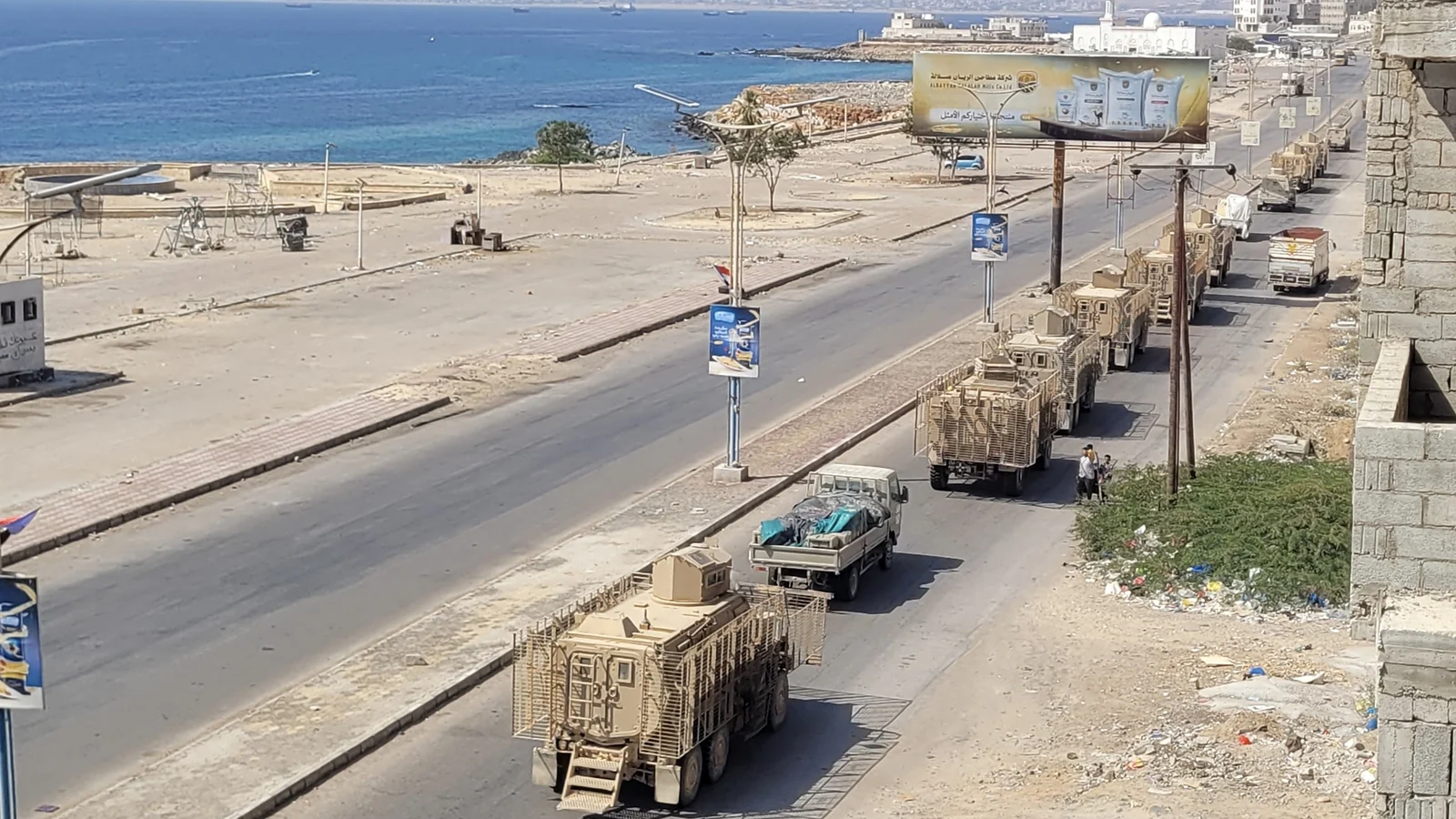
Morning in Mukalla usually arrives like a slow exhale — boats returning with silvery fish, the spice stalls filling the air with turmeric and cardamom, and the call to prayer rising from minarets that have watched trade cross the Arabian Sea for centuries. Last Saturday, the air smelled of cordite and dust instead.
“I’ve run this little shop for twenty years,” said Ahmed al-Mansuri, a lean man with a weathered face and a permanent stain of coffee on his shirt. “People came for bread, for gossip, for hope. Today they come to the window to watch the sky.”
Gunfire rattled across Mukalla and Seiyun as the Southern Transitional Council — a separatist movement backed by the United Arab Emirates — extended its recent offensive across wide stretches of Hadramawt, Yemen’s largest governorate by area and a province that has long been prized for its oil, gas and strategic ports. The Saudi foreign ministry, alarmed by the escalation and the prospect of a permanent split in Yemen, issued a public call for a comprehensive conference in Riyadh to gather “all southern factions” and hammer out a political path forward.
Old Rivalries, New Violence
At the heart of this crisis sits a familiar cocktail: local grievances steeped in history, foreign patrons with competing interests, and a war-weary population that has little appetite left for more bloodshed. The Saudi-led coalition — which intervened in Yemen in 2015 aiming to dislodge the Houthi movement from the north — now finds itself at odds with its erstwhile partner, the UAE, as each backs different actors in the fractured south.
“This is not merely a domestic quarrel,” said Dr. Leila Haddad, a political analyst who has followed the Arabian Peninsula for two decades. “It is the product of decades of external intervention layered atop local ambitions. When external patrons shift gears, the armed groups on the ground move with them. The result is more fragmentation, not less.”
Earlier in the week, the coalition targeted what it called an alleged weapons shipment bound for UAE-backed forces. By Friday, airstrikes — including an attack on the Al-Khasha military camp in Hadramawt — were reported to have killed around 20 people, according to the separatists. Residents of Seiyun said the airport and a nearby military base were struck, sending shrapnel into palm groves and shattering the brittle peace of the desert city.
In the Shadow of Shibam: Culture and Consequence
Hadramawt is not just cartographic space. It is the pulse of a cultural landscape famous for the mud-brick towers of Shibam — sometimes called the “Manhattan of the Desert” — and for frankincense routes older than many civilizations. In Seiyun, the grand adobe palace and the rows of mango trees tell a story of place and persistence. Here, identity has always mattered. But identity for some now means separatism.
“We have been overlooked by Sana’a, ignored by the central government, and used by those with money and guns,” said Fatima al-Habshi, a teacher in Seiyun whose classrooms have lost students to displacement and militia recruitment. “When leaders promise an independent South, some people hear dignity; others hear permanent war.”
What the Southern Transitional Council Says
The STC, which formally took shape in 2017 and has deep ties to the UAE, announced the beginning of a two-year transition towards declaring an independent southern state. The plan, officials said, would include a period of dialogue and a later referendum on independence.
“This is about self-determination,” said Major General Omar al-Saqqaf, an STC official, during a brief radio interview. “The south has been plundered and marginalized for decades. We will not accept another decade of neglect.”
Human Costs and Numbers That Don’t Tell Everything
Behind the maps and the statements lie human realities that simple tallies cannot fully capture. Yemen remains one of the world’s most acute humanitarian crises. More than 30 million people live in a country where services are frayed, markets wobble, and the basic infrastructure of daily life is a relic of a better era. The United Nations and humanitarian groups estimate that over 20 million Yemenis require some form of humanitarian assistance, and nearly 4 million are internally displaced.
“Each new front line frays the safety nets further,” said Rania Ahmed, a logistic coordinator for an international aid group in Aden. “When airports are hit, when roads are closed, the people who lose out are the children and the sick. Food prices spike, medicines disappear, and families face impossible choices.”
Geopolitics on a Narrow Strait
What happens in Hadramawt echoes beyond Yemen’s borders. The governorate’s coastal towns lie not far from the Bab al-Mandeb strait, a narrow maritime choke point through which a substantial portion of the world’s oil and container traffic passes en route to the Suez Canal. The prospect of a new, hostile border in the south of the Arabian Peninsula has strategic consequences not only for Riyadh and Abu Dhabi but also for global commerce.
“Instability in southern Yemen threatens maritime security and could drive up insurance premiums and shipping costs,” noted Captain Henrik Olsen, a maritime-security consultant based in Denmark. “Global supply chains are fragile; hotspots like Hadramawt matter.”
Voices from the Ground: Fear, Hope, and Weariness
In Mukalla’s quieter alleys, people speak in hushed tones. Some welcome the STC’s promises; others fear that independence will mean more blockades and fewer jobs. “We love our land, but we cannot feed our kids with slogans,” said Saeed, a fisherman who refused to give his full name. “If there is a referendum, I will go. But will anyone be alive to count the votes?”
Local healers and shopkeepers recounted the same weary sentiment: enough political promises, fewer empty stomachs. “We are tired of being a chessboard,” said Mariam Noor, who runs a small bakery. “Both Riyadh and Abu Dhabi play their game here, and we are the pawns that suffer.”
Paths Forward — Or More of the Same?
Riyadh’s offer to host a comprehensive conference is, on paper, a sensible if overdue move. Talks could create a platform for rival southern factions, local leaders, and the internationally recognized government to negotiate protections, power-sharing and a credible timetable for any political transition. But such conferences have a chequered history in Yemen: they can be staging grounds for agreements, yes, but also for delays and disappointments.
What would a meaningful peace process look like? Observers say it must be inclusive, locally owned, and backed by enforceable guarantees — not only for elites but for the ordinary citizens who would vote in any referendum, who send their children to school, and who tend the palm groves that feed whole neighborhoods.
- Include local councils and civil society, not only armed leaders.
- Ensure humanitarian access before, during, and after talks.
- Link any political plan to economic guarantees for livelihoods and services.
What Do We Do as Onlookers?
As a global audience, it is easy to reduce Yemen to headlines and to think of it as “someone else’s war.” But Yemen’s fracture challenges a simple truth: the consequences of conflict are transnational. They ripple through migration routes, global trade, and the moral ledger of how the international community responds to human suffering.
So ask yourself: when foreign capitals posture, whose voices are truly heard? When maps are redrawn in conference rooms, who counts the cost? The people in Mukalla and Seiyun are not abstractions. They are bakers, fishermen, schoolteachers, and parents. They deserve more than the fate of a pawn in a regional checkmate.
For now, the markets will empty and the prayers will be louder. For now, the bright mud towers of Shibam will stand amid an uncertain horizon. Whether Riyadh’s conference becomes a path toward dignified resolution or another refrain in a decade-long dirge remains in the balance. The world will be watching — and the people of Hadramawt will, as always, be waiting.