Night of iron and glass: Ukraine wakes to smoke, silence, and the math of loss
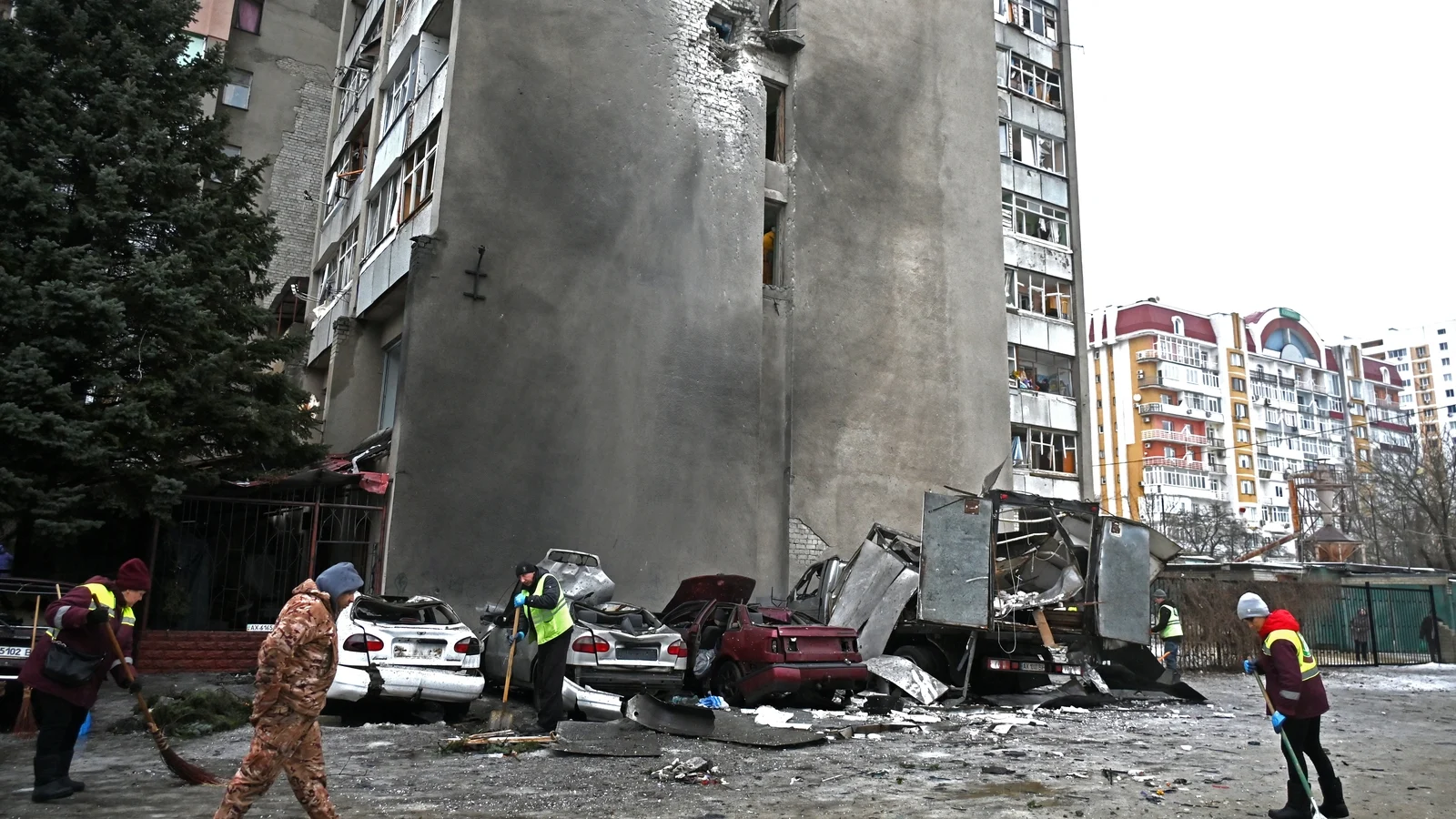
When dawn came over cities from Kharkiv to Zaporizhzhia, it revealed a strange, brutal geometry: holes punched through apartment blocks, charred shopfronts, power cables like shredded hair across pavements, and families wrapped in the same wool blankets they had used last winter. The sky was a pale, indifferent blue. The air smelled of burned insulation and the metallic tang of spent missiles.
“It sounded like the world was being rewritten outside our windows,” said Olena, a kindergarten teacher in Kryvyi Rih who spent the night sheltering children in a classroom after two missiles and scores of drones struck nearby. “We kept humming songs to keep the little ones from listening to the explosions. Singing is how you pretend the day will still be kind.”
Ukrainian authorities said the raid was enormous. President Volodymyr Zelensky posted figures that read like an oil painting in numbers: some 420 drones and 39 missiles, including 11 ballistic warheads, aimed at energy facilities, rail networks and other pieces of a country’s daily scaffolding. The air force said defence crews shot down 374 drones and 32 missiles, but that at least five ballistic missiles and roughly 46 drones nevertheless struck targets, damaging substations, gas installations and homes across multiple regions.
The deliberate targeting of lifelines
This wasn’t a random bombardment of military sites. The pattern was clinical: power plants and distribution nodes, gas facilities in the Poltava region, substations supplying Kyiv and Dnipro, and rail arteries in frontline territories such as Donetsk, Kharkiv and Zaporizhzhia. The goal was to turn infrastructure into the front line—to make cold, darkness and immobility an instrument of war.
“When you hit electricity and transport, you don’t just blow up a transformer—you close hospitals, you strand workers, you stop trains carrying medicine,” said Ihor Melnyk, a retired electrical engineer who now advises utility crews. “This is strategic sabotage. It’s meant to multiply suffering.”
Across eight regions, officials reported dozens injured—among them children. Kharkiv’s governor counted at least 14 wounded, including a seven-year-old. In Zaporizhzhia, local authorities said ten people were hurt and 19 apartment blocks bore the scars of shrapnel and fire. In Kryvyi Rih, a kindergarten and several homes were damaged; across Kyiv, debris from intercepted missiles peppered roofs and streets.
What the numbers mean on the ground
- 420 drones and 39 missiles: the scale of the attack, as reported by Kyiv.
- 374 drones and 32 missiles shot down: Ukrainian air-defence tallies.
- Dozens injured across eight regions, including children: the human toll.
- Multiple substations and gas facilities hit: infrastructure damage with cascading effects.
Those are not abstract statistics. They are generators left idle, trains delayed or canceled, hospital wards that flicker into darkness, and people forced to boil water over camping stoves as temperatures dip back toward winter. “You lose power and suddenly you lose time,” said a nurse in Dnipro. “You have to decide which patient needs a heater, which medicine needs refrigeration. You make choices you never thought you’d have to make.”
Voices from the rubble
On the streets of Zaporizhzhia, a man named Serhiy stood staring at the gutted ground floor of a shop where he used to buy sunflower oil. He spoke slowly, the way people speak when they inventory the new, smaller world in their heads.
“We used to joke about blackouts in the summer,” he said. “This is different. It makes you think about the future of small things—my wife’s baking, the school band, a neighbor’s cat. War wants to erase kitchen tables.”
A paramedic in Kharkiv who asked not to be named described carrying children into makeshift shelters beneath metro stations, wrapping them in space blankets and handing out juice boxes. “You try to be ordinary—to hand them crackers and pretend everything is safe,” she said. “But your hands shake. And you know you’re working against machines made to frighten.”
Experts watching the conflict warn that attacks concentrated on energy and transport multiply the war’s humanitarian footprint. “This is an old tactic dressed in new technology,” said Dr. Marta Kühn, a European security analyst. “Drones and missiles are used to attack the systems that sustain civilian life. The result is prolonged displacement, disrupted healthcare and heightened winter vulnerability.”
Railways—more than steel tracks
Railway infrastructure bore a strategic brunt of the attack in frontline regions. For millions of Ukrainians, trains are a lifeline—moving goods, evacuating civilians, delivering fuel and materials for hospitals and shelters. Knock out the rail, and supply chains groan.
“My station is my community,” said Petro, a stationmaster on the outskirts of Donetsk. “You flood a line with damage and you don’t just stop a train; you stop the baker, the carpenters, the people who bring sugar to the market.”
Diplomacy under the shadow of the power cut
Even as Sirens wailed and repair crews raced to dormant substations, diplomatic efforts continued. Kyiv has been participating in trilateral discussions—meetings that include Ukrainian and U.S. officials and, indirectly, Russian representatives—held recently in Geneva. Officials say the talks have been preliminary, without a clear breakthrough on the most explosive topics: territory and security guarantees.
President Zelensky has indicated he seeks a sequenced approach to high-level negotiations—preparatory talks leading to a leaders’ meeting—but the elephant in the room remains the same territorial dispute that has simmered since 2014 and flared into full-scale war more recently. Russia’s demands and Ukraine’s red lines remain distant from any tidy compromise.
“You cannot negotiate away a homeland,” said a Ukrainian diplomat in Geneva. “But we must seek ways to stop the suffering, to protect civilians and to get repair crews working without fear.”
What this tells us about modern war—and the world beyond
There is something unsettling about technology being used to attack basic services. Drones—small, relatively cheap and increasingly autonomous—allow belligerents to press continuous pressure without exposing pilots or large numbers of troops. That tactical evolution forces new thinking in civil defense, urban planning and humanitarian law.
Internationally, the strikes raise questions about resilience: how do modern states protect power grids, keep railways running, and ensure that the fabric of daily life is not the first casualty? How should aid be structured to respond not just to immediate wounds but to the slow erosion of infrastructure that turns a country fragile?
For people living through these nights of fire and glass, the answers are immediate and human-sized: make sure there is food on the table, make room for children in the cellar, keep someone awake to monitor patients on battery-powered oxygen.
Looking ahead—repair, resistance, resilience
In the short term, crews will work to patch transformers, reroute trains, and clear streets. NGOs and neighbors will pull together blankets, hot meals and generators. Longer-term, reconstruction talks in places like Geneva will need to factor in hard lessons from attacks that aim at infrastructure: decentralize power, harden substations, diversify supply chains and, crucially, protect civilians as a matter of law and policy.
“Rebuilding is not just bricks and cables,” said an urban planner helping draft resilient-recovery plans. “It’s about restoring people’s ability to live a predictable life. It’s about trust.”
So we ask: what is a city without its lights, a hospital without a fridge, a season without warmth? And how much of our modern existence—our hospitals, schools, markets—do we accept as vulnerable until it is too late? These are not merely Ukrainian questions; they are global ones, posed in the quiet aftermath of another long night.
For now, in kitchens and shelters and behind patched windows, people are making decisions again: who needs the heater? Which batteries to save? Who will teach the children to hum through the explosions? In the end, resilience will be built on small acts of care as much as on grand diplomatic plans. The rest of the world should listen—not only to the numbers, but to the people who clean up the glass and stitch their lives back together.